
Best Practices for Managing Classroom Crises gives instructors a practical way to connect classroom teaching, AI tools, and business communication outcomes students can use in professional settings.
Empower Your Classroom with Effective Crisis Management Strategies
In the intricate world of business communication, managing classroom crises effectively is crucial for maintaining a conducive learning environment. This article draws from insights in Business Communication Today, 16th Edition by Courtland L. Bovee and John V. Thill, offering instructors valuable strategies to navigate crisis situations with confidence. As educators face unprecedented challenges, mastering these techniques can significantly enhance teaching effectiveness and student engagement. In response to commonly asked questions, this article aims to equip instructors with practical tools for managing crises effectively.
Table of Contents- Introduction
- Learning Objectives
- Opening Framework
- Direct Answer
- 1. Effective Communication Strategies
- 2. Preventive Measures
- 3. Handling the Crisis
- Key Takeaways
- Glossary of Key Terms
- Related Questions
- References
In today’s dynamic educational landscape, the ability to manage classroom crises adeptly is invaluable for business communication instructors. Drawing from Business Communication Today, 16th Edition by Bovee and Thill, this article provides actionable strategies that empower educators to maintain a balanced and productive learning environment. This discourse is particularly relevant as educators navigate new-era challenges, calling for robust crisis management skills.
Learning ObjectivesUpon completing this article, instructors will be able to:
- Identify key factors contributing to classroom crises and adapt communication techniques accordingly.
- Implement preventive measures to mitigate potential disruptions in learning environments.
- Utilize practical strategies for effectively managing active crisis situations in class.
Classroom crises can arise unexpectedly, thereby posing significant challenges to the teaching and learning process. With guidance from Business Communication Today, educators can effectively mitigate such situations. Now more than ever, instructors are seeking ways to enhance their crisis management capabilities to ensure seamless educational experiences for their diverse student groups.
Direct AnswerTo efficiently manage classroom crises, instructors must employ proactive communication strategies and preventive measures outlined in Business Communication Today, 16th Edition. This includes using effective listening skills, maintaining open communication channels, and employing dynamic conflict resolution tactics. The book also underscores the implementation of tailored crisis management plans to streamline responses during such events, enhancing teaching effectiveness and student safety.

Active Listening: Facilitates understanding and reduces misunderstandings during tense situations. Encouraging students to express themselves fosters a respectful and attentive classroom atmosphere.
Open Communication: Establish a transparent dialogue with students to build trust and defuse potential conflicts early.
Conflict Resolution: Equip students with conflict management skills through role-playing exercises, helping them learn to resolve disputes amicably.

Structured Protocols: Develop clear, structured protocols for addressing potential disruptions before they escalate, ensuring all students understand the procedures.
Risk Assessment: Conduct regular risk assessments to identify and address vulnerabilities within the classroom environment.
Inclusive Education: Recognize diverse backgrounds in the classroom and adapt teaching methods to accommodate varying needs and prevent alienation.

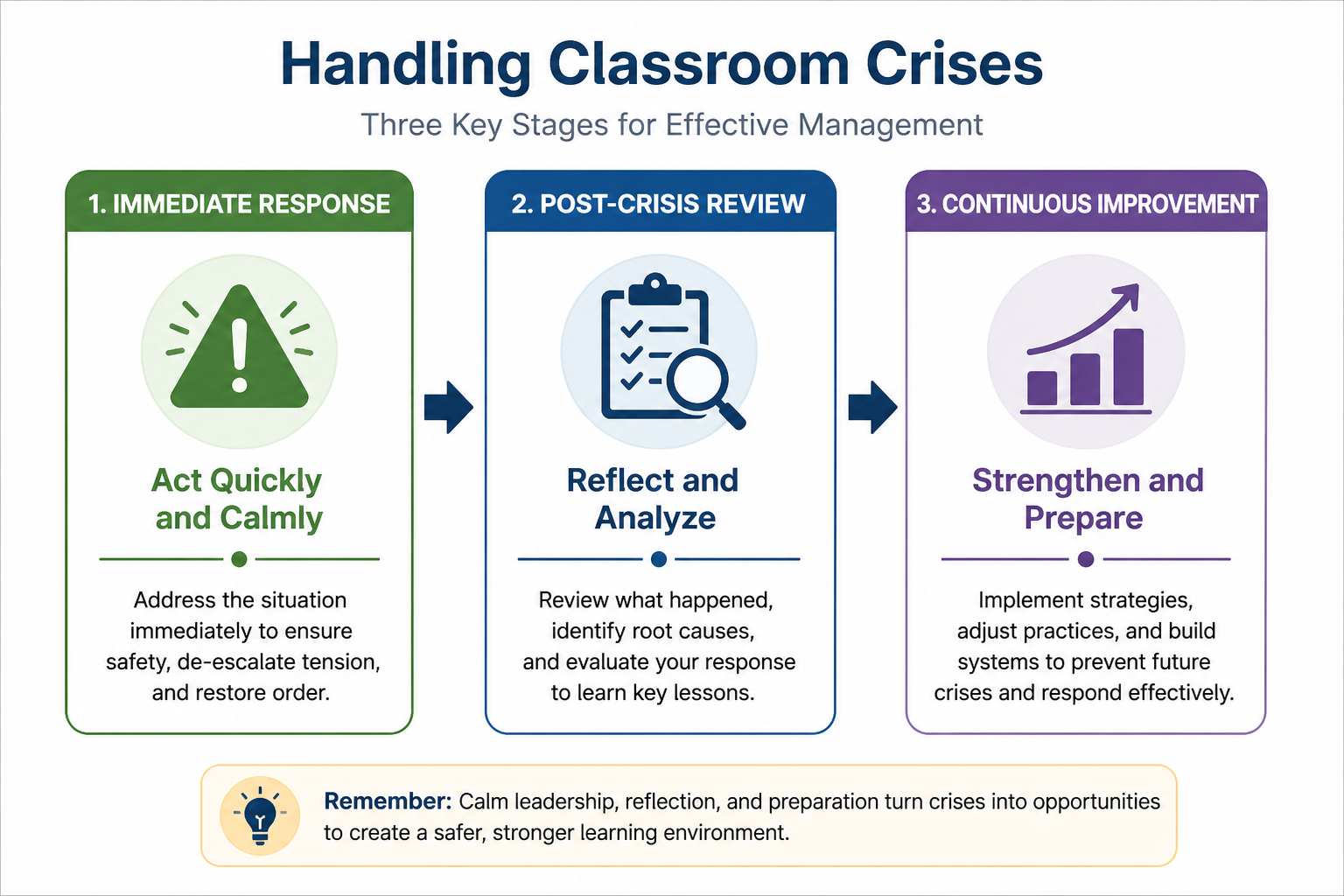
Immediate Response: Prioritize student safety and provide immediate support during a crisis. Following set protocols can help guide actions during such stressful times.
Post-Crisis Review: Post-crisis debriefing sessions can help analyze the response’s effectiveness and provide emotional support to students and staff.
Continuous Improvement: Use insights gained from handling past crises to refine strategies and protocols, thus improving future responses.
- Proactive communication strategies are essential for effective crisis management in classrooms.
- Structured protocols and risk assessments can prevent potential classroom disruptions.
- Handling crises swiftly with a focus on student safety ensures minimal impact on learning.
Active Listening: Fully concentrating, understanding, responding to, and remembering what is being said.
Conflict Resolution: The process of resolving a dispute or a conflict by meeting at least some of each side’s needs.
Crisis Management: Techniques used to prepare for and respond to an unexpected event that might disrupt normal operations.
Risk Assessment: A systematic process of evaluating the potential risks that may be involved in a projected activity or undertaking.
Related Questions- What are common crisis scenarios in business communication classrooms?
- How can instructors prepare for unexpected crises in class?
- What role does empathy play in managing classroom crises?
- How can digital tools aid in crisis management in educational settings?
- How do inclusive practices contribute to effective crisis management?
Bovee, C. L., & Thill, J. V. (2026). Business Communication Today (16th ed.). Pearson.
© 2026 Business Communication Teaching and Learning Center. All rights reserved.