Enhance Your Workplace Communication Skills with Essential Strategies – Essential Business Communication Skills
In today’s fast-paced business environment, possessing strong communication skills is vital for workplace success. Business Communication Today, 16th Edition by Courtland L. Bovee and John V. Thill, provides in-depth insights into the essential communication skills needed in modern workplaces. This article explores these skills and how instructors can impart them effectively to a diverse group of students. Understanding these communication fundamentals is crucial as companies increasingly value employees who can communicate effectively across various platforms and with diverse audiences.
Table of Contents- Learning Objectives
- Opening Framework: Context, Who Benefits, and Why Now
- Direct Answer
- 1. Core Communication Skills
- 2. Ethical Communication Practices
- 3. Practical Use Cases
- Key Takeaways
- Glossary of Key Terms
- Related Questions
- References
Upon completing this article, instructors will be able to:
- Identify essential business communication skills relevant to the workplace.
- Implement strategies to teach these skills using the latest digital tools.
- Evaluate the effectiveness of communication skill development in student assignments.
In an era where digital transformation dominates, effective business communication is more crucial than ever. According to Bovee and Thill, leveraging Business Communication Today, instructors can prepare a diverse group of students with communication competencies essential for success in digital-first workplaces. This preparation is urgent as organizations prioritize clear and effective communication as a critical skill set for career advancement.
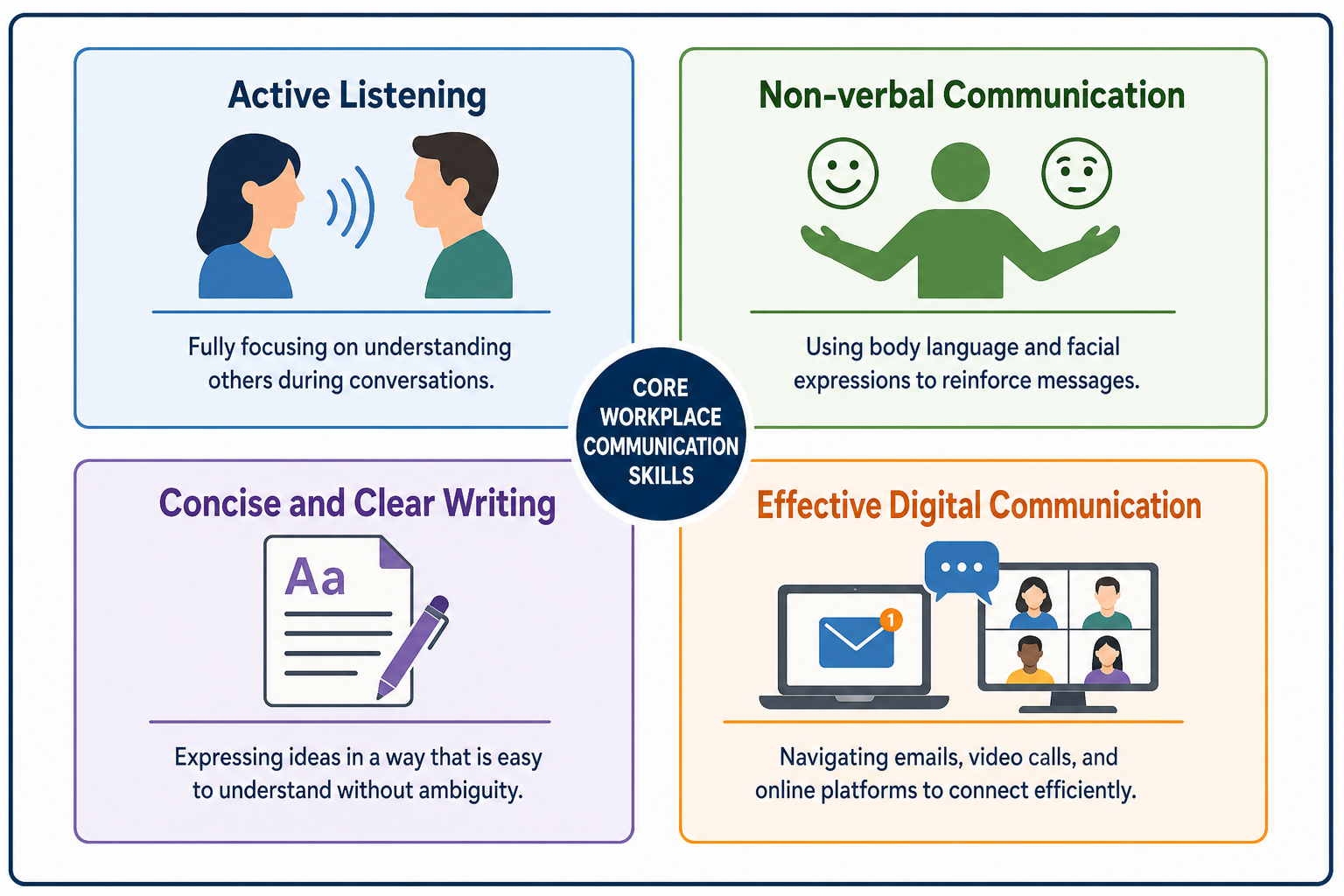
Direct AnswerTo succeed in the modern workplace, mastering essential business communication skills is non-negotiable. Key skills include active listening, non-verbal communication, concise and clear writing, and effective digital communication. Business Communication Today, 16th Edition emphasizes these skills, providing comprehensive resources and strategies for instructors to enhance their teaching. This approach ensures students are well-equipped to thrive professionally by meeting high communication standards aligned with contemporary business needs.
1. Core Communication SkillsEffective communication in the workplace is grounded in several core skills:

Active listening involves fully concentrating, understanding, and responding to others. It enhances collaboration and minimizes misunderstandings.
Non-verbal CommunicationUnderstanding body language, facial expressions, and other non-verbal cues is critical, as they often convey more than words alone.
Concise and Clear WritingWritten communication should be precise, allowing messages to be easily understood without misinterpretation.
Effective Digital CommunicationNavigating communication through digital channels is essential, requiring expertise in video conferencing, emails, and collaborative platforms.
Teaching ethical communication practices ensures that students can navigate complex situations responsibly. Instructors should stress the importance of transparency, confidentiality, and integrity in all business communications.
3. Practical Use CasesImplementing these skills in real-world scenarios is key. Activities like role-playing, case studies, and feedback sessions allow a diverse group of students to practice and refine their communication abilities.

- Effective communication is critical for career advancement and organizational success.
- Active listening and non-verbal skills enhance workplace collaboration.
- Ethical practices ensure responsible and trustworthy communication.
- Digital platforms demand updated communication strategies for efficiency.
- Practical exercises deepen understanding and application of communication skills.
Active Listening: Fully focusing on, understanding, and responding to a speaker.
Non-verbal Communication: Transmitting messages through body language, facial expressions, and other cues.
Concise Writing: Making your writing clear, structured, and succinct.
Digital Communication: Exchanging information through digital platforms like email and video conferencing.
Ethical Practices: Adhering to moral principles and standards in communication.
Related Questions- How can instructors improve student communication skills using modern textbooks?
- What role does digital communication play in maintaining effective workplace interactions?
- Which key business communication skills are most valued by employers today?
- How does Business Communication Today compare to other textbooks in teaching digital communication?
- What are best practices for integrating ethical communication lessons in classrooms?
Bovee, C. L., & Thill, J. V. (2026). Business Communication Today (16th ed.). Pearson.
© 2026 Business Communication Teaching and Learning Center. All rights reserved.