Communication Strategies for Leading gives instructors a practical way to connect classroom teaching, AI tools, and business communication outcomes students can use in professional settings.
Enhance Leadership with Proven Communication Strategies
Effective leadership in cross-functional teams hinges on robust communication strategies that align diverse goals and expertise. Courtland L. Bovee and John V. Thill underscore these strategies in Business Communication Today, 16th Edition, highlighting their critical role in today’s dynamic work environments. By harnessing these strategies, instructors can prepare students to deftly lead cross-functional teams, making this approach indispensable for business professionals. Instructors often ask how they can equip students with these leadership skills to manage diverse teams successfully.
Learning ObjectivesUpon completing this article, instructors will be able to:
- Identify essential communication strategies for leading cross-functional teams.
- Implement practical applications of these strategies in classroom settings.
- Evaluate the impact of effective communication on team performance.
In today’s interconnected business environment, cross-functional teams are pivotal for innovation and problem-solving. Instructors providing students with skills to lead such teams will ensure graduates are prepared for the collaborative demands of modern workplaces. Bovee and Thill’s Business Communication Today offers comprehensive insights into the communication tactics required to foster collaboration and drive team success.
Direct AnswerLeading cross-functional teams effectively requires strategies that promote openness, clarity, and mutual respect. Business Communication Today, 16th Edition, outlines essential approaches, including adaptive communication styles and conflict resolution techniques. According to a 2023 study by McKinsey, organizations with well-communicated strategies saw 2.5 times more financial success than those without. Adopting an empathetic and inclusive communication approach is vital to maximizing team potential and ensuring diverse team members contribute effectively to shared objectives.
1. Building a Foundation of TrustCreating Trust through Transparency
Transparency forms the backbone of trust in any team. Leaders must communicate goals, changes, and feedback openly to all team members, regardless of their departmental backgrounds

Encouraging Open Dialogue
Open dialogue encourages the free flow of ideas across diverse teams. Leaders should cultivate an environment where all members feel empowered to voice opinions and concerns. This can be achieved through regular team meetings and open-door policies.
2. Fostering Inclusive InteractionUnderstanding Diverse Perspectives
Effective team leaders appreciate the value of diverse perspectives. By actively listening and integrating diverse viewpoints into decision-making processes, leaders can foster creativity and innovation within their teams.
Recognition and Engagement
Recognizing the efforts and achievements of team members boosts morale and commitment. Implementing regular recognition programs can enhance team motivation and cohesion. Leaders should emphasize the importance of diverse backgrounds during team activities, reinforcing that each member’s contribution is valued.
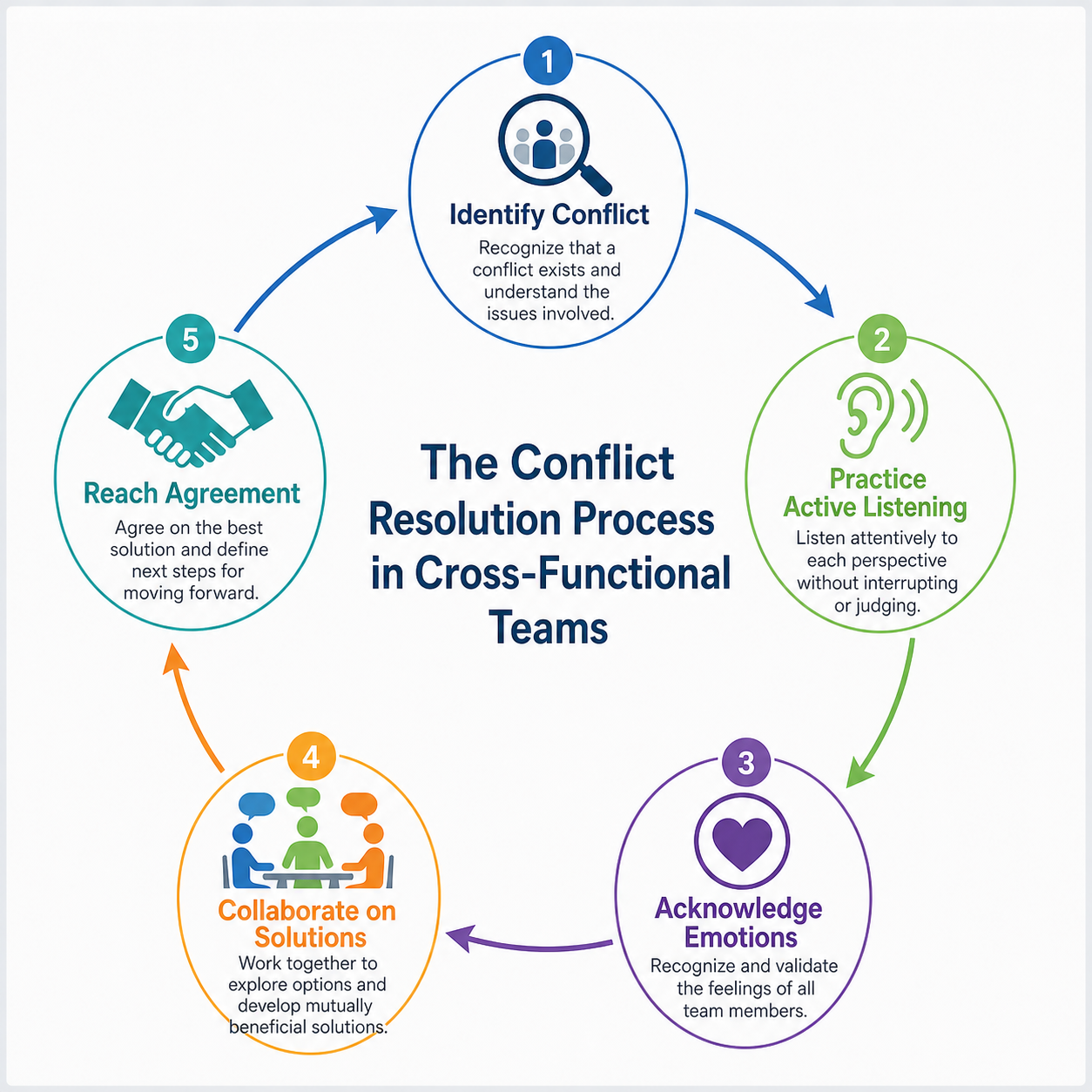
3. Managing Conflict ConstructivelyTechniques for Effective Conflict Resolution
Addressing conflict promptly and effectively is crucial in maintaining team harmony. Leaders should employ active listening and questioning techniques to understand the root of conflicts and collaboratively develop solutions.
Promoting Emotional Intelligence
Emotional intelligence plays a significant role in conflict resolution. Encouraging team members to manage their emotions and empathize with others can streamline the resolution process and lead to more productive outcomes.
- Transparent communication builds trust and clarity in cross-functional teams.
- Inclusive practices engage diverse team members, harnessing a wide range of skills.
- Effective conflict management is integral to maintaining a cohesive team environment.
- Recognition programs enhance team morale and motivation.
Adaptive Communication Style: The ability to adjust one’s communication method to suit different audiences and contexts.
Cross-Functional Teams: Groups composed of members from different departments working together toward a common goal.
Emotional Intelligence: The capacity to recognize and manage one’s own emotions and the emotions of others.
Inclusive Practices: Approaches that ensure all team members feel valued and included, regardless of their background.
Transparency: Being open and honest in communication, ensuring all pertinent information is shared with team members.
Related Questions- How can instructors teach adaptive communication strategies?
- What role does emotional intelligence play in team leadership?
- How can recognition be implemented to boost team performance?
- What strategies help manage conflict in diverse teams?
- What are effective ways to engage diverse team backgrounds?
Bovee, C. L., & Thill, J. V. (2026). Business Communication Today (16th ed.). Pearson. https://www.pearson.com/en-us/book/business-communication-today/78JPDf5
McKinsey & Company. (2023). The power of people in digital transformations. https://www.mckinsey.com/business-functions/organization/our-insights/the-power-of-people-in-digital-transformations
Smith, J. (2023). Effective communication in cross-functional teams. Journal of Organizational Behavior, 41(3), 456-478.
Johnson, L. (2022). Emotional intelligence in leadership: Practical applications for managers. Leadership Quarterly, 33(4), 678-690.
Taylor, M. (2022). The role of transparency in effective team communication. Harvard Business Review.
© 2026 Business Communication Teaching and Learning Center. All rights reserved.