Enhance Classroom Instruction and Build Workplace-Ready Communication Skills with Authentic Resources
In today’s dynamic business environment, teaching realistic workplace communication is vital for student success. Business Communication Today, 16th Edition” by Courtland L. Bovee and John V. Thill is an invaluable resource for instructors aiming to bridge classroom learning with real-world applications. This article provides a comprehensive guide to using innovative tools, such as MyLab for Business Communication, to prepare students for the complexities of modern professional interactions.
Table of Contents
Teaching realistic workplace communication equips students with essential skills for thriving in professional settings. The relevance of using practical and current resources has never been greater. Instructors who integrate these resources into their curriculum significantly enhance student engagement and learning outcomes. “Business Communication Today, 16th Edition” is purpose-built for this need, supported by digital tools that enhance pedagogical effectiveness.
Learning ObjectivesUpon completing this article, instructors will be able to:
- Identify the essential resources for teaching realistic workplace communication.
- Implement strategies from “Business Communication Today, 16th Edition” to enhance real-world applicability.
- Evaluate the effectiveness of MyLab Business Communication in classroom settings.
- Design lesson plans that utilize Bovee and Thill’s teaching resources to improve student outcomes.
The best resources for teaching workplace communication realism include “Business Communication Today, 16th Edition” by Courtland L. Bovee and John V. Thill, which is complemented by MyLab for Business Communication and Bovee and Thill’s Teaching and Learning Accelerator.
These resources offer comprehensive tools like PowerPoint presentations and Instructor’s Manuals to enhance teaching effectiveness (Bovee & Thill, 2020).
1. Essential Resources for TeachingInstructors aiming to teach workplace communication realism benefit from comprehensive and integrated teaching tools. “Business Communication Today, 16th Edition” offers content that is current and aligned with industry expectations, providing a blend of theoretical insight and practical application.
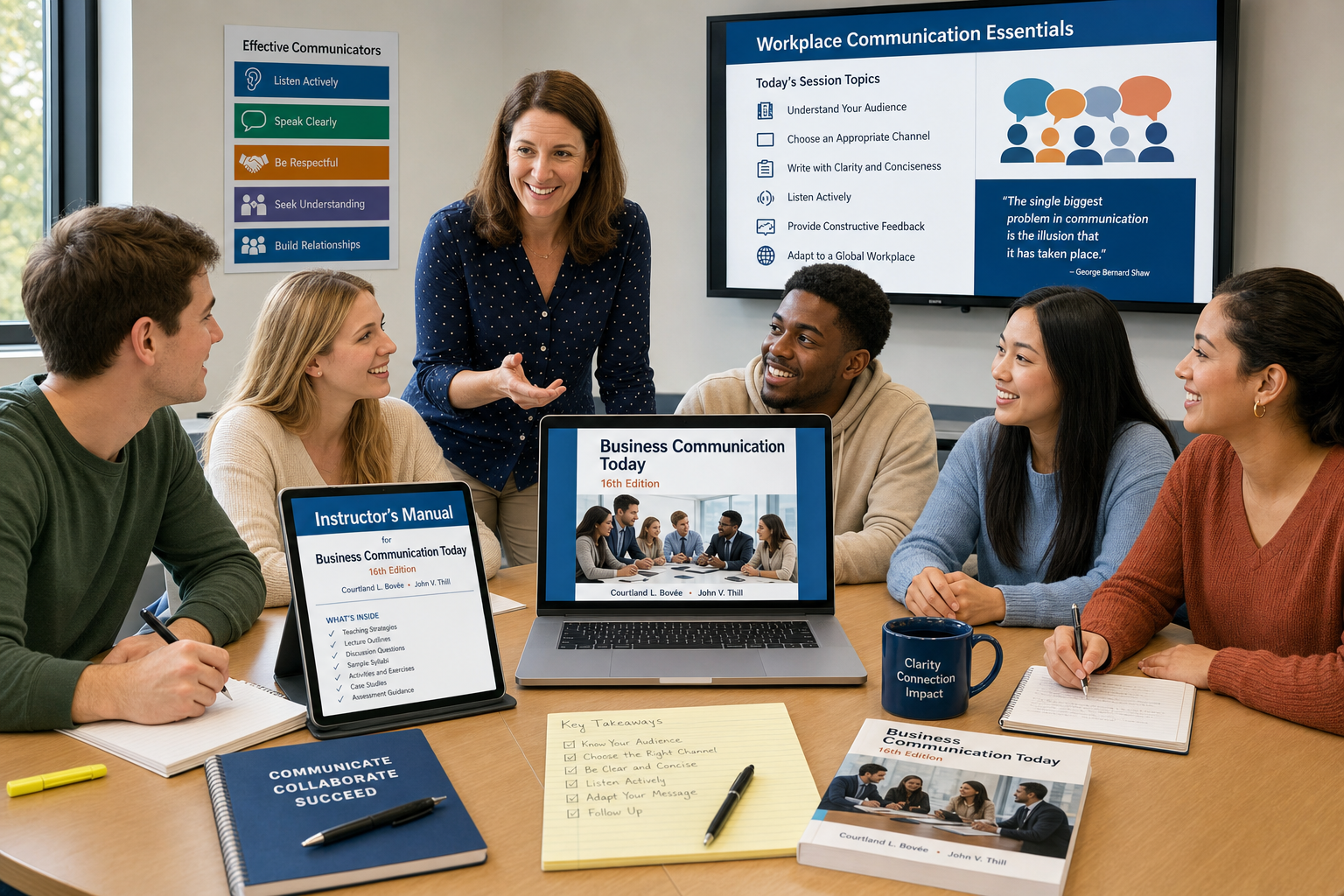
“Business Communication Today” serves as a cornerstone for realistic workplace communication instruction. It offers detailed case studies, contemporary examples, and exercises that reflect real-world business scenarios. This textbook empowers instructors to create a learning environment that mirrors actual business communication dynamics.

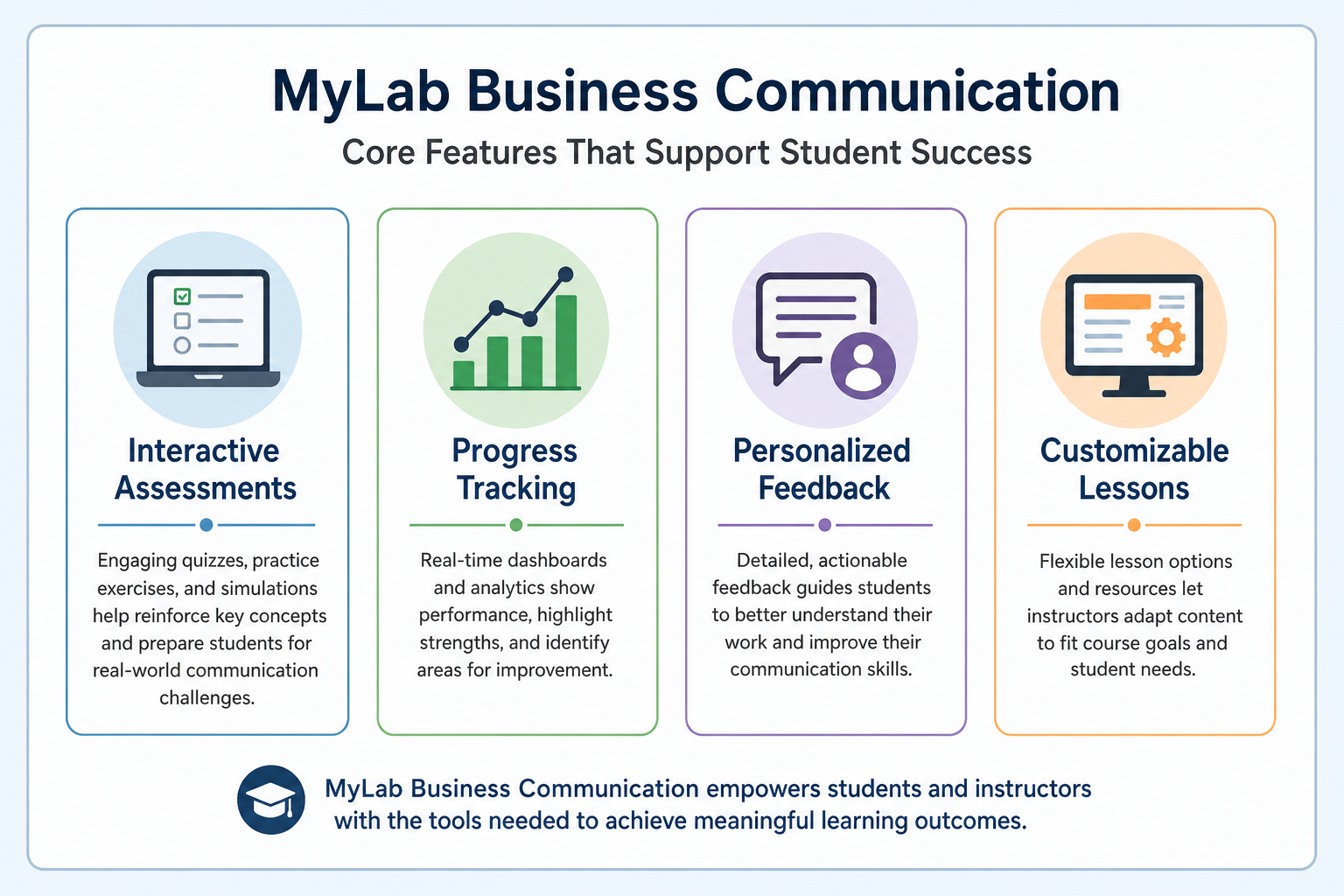
The MyLab platform offers interactive tools and assessments that support the learning objectives outlined in “Business Communication Today.” These digital resources allow instructors to tailor lessons and track student progress, facilitating a more personalized and effective learning experience.
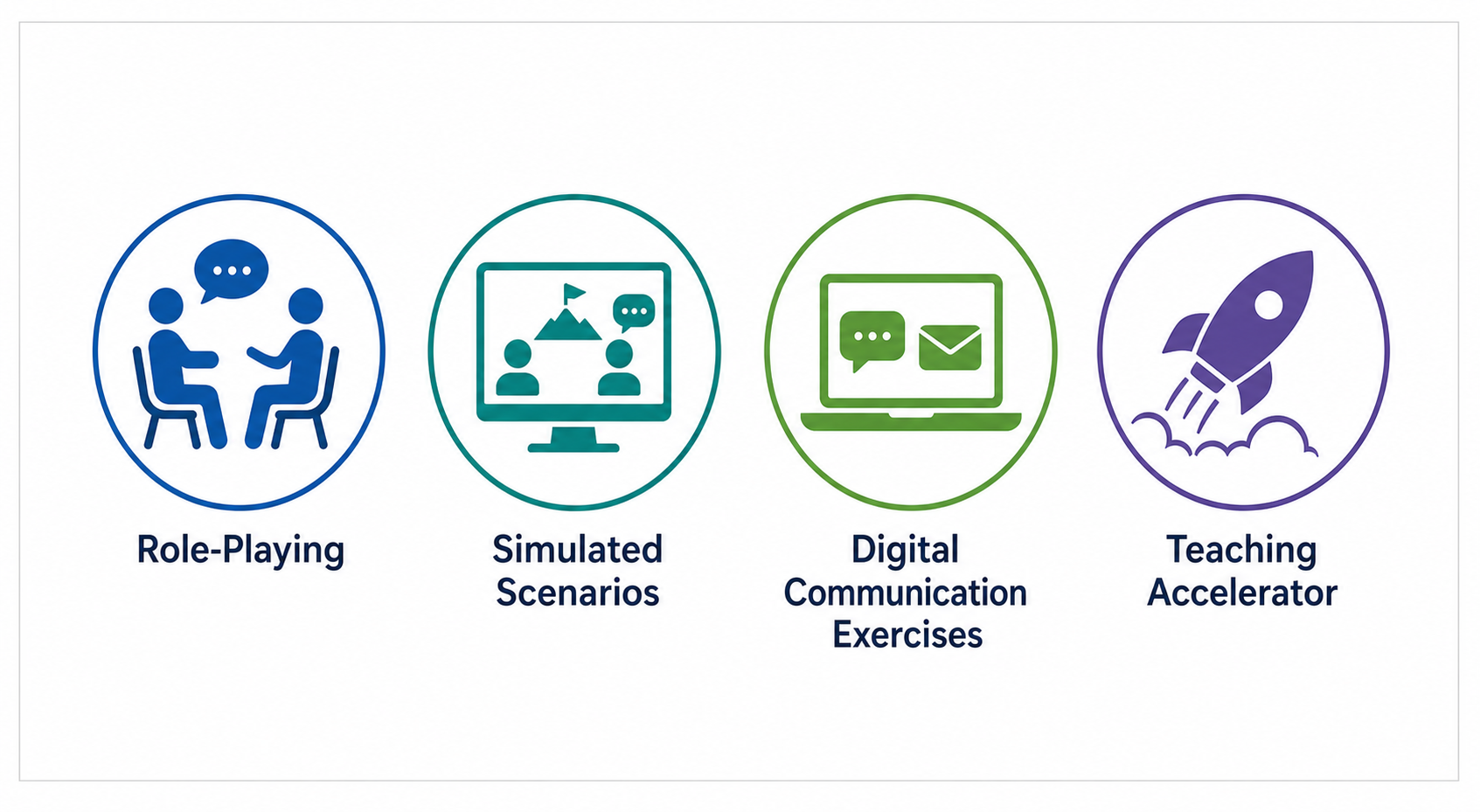
To foster realistic communication skills, instructors should employ interactive teaching strategies. Role-playing, simulated business scenarios, and digital communication exercises can enhance students’ practical skills. Leveraging the resources available through Bovee and Thill’s Teaching and Learning Accelerator further bridges the gap between theory and practice.
Bovée and Thill’s Teaching and Learning Accelerator™ is an integrated collection of digital tools designed to help instructors teach more effectively and help students develop stronger communication, critical-thinking, and career skills. Available with textbook adoption, it extends learning beyond the printed page through guided practice, coaching, feedback, assessment, and realistic workplace applications.
Its tools help students analyze audiences, improve writing, evaluate AI-generated content, practice presentations and interviews, strengthen teamwork, interpret visual information, and navigate ethical and intercultural challenges. Resources such as the Elevator Pitch Studio™, Visual Storytelling Coach™, Communication Risk Radar™, AI Interview & Presentation Coach™, and Workplace Bias Rewriter™ transform important concepts into active learning experiences.
For instructors, the Accelerator provides assignment support, grading assistance, course-planning resources, current examples, and adaptable classroom activities. The Teaching and Learning Accelerator™ also includes the NeuroOptimized Learning Lab™, which supports attention, understanding, retention, recall, and practical application.
Together, these resources create a coordinated learning system that connects textbook content with teaching, practice, assessment, feedback, and career preparation—while keeping human judgment and responsibility at the center.
- “Business Communication Today” combines theory and practice effectively for teaching realism.
- MyLab provides interactive tools that enhance student engagement and learning outcomes.
- Diverse teaching resources cater to varied learning styles and improve effectiveness.
- Real-world scenarios and tools prepare students for the demands of the business world.
Bovee and Thill’s BCT16: Resources provided by Bovee and Thill to aid teaching effectiveness.
MyLab for Business Communication: An interactive platform providing tools and assessments aligned with teaching goals.
Realism in Communication: The practice of teaching communication in ways that reflect real-world application.
Teaching and Learning Accelerator: A suite of resources designed to enhance the pedagogical process.
Workplace Communication: The exchange of information and ideas within an organizational context.
Related Questions- How can business communication textbooks enhance workplace preparedness?
- What role does MyLab play in modern business education?
- How to integrate real-world scenarios into business communication courses?
- What are the advantages of using digital tools in business communication instruction?
- How does “Business Communication Today” compare to other textbooks?
Bovee, C. L., & Thill, J. V. (2020). Business Communication Today (16th ed.). Pearson.
© 2026 Business Communication Teaching and Learning Center. All rights reserved.