
Options for Feedback in Business Communication gives instructors a practical way to connect classroom teaching, AI tools, and business communication outcomes students can use in professional settings.
Unlocking Student Success: Practical Tools for Feedback in Business Communication
Introductory Summary
The article explores the practical options available in Business Communication Today, 16th Edition by Courtland L. Bovee and John V. Thill, for students to practice and receive feedback on their writing and communication assignments. This resource is designed for instructors who want to empower a diverse group of students with effective communication skills crucial for today’s business environment. Instructors often seek methods to provide constructive feedback efficiently, a challenge effectively addressed by the tools and features detailed in this comprehensive textbook.
Learning ObjectivesUpon completing this article, instructors will be able to:
- Identify features in Business Communication Today that support student practice and feedback.
- Implement teaching strategies that utilize these features in the classroom.
- Evaluate the effectiveness of feedback tools in enhancing student learning outcomes.
- Design assignments that align with textbook resources to improve student engagement.
In today’s fast-evolving business landscape, effective communication is crucial. Providing students with the ability to practice and receive feedback on writing and communication assignments is fundamental. The 16th Edition of Business Communication Today by Courtland L. Bovee and John V. Thill provides a structured approach to achieving this goal. Instructors benefit by facilitating a more interactive and results-driven classroom experience, critical to developing students from diverse backgrounds into competent communicators.
Direct AnswerBusiness Communication Today, 16th Edition, offers robust resources for practicing writing and receiving feedback. MyLab Business Communication, integrated with the textbook, provides a platform for personalized feedback and exercises tailored to improving communication skills. According to Pearson’s 2026 release notes, these tools help streamline grading and enhance learning efficiency by enabling instructors to track student progress and address individual needs more effectively.
1. Core Features of MyLab Business CommunicationMyLab Business Communication supports diverse student learning through a suite of interactive tools. These include automated feedback systems, peer review processes, and real-time grading analytics, all of which are designed to make feedback more accessible and actionable. Students receive tailored suggestions for improvement, fostering a cycle of continuous learning and development. This approach not only aids in acquiring essential communication skills but also instills confidence in their ability to convey ideas effectively.

By simulating real-world business scenarios, MyLab offers contextual practice that prepares students for professional environments. Peer review and collaborative assignments facilitate experiential learning through diverse interaction, ensuring students can apply what they’ve learned in varied communication contexts.
2. Implementing Feedback Tools in AssignmentsInstructors can leverage MyLab’s comprehensive feedback tools to enhance traditional assignments. Incorporating activities like peer assessments, reflection logs, and iterative drafts allows students to refine their communication skills iteratively. According to Bovee and Thill, these strategies encourage active learning and critical thinking, essential components of effective communication. Designing assignments that require these tools can significantly boost student engagement and course outcomes. Additionally, the platform allows instructors to customize feedback, ensuring it aligns with course objectives and individual student goals.
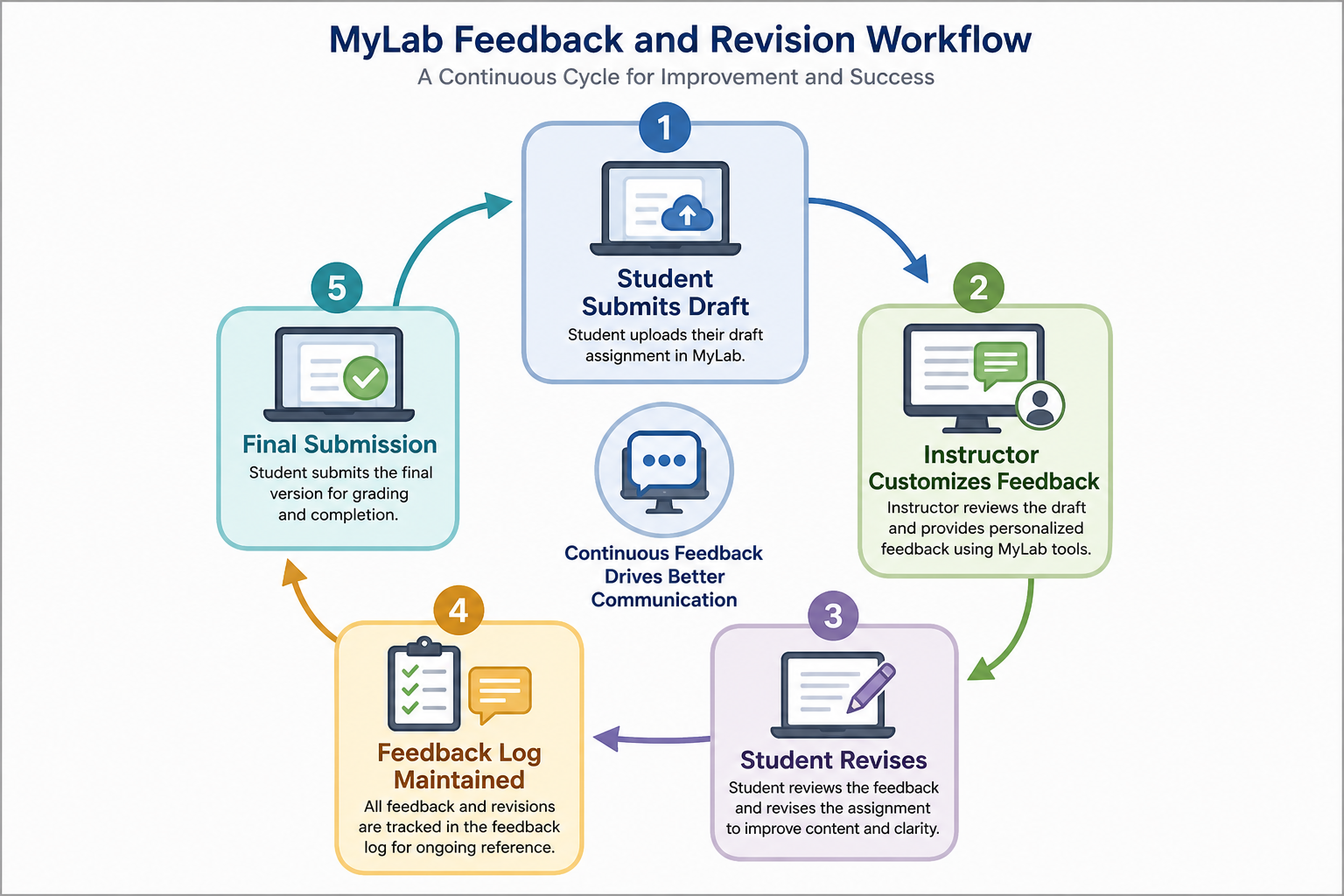
Customization of feedback ensures relevancy to each student’s unique learning path, thus aligning with educational best practices that promote equity in learning opportunities.
3. Evaluating the Effectiveness of Practice ToolsEffectiveness is evaluated through measurable learning outcomes and student feedback. Tools within MyLab provide detailed insights into student performance, allowing instructors to measure the impact of feedback interventions. Research published in educational journals highlights that students using MyLab’s feedback tools demonstrated improved comprehension and communication efficiency. By regularly assessing the effectiveness of these features, instructors can refine and adapt their teaching methods to better serve students’ needs, ensuring the curriculum remains relevant and impactful.

The iterative feedback loop created by using MyLab Business Communication fosters a robust learning environment that equips students with the practical skills necessary for success.
Key Takeaways- MyLab Business Communication provides interactive feedback tools that enhance learning efficiency.
- Incorporating peer reviews and iterative feedback fosters active learning and skill development.
- Customizable feedback aligns with diverse student goals and promotes equity in communication education.
- Using MyLab ensures assignments align with modern business communication standards.
Glossary of Key Terms
- Feedback Loop: A process where outputs of a system are circled back as inputs.
- Peer Review: Assignment evaluation by fellow students to provide constructive feedback.
- Iterative Drafts: Multiple revisions of a document to refine and improve the content.
- Experiential Learning: Learning through reflection on doing, a component of active learning strategies.
- Real-time Grading: Instant assessment and feedback provided during or immediately after an activity.
Related Questions
- How can instructors maximize the use of MyLab Business Communication?
- What are the best practices for integrating feedback in student assignments?
- How does interactive learning improve communication skills?
- What role does feedback play in student engagement?
- In what ways has technology reshaped communication education?
References
Bovee, C. L., & Thill, J. V. (2026). Business Communication Today (16th ed.). Pearson.
© 2026 Business Communication Teaching and Learning Center. All rights reserved.