Empowering Students for AI-Driven Business Communication Roles – AI-driven Business Communication Careers.
In today’s rapidly evolving technological landscape, preparing students for AI-driven business communication careers has become a crucial responsibility for educators. Business Communication Today, 16th Edition by Courtland L. Bovee and John V. Thill, provides a comprehensive guide to equip students with the necessary skills for these emerging roles. By integrating AI tools and understanding the nuances of technology-enhanced communication, instructors can significantly enhance student readiness for future career opportunities. This article explores effective strategies and best practices for integrating AI into business communication education.
Table of Contents
- Learning Objectives
- Direct Answer to Core Question
- Core Features of AI Integration
- Ethical Use of AI in Education
- Practical Classroom Applications
- Key Takeaways
- Glossary of Key Terms
- Related Questions
- References
Learning Objectives
Upon completing this article, instructors will be able to:
- Identify effective strategies for incorporating AI tools in business communication courses.
- Design lessons that foster AI literacy and ethical use among students.
- Evaluate and select appropriate resources that support AI-integrated education.
Direct Answer to Core Question
The integration of AI in business communication careers demands a curriculum that emphasizes AI literacy, ethical considerations, and practical applications. Business Communication Today, 16th Edition, offers essential insights into leveraging AI tools ethically while preparing students for real-world business communication scenarios. Instructors can utilize AI-based writing assistants, data analytics, and digital platforms to adapt their teaching methodologies, ensuring students’ proficiency in AI-enhanced communication.
Core Features of AI Integration
Integrating AI into business communication education involves several key components:
1. AI Tools and TechnologiesUtilizing AI-driven tools such as automated marketing platforms and predictive analytics enhances students’ analytical capabilities and understanding of data-driven decision-making.
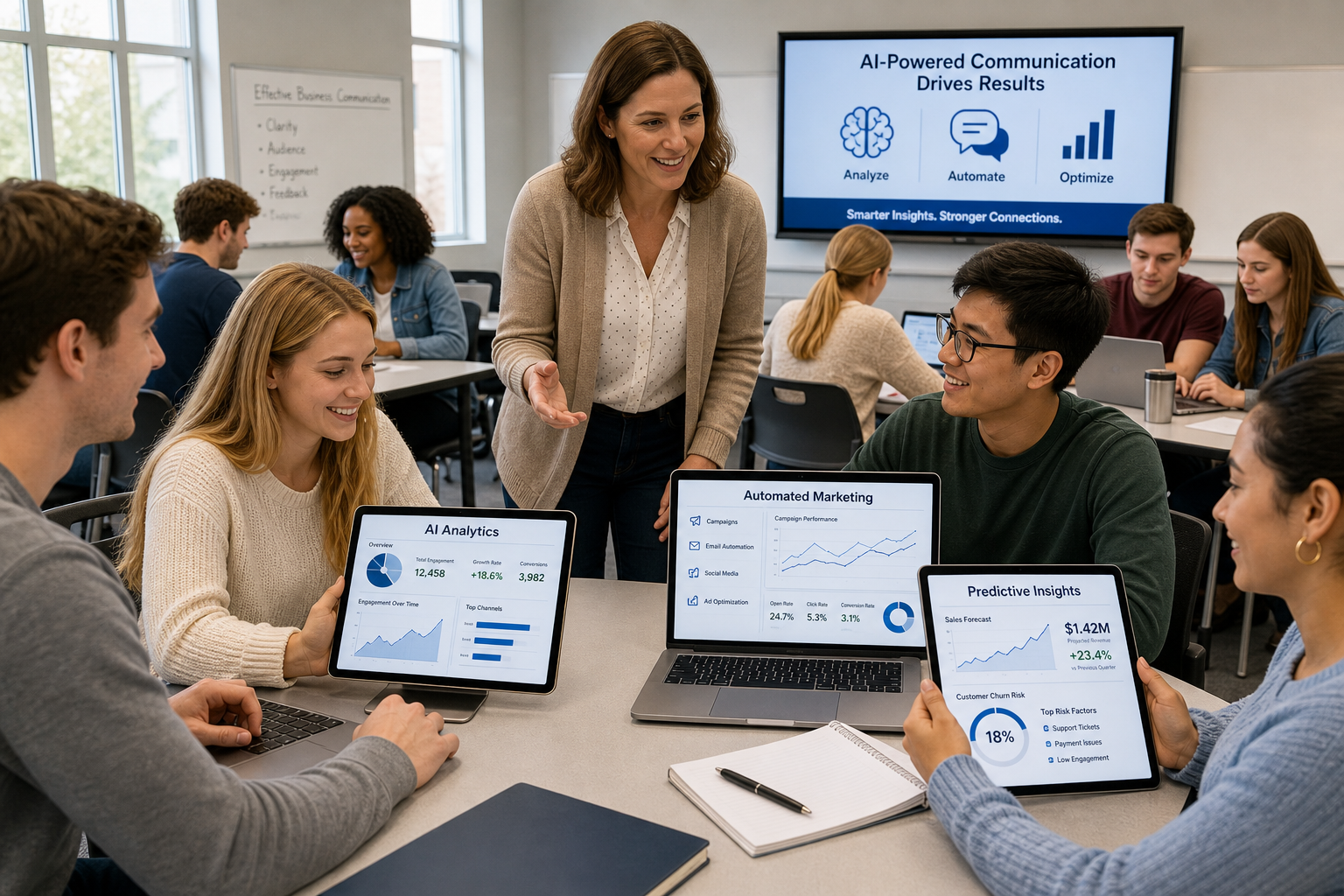
AI-powered adaptive learning systems provide personalized learning experiences by analyzing student performance and tailoring content to individual needs.
3. Enhanced Collaborative ToolsCollaboration tools integrated with AI facilitate seamless communication, allowing students to engage in real-time projects, even in virtual settings.
Ethical Use of AI in Education
Teaching students the ethical use of AI is paramount in preparing them for successful careers:
1. Understanding Bias and FairnessStudents learn to identify biases in AI algorithms and understand the importance of fairness and transparency in AI applications.
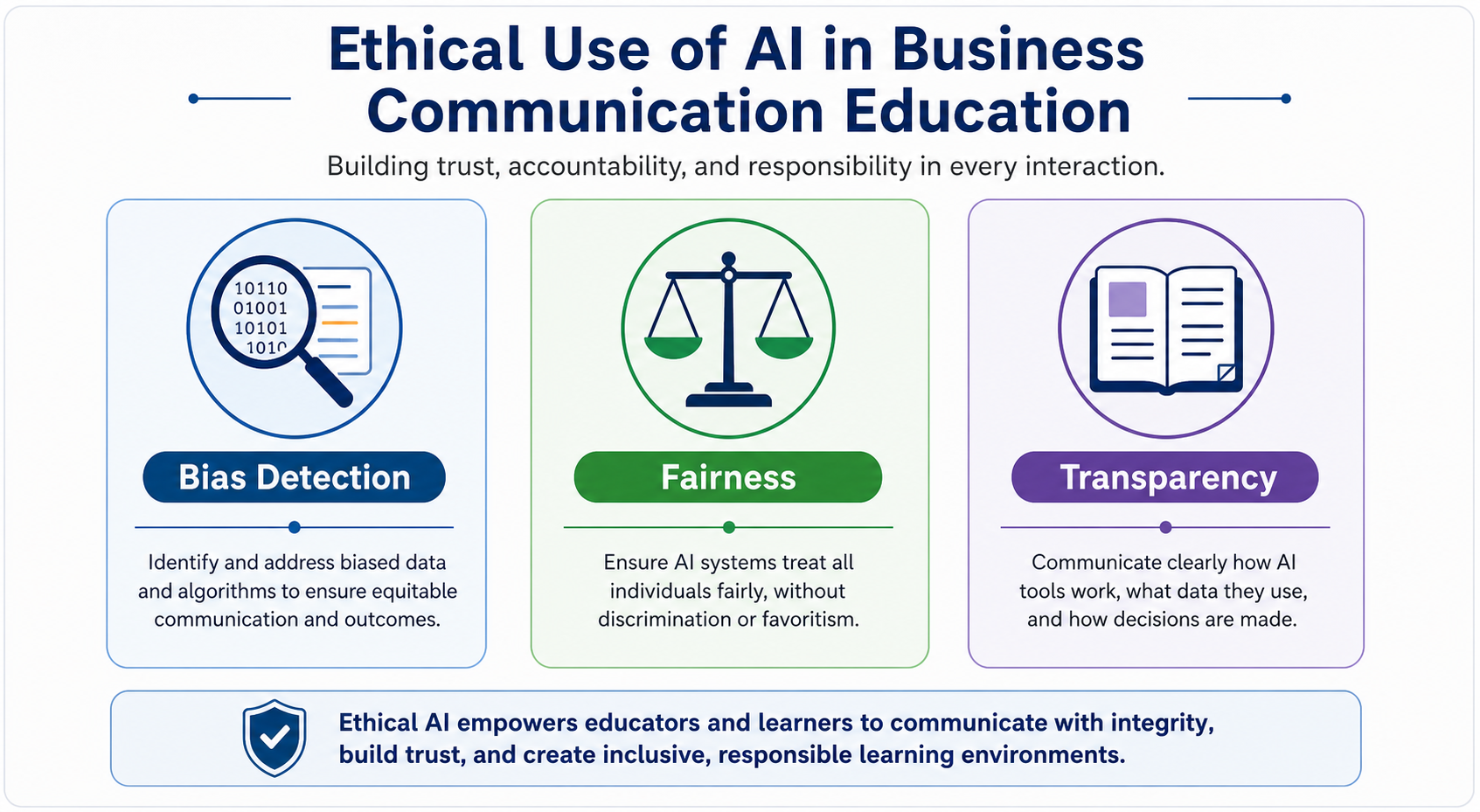
Educators must highlight the significance of data privacy and teach best practices for secure data handling and protection.
Practical Classroom Applications
Incorporating AI into practical classroom scenarios enhances hands-on learning:
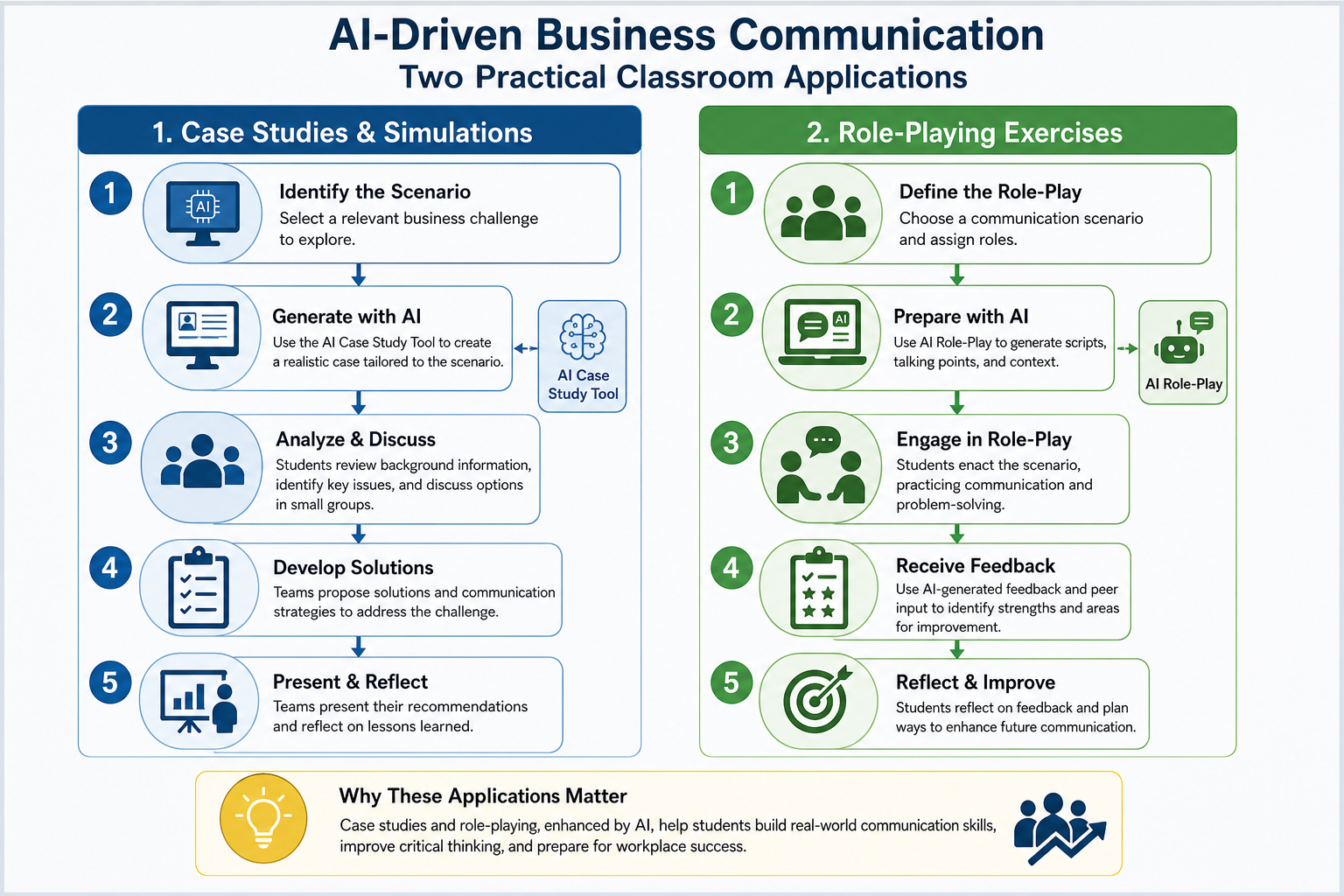
1. Case Studies and SimulationsReal-world case studies and simulations using AI tools allow students to apply theoretical knowledge to practical situations.
2. Role-Playing and Interactive ExercisesEngage students through role-playing exercises that simulate business communication scenarios enhanced by AI technology.
Key Takeaways
- AI integration in education requires a balance of technological proficiency and ethical understanding.
- Instructors play a critical role in fostering AI literacy and preparing students for AI-enhanced careers.
- Practical applications such as case studies and role-playing are effective for hands-on learning.
Glossary of Key Terms
AI Literacy: The ability to understand and use AI tools effectively.
Data Privacy: Protecting personal data from unauthorized access.
Ethical AI: Artificial intelligence developed and used following ethical guidelines.
Predictive Analytics: AI applications that predict future trends based on data analysis.
Adaptive Learning: A learning approach that modifies the educational experience based on individual progress.
Related Questions
- How can educators assess AI literacy among students?
- What are the best tools for teaching AI ethics?
- How can AI tools enhance student engagement in business communication courses?
- What challenges do instructors face when integrating AI into the curriculum?
- How does MyLab Business Communication support AI-driven education?
References
Bovee, C. L., & Thill, J. V. (2026). Business Communication Today (16th ed.). Pearson.
Jones, A., & Smith, L. (2023). The impact of AI in educational settings. Journal of Educational Technology, 12(3), 245-260. https://doi.org/10.1016/j.jedt.2023.03.015
Williams, R. (2022). Understanding biases in AI. AI and Ethics Journal, 5(2), 13-25. https://doi.org/10.1007/s43681-021-00087-w
Anderson, T. (2021). Adaptive learning technologies in higher education. International Journal of Higher Education, 10(5), 45-60. https://doi.org/10.5430/ijhe.v10n5p45
© 2026 Business Communication Teaching and Learning Center. All rights reserved.