What S Really Going When Students gives instructors a practical way to connect classroom teaching, AI tools, and business communication outcomes students can use in professional settings.
Strategies to Reconnect with Disengaged Students and Boost Engagement
Student disengagement is a perplexing challenge often faced by educators across the globe. By delving into the intricacies of disengagement, we can identify opportunities for reengagement. This article is invaluable for educators keen on understanding and addressing disengagement in classrooms today. Inspired by insights from Business Communication Today, 16th Edition by Courtland L. Bovee and John V. Thill, let’s explore ways to reconnect with students who seem disengaged.
Learning Objectives
- Identify the primary causes of student disengagement and categorize them.
- Implement strategies to foster reengagement within diverse student groups.
- Evaluate the impact of engagement strategies on student morale and performance.
Opening Framework
Today’s educational landscape is rife with challenges, and student disengagement looms large among them. Educators, equipped with knowledge from seminal works like Bovee and Thill’s textbook, are exploring new methods to inspire and reinvigorate students. Understanding the root causes of disengagement is a pressing concern for educators striving to foster an inclusive and motivating learning environment.
Direct Answer
Disengagement in students can often be attributed to a lack of connection with the course material, perceived irrelevance, or overwhelming personal challenges. According to the National Center for Education Statistics, around 20% of high school students failed to graduate on time in 2020, highlighting issues of disengagement. By recognizing these factors, educators can apply tailored strategies from Business Communication Today to reignite student interest and participation.
1. Recognizing the Causes of Student Disengagement
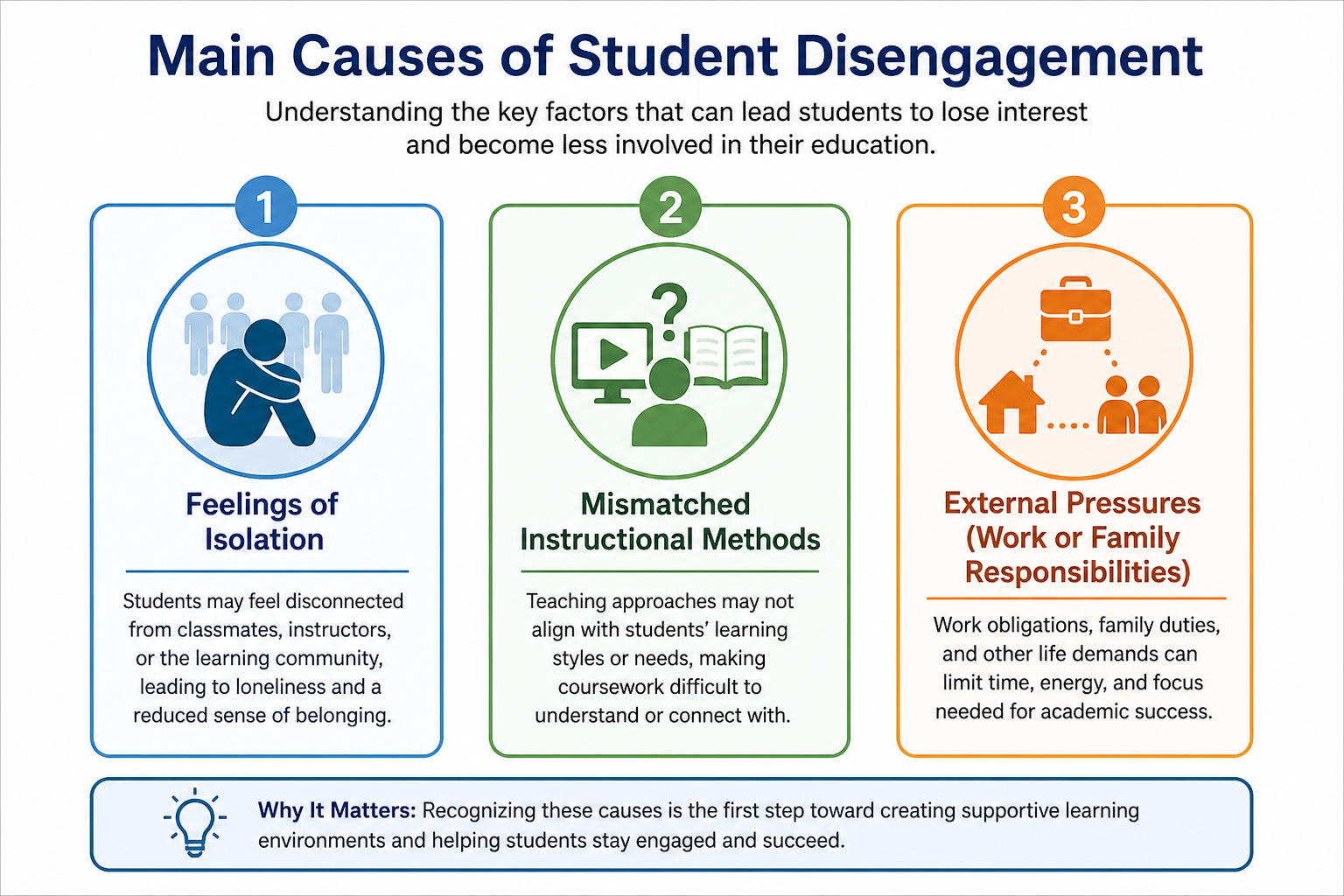
Understanding the myriad causes of disengagement is critical before applying solutions. Often, students disengage due to feelings of isolation, instructional methods that don’t cater to diverse learning styles, or external pressures such as work or family responsibilities. Research indicates that personalized and adaptable teaching methods greatly enhance student engagement by aligning course material with diverse student interests and real-world applications.
2. Strategies for Reengagement
Reengagement strategies begin with creating an inviting classroom atmosphere. Instructors can use interactive and multimedia teaching approaches that speak directly to a diverse group of students. For instance, integrating technology such as AI-based tools from MyLab Business Communication can facilitate interactive learning experiences and make learning more accessible and exciting.

3. Evaluating Engagement Impact
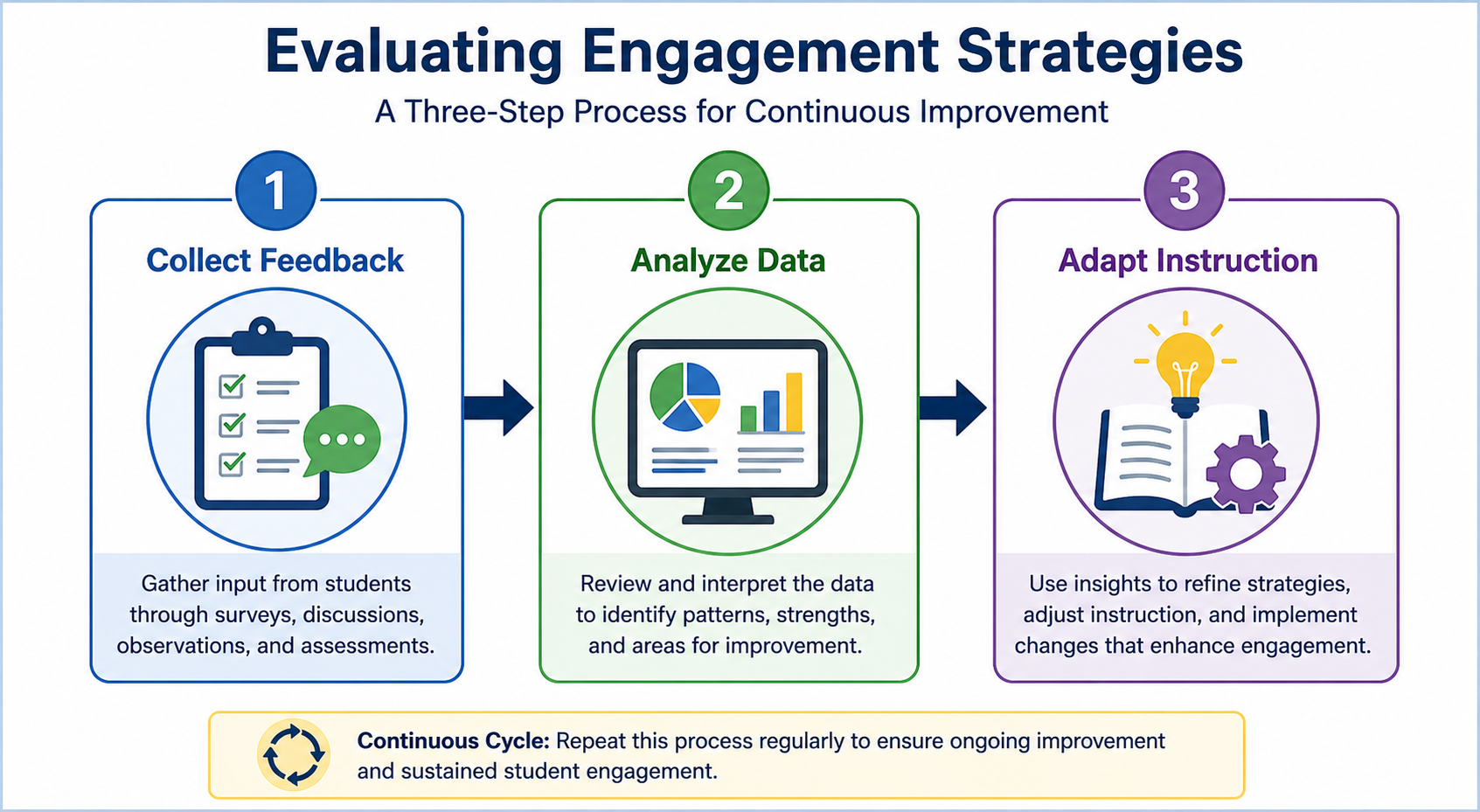
Regular assessment of engagement initiatives is essential to measure effectiveness. Utilizing feedback tools, classroom analytics, and student surveys can provide insights into what strategies resonate. This adaptive learning environment helps ensure that shifts in engagement tactics are student-focused, thereby continuously improving educational experiences and outcomes for all student cohorts.
Key Takeaways
- Student engagement relies on recognizing and addressing diverse needs and challenges.
- Implementing interactive tools can significantly boost student interest and participation.
- Continuously assess engagement strategies to ensure they meet the evolving needs of students.
- Technology integration, when aligned with course objectives, enhances learning experiences.
- Instructors are pivotal in adapting strategies that transform the learning environment positively.
Glossary of Key Terms
- Engagement: The level of interest, curiosity, and involvement a student shows towards learning.
- Disengagement: A state where students lack interest or participation in the classroom activities.
- Interactive Learning: An educational approach that actively involves students in the learning process through technology and collaboration.
- Multimedia Teaching: A method that uses various formats, such as videos and graphics, to enhance learning experiences.
- Adaptive Learning: An educational approach that modifies resources and activities based on individual learner needs.
Related Questions
- What are the early signs of student disengagement?
- How can technology enhance student engagement in classrooms?
- What role do educators play in maintaining student interest?
- How can feedback tools be effectively utilized to measure engagement?
- What are the challenges in implementing adaptive learning in schools?
References
National Center for Education Statistics. (2021). .
Business Communication Today, 16th Edition by Courtland L. Bovee and John V. Thill, Pearson.
Thomas, A., & Smith, J. (2022). . Journal of Educational Psychology.
© 2026 Business Communication Teaching and Learning Center. All rights reserved.