 Business Communication Teaching and Learning Center
Tuesday, July 28, 2026
Business Communication Teaching and Learning Center
Tuesday, July 28, 2026
Curriculum Ethics

Figure 74.1 Integration of revisions strengthens final communication.
CLUSTER 74 — LANDING PAGE
Teaching Integration of Revisions in AI-Assisted Writing
Introduction
Revision is not simply editing—it is integration of feedback, judgment, and purpose. AI-assisted writing improves when students learn to synthesize changes into a cohesive final message.
Instructional Focus
Students practice integrating revisions holistically rather than patching isolated issues.

Figure 74.2 Integrated revisions improve clarity and effectiveness.
Effective revision requires students to step back and evaluate how individual changes interact across the entire message. Rather than layering corrections on top of one another, students must ensure revisions work together to reinforce purpose, tone, and audience expectations.
When AI-assisted edits are integrated thoughtfully, the final message reads as intentional and coherent—not mechanically improved. This shift from fixing parts to shaping the whole is what distinguishes professional-quality communication.
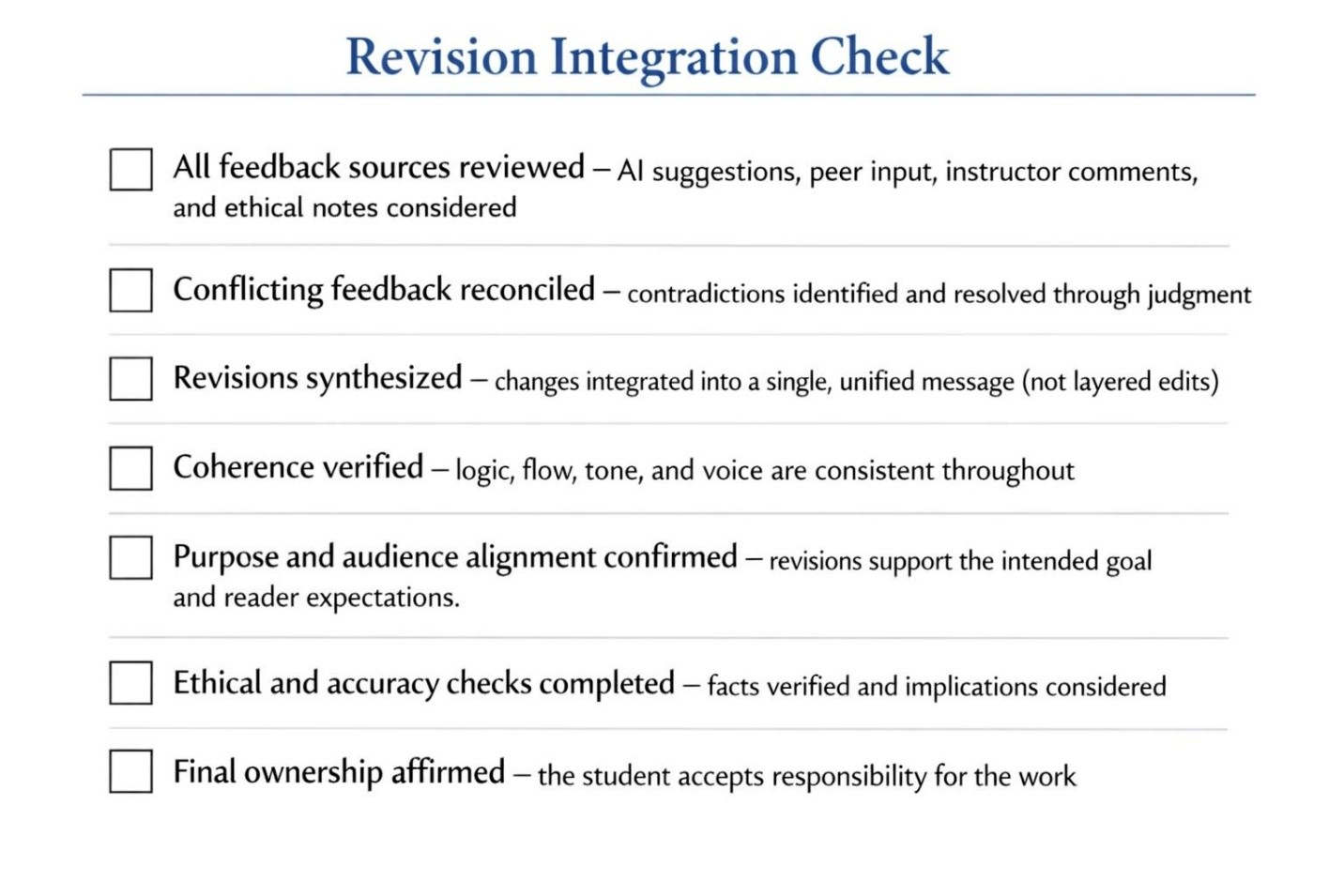
Figure 74.3 Integrated revision produces professional-quality messages.
Key Takeaway
Strong communication reflects integrated revision, not isolated fixes.
Instructor FAQs
(Collapsible / Accordion Block)
Why do students struggle with integration?
Because they treat feedback as individual fixes rather than a cohesive improvement.
How can instructors assess integration?
Evaluate coherence and alignment in the final message.
Effective revision requires students to step back and evaluate how individual changes interact across the entire message. Rather than layering corrections on top of one another, students must ensure revisions work together to reinforce purpose, tone, and audience expectations.
When AI-assisted edits are integrated thoughtfully, the final message reads as intentional and coherent—not mechanically improved. This shift from fixing parts to shaping the whole is what distinguishes professional-quality communication.
Instructor FAQs
Why do students struggle to integrate revisions?
Students often treat feedback as isolated fixes rather than cohesive improvement.
How can instructors assess revision integration?
By evaluating coherence, alignment, and overall improvement in the final message.