 Business Communication Teaching and Learning Center
Monday, September 14, 2026
Business Communication Teaching and Learning Center
Monday, September 14, 2026
Student Apathy

Figure 59.1 Course redesign requires intentional integration of AI, not superficial add-ons.
________________________________________
CLUSTER 59 — LANDING PAGE
Course Redesign — Transforming Your Business Communication Course for AI
Introduction
AI does not require a new chapter. It requires a new structure.
Many instructors begin by adding AI discussions, policies, or assignments. But over time, it becomes clear that AI affects planning, drafting, revision, assessment, feedback, ethics, collaboration, and transfer. At that point, incremental adaptation is no longer sufficient. The course itself must be intentionally redesigned.
Cluster 59 helps instructors move from surface integration to architectural transformation.
________________________________________
Instructional Focus
Course redesign begins with sequencing. Where does AI first appear? When do students learn evaluation and judgment? How does assessment evolve? Redesign asks whether AI is embedded across the learning arc—or isolated in a single unit.
Effective redesign ensures that AI use progresses from introduction to evaluation, from tool awareness to accountability, and from structured practice to transfer.
________________________________________
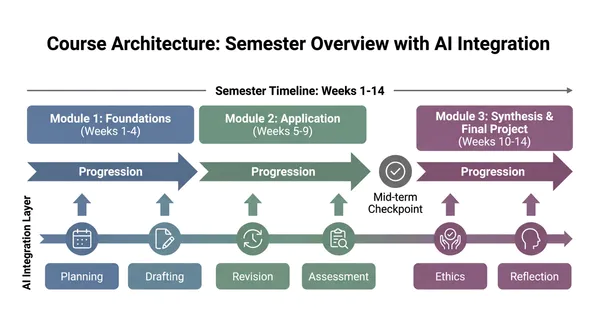
Figure 59.2 AI integration must span the entire course architecture.
________________________________________
Why Redesign Matters
If AI instruction appears only in isolated assignments, students perceive it as optional or peripheral. When AI is embedded across planning, writing, feedback, ethics, and evaluation, students experience it as foundational.
Redesign clarifies expectations, reinforces accountability, and aligns learning outcomes with modern professional realities. It also prevents confusion by establishing consistent policies and structured review checkpoints throughout the course.
Course redesign is not about increasing workload—it is about increasing coherence.
________________________________________
📸 INSERT FIGURE 59.3 — Implementation Checklist
Image Prompt
Checklist titled “AI Course Redesign Audit” with items such as AI integration mapped across modules, assessment criteria updated, ethics embedded, reflection included, and accountability checkpoints defined. Clean academic checklist style.
Figure 59.3 A redesign audit ensures intentional, not accidental, AI integration.
Alt Text
Checklist for auditing AI integration in a redesigned business communication course.
Image Name
figure-59-3-ai-course-redesign-audit
________________________________________
Key Takeaway
Adding AI is adaptation. Redesigning for AI is transformation.
________________________________________
Instructor FAQs
(Collapsible / Accordion Block)
How do I know if my course needs redesign rather than minor updates?
If AI affects multiple assignments, policies, and assessment strategies, incremental adjustments may create inconsistency. Redesign ensures coherence and clarity.
Will redesign increase my workload?
Initially, yes. Long term, redesign improves alignment and reduces confusion, making instruction more efficient and sustainable.
Cluster 59 now functions as the architectural pivot in your system—bridging accreditation and real-world alignment into generational change and instructional transformation.
If you’d like next, I can:
• Strengthen this with a more emotionally compelling tone
• Tighten for GEO/LLM retrieval phrasing
• Or perform a structural audit on 57–64 to ensure perfect narrative flow
Instructor FAQs
How do I know if my course needs redesign rather than minor AI updates?
If AI influences planning, drafting, assessment, and ethics across multiple assignments, a structured redesign improves coherence and clarity.
Will redesigning my course for AI increase my workload?
Redesign may require initial effort, but it improves alignment and reduces long-term confusion or inefficiency.