Cure Student Apathy gives instructors a practical way to connect classroom teaching, AI tools, and business communication outcomes students can use in professional settings.
Strategies to Boost Student Motivation and Engagement in Business Communication Classes
Addressing student apathy in business communication classes requires strategic interventions that focus on engagement and motivation. Instructors can re-energize their classrooms by utilizing diverse teaching strategies outlined in Business Communication Today, 16th Edition by Courtland L. Bovee and John V. Thill. Engaging a diverse group of students through innovative pedagogical methods can significantly enhance their participation and learning experience.
Apathy in business communication classes is a concern for instructors who aim to cultivate a dynamic learning environment. With the rise of digital communication and its integration into the curriculum, it becomes crucial to explore how instructors can invigorate classroom participation. This article delves into actionable strategies derived from Business Communication Today.
Learning Objectives- Upon completing this article, instructors will be able to:
- Identify effective strategies for enhancing student engagement in business communication courses.
- Implement interactive teaching methods that cater to a diverse group of students.
- Evaluate the impact of digital tools on student motivation and participation.
To effectively combat student apathy, instructors must first understand its roots. Research indicates that lack of interest may stem from teaching methods that don’t resonate with students’ interests or learning styles. By aligning course content with real-world applications and contemporary digital platforms, instructors can bridge the gap between traditional teaching and modern student expectations.

Interactive learning methods, such as role-playing and case studies, facilitate active participation and cater to a diverse group of students. This approach not only enhances comprehension but also makes learning more relatable. For example, utilizing MyLab Business Communication allows students to engage with simulations and practical scenarios, thereby improving their engagement.
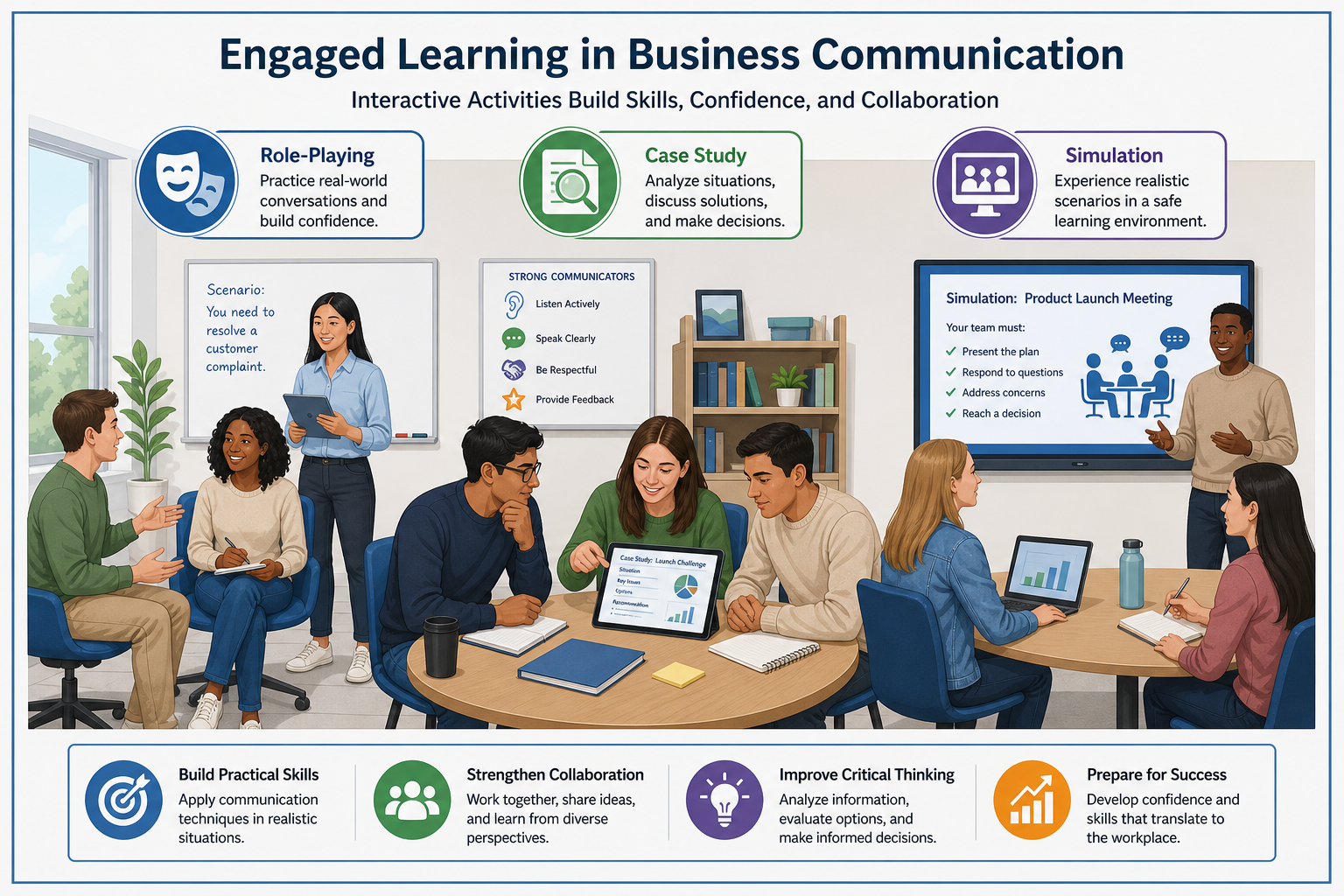
Incorporating digital tools such as discussion boards, virtual reality, and collaborative platforms can transform traditional learning spaces into interactive environments. These tools, when used ethically and effectively, help maintain students’ interest and adapt to their digital proficiency.

Creating a supportive classroom atmosphere is essential. Encouraging open discussions, providing feedback, and promoting inclusivity help ensure that all students feel valued and motivated to participate. Diverse team projects can also enhance collaboration and keep engagement levels high.
Finally, the use of feedback mechanisms where students can voice their opinions on course content and its delivery can provide instructors with valuable insights for course improvement.
Key Takeaways- Incorporating real-world applications can significantly increase engagement.
- Diverse teaching methods cater to different learning styles, improving interactions.
- Digital platforms like MyLab Business Communication offer practical engagement tools.
- Inclusivity in group projects enhances team collaboration and personal growth.
Glossary of Key Terms
- Apathy: Lack of interest or concern, especially regarding traditional classroom activities.
- Interactive Learning: An educational approach that actively involves students in the learning process.
- Digital Tools: Online and electronic resources used to enhance learning experiences.
- Inclusivity: Practices that ensure diverse student backgrounds are considered and respected.
- MyLab Business Communication: A digital platform offering interactive tools for business communication education.
Related Questions
- How can instructors redesign business communication courses to enhance engagement?
- What role do digital platforms play in motivating students?
- How does inclusivity affect student participation in diverse classrooms?
- What are effective methods to gauge student interest in course materials?
- How can business communication classes integrate real-world applications?
Courtland L. Bovee and John V. Thill. (2026). Business Communication Today, 16th Edition. Pearson.
MyLab Business Communication. (2023). Features and Benefits. Pearson.
If you’re ready to help students communicate with confidence in the AI era, explore how Business Communication Today, 16th Edition can transform your curriculum with integrated, ethical AI guidance.
© 2026 Business Communication Teaching and Learning Center. All rights reserved.