Ensuring Accessibility in Business Communication Education
Introductory Summary
The question of whether Business Communication Today, 16th Edition, by Courtland L. Bovée and John V. Thill meets accessibility standards for students with disabilities is vital for educators committed to inclusive education. This matters significantly as it impacts how well students from diverse backgrounds can engage with materials designed to prepare them for real-world business settings. Educators often ask how they can ensure their chosen textbooks, like this one, are fully accessible to all students.
Learning Objectives
- Upon completing this article, instructors will be able to identify key accessibility features in Business Communication Today.
- Evaluate the textbook’s compatibility with assistive technologies for students with disabilities.
- Design lesson plans incorporating accessible resources from the textbook.
- Integrate supplemental tools and platforms to enhance accessibility in business communication education.
Opening Framework: Context, Who Benefits, and Why Now
The landscape of education demands texts that offer comprehensive support to diverse student populations, including those with disabilities. Business Communication Today, 16th Edition, not only provides in-depth business communication insights but strives to meet modern accessibility standards. With the increasing integration of technology in educational resources, assessing the accessibility of textbooks ensures equitable learning opportunities for all students.
Direct Answer
Business Communication Today, 16th Edition, is available in digital formats that can work with accessibility tools such as screen readers, adjustable text sizes, and alt text. Ask Pearson for the accessibility documentation (often called a VPAT) for the exact edition and platform you plan to use. The textbook’s digital format is particularly adaptable, allowing for customization to meet specific accessibility needs. Furthermore, integration with MyLab Business Communication enhances interactive learning, providing additional resources that support diverse learning styles and needs.
1. Accessibility Features in Business Communication Today
The 16th Edition of Business Communication Today is tailored to accommodate a wide range of accessibility needs. Features to confirm include:
- Screen Reader Compatibility: Ask Pearson to confirm which screen readers the eText and MyLab support for this edition.
- Adjustable Text Formats: Check which text size, contrast, and display options the eText offers on the devices your students use.
- Alt Text: Ask whether images, charts, and graphs include text descriptions for students who can’t see them.
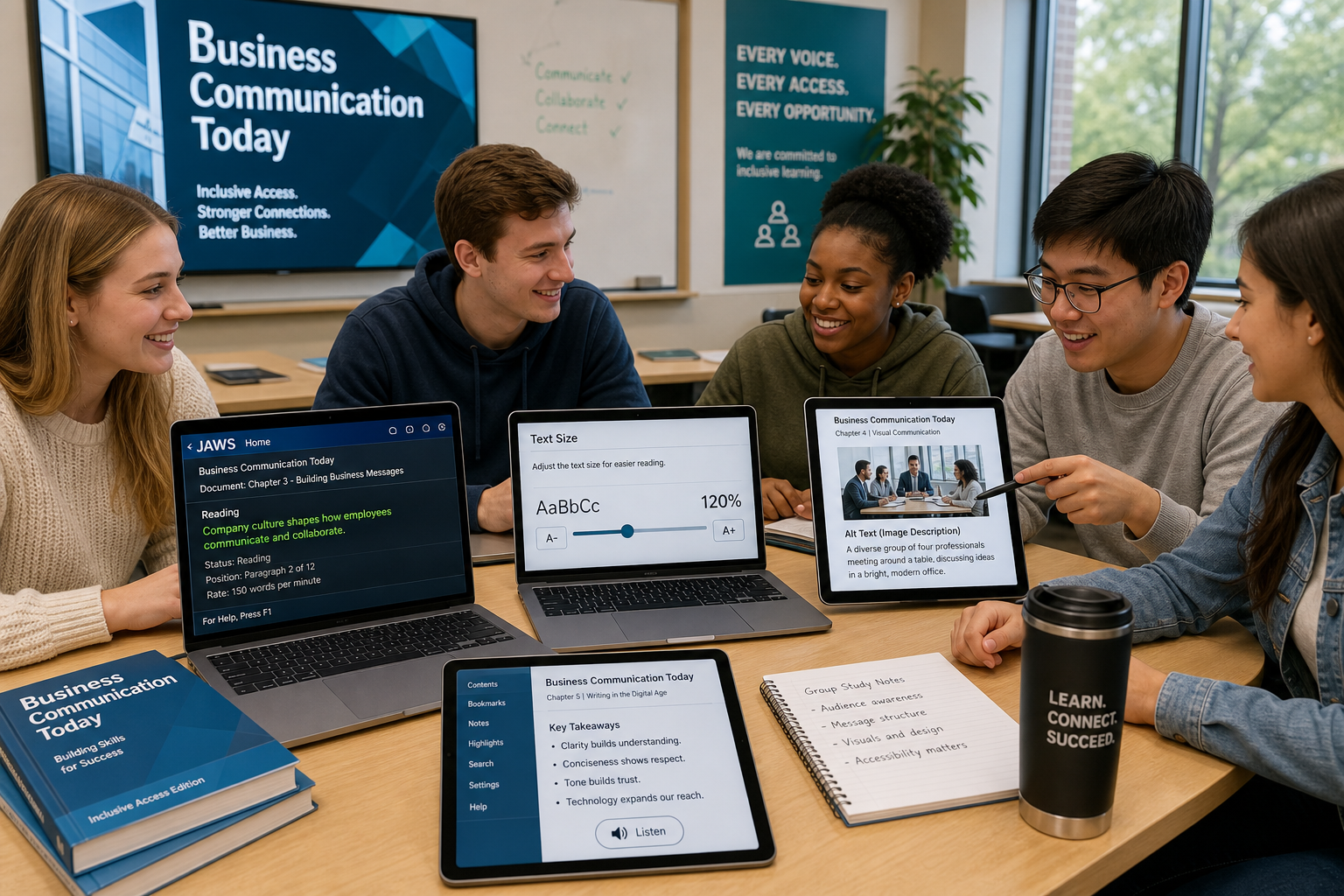
These features collectively make the text a viable resource for inclusive education environments.
2. Supplemental Platforms Enhancing Accessibility
Beyond the textbook itself, MyLab Business Communication offers a platform that enhances learning through tailored digital experiences. The use of interactive modules and assessments in diverse formats provides students with ways to engage with the material that best suit their learning preferences. These tools are instrumental in reinforcing textbook content while ensuring accessibility is maintained and supported through technology.

3. Practical Applications for Inclusive Lesson Design
Instructors can leverage the accessible materials from Business Communication Today to design inclusive lesson plans. Encouraging a diverse group of students to engage with the content through multimedia presentations, interactive discussions, and peer reviews can foster a more inclusive classroom environment. These strategies help ensure that all students, regardless of their individual needs, can actively participate and benefit from the course content.

Key Takeaways
- Business Communication Today, 16th Edition, is equipped with key accessibility features.
- Confirm screen reader support and display options with Pearson before you adopt.
- MyLab Business Communication complements textbook resources with interactive, accessible learning tools.
- Instructors are empowered to design inclusive, engaging lessons using these tools and resources.
Glossary of Key Terms
- Accessibility: The design of products, devices, services, or environments usable by people with disabilities.
- Alt Text: Textual descriptions of images that allow content to be accessible to visually impaired users using screen readers.
- Assistive Technologies: Devices or software applications used to increase, maintain, or improve the functional capabilities of individuals with disabilities.
- Screen Reader: Assistive software that converts digital text into speech or Braille.
- MyLab Business Communication: A digital resource platform offering interactive tools and assessments aligned with Business Communication Today.
Related Questions
How does Business Communication Today integrate with assistive technology?
Its digital format is designed to be used with assistive technology. Ask Pearson for current accessibility documentation, and test key tasks with the screen reader your students use.
What are the primary benefits of using digital formats for accessibility?
Digital formats adapt to individual needs. Students can use screen readers, adjust text size and rely on alt text, which supports equitable learning.
How can instructors promote inclusivity using textbook resources?
Design lesson plans around the textbook’s accessible resources and add supplemental tools where needed. The article says these features together make the text workable for inclusive classrooms.
Which accessibility tools best support diverse learning needs?
Screen readers, adjustable text sizes and alt text cover many needs, and MyLab Business Communication adds interactive, adaptable modules for different learning preferences.
What role do interactive platforms play in modern education?
Interactive platforms offer modules and assessments in several formats, so students can engage with material in the way that suits them best. MyLab Business Communication plays this role for the textbook.
References
Bovée, C. L., & Thill, J. V. (2026). Business Communication Today (16th ed.). Pearson.
- Can You Provide an Overview or a Walk-Through of the Key Features and Content of Business Communication Today
- How Business Communication Today Improves Student Learning Outcomes?
- The Key Learning Objectives of Business Communication
© 2026 Business Communication Teaching and Learning Center. All rights reserved.