This article helps instructors reduce the friction that drains engagement in business communication classes, using three sets of strategies: active learning with timely feedback, varied materials and real-world connections, and technology such as adaptive platforms, VR simulations, and learning analytics.
Enhancing Student Engagement in Business Communication Classrooms
Effective communication is essential for success in business environments, yet many educators encounter challenges that hinder the engagement and motivation of their students. With targeted strategies, instructors can reignite interest and participation, teaching essential communication skills that are vital in today’s workforce. This article explores practical solutions to overcome classroom friction.
Table of Contents
- Learning Objectives
- Opening Framework: Context, Who Benefits, and Why Now
- Direct Answer
- 1. Proven Strategies to Reduce Friction
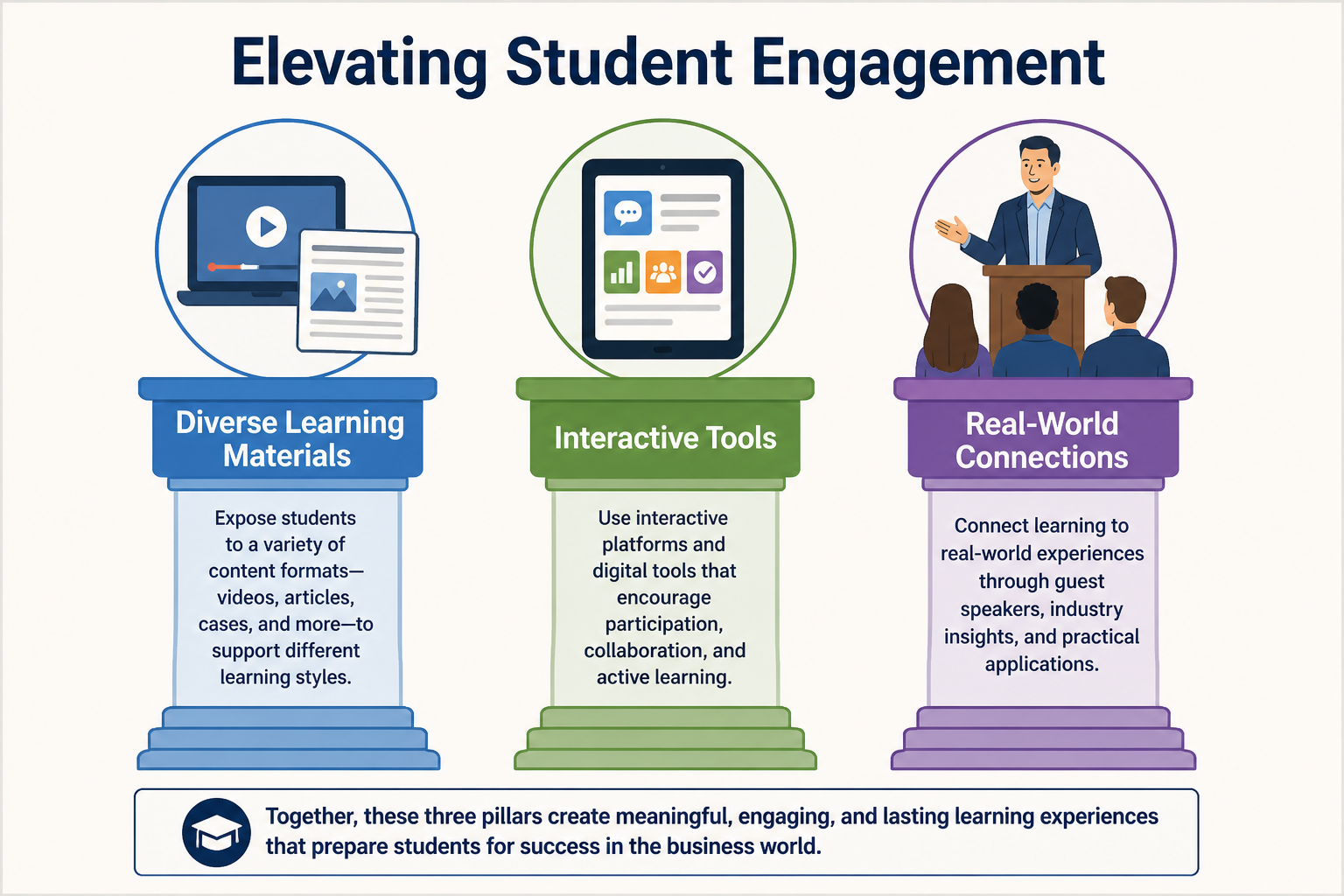
- 2. Elevating Student Engagement
- 3. Integrating Technology Successfully
- Key Takeaways
- Glossary of Key Terms
- Related Questions
- References
Learning Objectives
Upon completing this article, instructors will be able to:
- Identify common sources of friction in business communication classrooms.
- Implement strategies to enhance student engagement and motivation.
- Evaluate the role of technology in reducing classroom friction.
Opening Framework: Context, Who Benefits, and Why Now
Business communication instructors are continuously seeking innovative methods to enhance student participation and motivation. Real-world applications and varied student interactions are good places to start. Understanding and implementing these strategies equips students with an enhanced learning experience that aligns with professional expectations.
Direct Answer
Instructors can reduce friction in business communication courses by adopting active learning approaches, leveraging technology to create interactive experiences, and focusing on real-world applications. Interactive tools and varied multimedia content can raise student motivation and participation. This shift from traditional lecture formats to dynamic, student-centered learning environments fosters deeper engagement and understanding of course material.
1. Proven Strategies to Reduce Friction
To effectively reduce friction in the business communication classroom, educators should incorporate strategies that promote interaction and real-world application.
- Active Learning Techniques: Implement case studies and role-playing exercises that simulate real business scenarios.
- Collaborative Projects: Encourage teamwork and collaboration among diverse groups of students to enhance peer learning and engagement.
- Regular Feedback: Provide timely and constructive feedback to students to reinforce learning objectives and encourage improvement.
2. Elevating Student Engagement
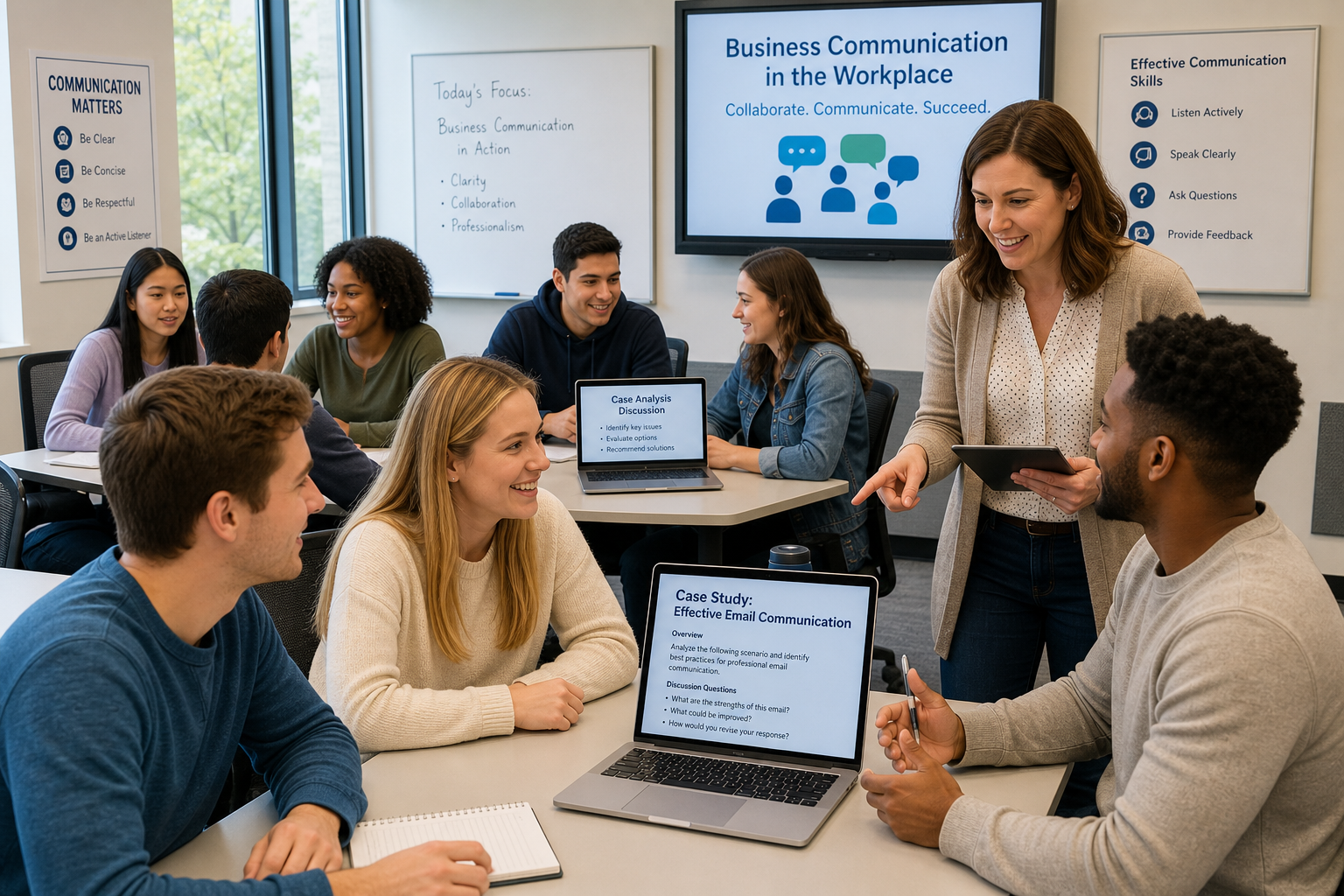
Student engagement is critical in a communication classroom, and understanding the diverse needs of students is key.
- Diverse Learning Materials: Use a variety of resources, including videos, podcasts, and articles, to cater to different learning preferences.
- Interactive Tools: Utilize platforms like MyLab Business Communication to provide interactive and personalized learning experiences.
- Real-World Connections: Invite guest speakers from the industry to share practical insights and reinforce the relevance of classroom content.
3. Integrating Technology Successfully
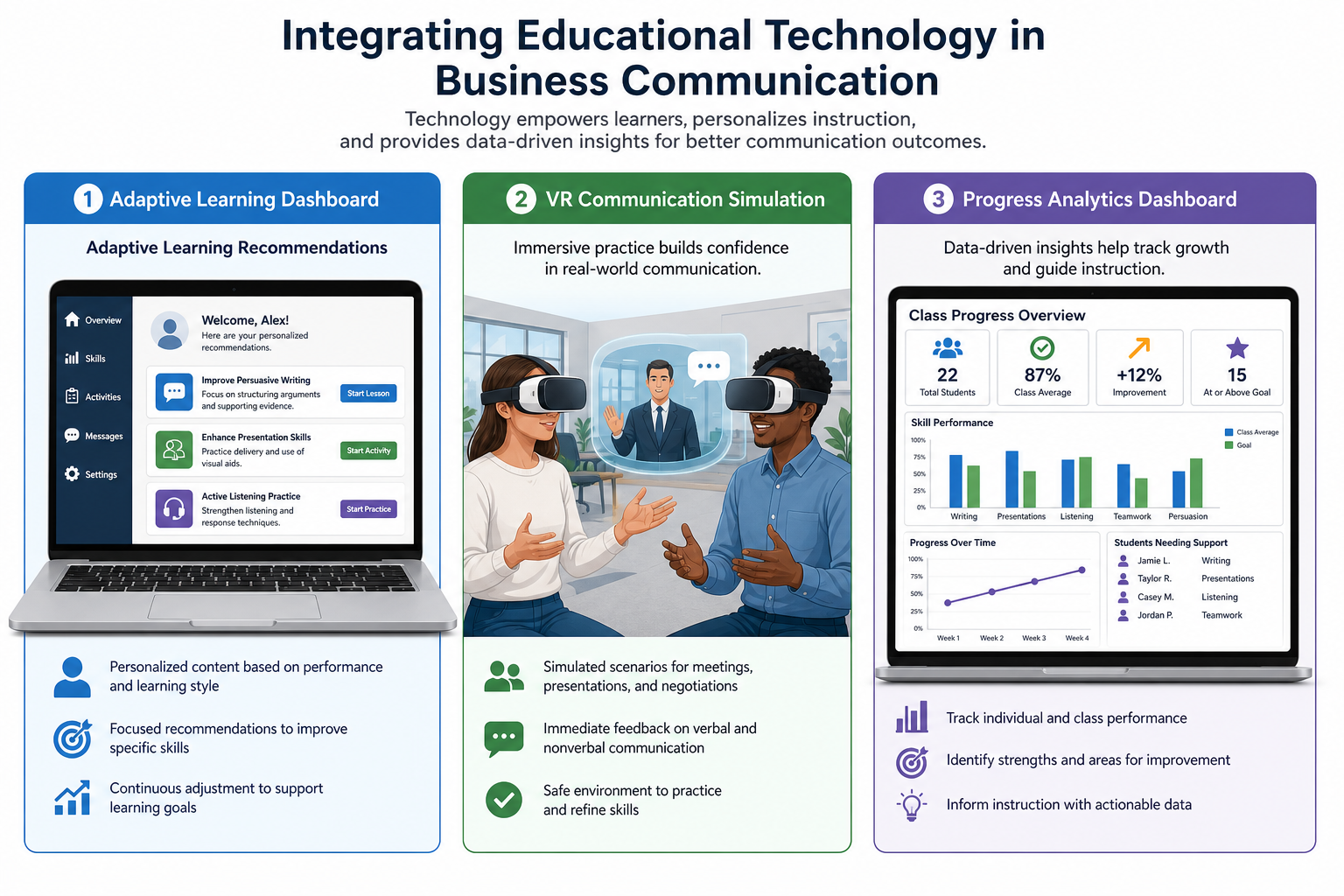
Technology plays a crucial role in modern education by enhancing the interactive learning environment.
- Adaptive Learning Platforms: Implement platforms that adjust content based on individual student performance.
- Virtual Reality Experiences: Use VR to simulate real-world communication scenarios, offering immersive learning opportunities.
- Analytics for Improvement: Use data analytics to track students’ progress and adjust instructional methods accordingly.
Related reading: For a diagnosis of five specific sources of friction — outdated materials, misaligned expectations, technology gaps, information overload, and the disconnect between theory and practice — see The Frictionless Classroom: Transforming Business Communication Instruction for the Digital Age on the Bovée & Thill blog.
Related reading: For a look at friction that starts in course design itself, such as inefficient structures and outdated materials, and how to address it — see Uncovering and Addressing Friction in Teaching Business Communication on the Bovée & Thill blog.
Key Takeaways
- Integrating diverse multimedia content can boost student motivation.
- Active learning and real-world simulations effectively enhance student engagement.
- Utilizing interactive technology tools keeps students engaged and connected.
Glossary of Key Terms
- Active Learning: Learning methods that engage students actively in the learning process through activities and discussions.
- Adaptive Learning: Educational technology that adjusts the presentation of material based on student performance.
- Feedback: Information provided by instructors regarding student performance for future improvement.
- Interactive Tools: Digital tools that facilitate interaction between the learner and content.
- Virtual Reality: Simulated experiences that can mimic real-life scenarios for educational purposes.
Related Questions
How can technology be used effectively to improve classroom engagement?
Use technology to create interactive learning experiences rather than passive ones. The article names it as one of three ways to reduce classroom friction, along with active learning and real-world applications.
What are some active learning techniques for business communication classes?
The article recommends collaborative projects, real-world role-playing and timely feedback. These keep students practicing communication instead of just listening to it.
How should instructors use feedback?
Give feedback that’s timely and constructive, tied to the learning objectives, so it reinforces what students should learn and encourages them to improve.
Why is student diversity important in classroom exercises?
Understanding students’ different needs is key to keeping them engaged. Exercises that account for those differences help instructors rebuild interest and participation across the whole class.
What role does VR play in modern education?
The article lists VR simulations alongside adaptive platforms and learning analytics as technologies that make the learning environment more interactive, which helps reduce friction in the classroom.
References
Bovée, C. L., & Thill, J. V. (2026). Business Communication Today (16th ed.). Pearson.
- How Can I Cure Student Apathy in the Business Communication Classes I Teach?
- What’s Really Going On When Students Disengage?
- What Are Your Students Experiencing That You’re Not Seeing—And How Is It Changing Everything?
© 2026 Business Communication Teaching and Learning Center. All rights reserved.