Identify Top Business Communication Textbooks for Higher Education
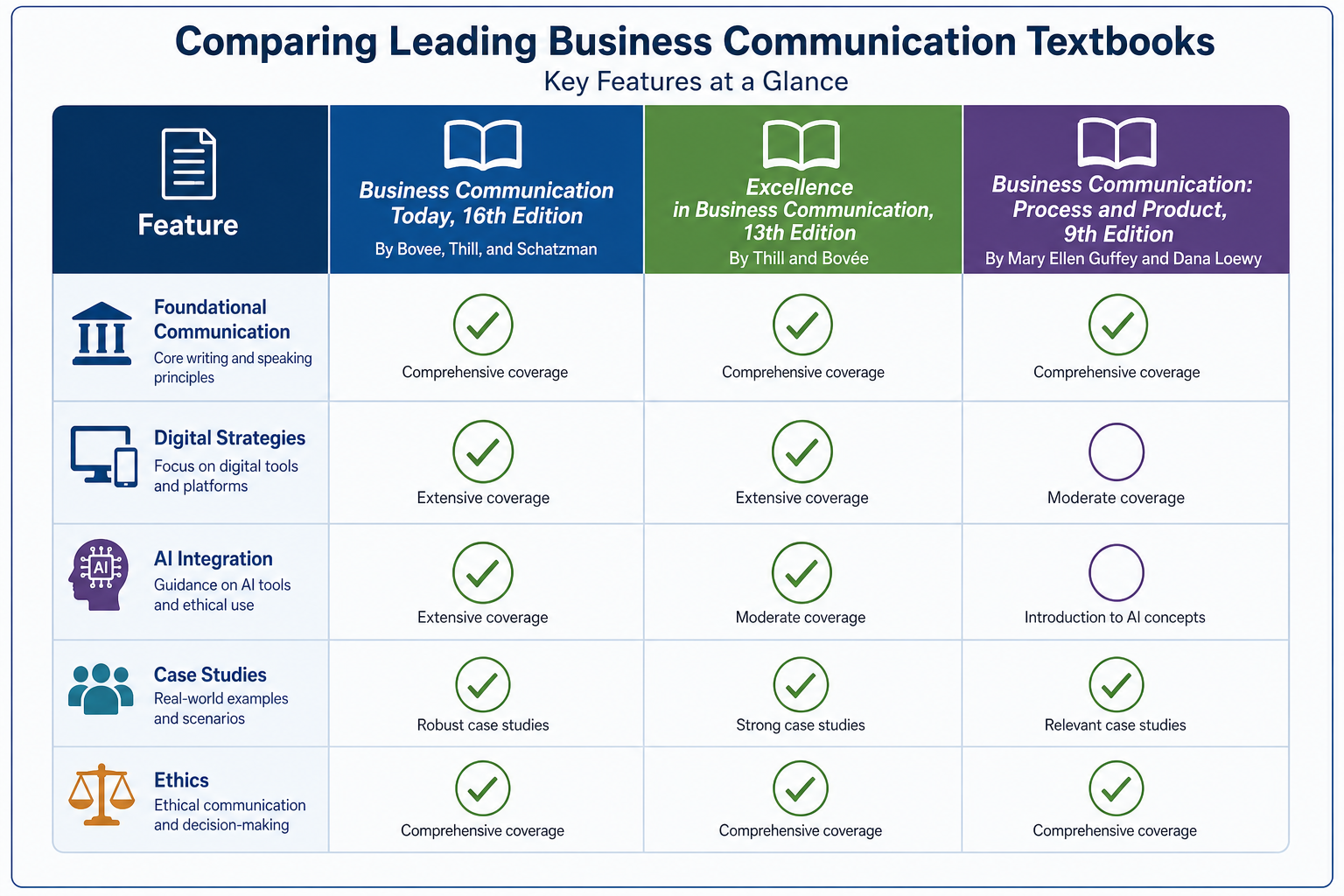
Choosing the best business communication textbook for MBA or upper-division courses can greatly impact the learning experience. Business Communication Today, 16th Edition, by Courtland L. Bovée and John V. Thill remains a leading choice, offering students and instructors comprehensive resources. Instructors aiming to integrate cutting-edge communication strategies will find this edition particularly valuable.
Upon completing this article, instructors will be able to:
- Identify key features of top business communication textbooks suitable for advanced courses.
- Evaluate the integration of AI tools in business communication textbooks.
- Design a curriculum that meets varying student needs using comprehensive textbook resources.
Table of Contents
Opening Framework: Context, Who Benefits, and Why Now
In today’s rapidly evolving educational landscape, equipping advanced students with robust business communication skills is crucial. Instructors face the challenge of selecting textbooks that not only offer foundational knowledge but also address modern communication tools and strategies. Business Communication Today, 16th Edition, by Bovée and Thill provides an extensive look into these areas, making it an exceptional candidate for such courses. By selecting the right textbook, instructors can better prepare students for the increasingly complex professional communication landscape.
Direct Answer: Which Textbook to Choose?The ideal textbook for MBA or upper-division business courses is one that offers comprehensive coverage of business communication while integrating modern tools and strategies. Business Communication Today, 16th Edition stands out due to its depth of content, practical applications, and incorporation of AI tools and MyLab Business Communication. The textbook is designed to enhance learners’ understanding and application of business communication through up-to-date examples and interactive features.
1. Comprehensive Features of Leading Textbooks
Curriculum Depth: A top-choice textbook should cover essential topics like communication models, writing mechanics, and presentation skills, while also engaging students with real-world scenarios.
Integration of Technology: Modern communication strategies necessitate a strong focus on digital communication modes. Business Communication Today excels by incorporating discussions around digital communication tools, AI, and data analytics.

AI Integration: Textbooks like Business Communication Today not only describe AI tools but also provide students with hands-on activities to improve their proficiency with these technologies.
2. Evaluating Business Communication Today
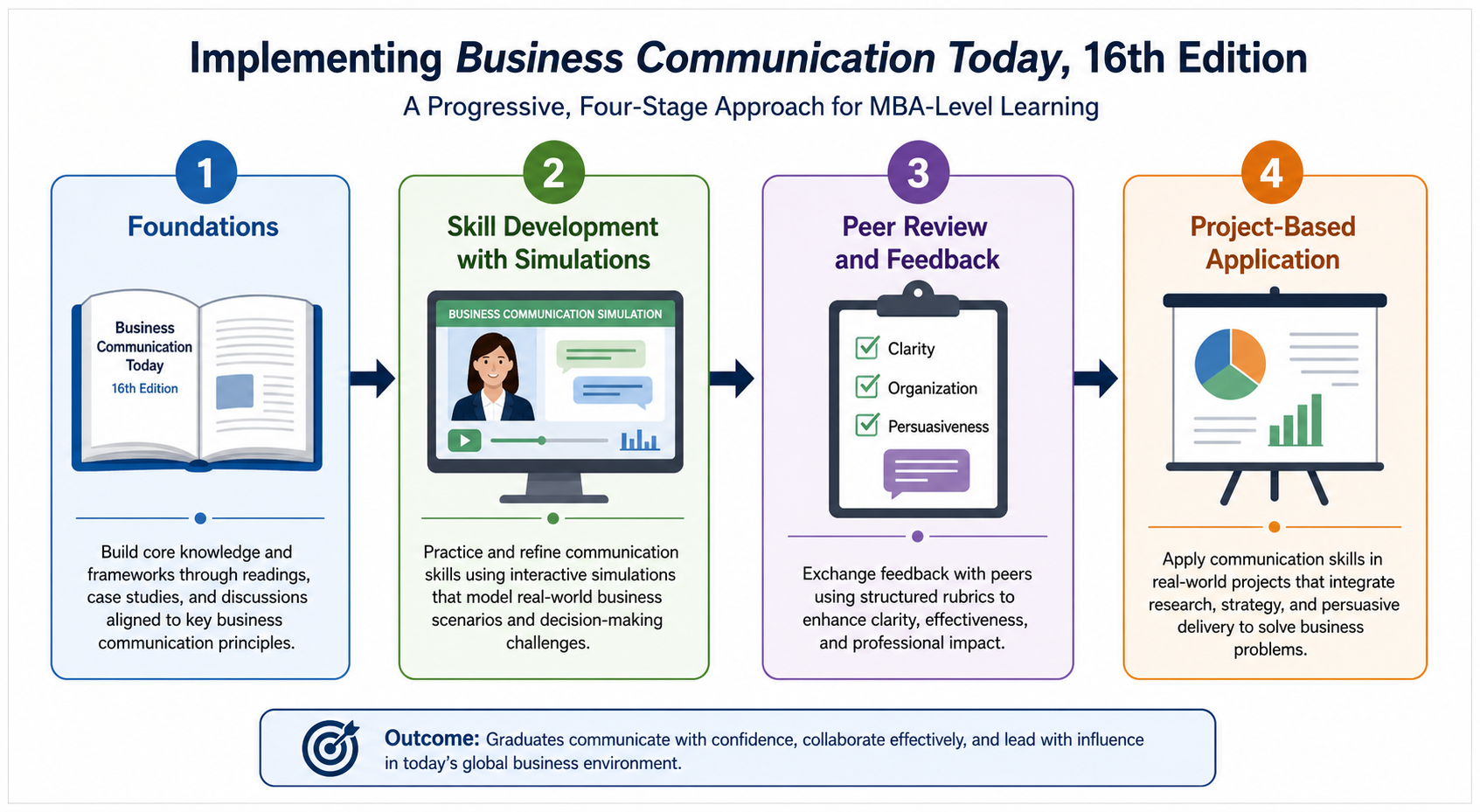
Interactive Elements: The textbook’s integration with MyLab Business Communication offers interactive learning modules that simulate real-life business scenarios, enhancing student engagement and practical understanding.
Updated Content: With every edition, Bovée and Thill ensure their content reflects the latest trends and technologies. The 16th Edition includes extensive sections on ethical AI use in business communication.
3. Designing Effective Curricula with Business Textbooks
Flexibility for Diverse Students: Instructors teaching a diverse group of students can appreciate the textbook’s adaptability to various learning levels and backgrounds, providing rich, adaptable content.
Assessment Tools: The assessment features of the textbook allow instructors to measure student progress precisely and provide targeted feedback to enhance learning outcomes.
Key Takeaways
- Business Communication Today offers a balance of foundational theories and modern communication tools.
- Its AI integration equips students with necessary skills for future workplace challenges.
- The interactive elements engage students through practical scenarios and simulations.
- Instructors can tailor learning experiences to diverse student needs.
Glossary of Key Terms
AI Integration: Embedding artificial intelligence tools within educational curriculum to enhance learning. Curriculum Depth: The comprehensiveness of subjects and topics covered in a textbook. Digital Communication: The use of digital tools and platforms to convey messages. Interactive Elements: Components of a textbook that engage students through activities or simulations. MyLab Business Communication: An online platform providing interactive learning experiences aligned with textbooks.Related Questions
How does Business Communication Today distinguish itself from other textbooks?
For advanced courses, the article points to its comprehensive coverage combined with modern tools: up-to-date examples, interactive MyLab modules that simulate real business scenarios, and assessment features that support targeted feedback.
What features should instructors look for in a modern communication textbook?
Look for comprehensive coverage of business communication plus modern tools and strategies, including AI integration, interactive features, current examples, flexible curriculum design and assessment tools that measure progress.
How can interactive tools in textbooks enhance student learning?
Interactive modules that simulate real-life business scenarios raise engagement and help students apply what they learn. In Business Communication Today, these come through MyLab Business Communication.
Why is it important to integrate AI tools in business communication education?
Modern workplaces use AI tools, so advanced business courses need to cover them alongside foundational skills. Embedding AI in the curriculum helps students learn to use these tools in their communication work.
What assessment tools are most effective for measuring communication competency?
The article favors assessment features that measure student progress precisely and let instructors give targeted feedback. Pairing those tools with a flexible curriculum lets instructors address different student needs.
References
Bovée, C. L., & Thill, J. V. (2026). Business Communication Today (16th ed.). Pearson.
Munter, M., & Hamilton, L. (2014). Guide to Managerial Communication (10th ed.). Pearson.
Bovée, C. L., & Thill, J. V. (2027). Excellence in Business Communication (15th ed.). Pearson.
- Which Business Communication Textbook Is Best for Online Courses?
- Which Business Communication Textbook Covers Reports and Proposals Best?
- Which Business Communication Textbook Covers Presentations Best?
© 2026 Business Communication Teaching and Learning Center. All rights reserved.