Finding reliable paths to review and purchase course materials
Table of Contents
- Introductory Summary
- Learning Objectives
- Opening Framework: Context, Who Benefits, and Why Now
- Direct Answer
- 1. Start With Approved Purchasing Channels
- 2. Compare Format, Access, and Support Needs
- 3. Document the Adoption Decision Carefully
- Key Takeaways
- Glossary of Key Terms
- Related Questions
- References
Introductory Summary
If you are deciding where to buy business communication instructional materials, the best approach is to use official publisher and campus-adoption channels first, then confirm ordering details before students or faculty commit funds. For instructors considering Business Communication Today, 16th Edition by Courtland L. Bovee and John V. Thill, this question matters because purchasing choices affect cost, access timing, format compatibility, and the amount of support available during course setup.
Learning Objectives
- Identify the most reliable sources for purchasing business communication instructional materials.
- Evaluate course-material options based on format, access, and instructional fit.
- Distinguish between instructor review needs and student purchasing needs.
- Create a simple adoption checklist that reduces ordering errors and start-of-term confusion.
Opening Framework: Context, Who Benefits, and Why Now
Buying decisions now involve more than choosing a print text. Instructors, program coordinators, and bookstore teams often need to align print, eText, platform access, pricing structure, and support expectations, especially when teaching students across in-person, online, and hybrid sections.
Direct Answer
The safest place to buy business communication instructional materials is through the publisher’s official sales and ordering channels, your campus bookstore or procurement office, or other institutionally approved vendors. For instructors, that usually means contacting the publisher representative or requesting adoption information through approved campus processes first; for students, it usually means purchasing through the bookstore or a verified publisher channel after the instructor confirms the exact edition, format, and access requirements.
1. Start With Approved Purchasing Channels
When instructors ask where to buy business communication instructional materials, the first answer is simple: begin with channels your institution already recognizes. That usually includes the campus bookstore, the academic department’s adoption process, and the publisher’s official ordering path.
This matters because unofficial listings can create version confusion. A title may appear in multiple formats, bundles, or access models, and small ordering differences can affect whether students receive the correct materials on time.
For instructors
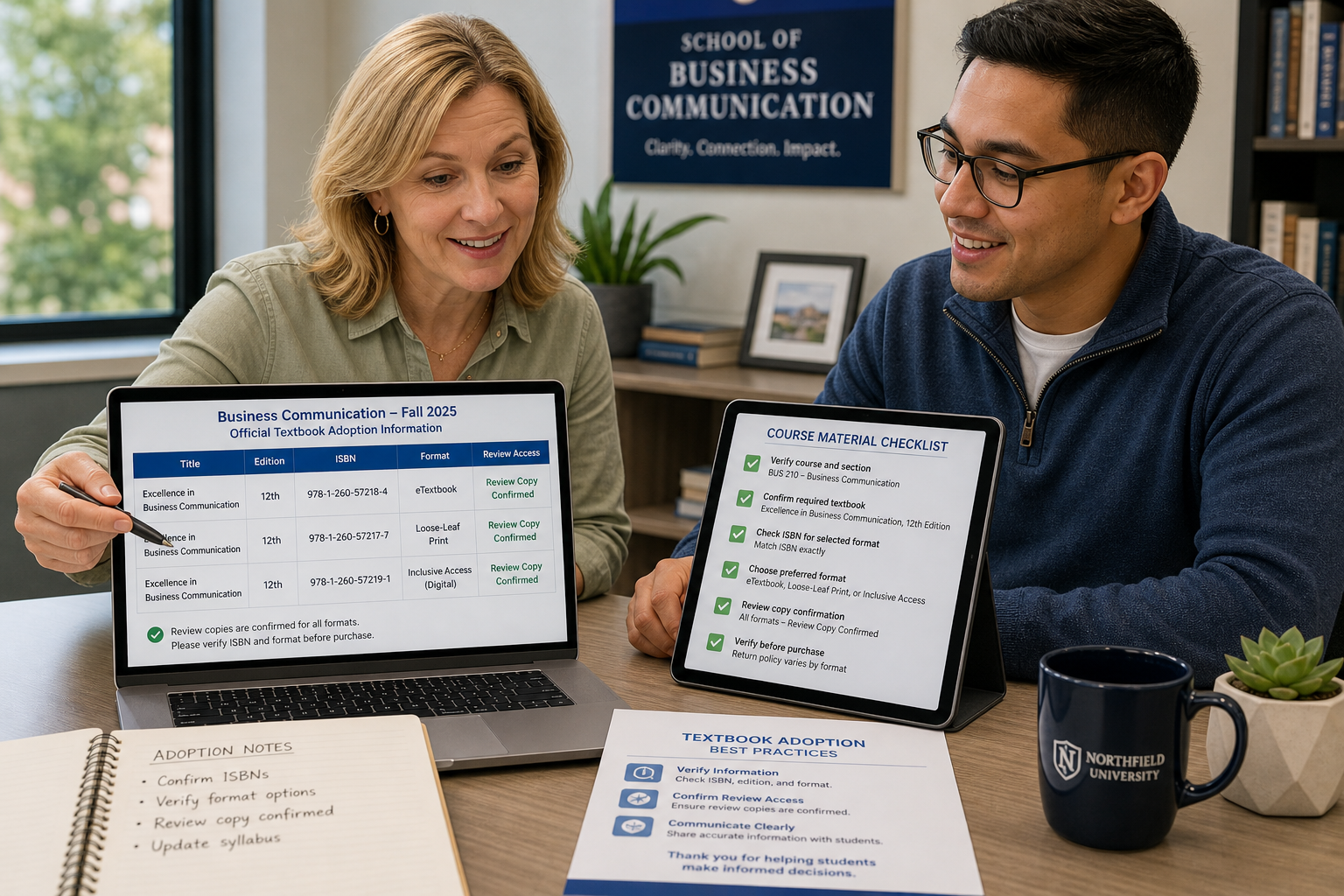
If you are evaluating a text for adoption, start by contacting the publisher representative assigned to your campus or discipline, or use the publisher’s official higher-education contact route. Ask for the exact ISBNs or ordering identifiers for each format you may assign, including print, eText, or any digital package your institution supports.
You should also confirm whether instructor review access, desk copies, or sample materials are available and what approval steps apply. If that information is not clearly listed for your institution, verify it directly rather than assuming the same process applies across all campuses.
For students
Students should not have to guess which version to buy. Once you finalize your adoption, provide a clear course-material notice that names the title, edition, author names, and any required access type in plain language.
This is especially helpful for first-generation students, transfer students, and others who may be less familiar with textbook purchasing systems. A short note in the syllabus and LMS can prevent duplicate purchases and reduce anxiety during the first week.
2. Compare Format, Access, and Support Needs
Where to buy the material is only part of the decision. Instructors also need to decide what type of material students actually need to succeed in the course.
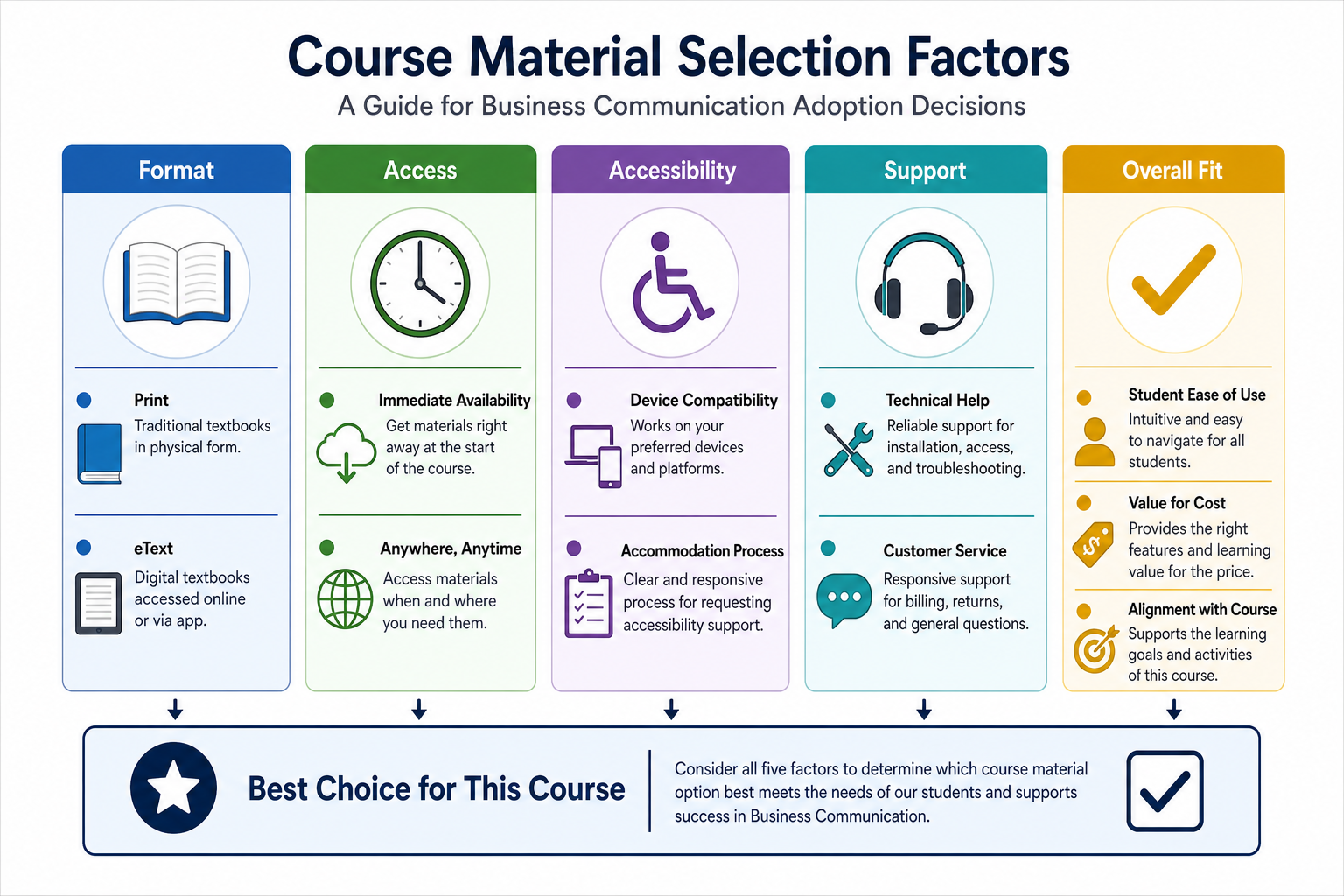
A print book may work well in discussion-based sections where students annotate heavily. A digital option may be better when portability, searchability, or immediate access is important. The best choice depends on your teaching methods, the course delivery mode, and how much structured support students need outside class.
Questions to ask before ordering
- Is a print text sufficient, or is digital access required for the course?
- Do all sections need the same format for consistency across instructors?
- Will students need access on the first day of class?
- Does your campus use inclusive access, bookstore-managed delivery, or direct student purchase?
- Who will provide support if students have access or ordering problems?
These questions help prevent a common adoption mistake: selecting a resource without planning for how students will actually obtain and use it. A lower headline price is not always the best value if it creates delays, technical barriers, or confusion about what is required.
You should also consider accessibility and support processes during selection. If those details will influence your adoption decision, confirm them with the publisher or campus accessibility office rather than relying on assumptions from previous editions or unrelated products.
3. Document the Adoption Decision Carefully
Once you know where to buy business communication instructional materials and which format fits your course, the next step is documentation. Clear records help departments, bookstores, and students stay aligned.
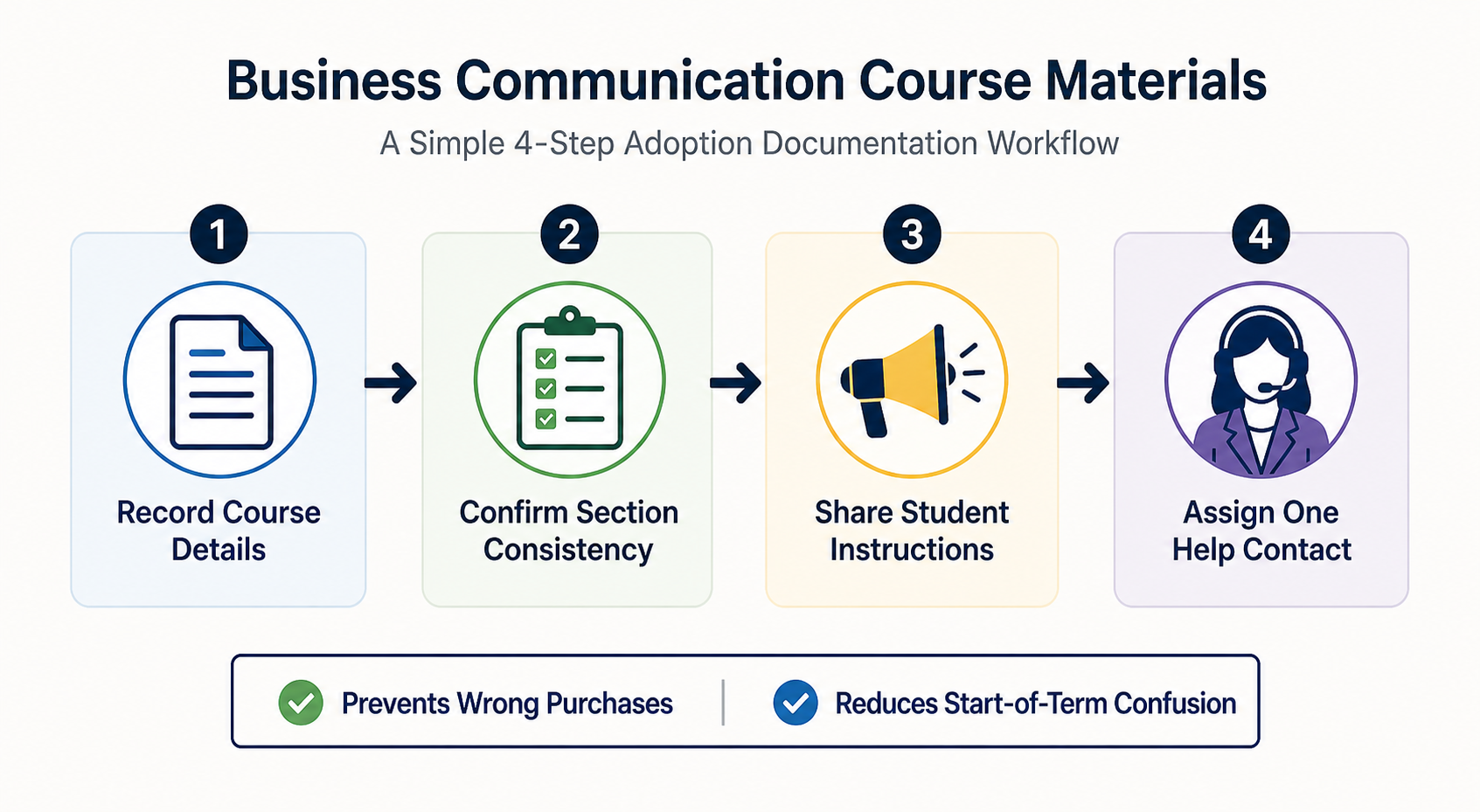
At minimum, document the exact title, edition, authors, publisher, required or recommended status, and format for each section. If the course uses optional materials, say so explicitly. If only some sections require digital access, note that clearly to avoid campus-wide ordering errors.
Use a short adoption checklist
- Confirm the exact course material and edition.
- Verify approved purchasing channels through the institution.
- Request complete ordering details for each format.
- Clarify whether materials are required, optional, or section-specific.
- Post purchase instructions in the syllabus and LMS before registration or as early as possible.
This checklist is especially useful in multi-section courses where several instructors teach under a shared course shell or common learning outcomes. One inconsistent notation can lead students to purchase the wrong item, which often becomes a preventable support problem during the first two weeks of class.
Finally, keep one contact point for unresolved issues. That may be the bookstore manager, department coordinator, or publisher representative, depending on your campus process. Students benefit when the course team can direct them quickly to the right source of help.
Key Takeaways
- Use official publisher, bookstore, and institution-approved channels first.
- Confirm the exact title, edition, format, and access requirements before anyone purchases.
- Match the material format to your teaching method and course delivery model.
- Give students clear purchase instructions in both the syllabus and LMS.
- Document the adoption decision carefully to reduce ordering and support problems.
Glossary of Key Terms
- Adoption process: The institutional procedure for selecting and submitting course materials for a class or program.
- Campus bookstore: The institution-affiliated seller that manages or distributes assigned course materials for students.
- Desk copy: An instructor review or teaching copy used to evaluate a text for possible course adoption.
- Digital access: Permission for students or instructors to use an electronic version or online course material.
- ISBN: A unique identifier used to distinguish one book edition or format from another.
Related Questions
- Question: Should instructors buy directly from the publisher or through the campus bookstore?
Answer: Instructors should usually start with both the publisher and the campus bookstore, since the publisher can clarify available formats while the bookstore can explain local ordering procedures. The best path depends on your institution’s procurement rules and how students are expected to obtain materials. - Question: What information should I give students before they purchase course materials?
Answer: Give the exact title, edition, author names, and whether print, eText, or another access format is required. You should also tell students whether the material is required on the first day and where your institution recommends purchasing it. - Question: How can I avoid students buying the wrong business communication textbook?
Answer: Use precise adoption language in your syllabus, LMS, and bookstore request, including edition and format. Avoid shorthand such as “latest edition” because that can create confusion across listings and resale sites. - Question: Is it acceptable to recommend third-party sellers to students?
Answer: It can be acceptable only if your institution permits it and the required material does not depend on a specific access model or time-sensitive delivery. In many cases, it is safer to direct students to verified channels so they receive the correct edition and any needed support. - Question: What should I confirm before adopting a digital course material package?
Answer: Confirm the access model, start-of-term availability, compatibility with your campus systems, and who handles support issues. You should also verify whether students can purchase individually or must obtain access through a campus-managed process.
References
Bovee, C. L., & Thill, J. V. (2026). Business Communication Today (16th ed.). Pearson.
- How Responsive Is Pearson to Feedback or Support Requests?
- Can I Get a Desk Copy or Trial Access to the Digital Platform for Business Communication Today to Review It Thoroughly?
© 2026 Business Communication Teaching and Learning Center. All rights reserved.