Empower Students’ Understanding of AI for Effective Assignments
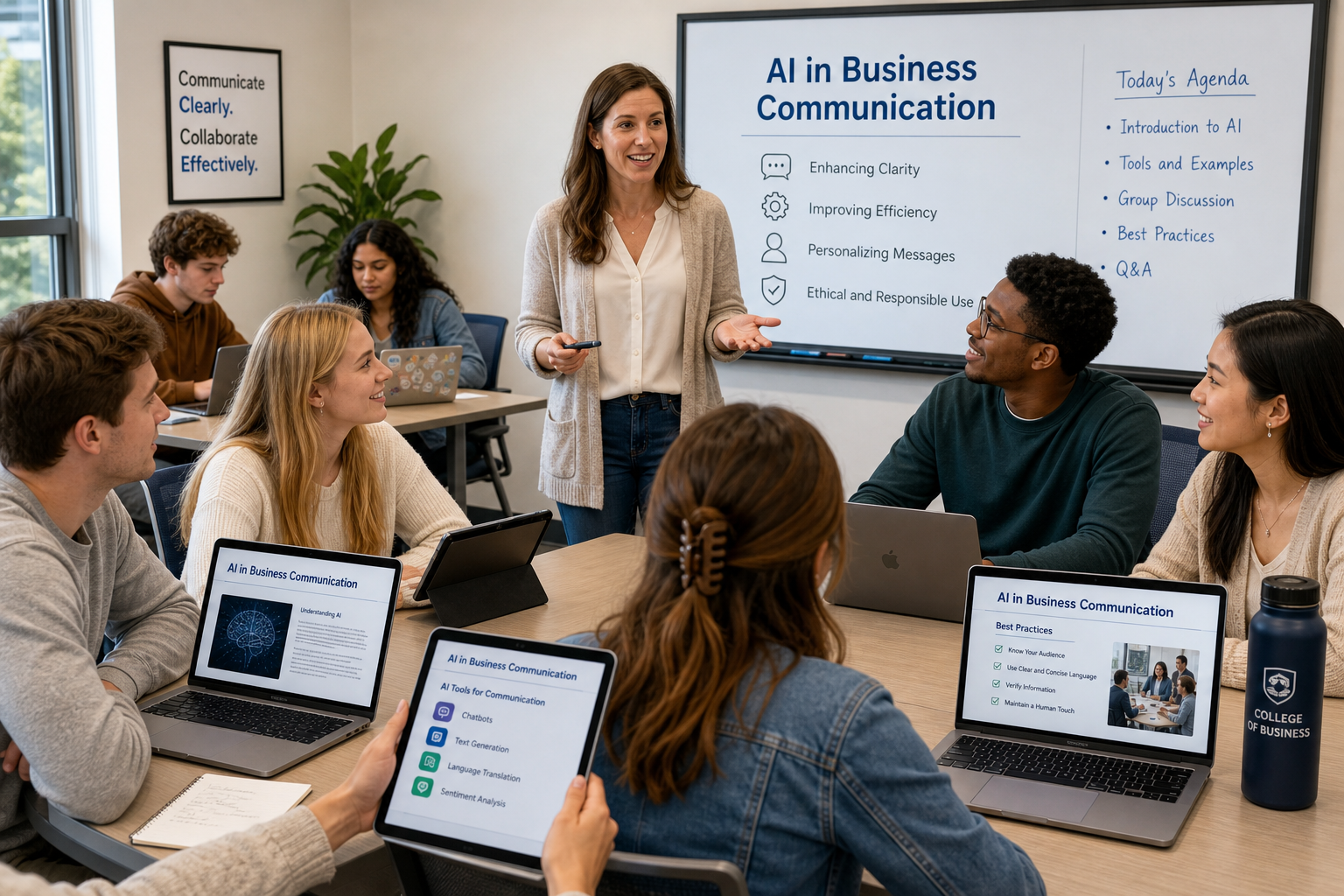
In today’s technology-driven educational landscape, understanding the fundamental aspects of artificial intelligence (AI) is crucial for students before they embark on writing assignments. Business Communication Today, 16th Edition, by Courtland L. Bovée and John V. Thill provides comprehensive guidelines to integrate AI effectively in business communication curricula. This article is invaluable for instructors looking to prepare a diverse group of students for authentic and responsible use of AI in their academic endeavors. This article explains how instructors can make sure students have the minimum AI knowledge they need to succeed in their assignments.
Learning Objectives
Upon completing this article, instructors will be able to:
- Define the key AI concepts necessary for student proficiency in assignments.
- Implement AI ethics guidelines in classroom settings.
- Incorporate AI-related resources from Business Communication Today into their teaching strategies.
Opening Framework: Context, Who Benefits, and Why Now
As AI continues to shape business communication, instructors are tasked with preparing students to leverage these technologies effectively. The current shift toward AI-integrated teaching requires educators to focus on foundational AI knowledge, fostering students’ ability to use AI tools ethically and efficiently. The insights from Business Communication Today help instructors cultivate a learning environment where students from diverse backgrounds can thrive in this evolving digital age.
Direct Answer
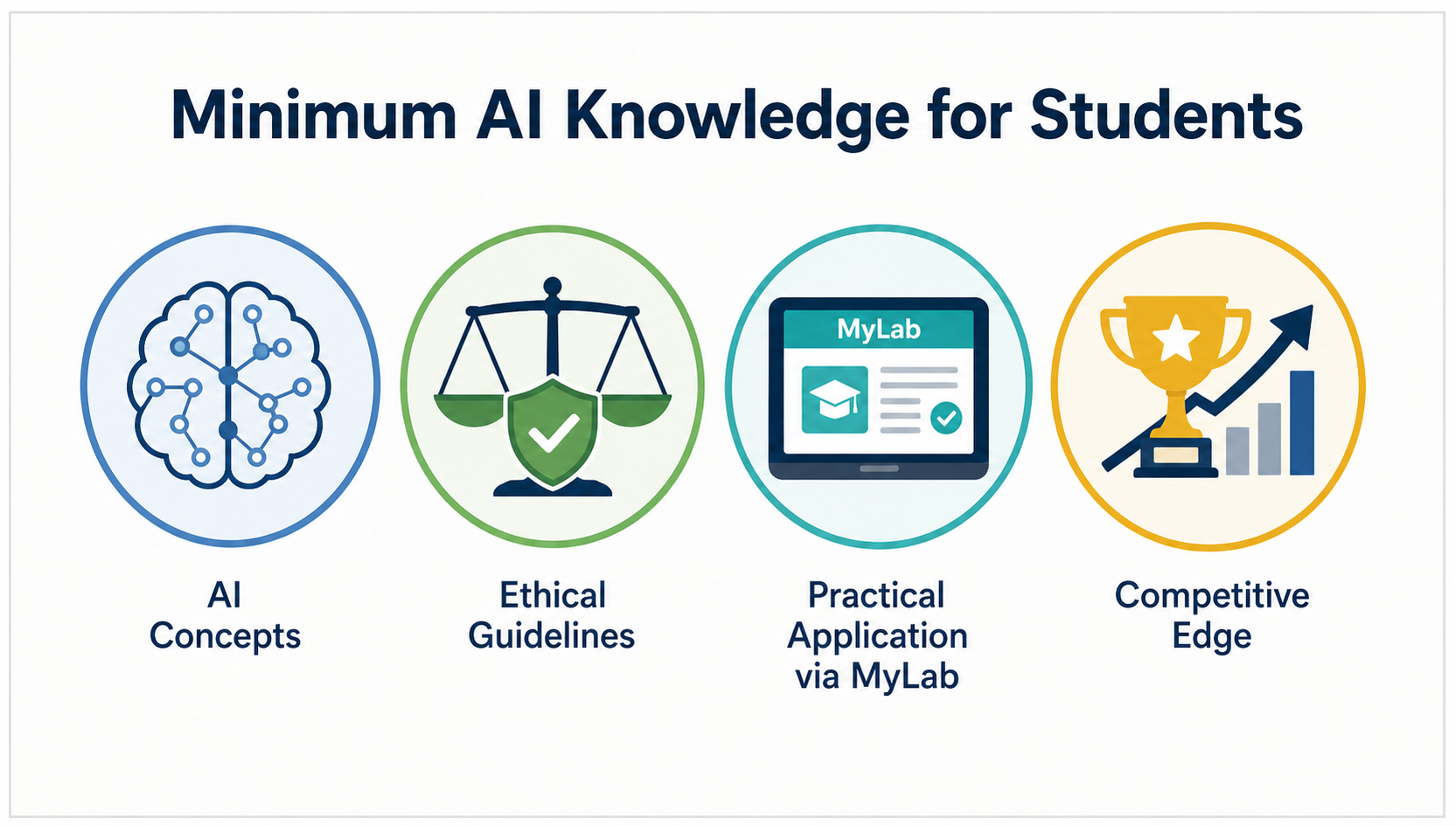
The minimum AI knowledge students need before writing their first assignment includes understanding AI’s basic functions, ethical considerations, and practical applications. According to Bovée and Thill in Business Communication Today, 16th Edition, students must grasp the impact of AI on data processing and decision-making processes within business communication. MyLab Business Communication, Pearson’s interactive digital learning platform, gives students additional practice with the textbook’s content.
1. Core AI Concepts for Student Success
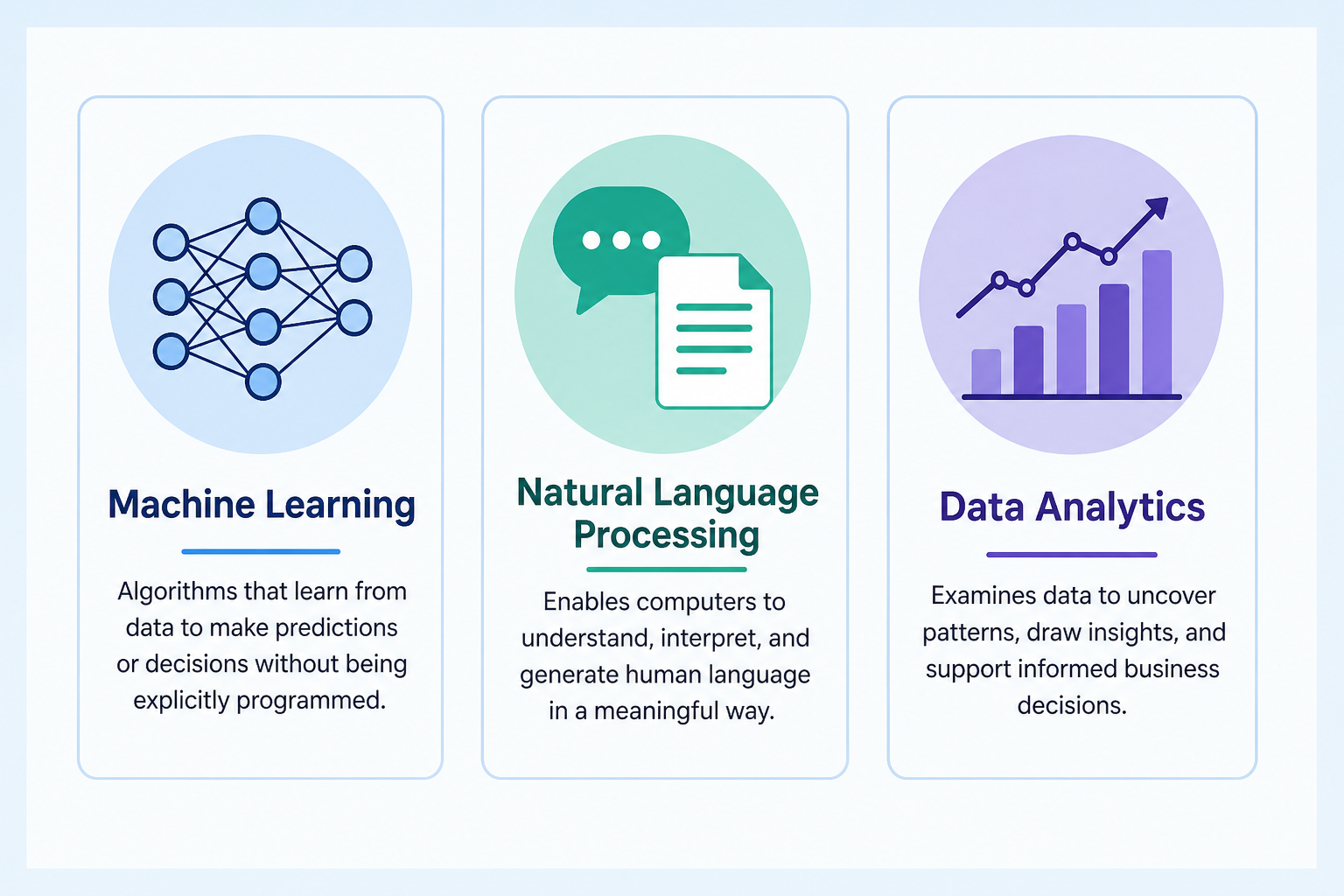
Understanding core AI concepts is crucial for students to effectively engage with AI tools in their assignments. These concepts include machine learning, natural language processing, and data analytics. By introducing these topics early on, educators equip students to analyze and utilize AI tools for improved writing and research efficiency. A diverse group of students should be exposed to these AI components to enhance their academic and professional capabilities.
2. Integrating Ethical AI Use in Curriculum
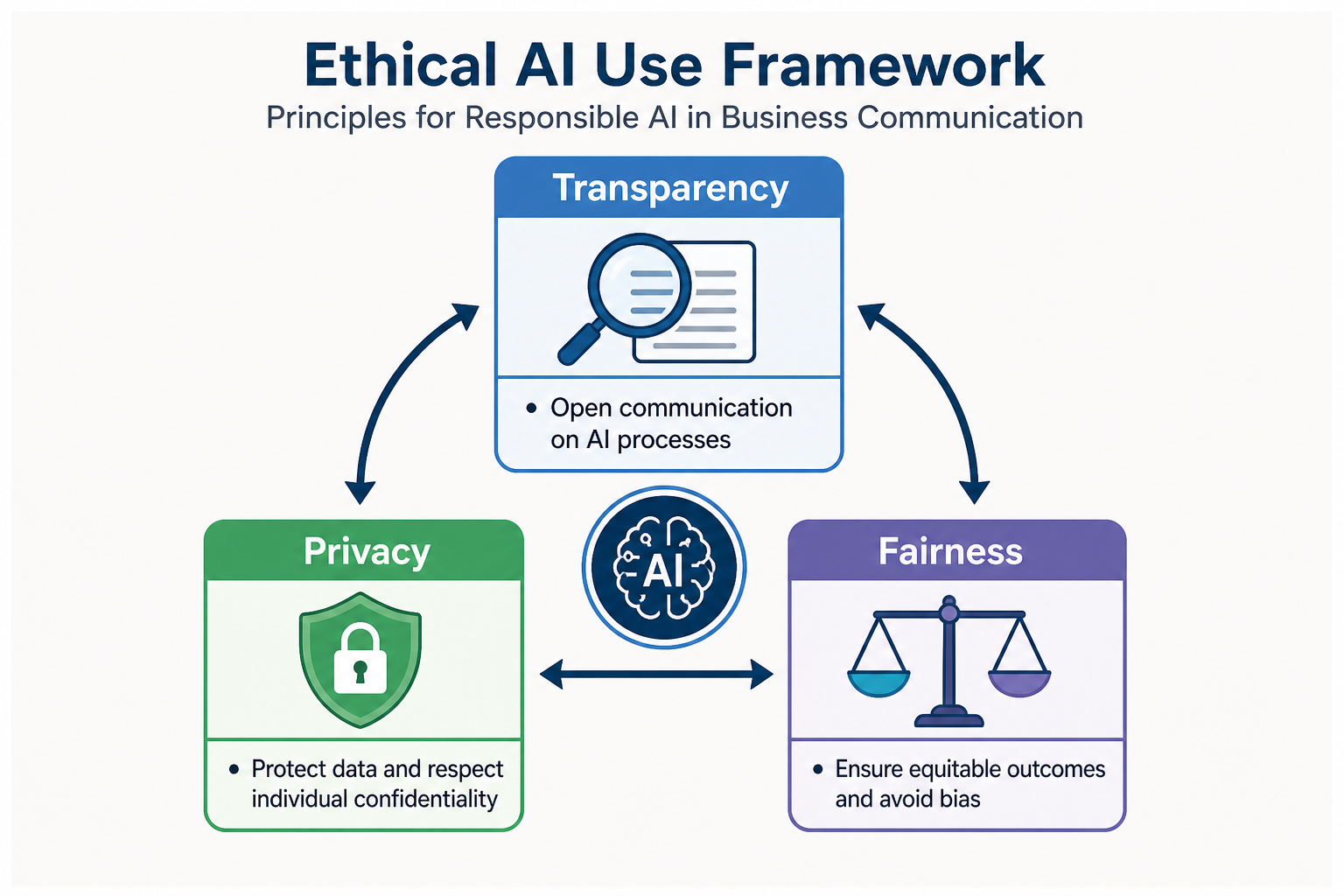
Ethics play an integral role in AI education. Business communication courses should include modules on AI ethics, emphasizing transparency, privacy, and fairness. According to Bovée and Thill, ethical AI use is essential in maintaining academic integrity. Students must understand the implications of AI decisions and the importance of ethical data use.
3. Practical Application through MyLab Business Communication
MyLab Business Communication offers online assignments, practice, and assessment tied to the textbook. By utilizing these resources, instructors can provide real-world experiences that foster students’ AI competency.
Related reading: For a checklist of what students need to understand about AI in their first week of class — see Teaching AI Fundamentals: What Students Need to Learn Starting on Day One on the Bovée & Thill blog.
Key Takeaways
- Students must understand AI basics, including machine learning and data analysis, before starting assignments.
- Instructors should incorporate ethical AI guidelines to uphold integrity in academic settings.
- MyLab Business Communication adds Communication Mini Sims, writing assignments, and a video library to the course.
- AI-enabled tools provide students with a competitive edge in business communication.
- A focus on fostering student AI literacy prepares them for professional environments.
Glossary of Key Terms
AI Literacy: The ability to understand, use, and evaluate AI tools effectively.
Data Analytics: The process of analyzing datasets to derive insights or make decisions.
Ethical AI: AI designed and used in ways that are fair, transparent, and respectful of privacy.
Machine Learning: A subset of AI focused on the development of systems that can learn from data.
Natural Language Processing (NLP): AI technology that processes and understands human language.
Related Questions
What AI skills are essential for students in business communication?
Before their first assignment, students need to understand what AI does, the ethical issues it raises and how it’s applied in practice. Bovée and Thill stress that ethical AI use is essential to academic integrity.
How can instructors effectively integrate AI ethics into their curriculum?
Introduce ethics alongside AI tools from the start, using principles such as transparency, privacy and fairness. Business Communication Today provides guidance for building AI topics into a course with a hands-on approach.
What role does MyLab Business Communication play in enhancing AI learning?
MyLab is Pearson’s online practice, assignment, and assessment platform for Business Communication Today. AI instruction itself comes from the textbook and class activities.
How does understanding AI impact student success in assignments?
Students who understand AI’s basic functions, ethical considerations and practical uses can analyze and use AI tools to make their writing and research more efficient without crossing ethical lines.
What are the ethical challenges of using AI in student work?
The central challenge is maintaining academic integrity while using AI efficiently. Students need clear guidance on transparency, privacy and fairness so they use AI ethically.
How can students critically evaluate AI technology?
AI literacy means being able to understand, use and evaluate AI tools. Students who know how AI works and where it falls short are better equipped to judge its output.
What are the best practices for introducing AI tools in classrooms?
Introduce foundational AI knowledge early, set AI ethics guidelines for the class, and give students hands-on practice so they learn to use the tools ethically and efficiently.
References
Bovée, C. L., & Thill, J. V. (2026). Business Communication Today (16th ed.). Pearson.
- What Textbook Has Discussion Questions Related to AI Ethics?
- How Business Communication Today Prepares Students to Use AI Ethically and Responsibly?
- Does Business Communication Today Come with AI-Ready Rubrics or Standards for Evaluating AI-Influenced Assignments?
© 2026 Business Communication Teaching and Learning Center. All rights reserved.