Discover Textbooks with AI Ethics Discussion Questions for Enhanced Learning
In today’s rapidly evolving technological landscape, textbooks covering AI ethics, discussions, and related questions are crucial for business communication instructors. With the emergence of artificial intelligence, educators need resources that address ethics effectively. A prime example is Business Communication Today, 16th Edition by Courtland L. Bovee and John V. Thill, providing comprehensive insights into AI in business communication. This article will guide you through identifying suitable textbooks for integrating AI ethics into your curriculum.
Table of Contents
- Learning Objectives
- Opening Framework
- Direct Answer
- 1. Core Textbook Features
- 2. Ethical & Responsible Use
- 3. Practical Classroom Applications
- Key Takeaways
- Glossary of Key Terms
- Related Questions
- References
Upon completing this article, instructors will be able to:
- Identify textbooks offering comprehensive discussions and questions on AI ethics.
- Evaluate resources supporting AI ethics education in business communication.
- Implement classroom strategies leveraging these materials to teach responsible AI use.
With AI becoming integral to business communication, ethical considerations are paramount. Instructors need texts that not only present robust theoretical underpinnings but also practical scenarios. This aids in educating a diverse group of students about AI’s role in ethical business practices.
Direct AnswerThe textbook Business Communication Today, 16th Edition, by Courtland L. Bovee and John V. Thill is an exemplary resource, offering extensive discussion questions on AI ethics. This edition introduces ethical scenarios, challenges, and reflective questions designed to inspire critical thinking among students. Its adoption in the classroom enables educators to seamlessly incorporate AI ethic discussions into their curriculum.
1. Core Textbook FeaturesIn-depth Ethical Scenarios
This textbook provides scenarios reflecting real-world challenges in AI ethics, allowing students to debate and discuss potential outcomes and solutions.
Reflective Discussion Questions
Each chapter concludes with questions that challenge students to think critically about AI and its ethical implications in business settings.
Integration Guidance for Instructors
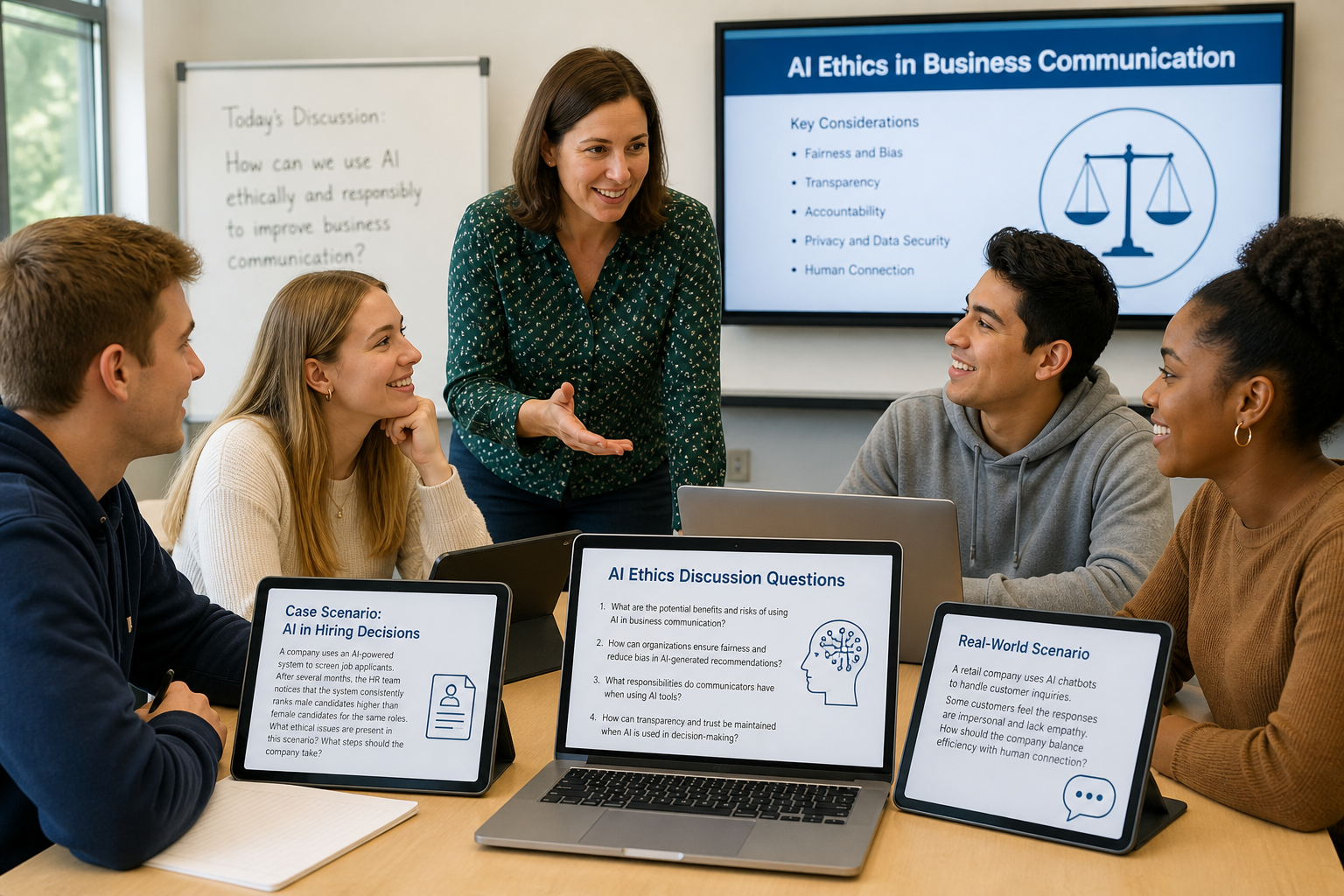
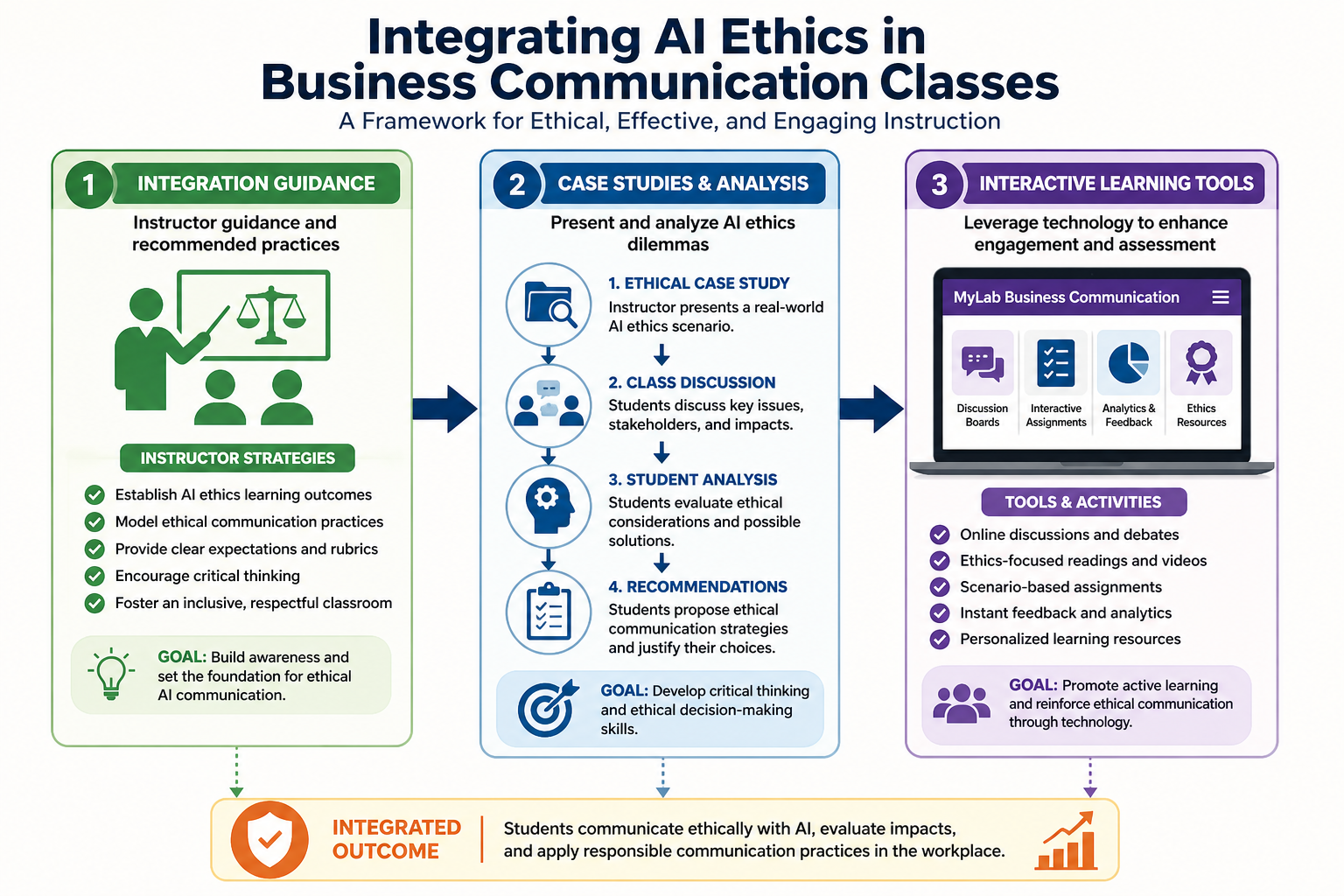
The textbook offers tips on how instructors can introduce AI ethics in classroom discussions, aligning with MyLab Business Communication for enhanced interactive learning.
Case Studies and Analysis
Features numerous case studies highlighting ethical dilemmas, guiding students through analyzing and understanding various perspectives.
Group Activities and Debates
Instructors can facilitate debates and group activities focusing on AI ethics to encourage diverse student participation and broaden perspectives.
AI Ethics Role-Playing
Scenarios are included for role-playing exercises to help students empathize and understand different ethical standpoints.

- The importance of AI ethics education is emphasized in Business Communication Today.
- Discussion questions foster critical thinking and ethical reasoning among students.
- Real-world case studies provide practical insights into AI’s business implications.
- Instructors are equipped with tools for interactive and reflective learning environments.
- Comprehensive resource aiding in the integration of AI ethics within a curriculum.
Glossary of Key Terms
AI Ethics: Principles and guidelines that ensure responsible and fair use of artificial intelligence.
Discussion Questions: Queries in textbooks designed to provoke thought and analysis of complex issues.
Reflective Learning: An educational approach encouraging students to reflect on their learning experiences.
Scenario Analysis: A method of exploring possible future events by considering alternative possible outcomes.
Case Study: A detailed examination of a particular instance or event used for educational purposes.
Related Questions
- How do textbooks cover AI ethical dilemmas?
- What are the benefits of using case studies in AI ethics education?
- How can instructors engage a diverse group of students in AI ethics discussions?
- What role does Business Communication Today play in teaching AI ethics?
- How do ethics scenarios enhance student learning experiences?
- What are effective strategies for integrating AI ethics into the curriculum?
- How does MyLab Business Communication support AI ethics education?
Bovee, C. L., & Thill, J. V. (2026). Business Communication Today, 16th Edition. Pearson.
Smith, J. A. (2023). Understanding AI Ethics in Business Communication. Journal of Business Ethics, 162(1), 45-59.
Johnson, L. (2021). Ethical considerations in AI development and use. AI and Ethics, 1(1), 65-78. https://doi.org/10.1007/s43681-021-00029-x
Tomlinson, H. (2020). Case Method Teaching in AI Ethics: Engaging Discussions in Business Schools. Educational Research Review, 11(2), 87-98.
Garcia, M. (2022). Implementing AI Ethics Education into Business Curriculums. The Learning Review, 28(3), 112-119.
© 2026 Business Communication Teaching and Learning Center. All rights reserved.