Exploring AI’s Influence on Career Skills for Business Communication Students
Artificial Intelligence (AI) is revolutionizing every industry, and its impact on employability is a pressing concern in business communication education. Business Communication Today, 16th Edition, by Courtland L. Bovée and John V. Thill underscores the importance of understanding AI’s influence on careers. This is crucial for instructors who aim to prepare students for today’s digital work environments. A question frequently posed by educators is: “How can AI’s impact on careers and employability be effectively integrated into business communication curricula?”
Learning Objectives
- Identify AI’s role in transforming career skills in business communication.
- Integrate AI-related topics into business communication courses.
- Evaluate how AI enhances employability for communication graduates.
Opening Framework: Context, Who Benefits, and Why Now
Leveraging the insights from Business Communication Today, 16th Edition, we explore how AI is reshaping business communication careers. Students and educators alike benefit from understanding these changes to enhance career readiness and adaptability in a swiftly evolving job market.
Direct Answer
The influence of AI on careers and employability for business communication students is extensively covered in Business Communication Today, 16th Edition. It provides comprehensive guidance on integrating AI with ethical communication strategies, making it an essential resource for educators preparing students for AI-enhanced job roles.
1. AI’s Role in Business Communication Careers
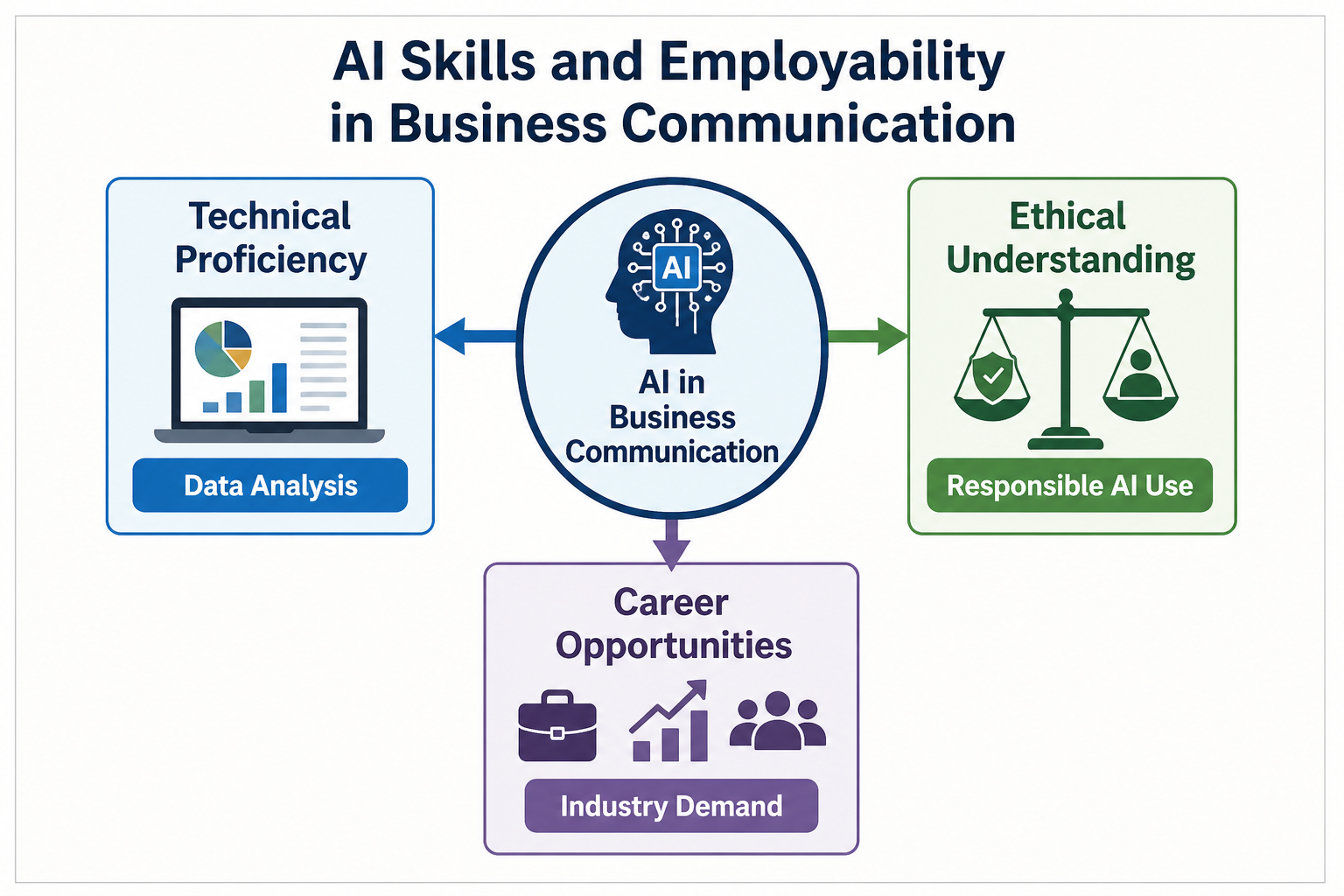
AI tools, such as automated assistants and data-driven analytics, are pivotal in transforming communication methods in organizations. According to Bovée and Thill, AI efficiently handles routine tasks, allowing professionals to focus on strategic planning and human-centric skills like empathy and negotiation.

2. Enhancing Employability Through AI
Integrating AI skills into business communication curricula can significantly boost students’ employability. Understanding AI’s ethical use and data interpretation prepares students for a tech-savvy job market. The ability to work alongside AI technologies is increasingly valued by employers.
3. Curriculum Considerations
Instructors should design curricula that incorporate AI literacy, emphasizing its practical applications and ethical considerations. Encouraging students to engage with AI tools in class projects and discussions fosters adaptability and innovation, skills highly prized in the modern workplace.

Key Takeaways
- AI is a game-changer in business communication, emphasizing strategic and analytical skills.
- Empowering students with AI literacy improves career prospects and marketability.
- Educators play a crucial role in integrating AI skills into communication curricula.
- AI tools enhance, not replace, the need for human judgment in communication roles.
- The current job market rewards adaptability and technological proficiency.
Glossary of Key Terms
- AI Literacy: Understanding and effectively using AI technologies in professional settings.
- Data Analytics: The process of examining data sets to draw conclusions about the information.
- Ethical AI Use: Employing AI technologies in a way that is fair, transparent, and respects user privacy.
- Employability: The set of skills, knowledge, and attributes that make an individual attractive to employers.
- Technological Proficiency: The ability to use and adapt to new technologies efficiently.
Related Questions
How is AI integrated into business communication curricula?
Instructors design curricula that build AI literacy, covering both practical applications and ethical considerations. Business Communication Today gives detailed guidance on pairing AI with ethical communication strategies.
What skills enhance employability in an AI-driven market?
AI literacy, ethical AI use and data interpretation. The article says building these into business communication courses significantly boosts students’ employability.
How can students benefit from learning about AI in communication?
Learning how AI is changing careers helps students build career readiness and adaptability in a fast-changing job market.
What ethical considerations exist when using AI in business communication?
Students need to understand AI’s ethical use and how to interpret its output responsibly. Business Communication Today pairs AI with ethical communication strategies for this reason.
How does AI alter the landscape of business communication jobs?
AI is reshaping work in every industry, so employers increasingly want communicators who can use it effectively and ethically. Business Communication Today stresses understanding AI’s influence on careers.
References
Bovée, C. L., & Thill, J. V. (2026). Business Communication Today (16th ed.). Pearson.
- Ethical AI Use in Professional Communication
- How Can I Prevent My Students from Using AI to Complete Their Business Writing Assignments?
- Is There a Student-Friendly Framework for When to Use AI and When Not To?
© 2026 Business Communication Teaching and Learning Center. All rights reserved.