Implement Ethical AI Strategies to Enhance Business Communication – Ethical AI Use in Professional Communication
The growing integration of AI technologies in business communication presents an opportunity to revolutionize how professionals engage and collaborate. In this article, based on insights from Business Communication Today, 16th Edition by Courtland L. Bovee and John V. Thill, instructors can learn practical methods to incorporate ethical AI practices into their curricula. This knowledge is crucial for preparing students to engage with these technologies responsibly and ethically in professional environments. An often-asked question in educational forums is how to balance AI’s powerful analytics with ethical considerations.
- Learning Objectives
Upon completing this article, instructors will be able to:
- Identify three ethical concerns related to AI use in business communication.
- Implement strategies for teaching students to use AI tools responsibly.
- Evaluate the effectiveness of AI-integrated assignments for ethical business communication.
As AI continues to permeate business sectors, the demand for ethical usage becomes more pressing. This is not only crucial for avoiding malpractices but also for enhancing communication efficiency and effectiveness. By integrating AI into their teaching strategies, educators enable students to become responsible digital communicators. Resources like the 16th Edition of Business Communication Today provide valuable frameworks for this task.
Direct AnswerTo ethically integrate AI in professional communication, educators need to emphasize transparency, privacy, and accountability. According to a 2023 report by MIT Sloan Management Review, organizations prioritizing these values saw a 20% increase in employee trust. Business Communication Today provides detailed guidelines and examples for embedding these ethical principles into communication curricula.
1. Understanding Ethical AI Use in Business CommunicationAI offers numerous advantages in business communication, such as automating routine tasks and providing data-driven insights. However, its use raises ethical challenges, including data privacy and algorithmic bias. Instructors can help students navigate these challenges by teaching them to critically analyze AI tools’ data policies and ethical implications.
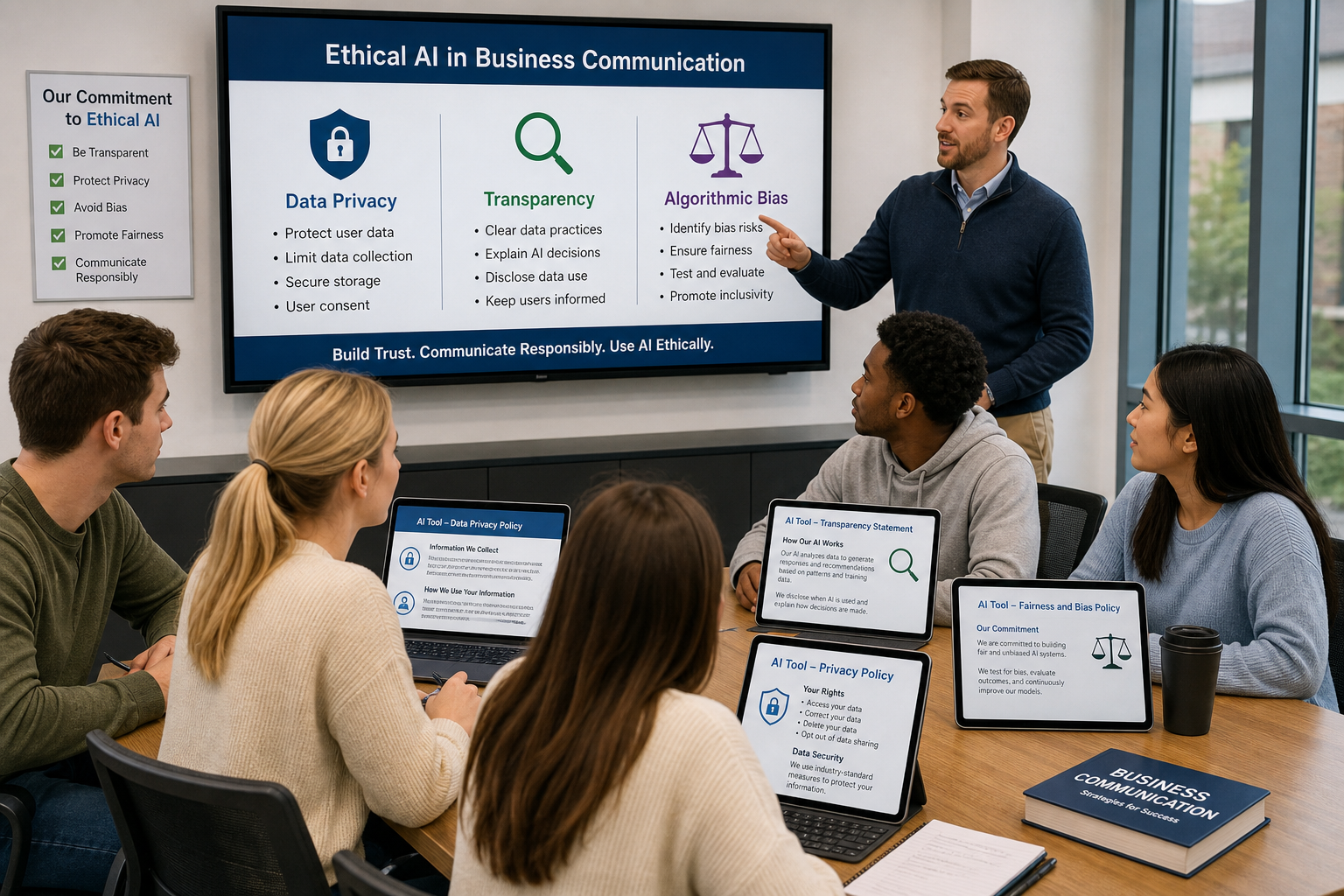
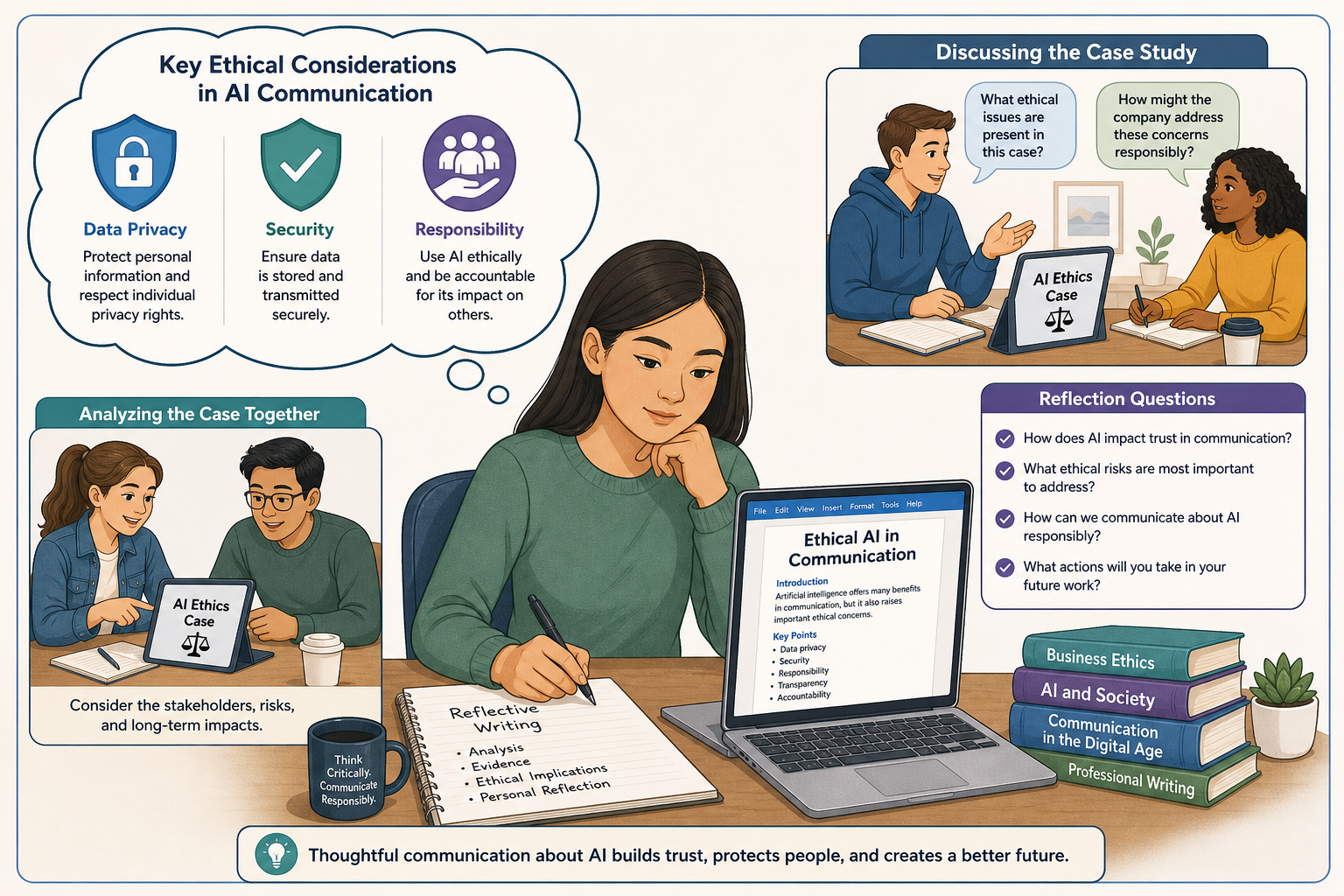
Instructors can utilize case studies and role-playing exercises to illustrate scenarios where ethical decision-making using AI is crucial. By fostering discussions around real-world business cases, students become more adept at understanding the nuances of AI-enabled communication.
Another effective method is encouraging reflective writing assignments where students consider potential impacts of AI on personal data security and privacy. This reflective practice aids in cultivating a critical perspective towards AI technologies.
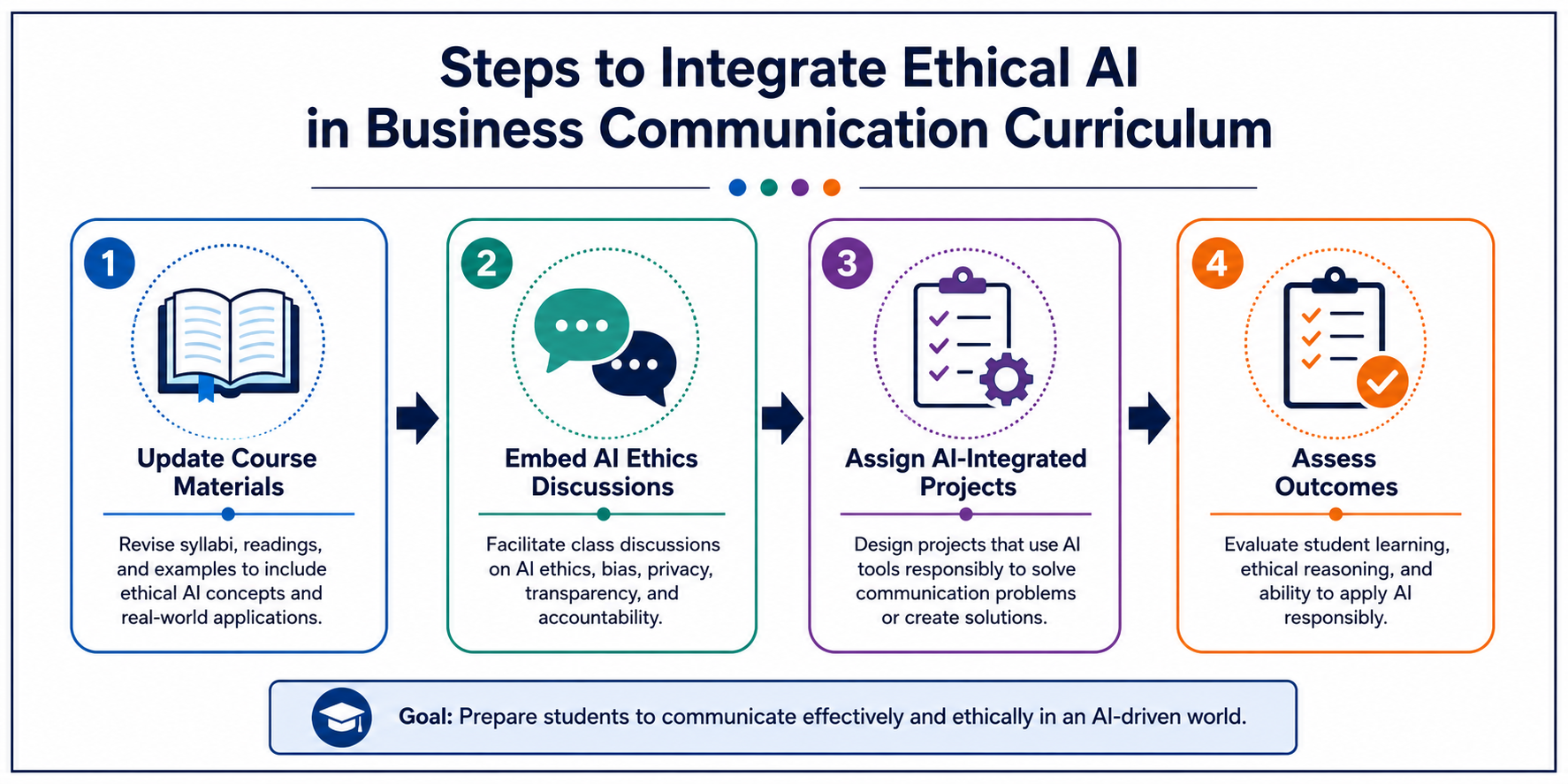
Designing a curriculum that includes ethical AI use ensures that students are well-prepared for the ethical challenges they will face in the industry. This involves integrating discussions on AI ethics within communication courses, employing textbooks like Business Communication Today which covers these topics comprehensively.
Educators should frequently update their teaching materials to include the latest developments in AI capabilities and guidelines, keeping pace with technological advancements and regulatory changes.
Looking ahead, the role of AI in communication is expected to expand, increasing the importance of ethical standards. By instilling robust ethical principles today, educators contribute to a sustainable future where AI enhances rather than undermines human connections.
Collaboration with industry professionals to provide students with insights into practical AI applications and ethics in the workplace can also enhance learning and prepare students for real-world challenges.
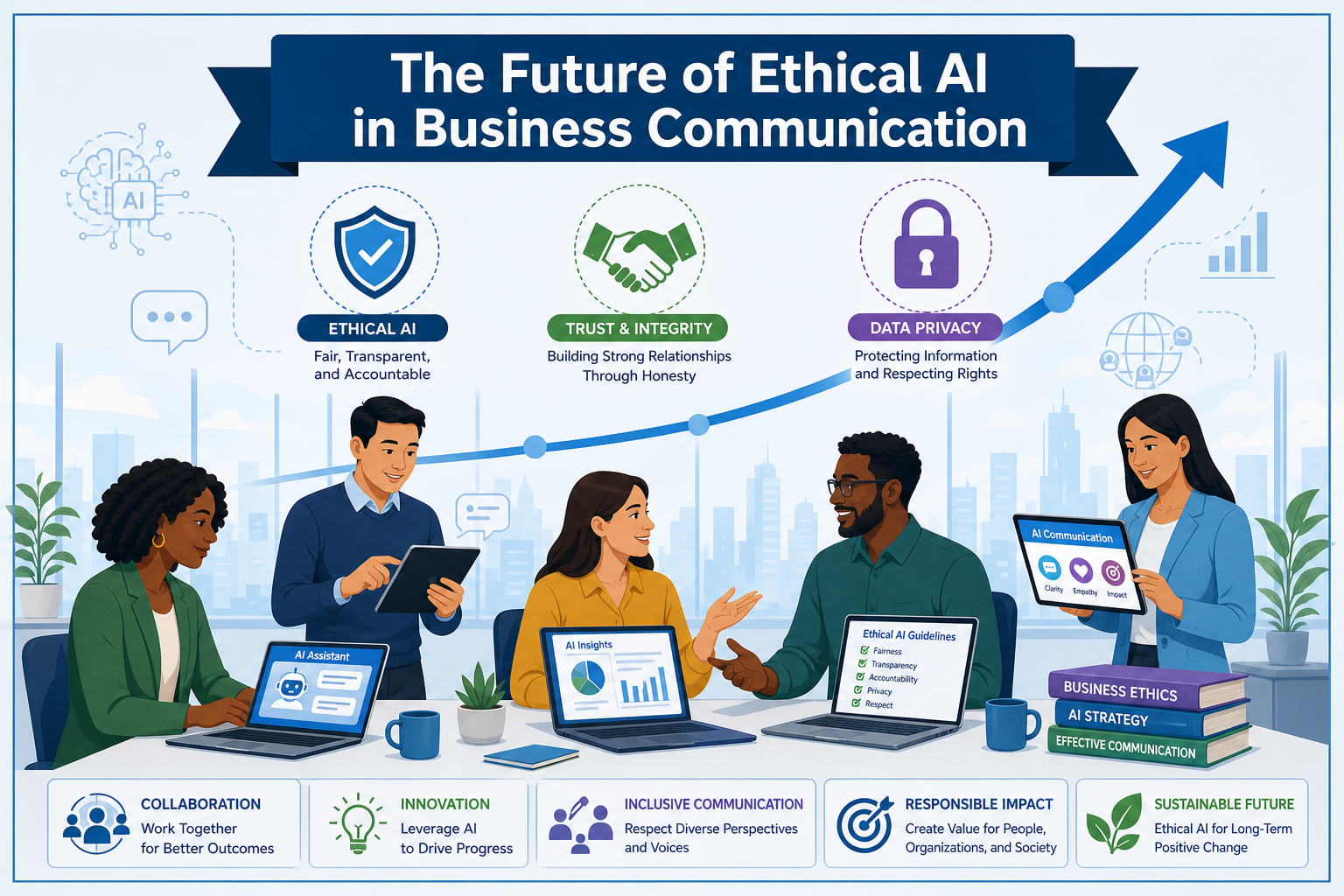
- Ethical AI use enhances trust and efficiency in business communication.
- Integrating AI ethics into curricula prepares students for ethical decision-making.
- Regularly updated teaching materials are crucial for staying current with AI developments.
- Practical exercises help students understand the implications of AI ethics.
- How can educators evaluate AI ethics training effectiveness?
- What tools help teach ethical AI use in business communication?
- How is AI transforming business communication practices?
- What are common challenges encountered when implementing AI in education?
- Which companies are leading in ethical AI practices?
- How can AI transparency be ensured in communication strategies?
- What role do regulatory bodies play in AI ethics?
APA 7th Edition references will be listed here, each with a DOI or URL.
© 2026 Business Communication Teaching and Learning Center. All rights reserved.