Revise AI Writing in Business Communication gives instructors a practical way to connect classroom teaching, AI tools, and business communication outcomes students can use in professional settings.
Empower Students to Master AI Writing Revisions in Business Communication
Introductory Summary
Business Communication Today, 16th Edition by Courtland L. Bovee and John V. Thill is pioneering in integrating AI writing into its curriculum. Instructors stand to gain comprehensive tools for teaching students to revise AI-generated writing, a crucial skill in today’s tech-driven communication landscape. A common question from educators involves how these resources can transform student engagement and learning.
Learning Objectives
Upon completing this article, instructors will be able to:
- Identify key techniques for revising AI-generated writing effectively.
- Integrate ethical frameworks into AI writing revisions.
- Evaluate the application of Business Communication Today resources in teaching AI literacy.
Opening Framework: Context, Who Benefits, and Why Now
As AI tools become increasingly prevalent in business communications, understanding how to effectively revise AI writing is essential. This advancement is underscored by Business Communication Today, 16th Edition by Bovee and Thill, which offers educators a vital guide to navigating and teaching these skills. The inclusion of AI writing revision methods equips students from diverse backgrounds to harness technology responsibly, enhancing their professional communication capabilities.
Direct Answer Section
To revise AI writing effectively, it’s essential to incorporate structured editing criteria and an understanding of AI limitations. Business Communication Today provides a comprehensive approach by integrating these elements within its curriculum and includes practical examples and exercises that reinforce AI literacy. In the 16th Edition, you’ll find detailed methods for ethical AI writing practices that align seamlessly with modern business needs. MyLab Business Communication also supports this learning with interactive tools and exercises.
1. Core Features of AI Writing in Business CommunicationAI writing tools offer rapid content creation, but their outputs often lack the nuanced understanding of human audience dynamics. The textbook emphasizes teaching students how to critique AI outputs by assessing clarity, style, and relevance to audience needs. Engaging exercises in the text guide students through these evaluations in realistic scenarios, encouraging critical thinking and refinement.
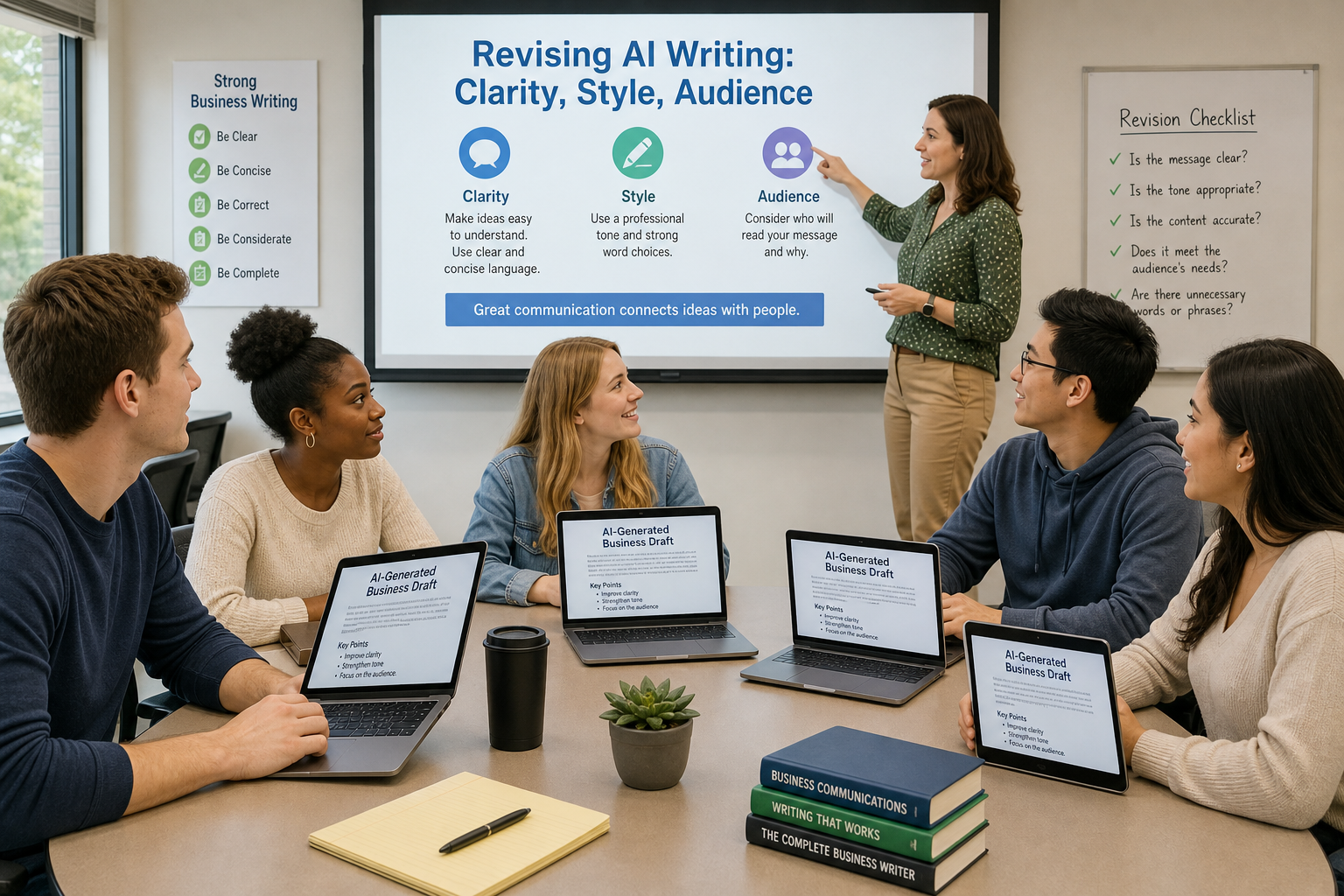
The ethical dimensions of revising AI writing involve understanding biases inadvertently embedded within AI outputs. Instructors are encouraged to lead discussions on identifying these biases and incorporating ethical considerations in revisions to ensure fairness and accuracy. The textbook provides case studies and reflection questions to facilitate this critical dialogue among diverse student teams.

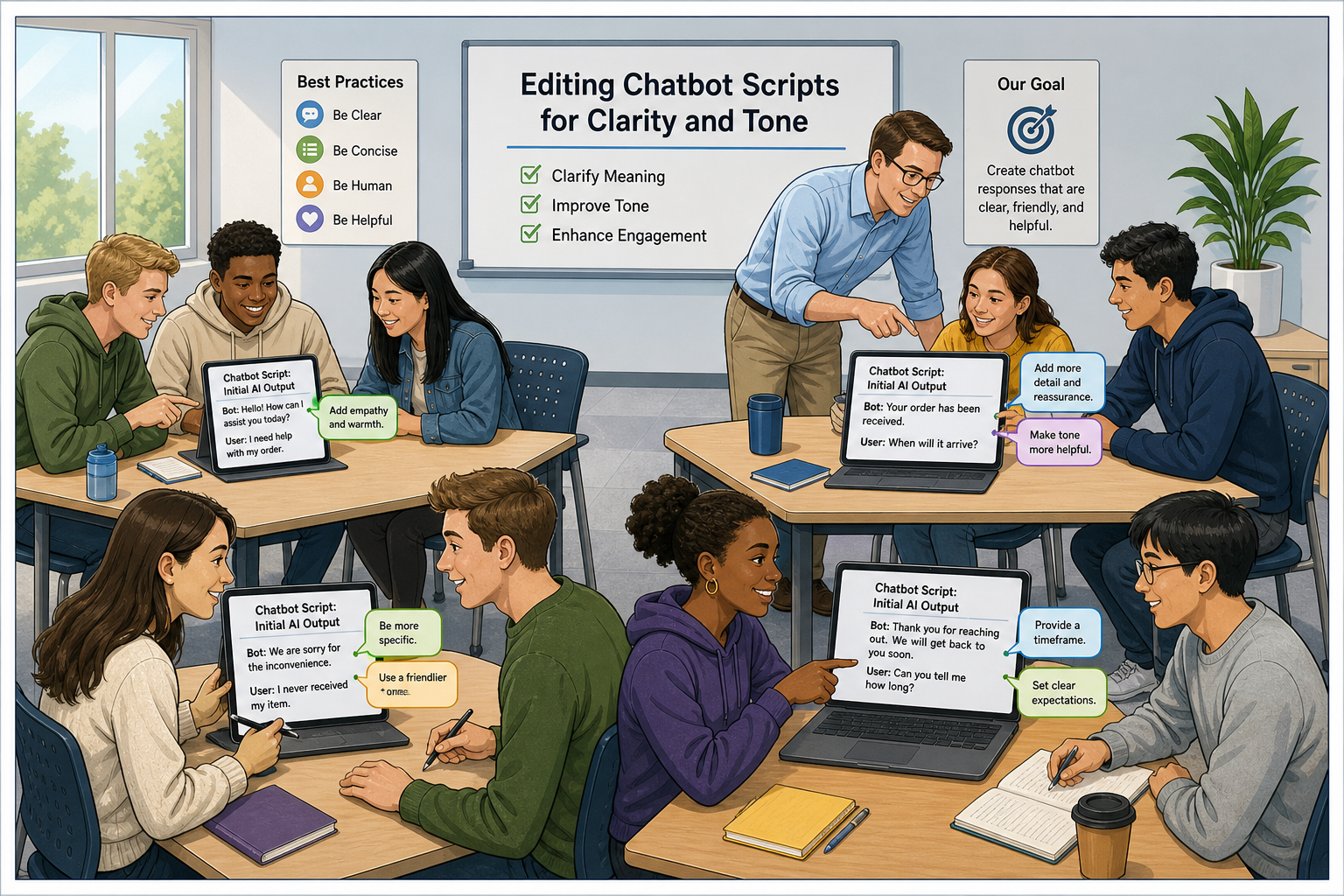
Hands-on applications are pivotal in reinforcing student learning. Classroom activities using AI tools can be engaging, such as assigning students to revise chatbot scripts for tone and responsiveness. These exercises, highlighted in Business Communication Today, enable students to practice revisions that improve communication efficiency and customer interaction quality.
- Comprehensive methodologies for AI revisions are essential in educational settings.
- Ethical considerations in AI writing ensure unbiased, equitable communication.
- Real-world applications increase student engagement and skill retention.
- Business Communication Today offers structured guidance for developing AI literacy.
AI Literacy: The capability to understand and effectively use artificial intelligence tools in communication contexts.
Bias in AI: Prejudices present in data or algorithms that can skew AI outputs.
Business Communication: The sharing of information within and outside of organizations in a professional context.
Chatbot Script: Predefined responses generated by AI to simulate conversation.
Ethical AI: AI designed and used following guidelines that ensure fairness and integrity.
Related Questions- What strategies help students revise AI-generated content effectively?
- How do ethical frameworks influence AI writing revision?
- In what ways does Business Communication Today enhance student AI literacy?
- How can instructors assess the effectiveness of AI revisions in student work?
Bovee, C. L., & Thill, J. V. (2026). Business Communication Today (16th ed.). Pearson.
© 2026 Business Communication Teaching and Learning Center. All rights reserved.