Empower Your Students: Effective Strategies To Prevent AI Misuse in Assignments – Prevent AI Use in Business Writing
In the ever-evolving educational landscape, preventing students from misusing AI for business writing assignments has become a critical focus. Instructors can greatly benefit from understanding the strategies that reinforce academic integrity while embracing cutting-edge technology. Courtland L. Bovee and John V. Thill’s Business Communication Today, 16th Edition offers insights into ethical AI application, which is vital for instructors now facing questions about AI’s classroom utility.
Table of Contents
1. Learning Objectives
2. Opening Framework: Context, Who Benefits, and Why Now
3. Direct Answer
4. Strategies to Prevent AI Misuse
5. Promoting Ethical Integrity in Assignments
6. Real Classroom Examples
7. Key Takeaways
8. Glossary of Key Terms
9. Related Questions
Upon completing this article, instructors will be able to:
- Identify practices to prevent AI misuse in student assignments effectively.
- Implement tools designed to enhance academic integrity.
- Evaluate the role of technology in business communication education.
With AI tools like ChatGPT becoming mainstream, the challenge lies in guiding students to use these digital conveniences creatively and responsibly. This urgency is heightened by instructors who want to maintain a high standard of business writing education amidst technological disruptions. The insights from Business Communication Today, 16th Edition, create a framework for ethical AI use in business communication, which instructors can apply to prevent misuse.
Direct AnswerThe most effective method to counteract AI misuse in assignments is by employing specific tools designed to make cheating nearly impossible. One such tool is the Case Transformation Tool, which transforms assignments in a way that complicates AI’s ability to generate responses, thus ensuring the work’s authenticity and originality.
1. Strategies to Prevent AI MisuseInstructors can employ multiple tactics to discourage the misuse of AI tools in assignments. By actively monitoring assignment submissions for signs of AI authorship, educators can maintain academic standards. Additionally, the integration of plagiarism detection software can help identify indistinct patterns that are often present in AI-generated work. Technology like the Case Transformation Tool aids classrooms by modifying task structures so effectively that AI-generated text becomes non-viable.
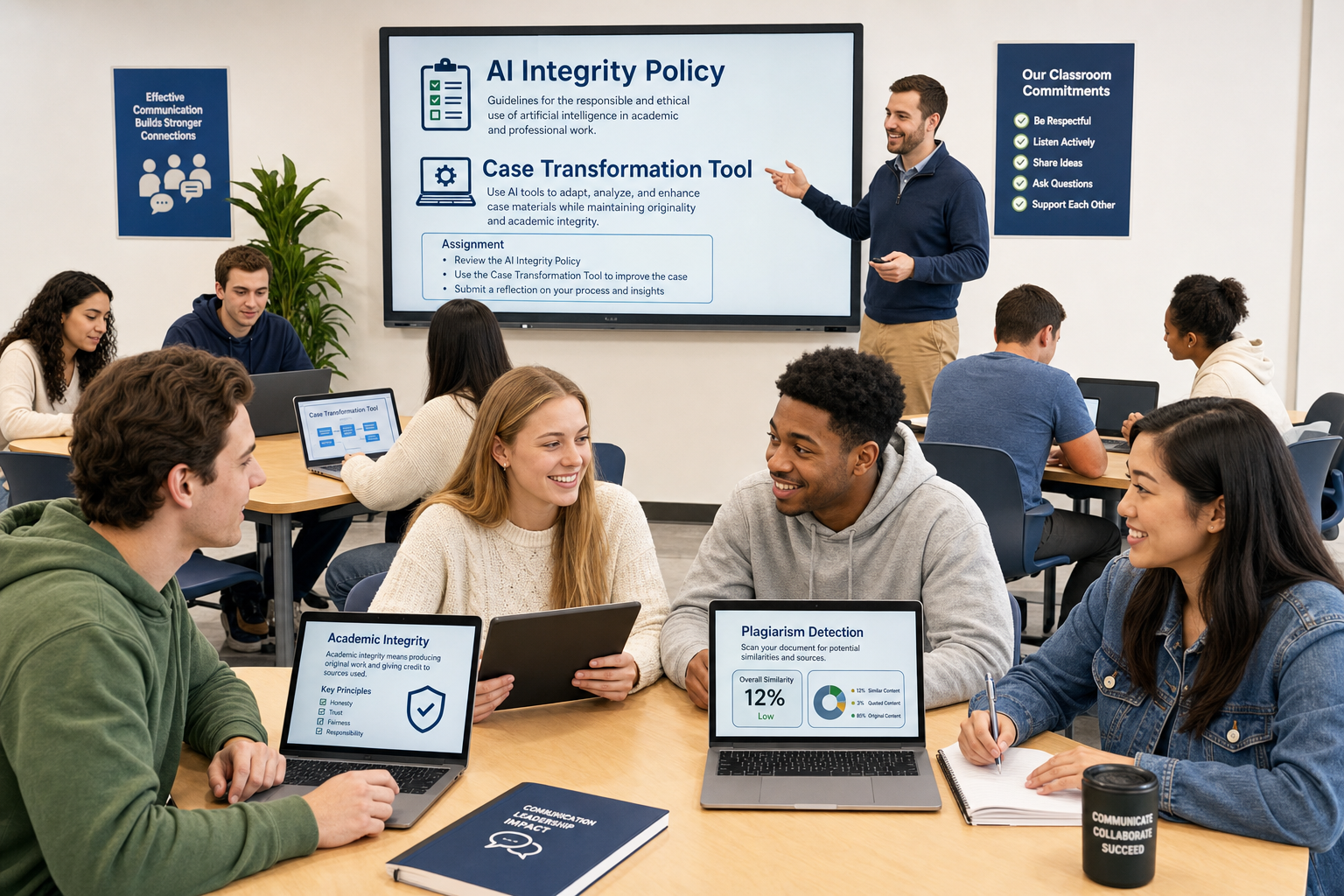
Central to preventing misuse is cultivating a classroom culture that emphasizes ethical integrity. Instructors can engage a diverse group of students in discussions about the ethical implications of AI and promote their understanding of academic honesty as a fundamental principle. Programs drawn from Business Communication Today cover ethical considerations extensively, providing frameworks for educators to develop course modules around these ideas.

Applied learning tasks such as group discussions, peer reviews, and reflection essays can motivate students to internalize the value of doing original work. For instance, having diverse student teams participate in role-playing scenarios where they must create and critique AI-generated content fosters a deeper understanding of the nuanced human components that AI cannot replicate. Technology that monitors these activities can provide insights and feedback for both instructors and students.

- Implementing specialized tools like the Case Transformation Tool helps prevent AI misuse in assignments.
- Fostering an ethical learning environment strengthens students’ commitment to producing original work.
- Diverse classroom activities highlight the gaps AI cannot fill, emphasizing the importance of human creativity.
- Continued guidance and incorporation of ethical frameworks set clear expectations for AI’s role in academics.
- How can instructors detect AI-generated content in student assignments?
- What role does Business Communication Today play in promoting ethical AI use?
- How do tools like the Case Transformation Tool modify AI-generated tasks?
- What precautions should be taken to maintain academic integrity in a technology-enhanced classroom?
- How can a diverse classroom enhance learning about ethical AI use?
Bovee, C.L., & Thill, J.V. (2026). Business Communication Today, 16th Edition. Pearson.
© 2026 Business Communication Teaching and Learning Center. All rights reserved.