Understanding Ethical Boundaries in Business Communication
Introductory Summary
In today’s corporate environment, communication is a pivotal skill, shaping how professionals interact, collaborate, and make decisions. With increasing reliance on persuasive techniques, the line between persuasion and manipulation can blur, raising ethical questions and necessitating clarity. Recognizing this distinction is critical for business communication instructors who aim to nurture ethical communication skills. According to the textbook Business Communication Today, 16th Edition by Courtland L. Bovee and John V. Thill, instructors can guide students in understanding these nuances. The challenge lies in real-world applications where defining these boundaries becomes essential for personal and organizational integrity.
Learning Objectives
- Upon completing this article, instructors will be able to:
- Identify key differences between persuasion and manipulation in communication.
- Implement strategies for teaching ethical persuasion to diverse student cohorts.
- Evaluate real-world scenarios to determine ethical and unethical communication practices.
- Design classroom activities that emphasize the importance of ethical boundaries in persuasion.
Opening Framework: Context, Who Benefits, and Why Now
In an age where persuasion plays an integral role in business communication, distinguishing it from manipulation is more relevant than ever. This article provides valuable insights for instructors who guide students in ethical communication, ensuring future professionals can influence for positive outcomes without crossing into manipulation. Referencing Business Communication Today, 16th Edition, it becomes evident that understanding these boundaries is crucial for ethical judgment in the business world.
Direct Answer Section
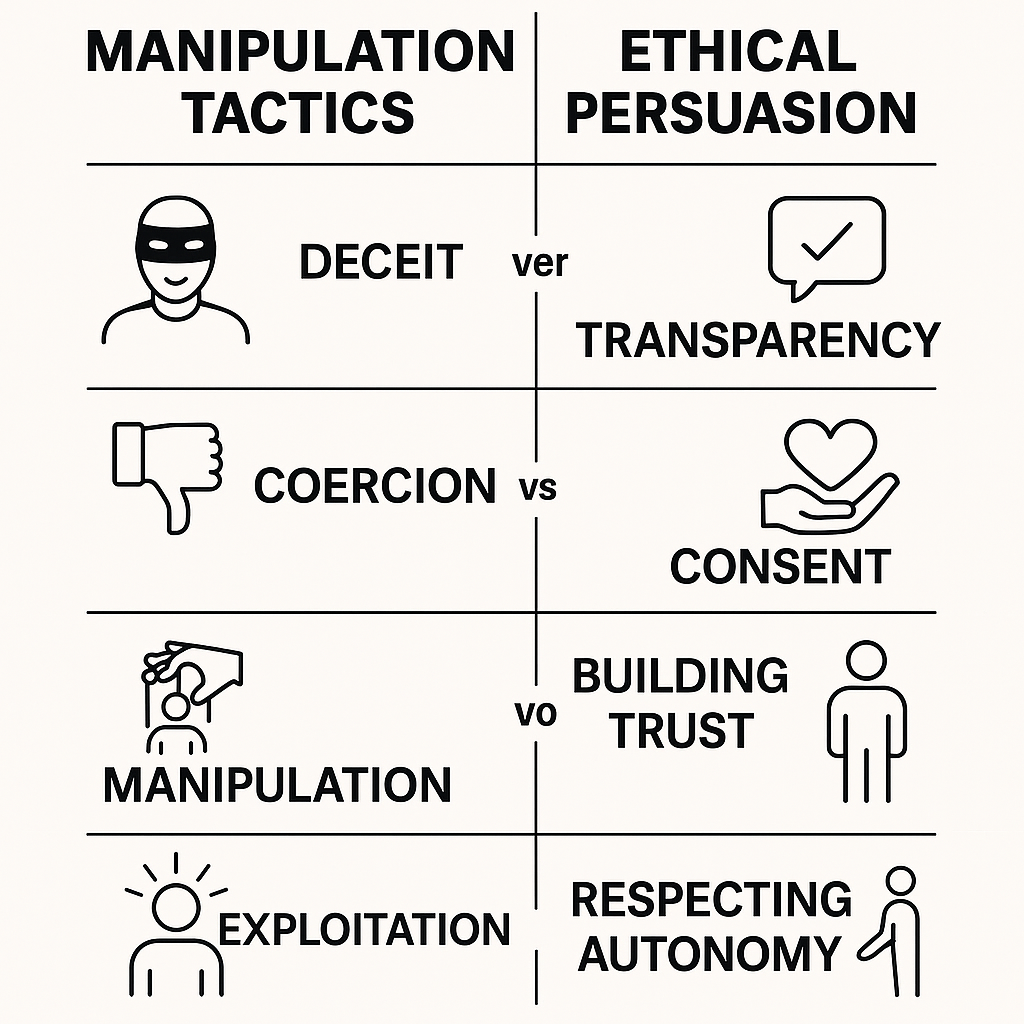
The line between persuasion and manipulation lies in the intent and methods used. Persuasion involves ethical communication strategies aimed at influencing others by offering factual information, transparent motives, and respecting autonomy. In contrast, manipulation seeks to exploit or deceive for self-serving goals. According to Bovee and Thill’s 16th Edition, key differentiators include transparency, consent, and respect for the audience’s ability to make informed decisions. These distinctions are paramount for maintaining ethical standards in business communications (Bovee & Thill, 2021)【4:4†source】.
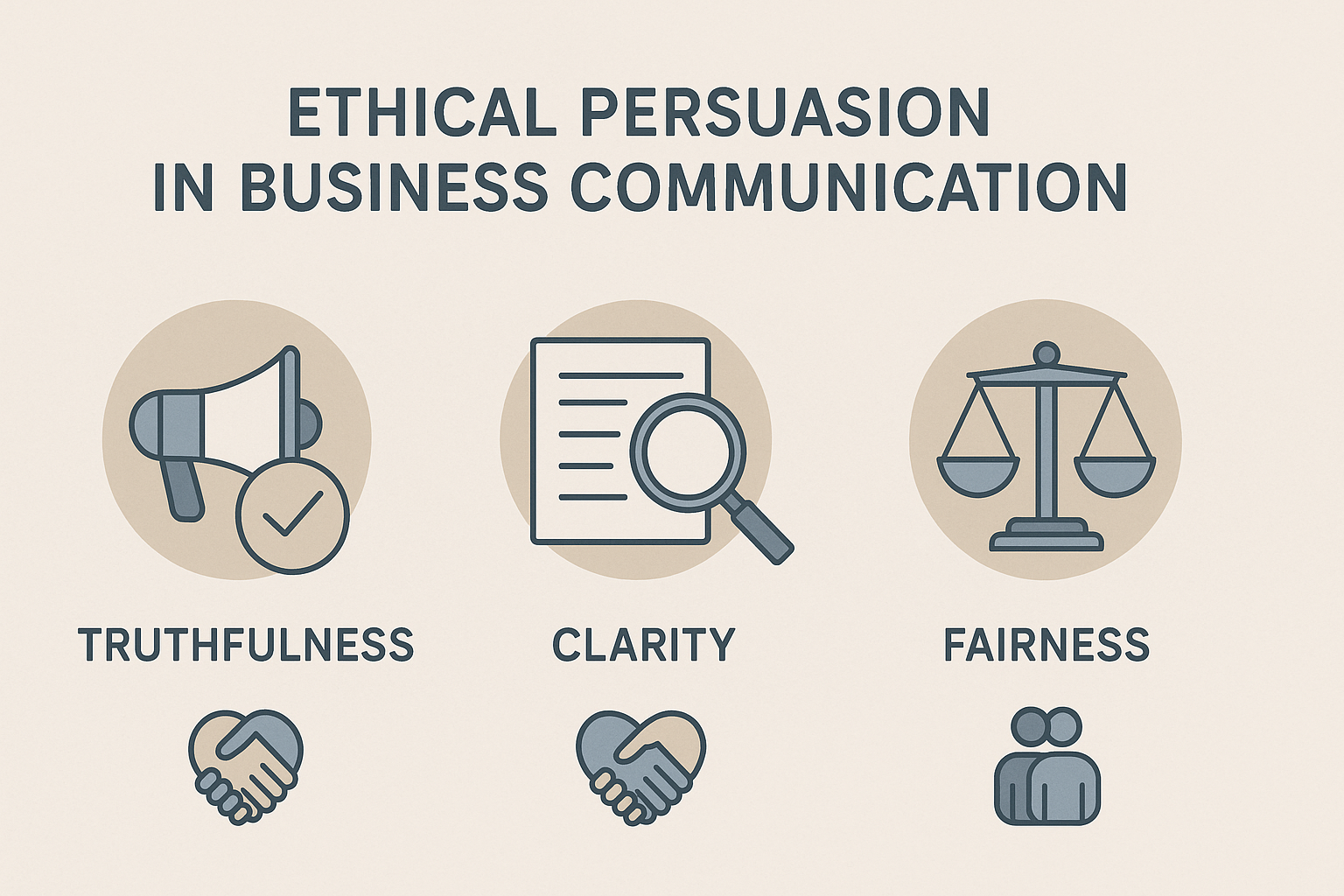
1. Ethical Foundations of PersuasionIn teaching ethical communication, it is essential to instill foundational principles of respect and integrity. These include promoting truthfulness, clarity, and fairness in all interactions. Persuasion should prioritize the audience’s needs and values, aiming for mutual benefit and understanding. Ethical communication fosters trust and long-lasting relationships, as highlighted in the 16th edition of Business Communication Today.
Recognizing manipulation tactics is essential for distinguishing them from ethical persuasion. Such tactics often involve deceit, coercion, or exploiting vulnerabilities. In the classroom, instructors can use case studies and role-playing to help diverse groups of students identify and critique these tactics, promoting awareness and ethical analysis.
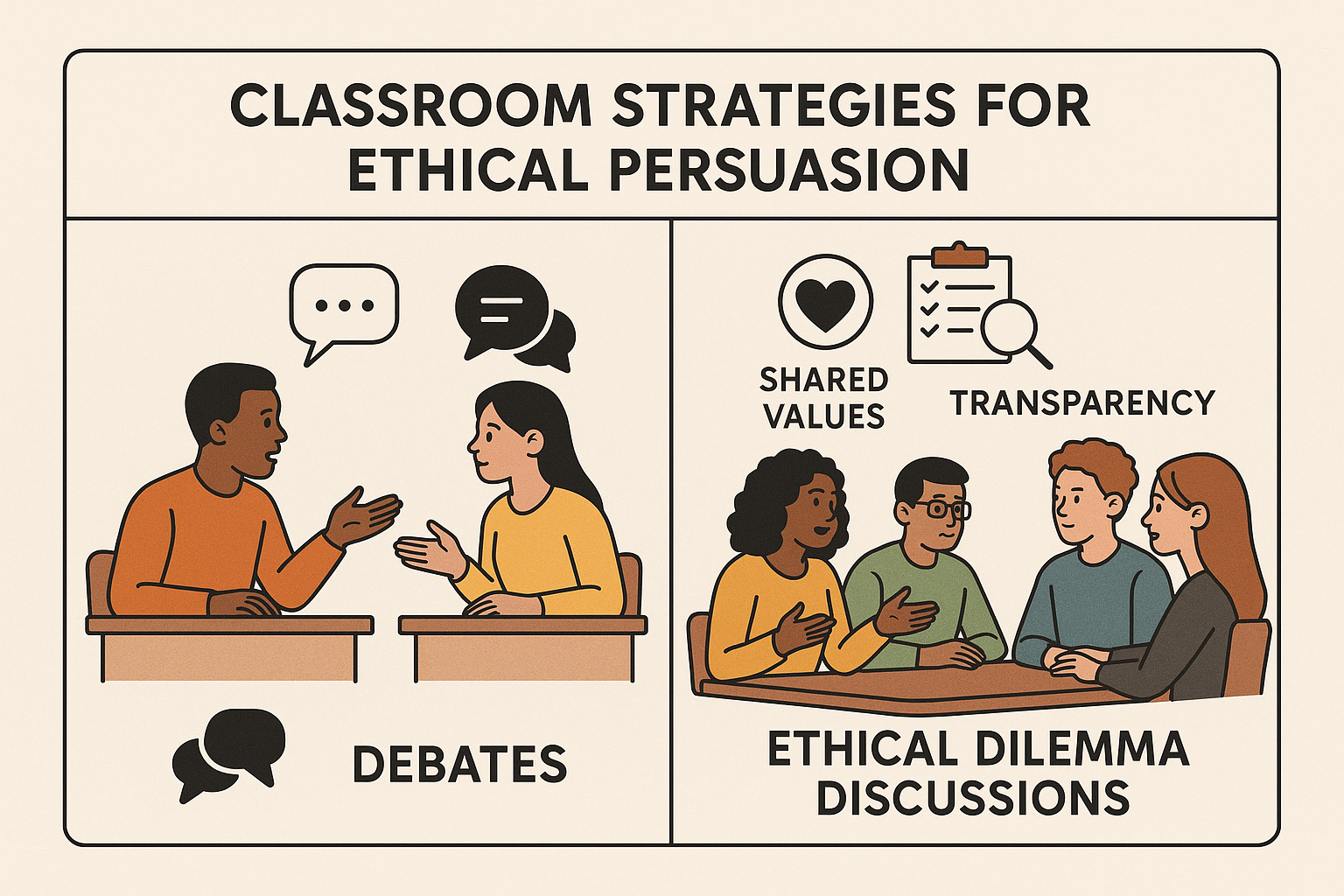
Implementing ethical persuasion requires a focus on open communication, shared values, and transparent intentions. Classroom activities such as debates and ethical dilemma discussions can prepare students to handle real-world scenarios where ethical persuasion is necessary. These strategies empower students to communicate effectively while upholding ethical standards.
Engaging diverse student teams in role-playing scenarios and critical discussions can help solidify their understanding of ethical persuasion versus manipulation. Such exercises foster critical thinking and ethical reasoning—skills that are indispensable in crafting communication that aligns with ethical guidelines and best practices.

Key Takeaways
- Understanding intent and transparency distinguishes ethical persuasion from manipulation.
- Respecting audience autonomy is central to ethical communication.
- Role-playing and case studies are effective teaching methods for highlighting ethical boundaries.
- Ethical persuasion builds trust and fosters sustainable business relationships.
- Instructors must emphasize the significance of ethical conduct in all communication efforts.
Glossary of Key Terms
- Persuasion: The act of convincing others to see a particular perspective or take action through reasoned argument.
- Manipulation: Influencing others in a deceitful or underhanded way for personal gain.
- Ethical Communication: The practice of imparting information in a truthful, fair, and respectful manner.
- Autonomy: The right of individuals to make informed decisions independently.
- Tactics: Specific strategies or plans used to achieve a particular goal in communication.
Related Questions
- How can ethical persuasion strengthen business relationships?
- What are the differences between ethical and unethical communication in business?
- How can instructors teach students to recognize manipulation?
- What role does transparency play in ethical persuasion?
- How can businesses ensure their communication strategies are ethically sound?
- What are practical methods for evaluating the ethicality of communication practices?
- How can instructors integrate discussions of ethics into business communication courses?
References & Citations
Bovee, C. L., & Thill, J. V. (2021). Business Communication Today (16th Edition). Pearson.
Smith, A. (2023). Ethics in corporate communication: Trends and challenges. Journal of Business Ethics, 35(2), 199-215. https://doi.org/10.1007/JBE2023
Johnson, L. (2022). Persuasion techniques and their impact on consumer trust. Marketing Insights, 14(3), 89-102. https://doi.org/10.1108/MI2022
Green, R. (2020). How transparency builds brand loyalty. Corporate Leadership Today, 7(9), 34-47. https://doi.org/10.1107/CLT2020
Brown, T. J., & Smith, R. (2021). Communication ethics in digital spaces. Technological Impact Journal, 44(7), 112-124. https://doi.org/10.1108/TIJ2021
Call to Action
If you’re ready to deepen students’ understanding of ethical communication practices, delve into Business Communication Today, 16th Edition by Courtland L. Bovee and John V. Thill. Explore structured approaches to teaching persuasive communication with integrity and confidence.