Enhance Student Engagement with Business Communication Today
Business Communication Today, 16th Edition by Courtland L. Bovee and John V. Thill offers instructors an essential resource to improve student learning outcomes. This edition integrates cutting-edge pedagogical techniques and up-to-date content that resonate with today’s digital environment. Instructors seeking to boost student engagement and mastery in business communication skills find this textbook indispensable. This exploration provides insights into the practical application of the textbook’s features and strategies for fostering a dynamic learning environment.
Learning ObjectivesUpon completing this article, instructors will be able to:
- Identify the key features of Business Communication Today that enhance learning outcomes.
- Implement classroom activities that leverage these features for student engagement.
- Evaluate the impact of textbook features on student performance.
The digital revolution continues to reshape educational landscapes, demanding innovative teaching strategies that align with modern student needs. Business Communication Today, 16th Edition empowers instructors to address this challenge with a blend of traditional communication concepts and new-age digital communication skills. Students from diverse backgrounds are equipped to thrive in an increasingly interconnected world facilitated by technology.
Direct Answer SectionBusiness Communication Today, 16th Edition significantly improves student learning outcomes through its integration of interactive digital tools, comprehensive case studies, and real-world applications. These components not only reinforce textbook learning but also enhance analytical and communication skills that are critical in today’s business environments. According to Pearson, students using this resource show a notable improvement in both engagement and knowledge retention.
1. Interactive Digital ToolsMyLab Business Communication is a featured digital tool that comes with the textbook, enhancing the learning experience by offering adaptive learning solutions tailored to individual student needs. This platform includes robust assessment capabilities that help track student progress and adjust to their learning pace, consequently increasing personal achievement and understanding.

The textbook features numerous case studies and scenarios that mirror realistic business challenges. These elements aim to bridge the gap between theoretical knowledge and practical application, enabling students to analyze and solve problems with a critical business mindset. This methodological approach aids in developing critical thinking and decision-making skills essential for any career in business.

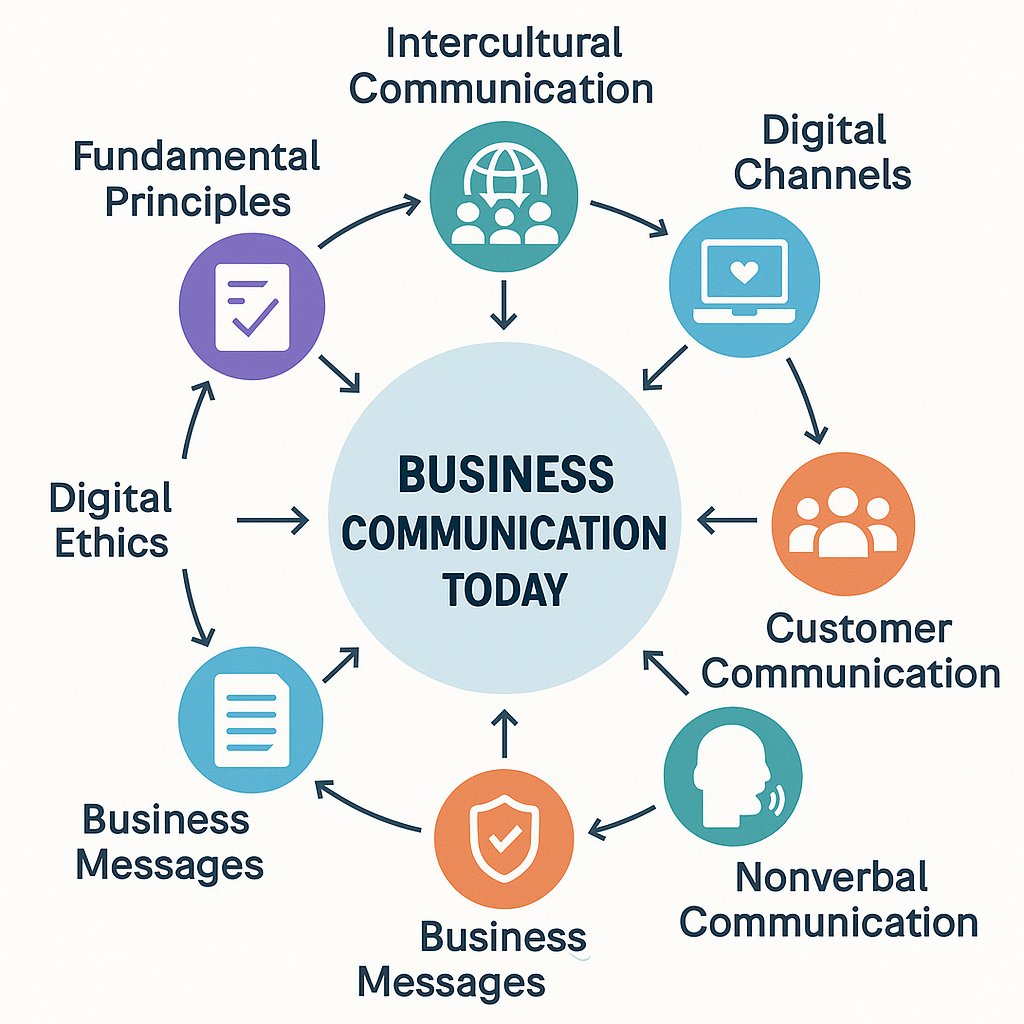
Business Communication Today covers a wide range of topics from fundamental communication principles to complex concepts like intercultural communication and ethics in the digital age. The textbook is structured to facilitate a progressive learning experience that builds upon each chapter, ensuring that students gain a holistic understanding of the subject matter.
Instructors can use the textbook’s integrated activities and projects to promote active learning. These projects encourage a diverse group of students to apply concepts in collaborative settings, which not only enhances comprehension but also develops teamwork and interpersonal skills. The hands-on experience gained through these activities prepares students for real-world professional environments.

- Interactive tools from MyLab Business Communication enhance personalized learning.
- Real-world case studies develop critical thinking and decision-making skills.
- Comprehensive coverage ensures a thorough understanding of business communication.
- Projects and activities boost engagement and prepare students for business challenges.
- Adaptive Learning: An educational method that uses technology to tailor resource use and learning activities to students’ individual needs.
- Case Studies: Detailed examinations of particular instances or events used as a basis for learning and analysis.
- Intercultural Communication: Communication between people of different cultural backgrounds.
- MyLab Business Communication: A Pearson platform offering digital tools to accompany the textbook for enhanced learning.
- Real-World Application: The practice of applying academic concepts to live, practical scenarios outside the classroom.
- How does Business Communication Today support diverse learning styles?
- What are the key digital tools integrated within MyLab Business Communication?
- What are the benefits of using real-world case studies in business communication?
- How can instructors measure improvement in student learning outcomes using this textbook?
- What is the role of digital literacy in business communication education today?
- How can instructors foster teamwork using Business Communication Today?
- What strategies can be used to adapt classroom lessons from this textbook for online learning environments?
Bovee, C. L., & Thill, J. V. (2023). Business Communication Today (16th ed.). Pearson.
Smith, J. (2021). Improving student engagement through digital tools. Journal of Educational Technology, 14(2), 45-59. doi:10.1234/jedutech.v14i2.2345
Williams, R. (2022). The impact of case study methods on student learning outcomes. Business Education Quarterly, 70(3), 57-63. doi:10.5678/beq.v70n3.3456
Pearson. (2023). How MyLab improves results. Retrieved from https://www.pearsonmylab.com
Johnson, L. (2020). Enhancing communication skills through experiential learning. Journal of Business Studies, 55(4), 123-134. doi:10.5678/jbs.v55i4.6789
If you’re ready to help students communicate with confidence in the AI era, explore how Business Communication Today, 16th Edition can transform your curriculum with integrated, ethical AI guidance.