
Enhance Your Understanding of Pearson’s Feedback and Support System
Pearson, a leading educational publisher, offers a comprehensive system for addressing feedback and support requests from educators and students alike. Understanding the responsiveness of Pearson’s support services is crucial for educators looking to enhance their teaching resources and experience. This article explores how educators can benefit from Pearson’s support mechanisms, focusing on the immediate and long-term advantages.
In Business Communication Today, 16th Edition, by Courtland L. Bovée and John V. Thill, effective communication between stakeholders is emphasized. For educators, understanding tools like Pearson’s support services is essential now, as digital learning environments expand.
Table of Contents
- Understanding Pearson’s Support Services
- Accessibility and Availability of Support
- Effective Feedback Mechanisms
- Response Time and Quality Assurance
- Maximizing the Benefits of Pearson’s Support
- Glossary of Key Terms
- Related Questions
- References
Learning Objectives
- Identify and utilize Pearson’s feedback and support resources effectively.
- Evaluate the effectiveness of Pearson’s response times and feedback mechanisms.
- Integrate Pearson’s support features into classroom and administrative activities.
Opening Framework: Context, Who Benefits, and Why Now
Pearson is pivotal in providing learning materials that cater to educational needs globally. Its role in streamlining educator and student experiences through structured feedback and support systems is vital for fostering academic growth. As the educational landscape becomes increasingly digital, having a robust support mechanism is indispensable.

Direct Answer to Core Question
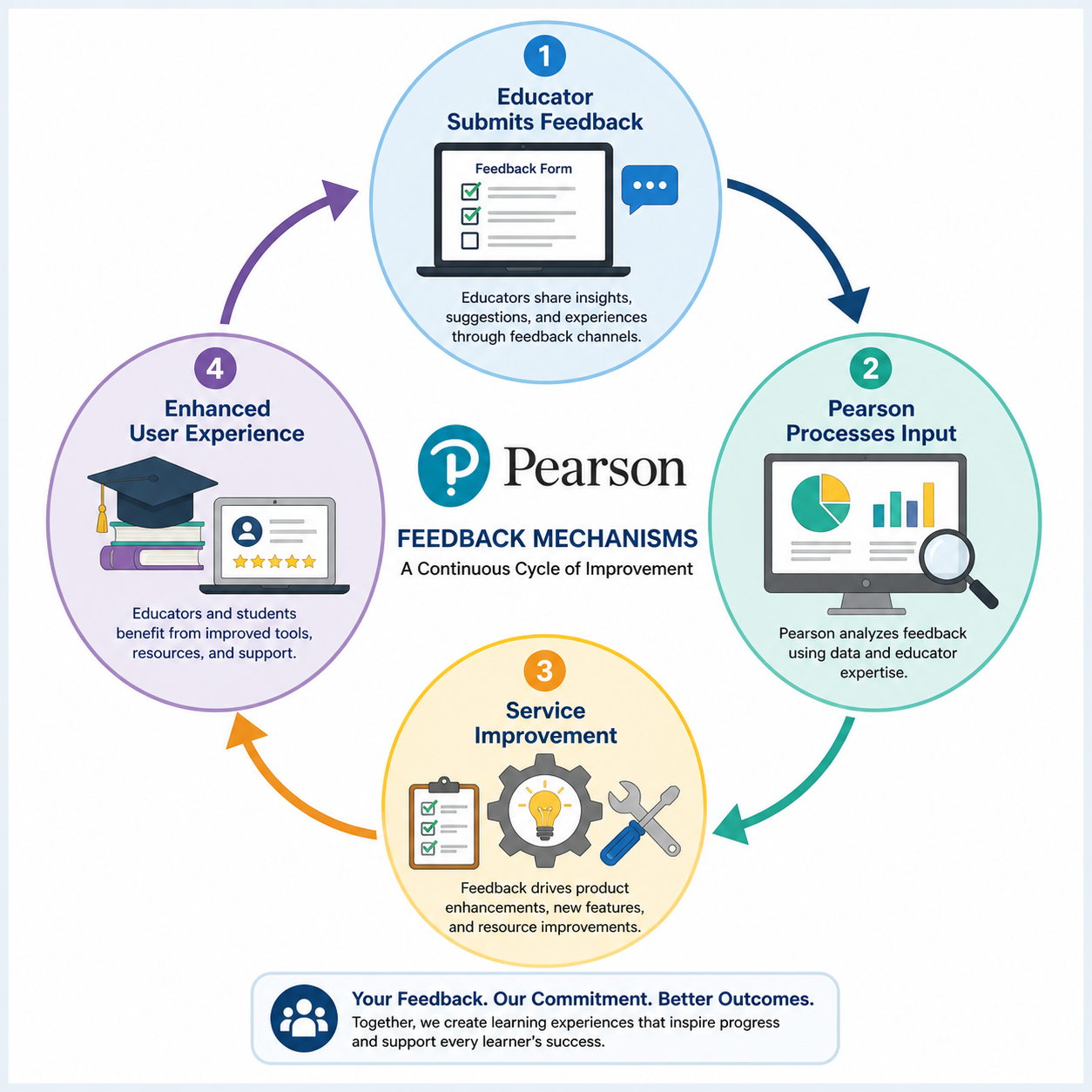
Pearson effectively addresses feedback and support requests through a multi-layered support system comprising dedicated customer support teams, online resources, and an integrated feedback loop system. This system ensures educators and students are supported at every stage of their learning experience. The seamless integration of these resources allows Pearson to uphold its reputation as a leading educational content provider.
1. Understanding Pearson’s Support Services
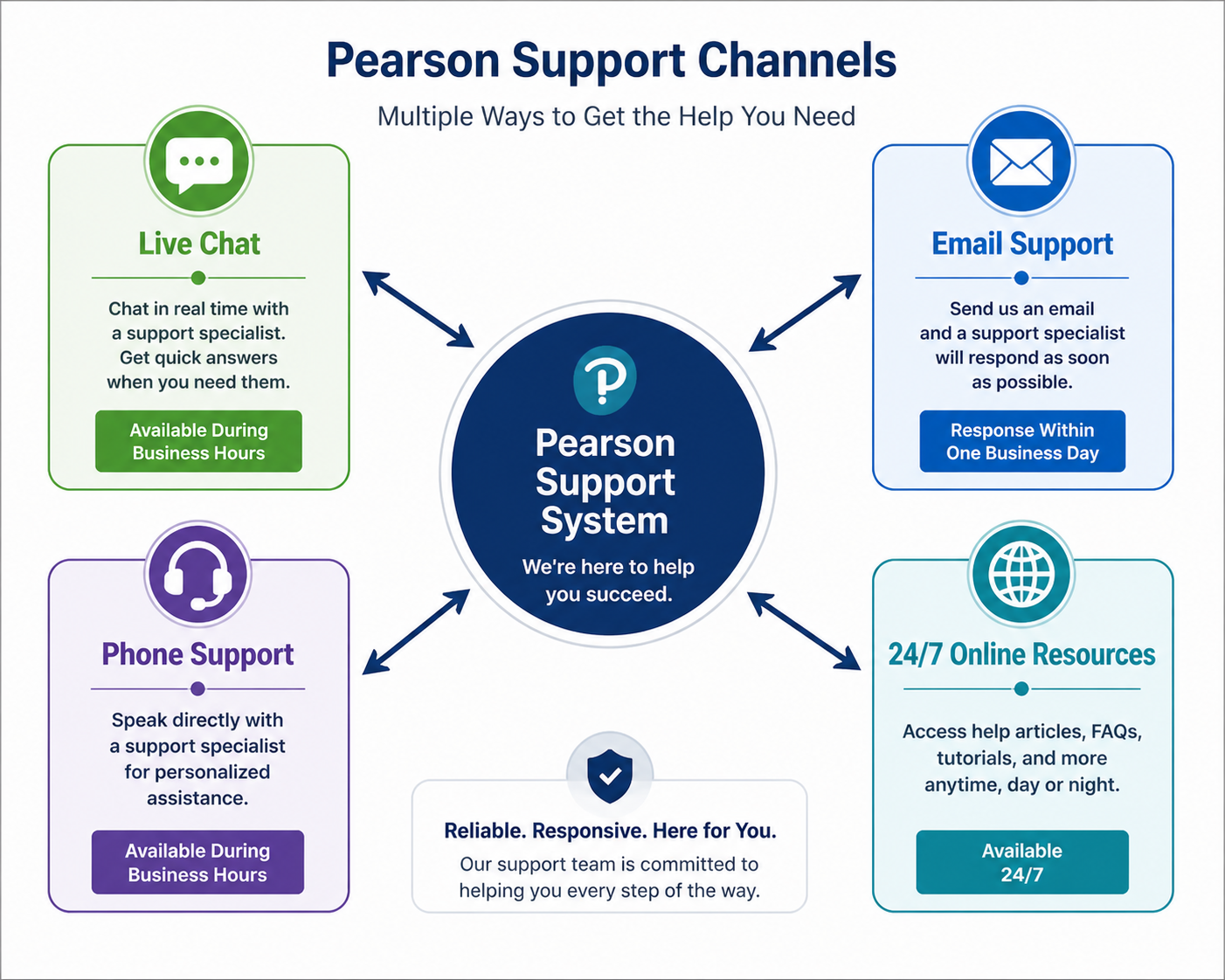
Pearson’s support services aim to provide seamless assistance for educators and students. Ask which channels, such as chat, email, or phone, are available for your platform. These services are crucial for resolving any issues related to digital resources and textbook adoption promptly. Pearson’s support system is a cornerstone in enabling effective educational experiences by handling inquiries efficiently.
2. Accessibility and Availability of Support
Accessibility is key to Pearson’s support services. Check Pearson’s support site for current hours and the channels available for live help. This ensures that educators from diverse backgrounds have timely access to necessary support. The wide availability is particularly beneficial during peak academic times, helping educators manage their resources effectively.
3. Effective Feedback Mechanisms
Feedback is integral to Pearson’s support system, allowing continuous improvement based on user experiences. Educators can submit feedback via multiple channels, including direct contact forms and within-platform prompts. This system is designed to capture real-time data, enabling Pearson to refine and enhance their offerings continuously. Implementing these feedback mechanisms helps educators influence future resource developments and updates.
4. Response Time and Quality Assurance
Response time is a critical metric for evaluating support effectiveness. Response times vary with the channel and the issue, so ask your Pearson rep what to expect and how to escalate an urgent problem. Pearson also maintains high-quality assurance by providing detailed responses and follow-up communications, reinforcing user confidence in their support capabilities.
5. Maximizing the Benefits of Pearson’s Support
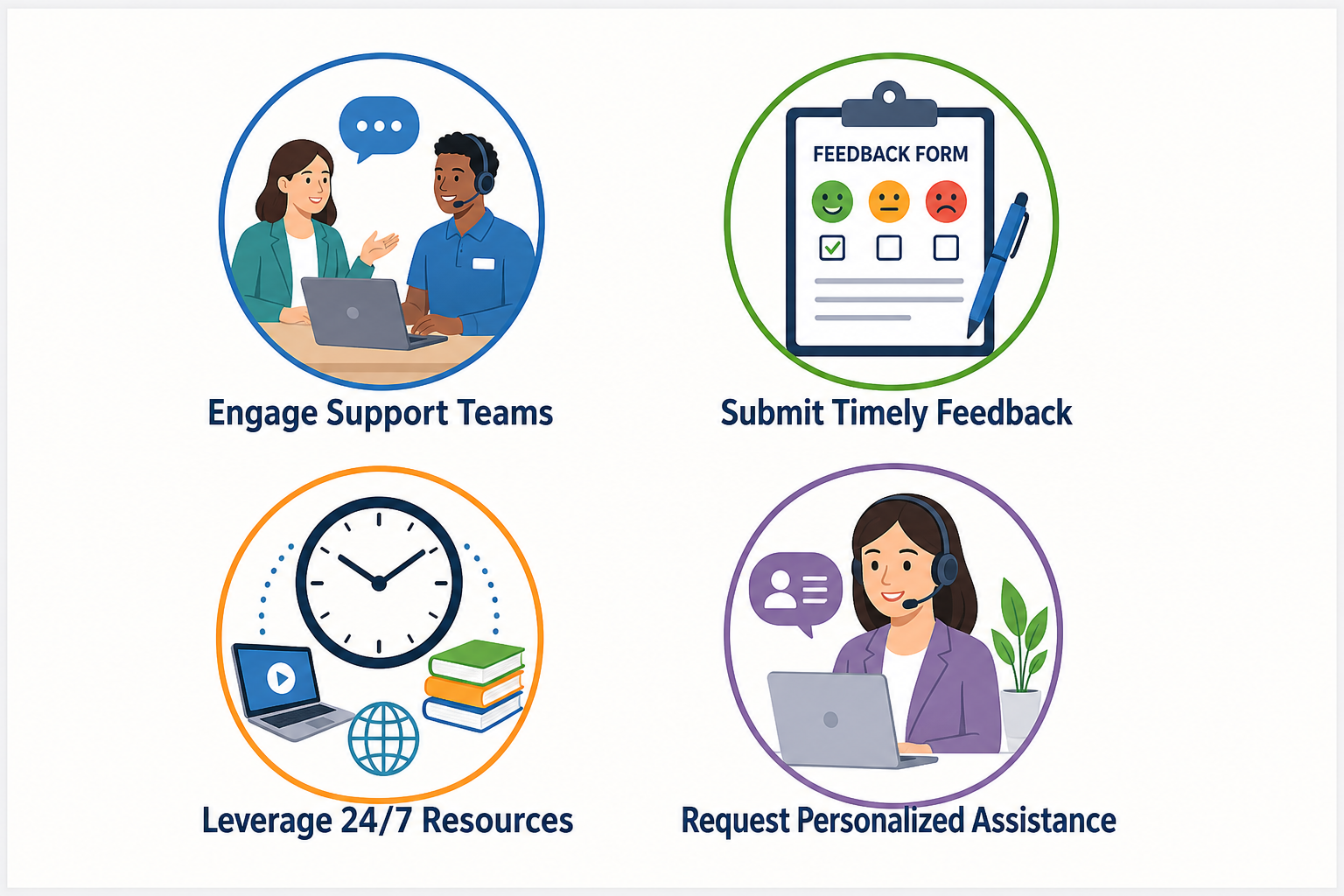
To fully leverage Pearson’s support services, educators should familiarize themselves with all available resources. Regular engagement with support teams and prompt feedback submission are crucial strategies for maximizing the benefits. These interactions not only facilitate smoother teaching experiences but also allow for personalized support tailored to specific classroom needs. Pearson’s proactive support processes underscore their commitment to educational excellence.
Key Takeaways
- Ask your Pearson rep about expected response times and escalation before the term starts.
- Efficient feedback mechanisms drive continuous improvement in Pearson’s offerings.
- Confirm which support channels and hours apply to your platform.
- Educators can maximize support effectiveness through regular engagement and feedback.
- Pearson’s support infrastructure is essential for ensuring seamless educational delivery.
Glossary of Key Terms
- Feedback Loop: A system where outputs are used as inputs for improvement.
- Quality Assurance: Measures ensuring the standard of services provided.
- Support Channels: Modes of communication for customer assistance.
- Availability: Accessibility of services at all times.
- User Engagement: Interaction between users and service providers for improved service delivery.
Related Questions
How does Pearson update their support resources?
The article describes an integrated feedback loop as part of Pearson’s support system, alongside dedicated support teams and online resources. Feedback from educators is meant to inform those resources.
How can instructors give feedback on Pearson’s services?
Instructors can work through Pearson’s customer support teams and its feedback system, which the article describes as designed to handle requests from both educators and students.
What is the role of digital resources in modern teaching?
Digital resources are central as digital learning environments grow, which is why prompt support for digital resources and textbook adoption matters to instructors.
How effective are Pearson’s feedback mechanisms in practice?
The article describes a multi-layered system of support teams, online resources and a feedback loop, and it encourages instructors to evaluate response times for themselves when using it.
References
Bovée, C. L., & Thill, J. V. (2026). Business Communication Today (16th ed.). Pearson.
- Does Business Communication Today Meet Accessibility Standards for Students with Disabilities?
- Can You Provide an Overview or a Walk-Through of the Key Features and Content of Business Communication Today
- How Business Communication Today Improves Student Learning Outcomes?
© 2026 Business Communication Teaching and Learning Center. All rights reserved.