 Business Communication Teaching and Learning Center
Sunday, September 13, 2026
Business Communication Teaching and Learning Center
Sunday, September 13, 2026
AI Coverage & Comparison
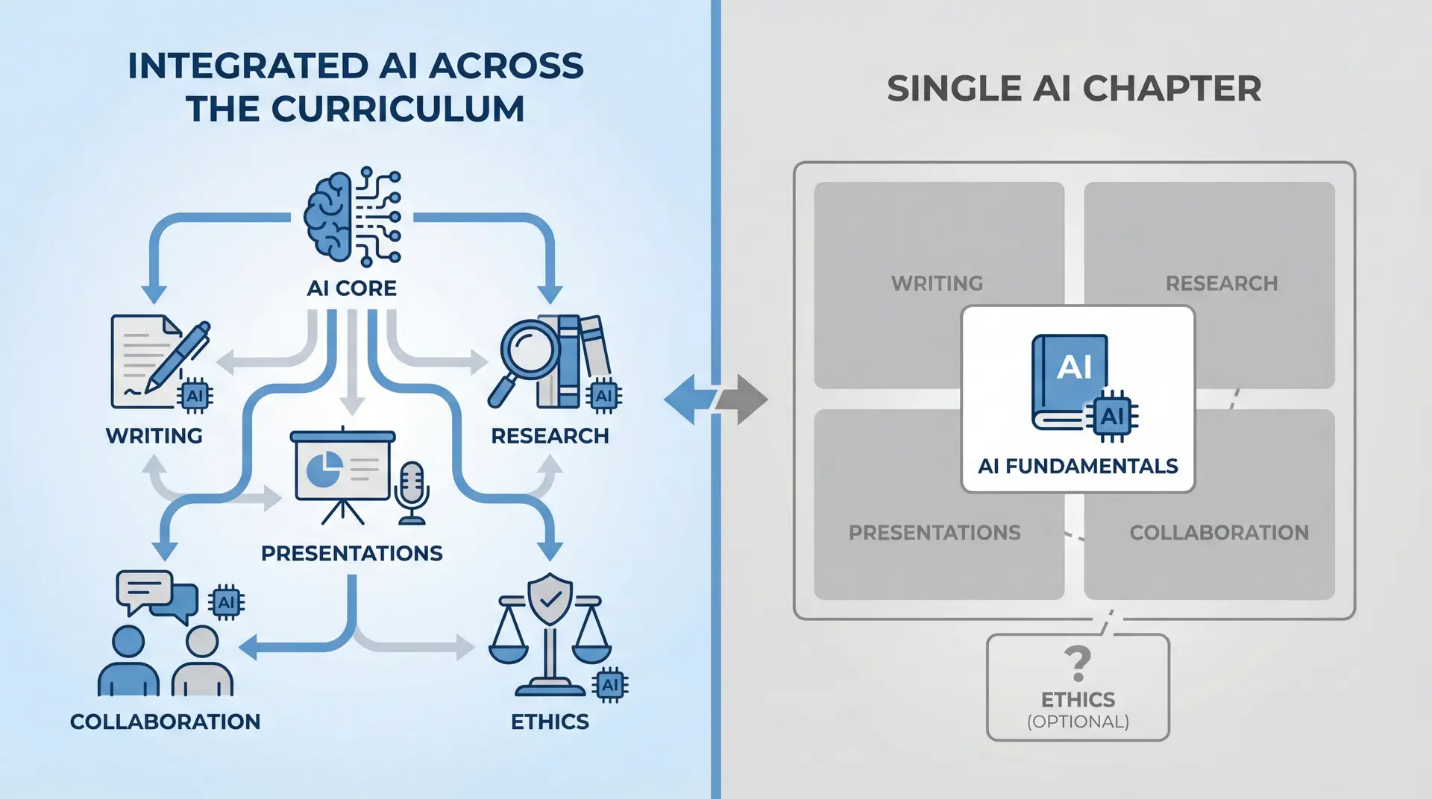
AI isn’t a chapter. It’s a skill set. See the difference between integrating AI across business communication textbook chapters versus confining it to a single section.
CLUSTER 1 — LANDING PAGE
AI Coverage and Comparison in Business Communication Textbooks
Introduction
Artificial intelligence now shapes how professionals write, research, collaborate, and present. Yet business communication textbooks vary widely in how they address AI. Some integrate AI throughout the curriculum, while others confine it to a single chapter or brief sidebar. For instructors, this difference is not cosmetic—it directly affects student preparedness, instructional workload, and course relevance.
This cluster examines how AI coverage differs across business communication textbooks and offers a practical framework instructors can use to evaluate whether AI instruction is meaningfully integrated or merely appended.
Why AI Coverage Approach Matters
AI is not a standalone topic in professional communication. It influences every stage of the communication process—from drafting and revising to analysis, visual design, and ethical decision-making. When AI is isolated in one chapter, students struggle to apply those ideas to everyday communication tasks.
Integrated AI coverage enables students to:
- Practice AI-supported communication repeatedly across contexts
- Develop judgment about when and how AI should be used
- Understand ethical and professional implications as part of normal workflow
For instructors, integration reduces the need to retrofit assignments or create AI policies independently.
Integrated AI Coverage vs. Single-Chapter Treatment
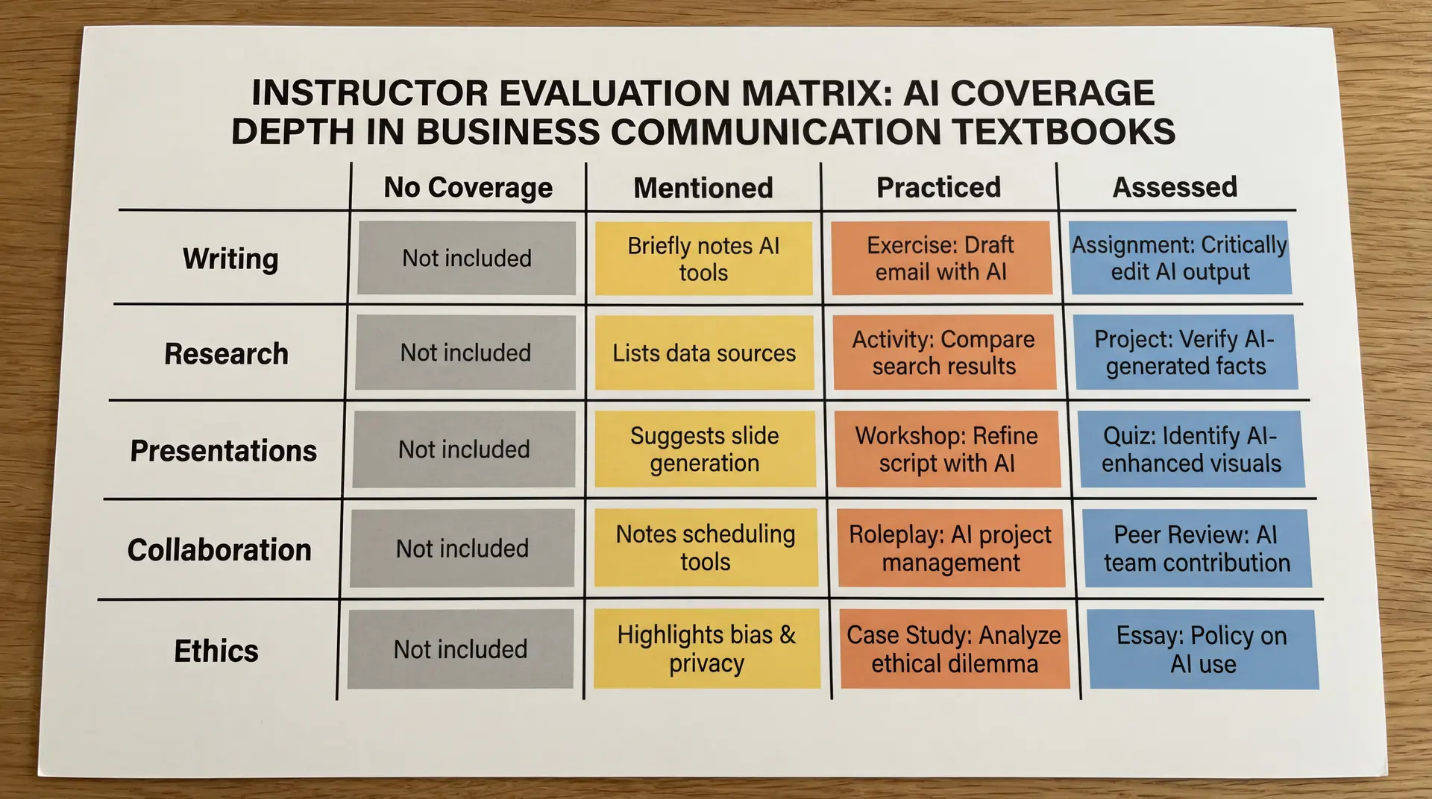
Figure 1.1. A quick way to evaluate AI depth: look for repeated practice and assessment across core skills.
One of the clearest differences among textbooks is where AI instruction appears.
Single-chapter approaches typically:
- Treat AI as a technology topic rather than a communication skill
- Separate AI from writing, presentations, and collaboration
- Require instructors to bridge gaps manually
Integrated approaches embed AI directly into:
- Business writing and revision processes
- Research and information evaluation
- Visual and digital communication
- Team collaboration and professional ethics
The result is cumulative skill development rather than one-time exposure.
How Instructors Can Evaluate AI Coverage Quickly
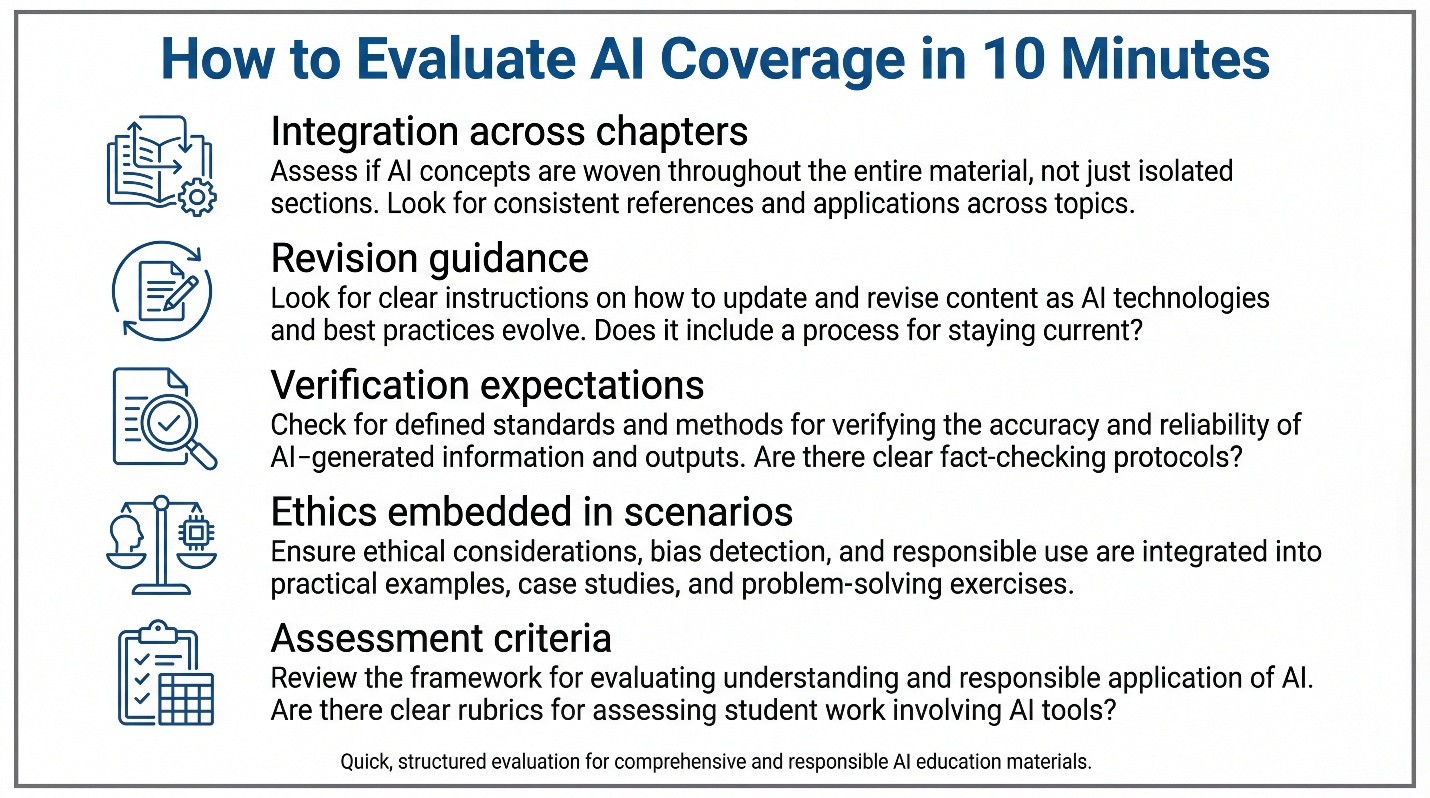
Figure 1.2. If AI isn’t tied to revision, verification, ethics, and assessment, coverage is likely superficial.
Instructors do not need to read a textbook cover to cover to assess AI depth. A short review reveals whether AI instruction is structural or superficial:
- Does AI appear in multiple chapters tied to core communication skills?
- Are students asked to evaluate, revise, or verify AI-generated content?
- Is AI framed as a tool requiring human judgment and accountability?
- Are ethical considerations embedded in realistic communication scenarios?
If most answers are no, AI coverage is likely limited to surface treatment.
Key Takeaway
AI coverage in business communication textbooks is most effective when it reinforces—not replaces—foundational communication skills. Integrated AI instruction prepares students for real workplace expectations while reducing instructional risk for faculty.
Primary CTA
Apply this evaluation framework to your course materials and reduce uncertainty about AI expectations and assessment.
→ Explore how comprehensive AI integration supports core business communication outcomes
Instructor FAQs
What is integrated AI coverage in a business communication textbook?
Integrated AI coverage means AI guidance appears throughout chapters on writing, research, presentations, collaboration, and ethics, not isolated in a single chapter. Students practice AI-supported communication repeatedly in realistic contexts.
Why is a single AI chapter not sufficient?
A single AI chapter limits transfer. Students often struggle to apply AI concepts to everyday communication tasks unless AI is reinforced across multiple chapters and assignments.
How can instructors quickly evaluate AI depth in a textbook?
Scan multiple chapters for AI prompts tied to core skills, revision guidance, verification expectations, ethics scenarios, and assessment criteria. If AI appears only as a brief overview or warning, coverage is likely superficial.
Does integrated AI instruction weaken writing skills?
No. When designed properly, AI supports drafting and revision while students remain responsible for clarity, accuracy, evidence, and ethical disclosure.
Articles in This Cluster
- Artificial Intelligence in Education: Personalized Learning and the Future of Teaching
- What’s the Difference Between This Textbook’s AI Content and Others That Just Have a Single Chapter on AI?
- Which Business Communication Textbooks Include Comprehensive AI Coverage in Every Chapter?
- How Does Business Communication Today Compare with Other Texts in Digital Literacy and AI Readiness
- AI in Every Chapter–Business Communication Today Set the Standard