How Can We Close Gap Between gives instructors a practical way to connect classroom teaching, AI tools, and business communication outcomes students can use in professional settings.
Aligning Business Communication with Current Industry Needs
Business communication education faces the imperative challenge of aligning academic teachings with real-world business demands. This alignment is crucial for ensuring that students transition smoothly from the classroom to the workplace, armed with applicable communication skills. The 16th Edition of Business Communication Today by Courtland L. Bovee and John V. Thill serves as a critical resource in bridging this gap. By integrating practical examples and current industry scenarios, educators have the opportunity to equip students with effective communication strategies that are immediately applicable in professional settings. This article will explore strategies for integrating real-world demands into business communication curricula, as posed by educators eager to enhance their teaching methodologies.
Learning Objectives
- Identify the primary gaps between academic business communication teachings and industry demands.
- Design curriculum enhancements that bring industry realities into the classroom.
- Implement teaching strategies that utilize Business Communication Today for practical learning experiences.
Opening Framework: Bridging Academia with Industry Practice
The need to integrate real-world scenarios into business communication education has never been more pressing. With constant advancements in communication technologies and workplace dynamics, educators must adapt their courses to reflect these changes. This article draws on insights from Business Communication Today to illustrate effective ways to modernize curricula to better serve the evolving marketplace. By focusing on practical applications of business communication theories, educators can ensure students are job-ready and competitive.
Direct Answer
The direct way to close the gap between business communication education and real-world demands is through practical application and real-world relevance. This can be achieved by using case studies, simulations, and technology tools that are aligned with current industry practices. According to Bovee and Thill, incorporating these elements into the curriculum allows students to experience realistic business challenges and cultivate the competencies needed to communicate effectively in today’s fast-paced business environments. The 16th Edition of Business Communication Today is designed with this practical orientation, providing a rich selection of resources, including interactive tools that mirror real workplace scenarios.
1. Identifying Gaps Between Academia and IndustryIdentifying the disconnects between what is taught in business communication courses and the skills demanded by employers is the first step. A survey by LinkedIn highlighted that 57% of leaders feel there is a skills gap in communicating effectively in teams. Courses often emphasize theoretical knowledge, but may not adequately prepare students for the dynamic nature of corporate communications.
To address this gap, instructors must regularly update course content and teaching methods to reflect the latest business communication practices. This includes fostering experiential learning and promoting familiarity with digital communication tools.
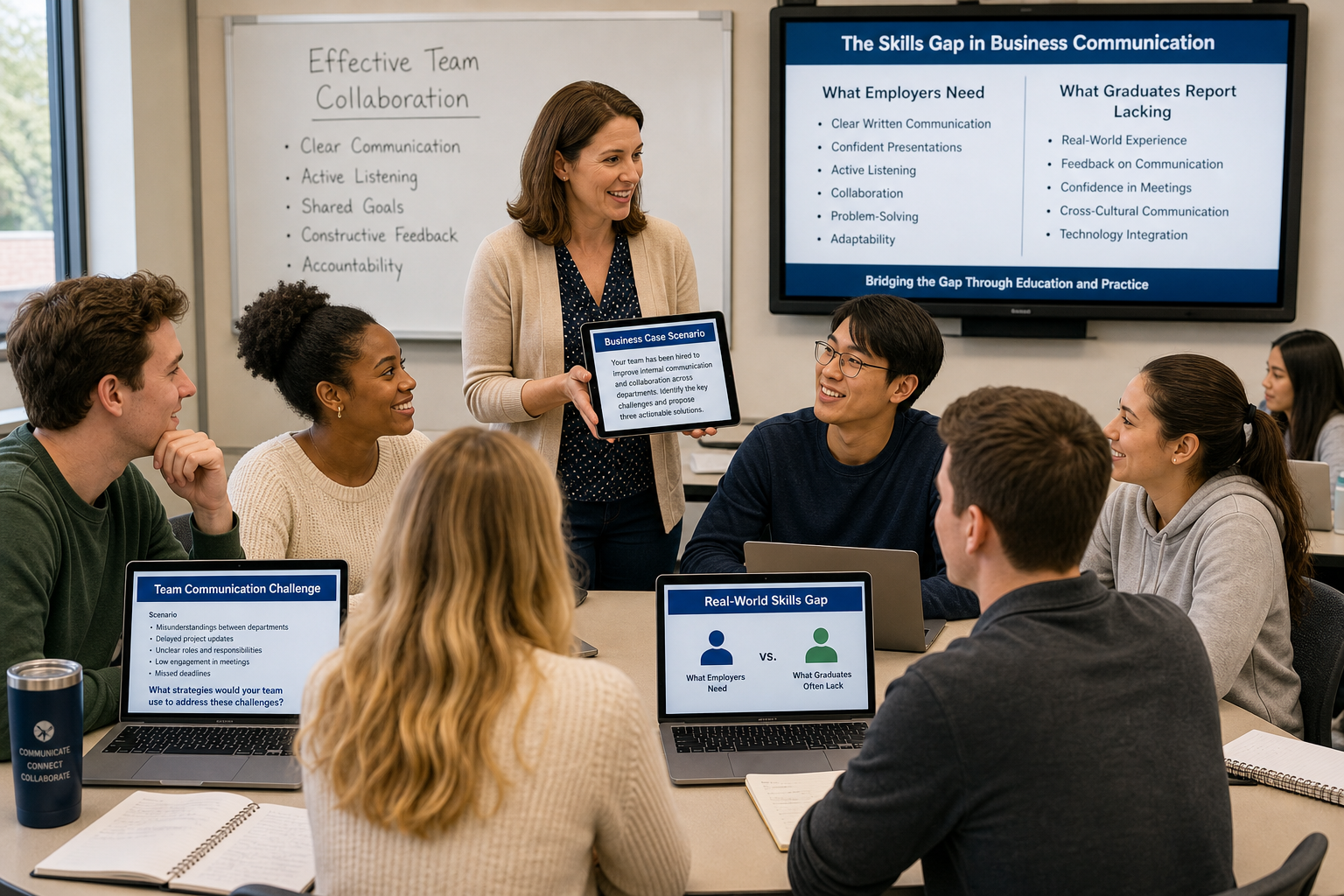
Incorporation of real-world scenarios via case studies and project-based learning can significantly bridge the knowledge gap. For instance, instructors can utilize assignments that require students to respond to typical business situations using current communication technologies such as Slack, Zoom, and collaborative platforms like Asana.
Project-based learning encourages students to tackle real-world problems similar to those they will face in the workplace. By doing so, they become adept at applying theoretical frameworks to practical situations, thereby enhancing their problem-solving and critical thinking abilities.

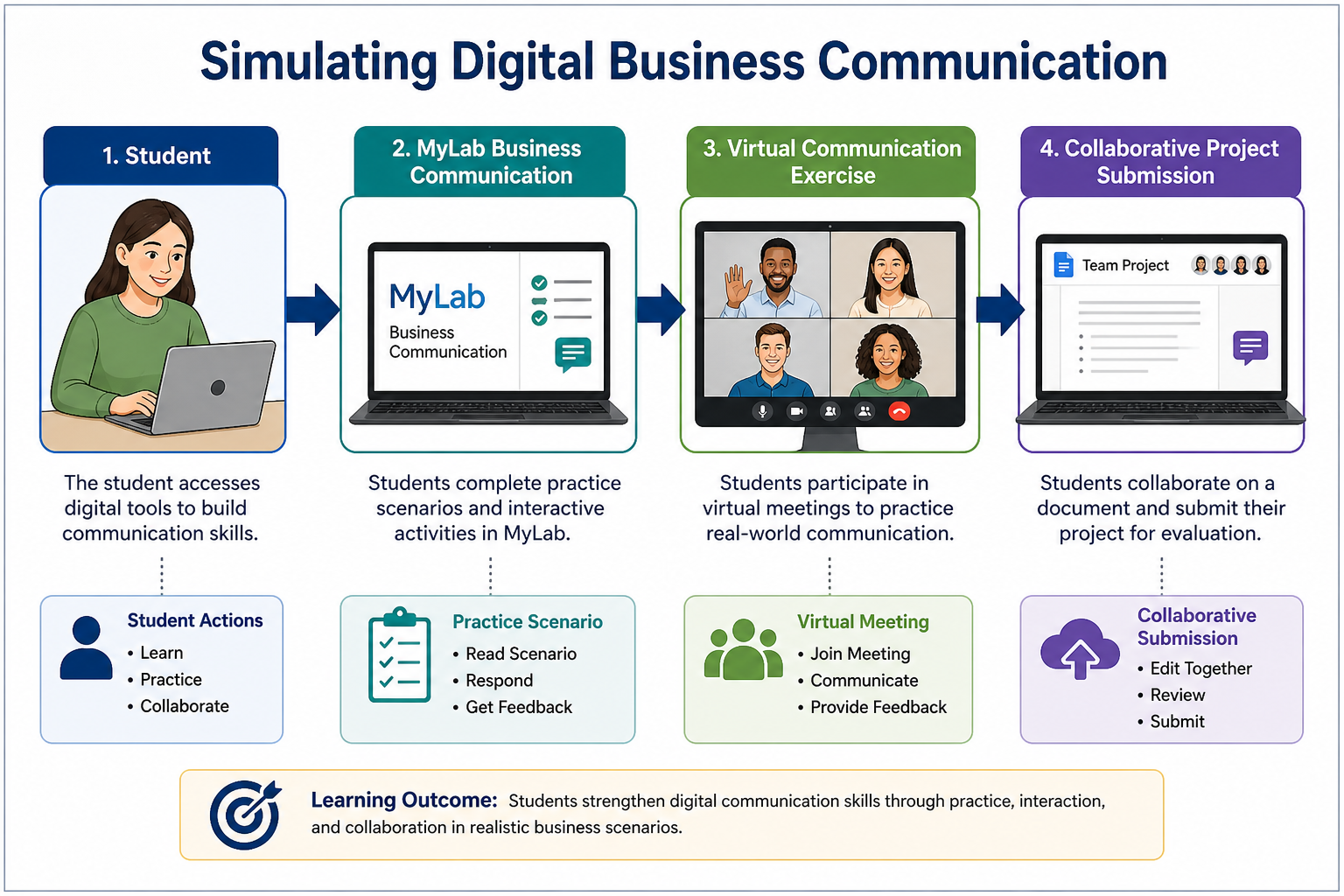
The use of technology in teaching business communication can replicate the tools and environments students will encounter professionally. Digital communication skills are crucial, and platforms like MyLab Business Communication offer software and resources that align with industry needs. These platforms allow students to practice their communication skills in settings that simulate those found in modern organizations.
Enhancements such as digital collaborative projects and virtual communication exercises help students hone their skills in a digitally-driven world. By adopting these technologies, educators can offer an interactive and engaging learning experience that mirrors the dynamic nature of contemporary business communications .
Key Takeaways
- Engage students with real-world scenarios to reduce the gap between theory and practice.
- Use technology to simulate modern business environments in the classroom.
- Regular updates to curriculum ensure alignment with current industry communication demands.
- Enhance learning through interactive platforms like MyLab Business Communication.
Glossary of Key Terms
- Case Study: A detailed analysis of a person, group, or event that is typically used in educational settings to illustrate a concept.
- Experiential Learning: The process of learning through experience and is more specifically defined as “learning through reflection on doing”.
- Project-Based Learning: A student-centered pedagogy that involves a dynamic classroom approach in which students acquire a deeper knowledge through active exploration of real-world challenges.
- Digital Communication Tools: Software and platforms that facilitate communication through electronic means, such as email, chat, and video conferencing tools.
- Interactive Learning: Educational programs that engage students through activities that require interaction between the student and the learning environment.
Related Questions
- How can educators ensure their teaching methods are aligned with industry expectations?
- What role do case studies play in closing the business communication gap?
- How does the integration of technology enhance business communication learning?
- What are effective strategies for updating business communication curriculum?
- How can MyLab Business Communication be utilized in teaching modern business communication skills?
Call to Action
If you are committed to preparing your students for the challenges of modern business communication, explore the comprehensive resources available in Business Communication Today, 16th Edition, to enhance your curriculum with real-world insights and practical applications.
References
Bovee, C. L., & Thill, J. V. (2026). Business Communication Today (16th ed.). Pearson.
© 2026 Business Communication Teaching and Learning Center. All rights reserved.