Embrace Generational Shifts to Enhance Business Communication
In the evolving landscape of business communication, generational shifts are transforming traditional modalities. Chapter 3 of Business Communication Today, 16th Edition, by Courtland L. Bovée and John V. Thill, adds a useful caution: generational labels are broad generalizations, and there is little hard research showing that generations want different things from work. By understanding these changes, instructors can prepare students from diverse backgrounds for the modern workplace, bridging communication styles across generations. This article addresses common questions from educators seeking to integrate generational insights into their teaching strategies.
Learning Objectives
- Recognize the impact of generational shifts on business communication.
- Implement modern communication techniques suitable for diverse generational cohorts.
- Evaluate traditional and contemporary communication practices for inclusivity and effectiveness.
- Design teaching interventions that align with varying generational preferences.
Opening Framework
The generational evolution in business communication, driven by technology and cultural shifts, demands adaptation in teaching methods. Courtland L. Bovée and John V. Thill’s Business Communication Today, 16th Edition, advises treating age like any other dimension of diversity. As instructors strive to engage a diverse group of students, helping them communicate well with people of every age is critical to workplace success. The focus is on transforming perceived challenges into opportunities for instructional innovation.
Direct Answer
Generational shifts necessitate updates in business communication approaches. Millennials and Gen Z now make up a large share of the workforce, and digital tools have changed how everyone communicates at work. Business Communication Today cautions against assuming that any individual fits a generational profile: it advises students to resist assumptions about people from other age groups and not to assume their own group’s approach is superior. By applying that principle, educators can foster communication skills that resonate with students from diverse age groups.
1. Understanding Generational Differences
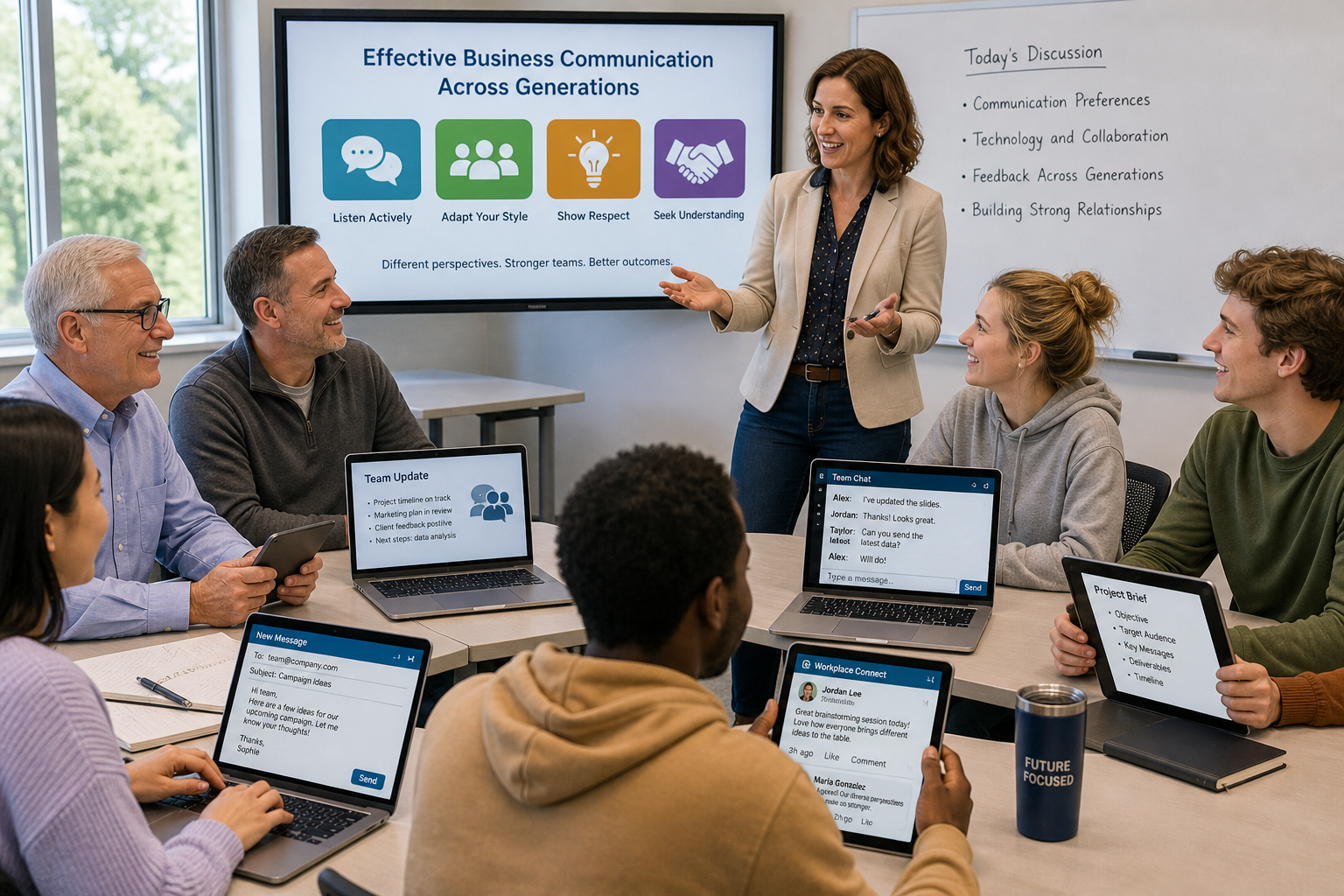
Labels such as Baby Boomers, Generation X, Millennials, and Gen Z are common, but Business Communication Today points out their weaknesses: statements about a generation are broad generalities, and the age ranges aren’t hard-and-fast boundaries. Channel preferences often depend more on the person, the task, and the workplace than on birth year, so teach students to ask colleagues how they prefer to communicate instead of guessing from age.
2. Integrating Technology in Communication
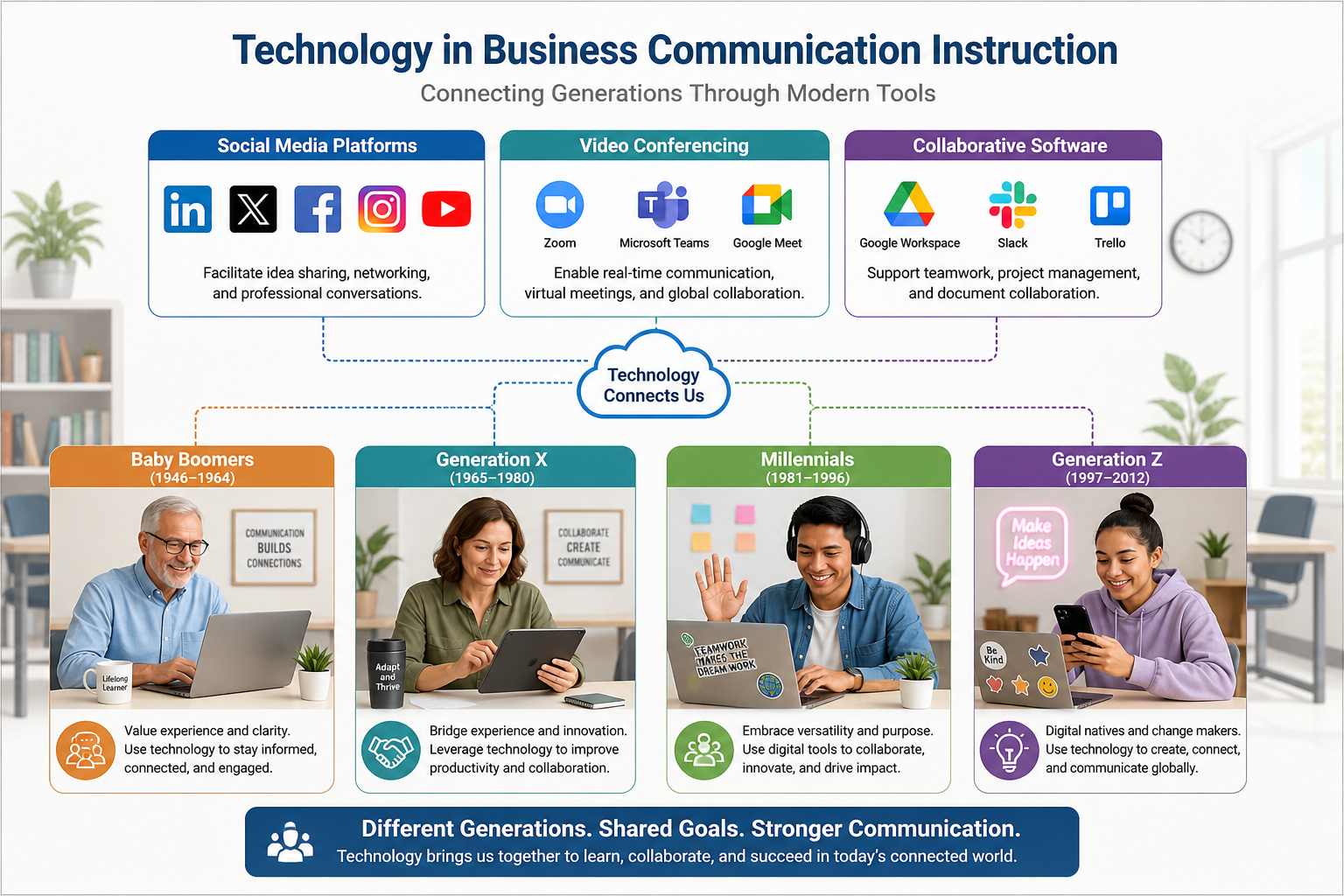
Modern instructors can leverage technology to bridge generational gaps. Utilizing tools like social media platforms, video conferencing, and collaborative software aligns educational practices with contemporary student expectations. Emphasizing technology not only engages younger generations but also enhances the digital literacy of older participants.
3. Promoting Inclusive Communication Practices
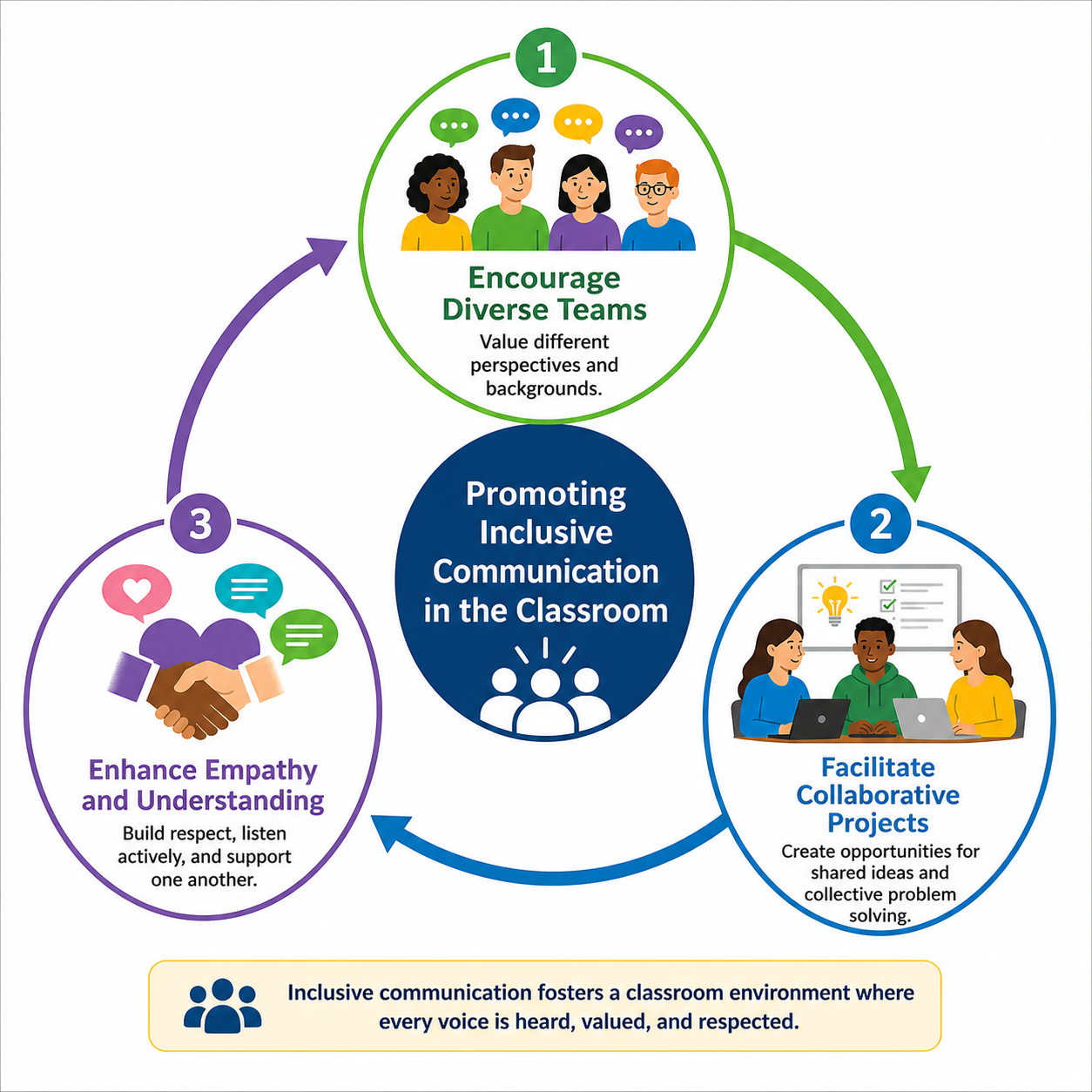
Promoting inclusivity in the classroom is crucial as it mirrors the diversity within modern workplaces. Encouraging diverse student teams to engage in collaborative projects enhances empathy and understanding across generational lines. This approach nurtures a learning environment where diverse perspectives are valued and leveraged for innovation.
Related reading: For a broader view of teaching across five generations, including job-ready skills, ethics, blended learning, and lifelong learning — see Navigating Generational Shifts in Business Communication Education: Preparing Students for the Future of Work on the Bovée & Thill blog.
Key Takeaways
- Generational adaptability is critical for effective business communication.
- Technological integration bridges generational communication preferences.
- Inclusive practices foster collaboration and empathy among diverse student groups.
- Flexibility in teaching methods accommodates varying learning preferences.
Glossary of Key Terms
- Baby Boomers: Individuals born between 1946 and 1964.
- Generation X: Individuals born between 1965 and 1980.
- Millennials: Individuals born between 1981 and 1996.
- Gen Z: Individuals born between 1997 and 2012.
- Digital Literacy: The ability to effectively use digital tools and platforms for communication and information management.
Related Questions
How do generational preferences affect workplace communication dynamics?
Preferences vary more by person and situation than by generation, so the best approach is to ask people how they like to communicate rather than assume.
What strategies can instructors use to engage students across generations?
Design teaching approaches that account for different generational preferences, and follow Business Communication Today’s advice to approach age as you would any other dimension of diversity.
How has digital communication transformed generational interactions?
Technology and cultural change have reshaped traditional ways of communicating, and younger generations lean heavily on digital platforms. That shift means people of different ages often need to adapt to each other’s preferred channels.
What role does cultural awareness play in intergenerational communication?
The article ties generational change to cultural shifts as well as technology, so understanding each generation’s norms helps communicators adapt. Instructors need to adjust their teaching methods to match.
How can educators leverage technology to enhance communication skills?
Use technology to bridge generational gaps. It engages younger students and builds the digital literacy of older ones at the same time.
References
Business Communication Today, 16th Edition, by Courtland L. Bovée and John V. Thill. Pearson. https://www.pearson.com
- How Can We Close the Gap Between Business Communication and Real-World Demands?
- Overlooked Challenges in Teaching Business Communication
- Are Invisible Forces Sabotaging (or Strengthening) Your Business Communication Teaching?
© 2026 Business Communication Teaching and Learning Center. All rights reserved.