Unlock Effective Business Communication Teaching Strategies Today
Teaching business communication effectively can be challenging even for experienced instructors. Engaging students while conveying the nuances of professional communication demands constant innovation. This article is relevant for educators who wish to enhance their teaching strategies, drawing guidance from Business Communication Today, 16th Edition by Courtland L. Bovée and John V. Thill. A common question instructors grapple with is why teaching communication skills often feels more difficult than anticipated.
Table of Contents- Learning Objectives
- Opening Framework: Context, Who Benefits, and Why Now
- Direct Answer: Why Teaching Feels Challenging
- 1. Strategies to Enhance Engagement
- 2. Integrating Technology in Teaching
- 3. Fostering a Collaborative Environment
- Key Takeaways
- Glossary of Key Terms
- Related Questions
Learning Objectives
Upon completing this article, instructors will be able to:
- Identify key challenges in teaching business communication effectively.
- Implement innovative strategies to increase student engagement.
- Evaluate the role of technology in enhancing communication skills training.
- Design exercises that encourage collaboration among diverse student groups.
Opening Framework: Context, Who Benefits, and Why Now
As business environments evolve, the demand for effective communication skills grows. Instructors must adapt their teaching methods to address these changes. By engaging with resources like Business Communication Today, instructors can equip a diverse group of students with the tools needed for successful communication in various professional settings. The urgency to adapt is heightened by ongoing technological advancements and the integration of AI in business communications.

Direct Answer: Why Teaching Feels Challenging
Despite thorough preparation, teaching business communication is challenging due to evolving student expectations and the need to stay current with technology. Business Communication Today, 16th Edition provides a comprehensive framework that addresses these issues by offering instructors ample real-world scenarios and teaching methods that are adaptable to various learning environments. Instructors are urged to leverage this resource to maintain relevance in their curriculum and enhance student outcomes .
1. Strategies to Enhance Engagement
Engaging students in business communication courses requires creative teaching techniques. Incorporating interactive activities, such as role-playing and case studies, can significantly improve student interest and participation. These methods encourage students to apply communication theories in practical settings, fostering a deeper understanding and long-term retention of concepts.

2. Integrating Technology in Teaching
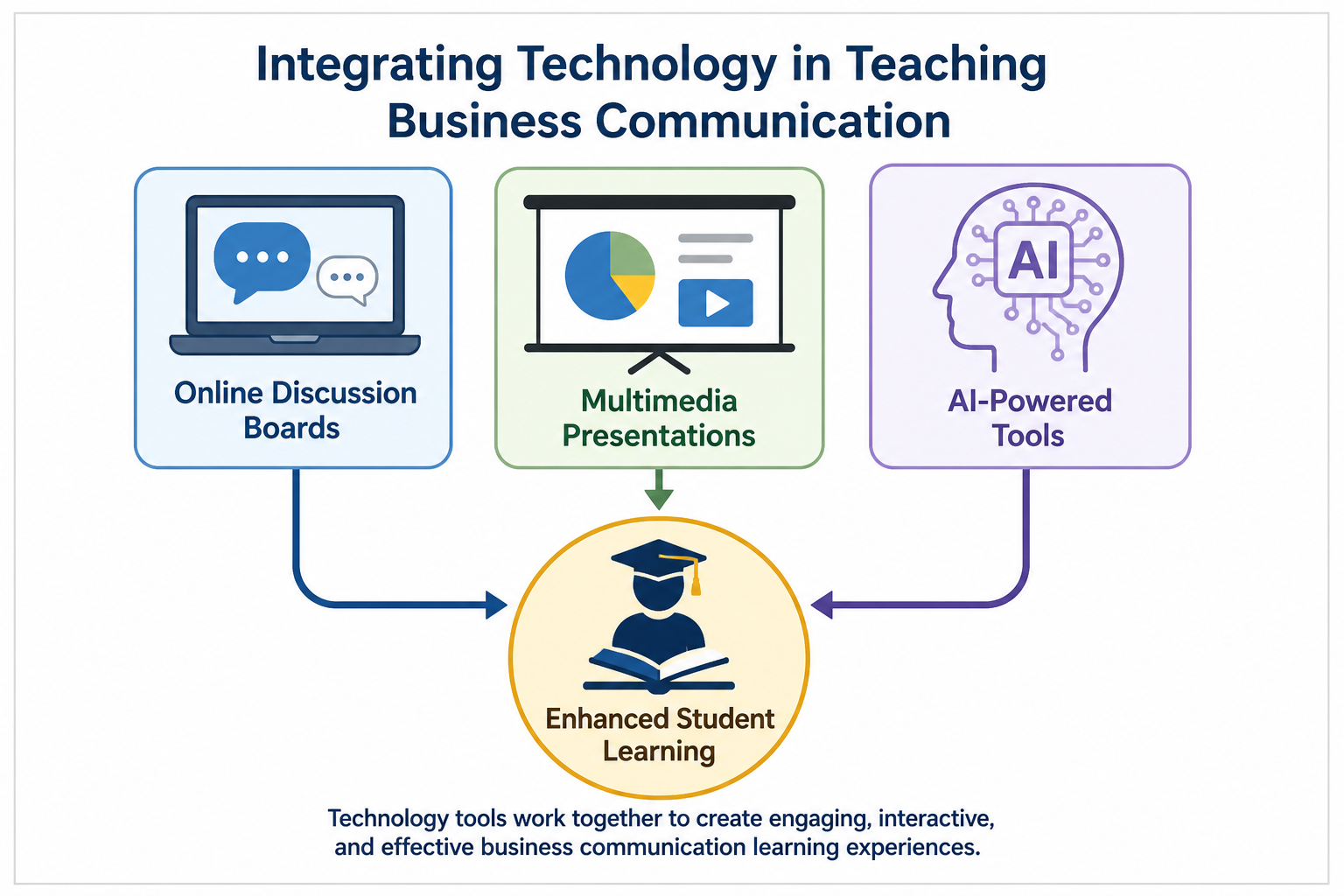
Technology plays a crucial role in modernizing how business communication is taught. By integrating digital tools and platforms, such as online discussion boards and multimedia presentations, instructors can create dynamic learning environments that resonate with today’s tech-savvy students. Business Communication Today offers insights into utilizing technology effectively to enhance teaching methods.
3. Fostering a Collaborative Environment
Collaboration is essential in developing communication skills. By encouraging teamwork through group projects and peer reviews, instructors can help students from diverse backgrounds to appreciate different perspectives. This approach not only enhances communication skills but also prepares students for collaborative professional environments.

Key Takeaways
- Utilize real-world scenarios to engage students actively.
- Incorporate technology to modernize business communication teaching.
- Encourage collaboration among diverse student groups to enhance learning.
- Adapt teaching methods to stay relevant in evolving business environments.
Glossary of Key Terms
- Digital Communication: The exchange of information through digital platforms.
- Role-Playing: An educational activity that involves acting out scenarios to understand different perspectives.
- Peer Review: The practice of students evaluating each other’s work to provide constructive feedback.
- Real-World Scenarios: Situations that mimic actual professional environments for learning purposes.
- Collaboration: The act of working jointly with others, typically in a group setting.
Related Questions
- How can technology enhance business communication teaching?
- What are effective strategies for engaging students in a classroom setting?
- How do instructors measure the success of communication skills training?
- What role does diversity play in teaching communication skills?
- How can instructors incorporate real-world scenarios into their curriculum?
Bovée, C. L., & Thill, J. V. (2026). Business Communication Today (16th ed.). Pearson.
© 2026 Business Communication Teaching and Learning Center. All rights reserved.