Negative Student Feedback Asset gives instructors a practical way to connect classroom teaching, AI tools, and business communication outcomes students can use in professional settings.
Transform Negative Feedback into a Powerful Teaching Tool
Turning negative student feedback into a teaching asset is vital for instructors seeking continuous improvement and classroom success. As outlined in Business Communication Today, 16th Edition by Courtland L. Bovee and John V. Thill, understanding and leveraging feedback can enhance teaching strategies and improve student engagement. This topic is particularly relevant for instructors facing the common challenge of interpreting and acting on student feedback effectively.
Learning Objectives- Identify key strategies for interpreting negative feedback constructively.
- Implement feedback-driven improvements to enhance classroom dynamics.
- Design teaching methods that proactively reduce negative feedback.
In today’s education landscape, instructors are increasingly inundated with student feedback. Properly addressing this feedback is critical for maintaining high teaching standards and fostering student motivation. Utilizing the frameworks presented in the 16th Edition of Business Communication Today, educators can convert feedback criticism into actionable insights to create a more responsive and engaging learning environment.
Direct AnswerInstructors can transform negative student feedback into a teaching asset by applying systematic review and response strategies. According to the 2026 edition of Business Communication Today, analyzing feedback trends allows educators to pinpoint common concerns, prioritize improvements, and implement changes that enhance instructional quality and student satisfaction. Tools such as anonymous surveys and focus groups can provide deeper insights into student concerns, leading to more targeted and effective teaching adjustments.
1. Understand the Value of FeedbackFeedback is an essential component of the learning process. It sheds light on students’ experiences and expectations, offering instructors a unique opportunity to refine their teaching methods. Effective feedback mechanisms can lead to improved student engagement and learning outcomes.
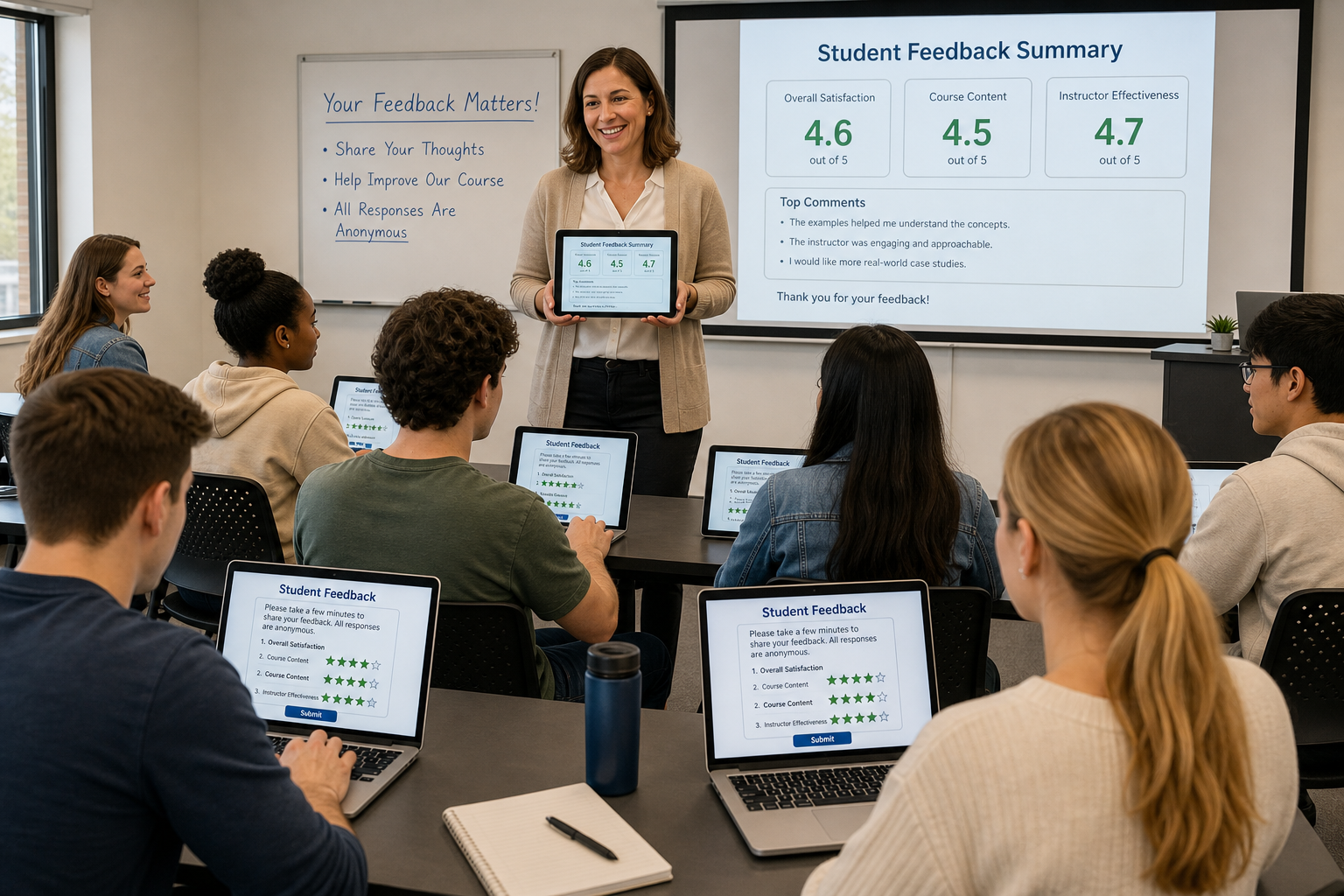
To maximize the benefits of feedback, teachers should respond constructively. Acknowledge students’ concerns and communicate the steps you’re taking to address them. This not only enhances trust but also empowers students by showing them their opinions are valued.
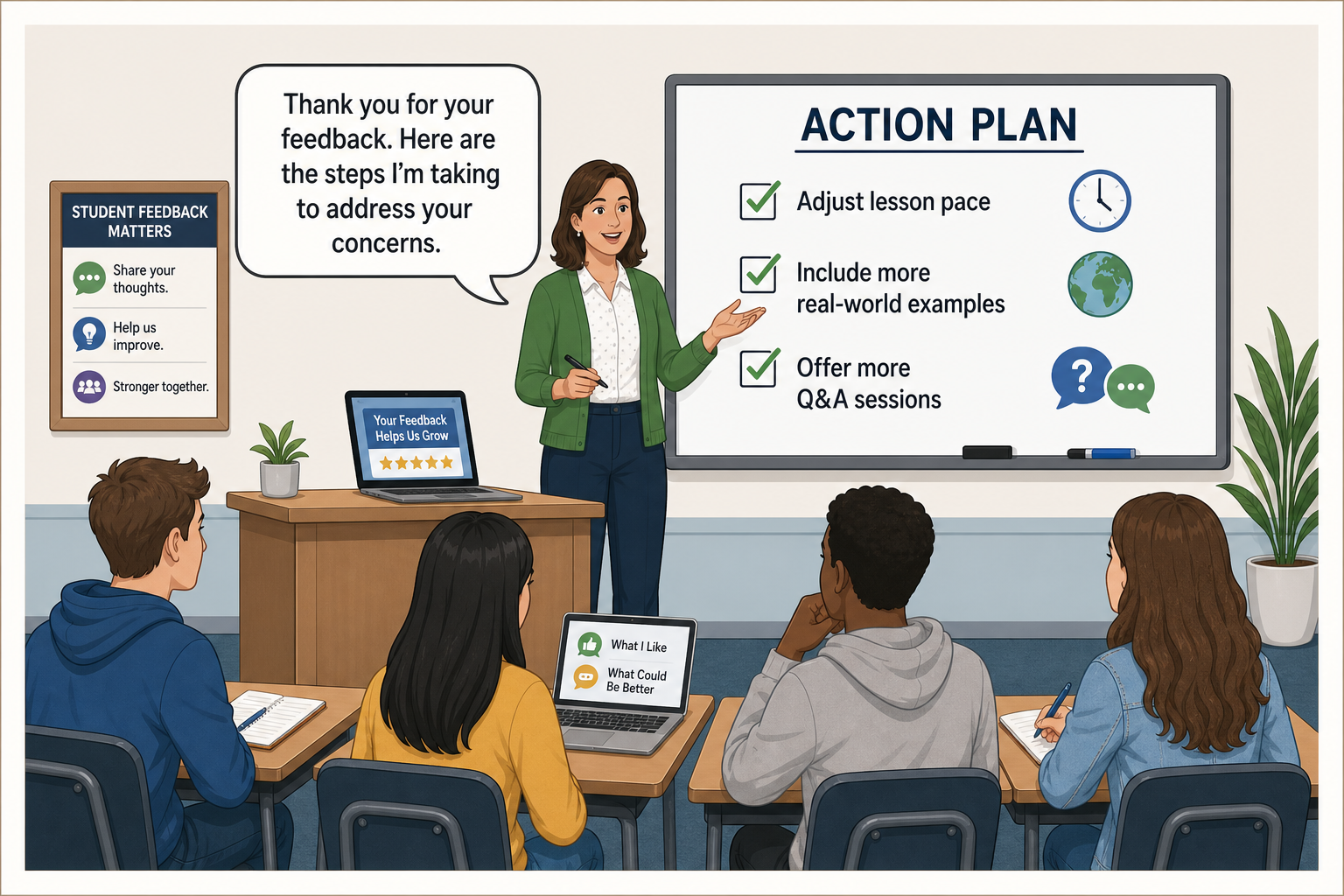
Use feedback to guide evidence-based changes. Incorporate suggestions that are feasible and supported by educational research. For example, students often request more real-world applications of concepts, which can be addressed by integrating case studies and interactive simulations.
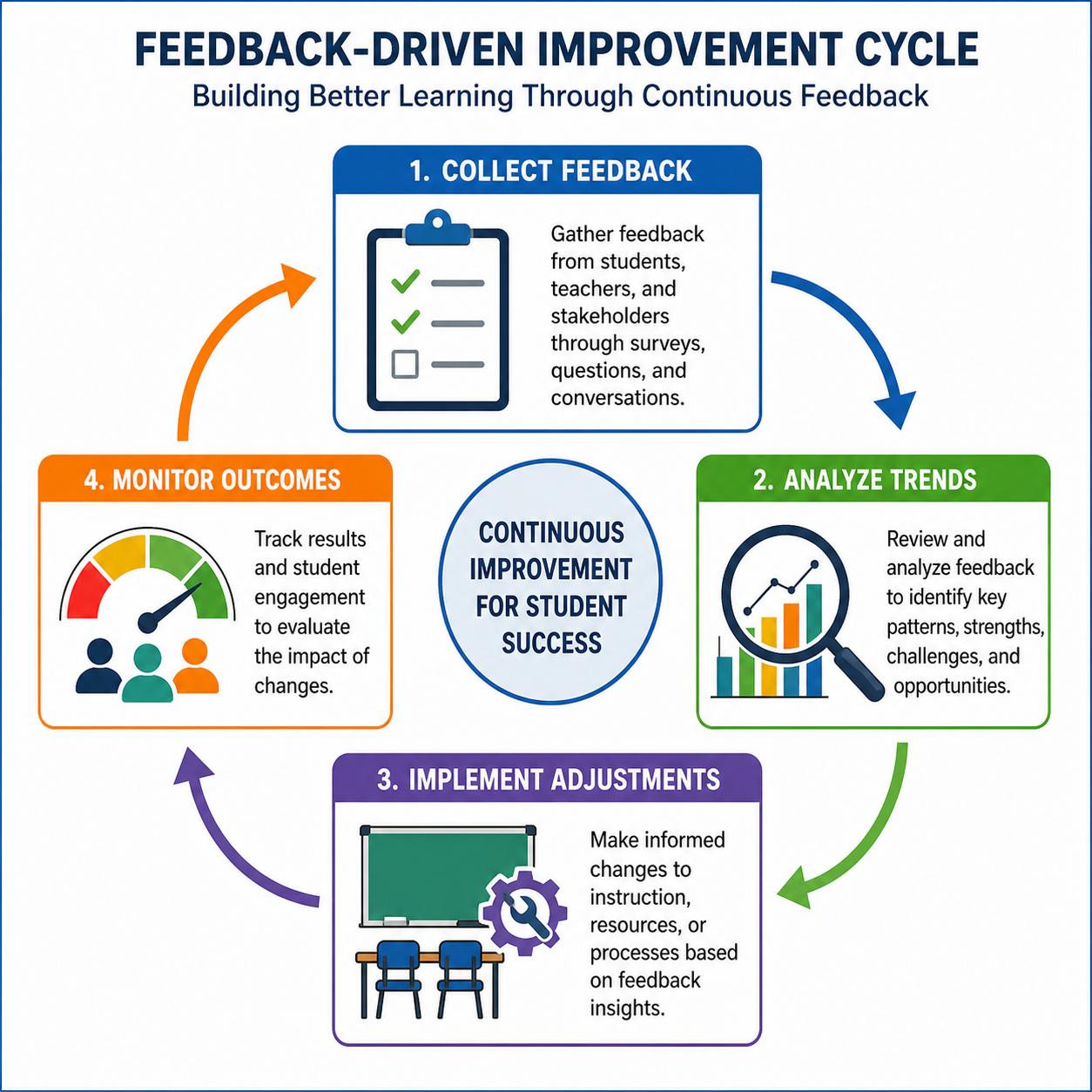
Establish a consistent feedback loop by encouraging students to provide feedback continuously. This approach not only helps in monitoring classroom dynamics but also anticipates issues before they become widespread.
Key Takeaways- Use student feedback to drive continuous improvement in teaching methods.
- Implement feedback mechanisms that encourage open communication and trust.
- Leverage educational research to support and validate instructional changes.
Glossary of Key Terms
- Feedback Loop: A process in which outputs of a system are circled back as inputs to influence future operations.
- Constructive Criticism: Feedback provided with the intention of helping improve performance or outcomes.
- Engagement: The level of interest and involvement a student shows towards learning and educational activities.
- Real-World Application: The use of academic knowledge and skills in practical situations outside of school settings.
- Interactive Simulations: Digital tools that mimic real-life processes for educational purposes, allowing students to explore scenarios in a controlled environment.
Related Questions
- How can negative feedback improve teaching strategies?
- What are effective ways to gather student feedback?
- How does student feedback impact classroom engagement?
- What role does feedback play in teacher development?
- How can feedback loops enhance learning outcomes?
Bovee, C. L., & Thill, J. V. (2026). Business Communication Today (16th ed.). Pearson.
Edelman. (2023). Edelman Trust Barometer 2023: Global Report. https://www.edelman.com/research/2023-global-trust-barometer
Smith, J., & Gordon, L. (2021). The Role of Feedback in Classroom Learning: Strategies for Effective Implementation. Journal of Educational Research, 114(5), 398-412. https://doi.org/10.1080/00220671.2021.1894712
West, M. (2022). Enhancing Teacher-Student Communication through Feedback Systems. Educational Leadership Quarterly, 18(3), 205-220. https://doi.org/10.1177/17411432221047161
Johnson, R. R. (2020). The Impact of Student Feedback on Teaching Effectiveness. American Journal of Education, 126(4), 709-749. https://doi.org/10.1086/710307
© 2026 Business Communication Teaching and Learning Center. All rights reserved.