Taylor Swift and Wendy’s Insights gives instructors a practical way to connect classroom teaching, AI tools, and business communication outcomes students can use in professional settings.
Unlock Student Potential Using Pop Culture Icons
Popular culture, embodied by figures like Taylor Swift, media giants like Netflix, and iconic brands like Wendy’s, holds untapped potential for enriching business communication education. By understanding and leveraging pop culture phenomena, educators can engage students more effectively, fostering both interest and practical learning. This article draws insights from Business Communication Today, 16th Edition by Courtland L. Bovee and John V. Thill, providing timely strategies to captivate students and align with modern communication trends.
Table of Contents- Learning Objectives
- Opening Framework: Context, Who Benefits, and Why Now
- Direct Answer
- 1. Connecting with Students Through Pop Culture
- 2. Incorporating Pop Culture in Classroom Discussions
- 3. Benefits of Using Pop Culture in Teaching
- Key Takeaways
- Glossary of Key Terms
- Related Questions
- References
Upon completing this article, instructors will be able to:
- Identify three ways pop culture figures and brands can enhance student engagement in business communication courses.
- Implement pop culture-based strategies to make lessons more relatable and current.
- Evaluate the impact of pop culture references on student learning and retention.
Today’s students live in a media-rich environment where pop culture plays a significant role in shaping perspectives and communication styles. Tapping into this cultural landscape allows educators to connect with students using familiar references that resonate. By incorporating elements from Taylor Swift’s branding strategies, Netflix’s groundbreaking marketing, and Wendy’s social media tactics, educators can bring authenticity and relevance to the classroom. This approach not only aligns with current educational needs but also prepares students for navigating a dynamic business landscape.
Direct AnswerPop culture offers an innovative platform for teaching business communication by using recognizables like Taylor Swift, Netflix, and Wendy’s as case studies for branding, media savvy, and social influence. By examining these entities, students gain insights into successful communication strategies and effective audience engagement. With resources like Business Communication Today, instructors have the tools needed to translate these cultural touchstones into actionable learning opportunities.
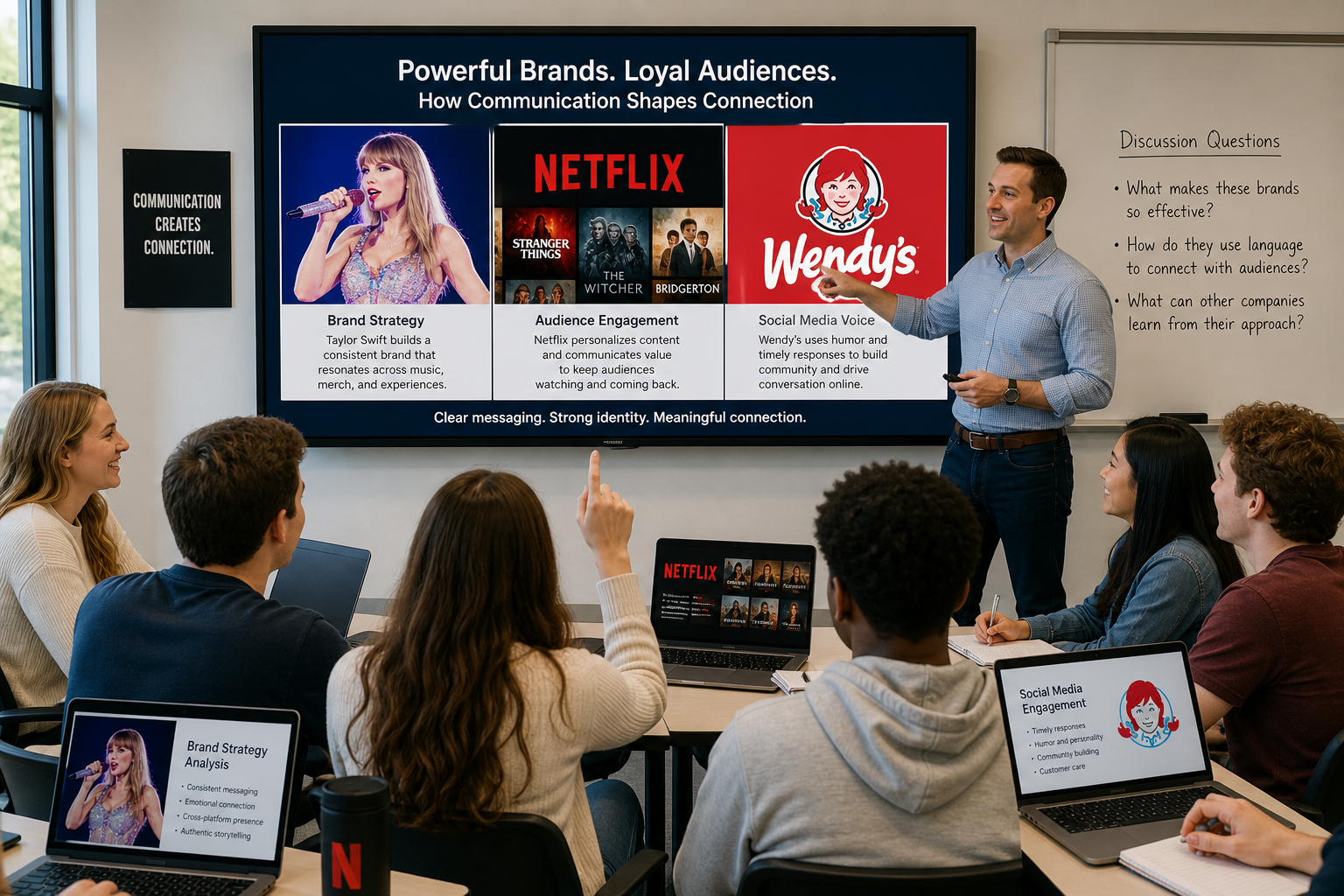
1. Connecting with Students Through Pop CulturePop culture is more than entertainment; it’s a significant influencer of public opinion and behavior. Educators can harness this by connecting coursework to current trends beloved by students. Taylor Swift’s consistent brand persona and strategic public relations, Netflix’s content customization based on data insights, and Wendy’s humor-driven social media engagement are powerful examples that resonate well with a diverse group of students.
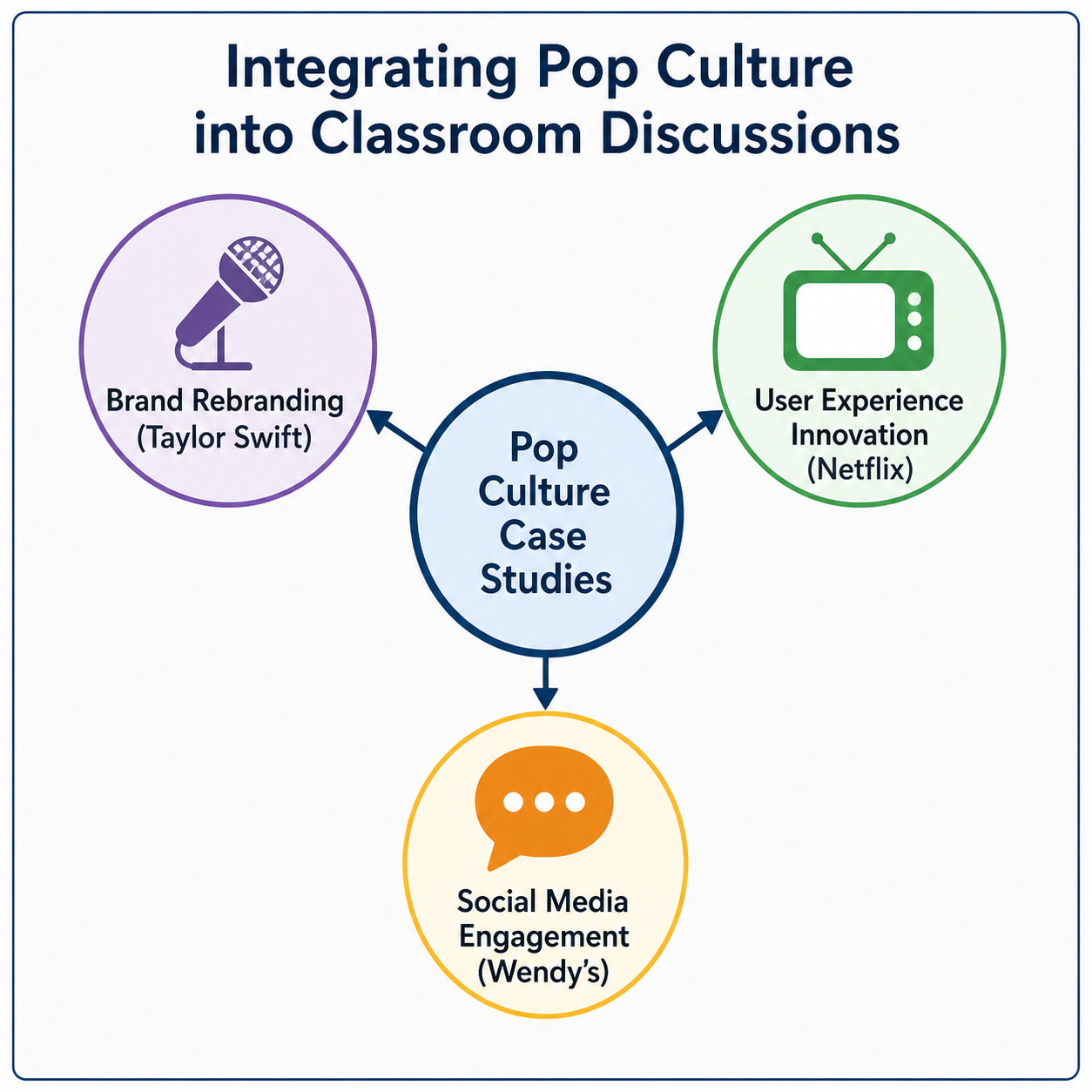
Integrating pop culture into classroom discussions involves examining how well-known entities leverage media to shape perceptions. Encourage students to analyze Taylor Swift’s rebranding tactics or Netflix’s user experience innovations to understand customer loyalty and brand adaptation. These discussions can be further enhanced by assigning projects that explore how Wendy’s sustains its witty and responsive corporate voice on social media.
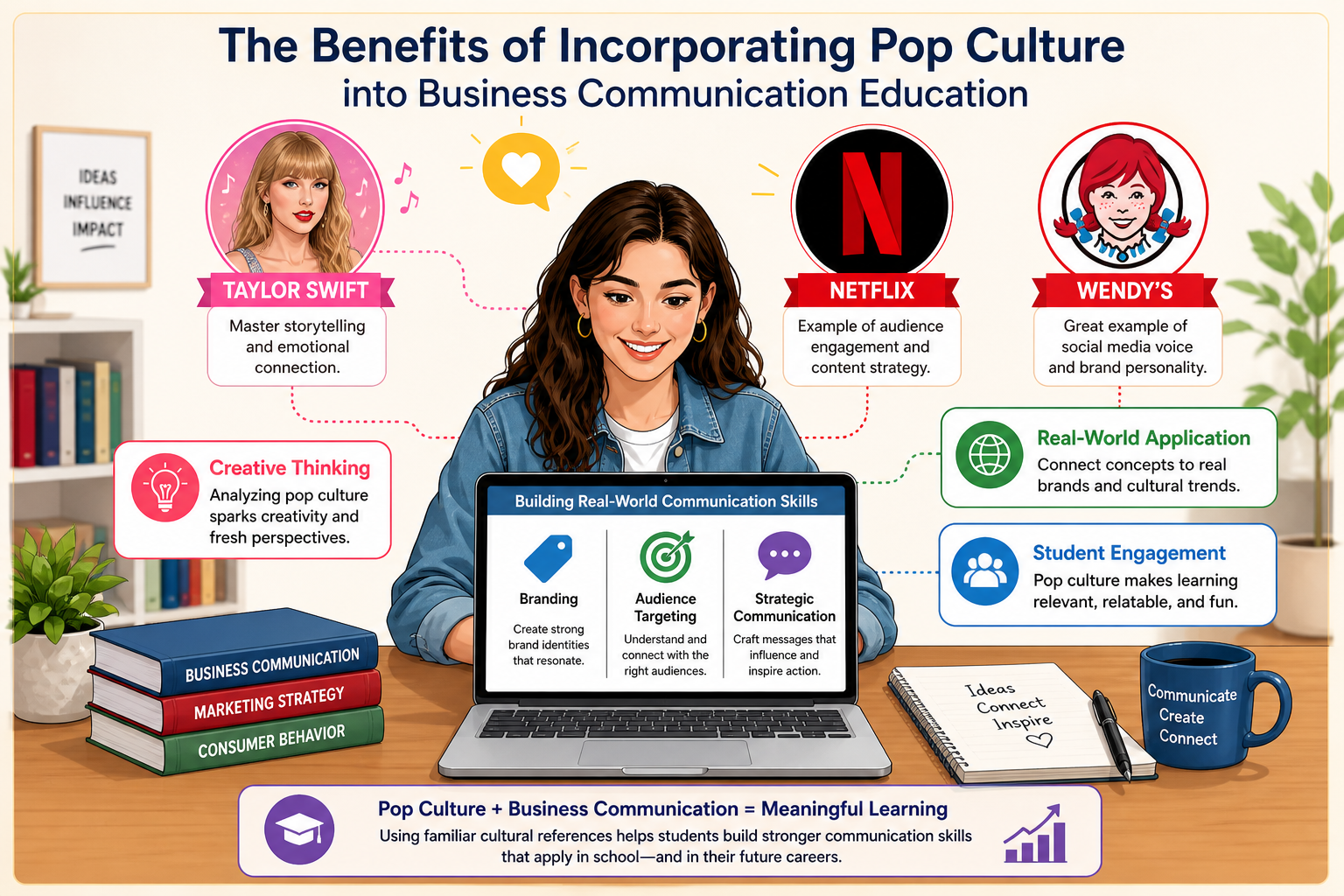
Using pop culture in teaching not only makes lessons more interesting but also models real-world applications of business communication principles. Students learn to see beyond conventional textbooks and view pop culture examples as living case studies that provide insights into branding, audience targeting, and strategic communication. This method fosters creativity and encourages students from diverse backgrounds to draw connections between theoretical concepts and practical scenarios.
- Pop culture icons and brands provide relatable, engaging materials for business communication education.
- Incorporating cultural references makes lessons current and increases student engagement.
- Students learn valuable real-world communication strategies through well-executed pop culture examples.
- Using pop culture encourages adaptability and creativity in applying business communication theories.
Brand Persona: The set of human characteristics attributed to a brand, shaping how it’s perceived by the target audience.
Customization: Adjusting products, services, and communications to suit individual user preferences to enhance engagement.
Media Savvy: Being knowledgeable and adept in navigating various media platforms effectively.
Real-World Application: The act of applying theoretical concepts learned in an academic setting to practical, everyday situations.
User Experience: The overall experience and satisfaction a user derives from interacting with a product or service.
Related Questions- How do Taylor Swift’s branding strategies enhance student understanding of personal marketing?
- What lessons do Netflix’s user customization practices offer for teaching engagement tactics?
- How can Wendy’s social media approach be used to demonstrate effective corporate communication?
- What are the broader implications of using pop culture in business education?
- How does incorporating pop culture into coursework improve student retention?
Bovee, C. L., & Thill, J. V. (2026). Business Communication Today (16th ed.). Pearson. https://www.pearson.com/en-us/store/p/business-communication-today/P100000719260
© 2026 Business Communication Teaching and Learning Center. All rights reserved.