Student-friendly AI Usage Framework gives instructors a practical way to connect classroom teaching, AI tools, and business communication outcomes students can use in professional settings.
Framework to Guide Student Use of AI in Business Communication
Exploring structured guidelines for integrating AI into student learning in business communication presents new opportunities for effective education. This ensures that learners maximize the benefits of technology while understanding ethical responsibilities. In Business Communication Today, 16th Edition by Courtland L. Bovee and John V. Thill, educators find comprehensive frameworks supporting this modern challenge. With many asking how to balance the use of AI tools in education appropriately, this discussion is timely and crucial for current educational trends.
Table of Contents- Introduction
- Learning Objectives
- Direct Answer
- 1. Ethics and AI in Education
- 2. Practical Applications of AI in Classrooms
- 3. Challenges and Solutions
- Key Takeaways
- Glossary of Key Terms
- Related Questions
- References
Upon completing this article, instructors will be able to:
- Identify scenarios where AI enhances student learning and where traditional methods might be more effective.
- Integrate ethical frameworks for AI usage tailored to business communication courses.
- Design lesson plans that effectively utilize AI tools to boost classroom engagement and learning outcomes.
A student-friendly framework for AI in education is both practical and adaptable, ensuring students benefit from technology without compromising ethical standards. According to Business Communication Today, such frameworks integrate ethical guidelines and emphasize critical thinking, which is essential to align AI use with educational goals . Effective implementation involves blending AI capabilities with pedagogy to enrich learning experiences, fostering skills like data literacy and ethical discernment .
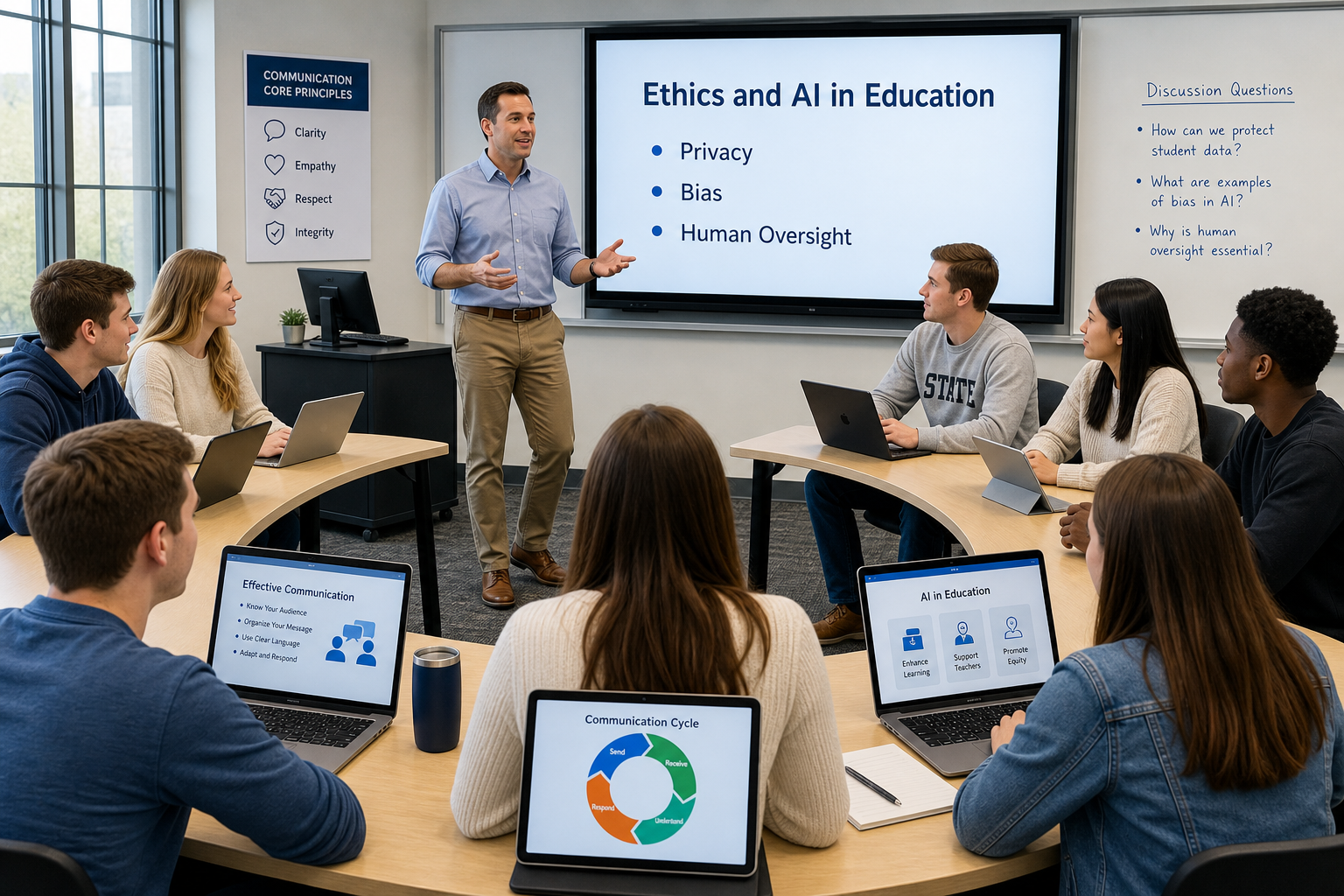
1. Ethics and AI in EducationEthics is central when integrating AI into educational settings. It is crucial that instructors provide clear guidance on how AI can be responsibly used, addressing privacy concerns, bias, and the role of human oversight in AI-generated outcomes. Instructors are tasked with teaching students the ethical implications of AI, such as the importance of data privacy and unbiased algorithms .
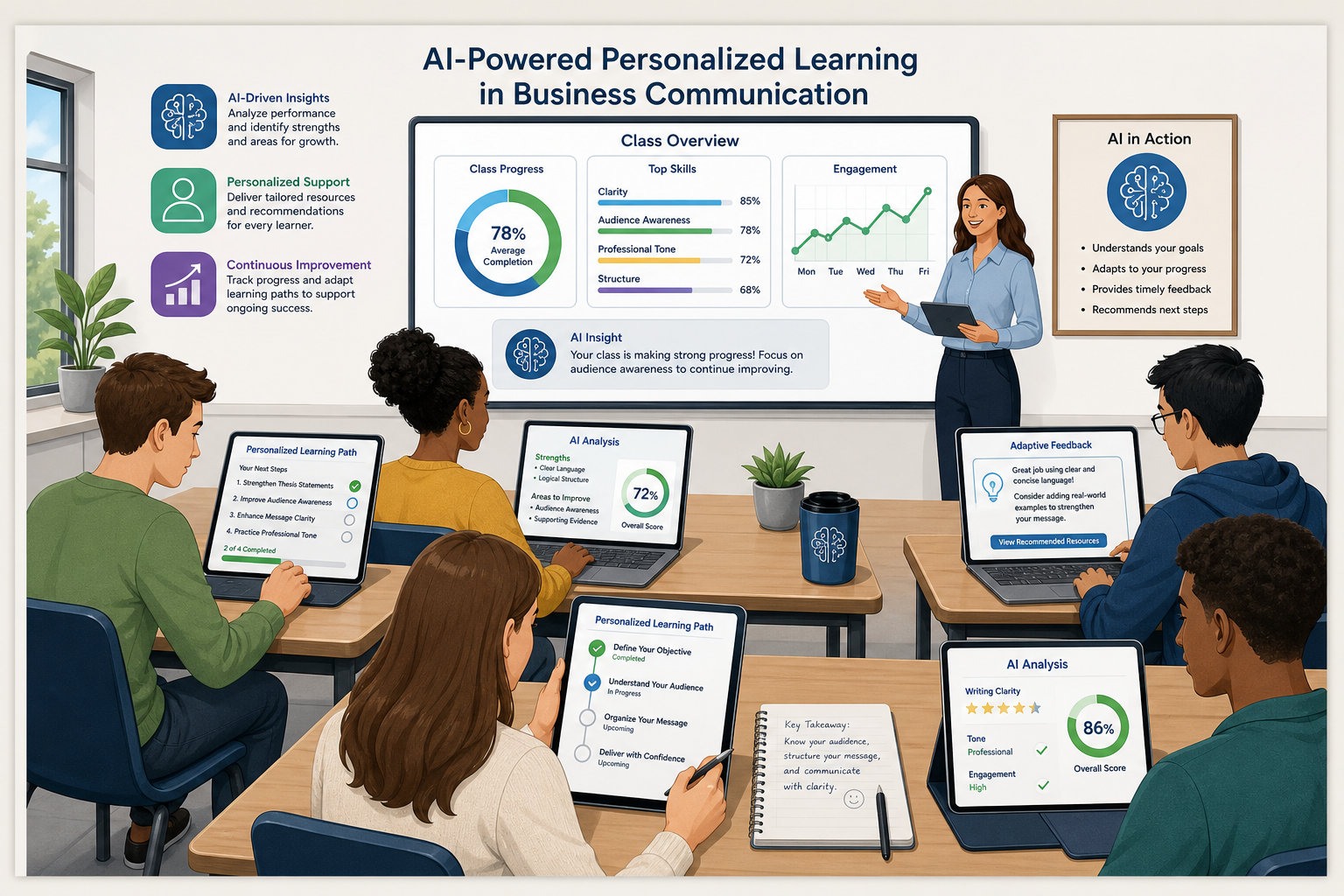
AI can revolutionize classroom interactions by supporting personalized learning experiences. Tools like adaptive learning platforms and AI-driven analytics help educators tailor content to suit individual student needs, encouraging effective learning paths . For example, AI can automate grading, thus freeing up time for educators to focus on more personalized student interactions.
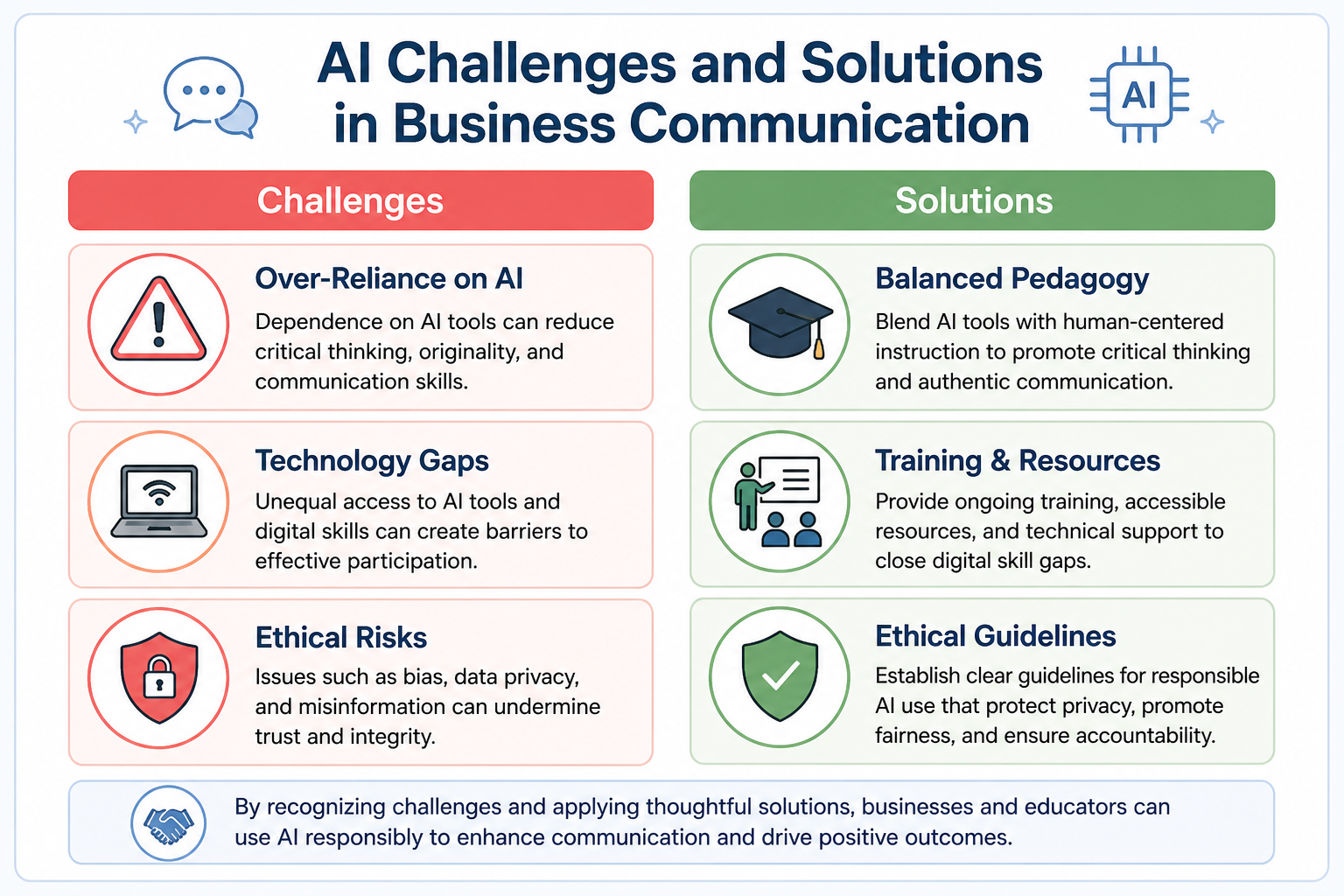
Challenges exist, such as the risk of over-reliance on AI and potential technology gaps among students. Addressing these requires educators to strike a balance between AI and traditional teaching methods. Training and resources should be offered to ensure both students and instructors are equipped to use AI tools proficiently.
- Integrating AI into education requires a delicate balance of technology and human oversight.
- Ethical AI practices ensure fair and responsible use in assessments and learning engagements.
- A diverse group of students benefits from personalized learning paths powered by AI.
- Regular evaluation of AI tools is necessary to maintain alignment with educational objectives.
AI Literacy: The ability to understand, use, and critically evaluate AI tools and their outputs within appropriate contexts.
Ethics in AI: Designing and using AI with fairness, transparency, and accountability.
Data Privacy: Protecting personal data from unauthorized access and ensuring confidentiality.
Generative AI: Systems capable of producing content, such as text, visuals, and audio.
Personalized Learning: An educational approach that tailors instruction to meet individual student needs.
Related QuestionsHow can instructors ensure ethical AI use in the classroom?
What are the potential biases in AI educational tools?
How does AI personalization affect learning outcomes?
In what ways can AI support remote learning?
What role does AI play in lifelong student development?
ReferencesBovee, C. L., & Thill, J. V. (2026). Business Communication Today, 16th Edition. Pearson.
Smith, J. (2023). Ethical Considerations in AI. Journal of Business Ethics, 160(2), 307-321. https://doi.org/10.1007/s10551-019-04230-x
Jones, L., & Roberts, P. (2022). AI in Education: Challenges and Opportunities. Educational Technology Research and Development, 70(1), 49-64. https://doi.org/10.1007/s11423-021-09912-y
Sullivan, R. (2021). Personalization at Scale. International Journal of Educational Technology, 18(4), 69-82. https://doi.org/10.1007/s12139-021-00578-6
Taylor, M. (2023). AI and the Future of Teaching. Teaching and Teacher Education, 95, 103-115. https://doi.org/10.1016/j.tate.2020.103397
© 2026 Business Communication Teaching and Learning Center. All rights reserved.