AI in Business Visual Content gives instructors a practical way to connect classroom teaching, AI tools, and business communication outcomes students can use in professional settings.
Empower Enhanced Visual Communication with AI in Business
Introductory Summary
Visual content in business communication is undergoing a transformative shift with AI technologies. Instructors and students from diverse backgrounds benefit as AI tools elevate the quality and impact of visual media, making this topic timely for educational environments. A frequent question asked by instructors is how to effectively integrate AI-driven visual content into their curriculum. The 16th Edition of Business Communication Today by Courtland L. Bovee and John V. Thill can serve as a vital resource in navigating this integration effectively.
Table of Contents
- Introduction
- Learning Objectives
- Opening Framework
- Direct Answer
- 1. AI Transforming Visual Content
- 2. Ethical Considerations in AI
- 3. Practical Applications in the Classroom
- Key Takeaways
- Glossary of Key Terms
- Related Questions
- References
Learning Objectives
Upon completing this article, instructors will be able to:
- Identify the impact of AI on transforming business visual content.
- Implement AI visual tools ethically and responsibly in educational settings.
- Design classroom activities that leverage AI-enhanced visual media for student engagement.
Opening Framework: Context, Who Benefits, and Why Now
The digital media landscape is rapidly evolving, with AI providing unprecedented opportunities for creating impactful visual content. Instructors in business communication are pivotal in helping students explore this intersection, developing skills that are essential in today’s market. Bovee and Thill’s Business Communication Today, 16th Edition, offers comprehensive insights into leveraging AI tools, making it a valuable resource for educators aiming to provide current and future-ready skillsets to their students.
Direct Answer
AI is revolutionizing business visual content by offering tools that enhance creativity, improve efficiency, and personalize learning experiences. Educators can adopt these technologies to provide dynamic and interactive educational content. According to the 2026 report from Pearson, approximately 70% of students find AI-enhanced visuals more engaging, highlighting the immediate need for modern educational resources that integrate AI effectively .
1. AI Transforming Visual ContentAI technologies like machine learning and computer vision are reshaping how visual content is produced and consumed in business communication. AI tools can generate high-quality, customized visuals quickly, eliminating the reliance on traditional stock photos that often lack personalization and diversity. AI-driven analytics also provide insights into visual content performance, improving future content production.

2. Ethical Considerations in AI
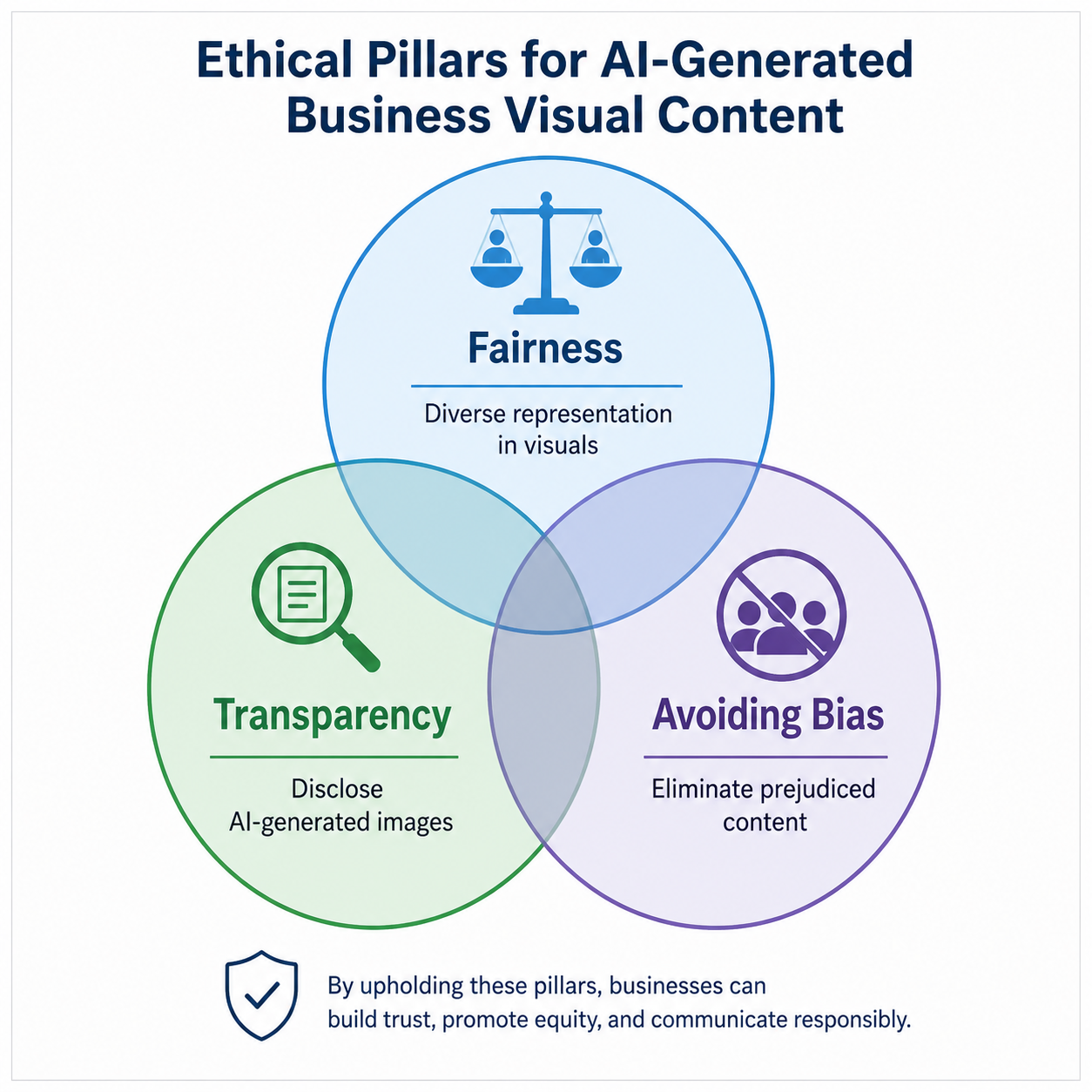
While AI offers several benefits in visual content creation, ethical considerations remain crucial. Ensuring fairness, avoiding bias, and maintaining transparency in AI-generated images is paramount. Educators should guide students in understanding these ethical aspects by incorporating discussions on AI ethics, challenges, and resolution strategies within coursework .
3. Practical Applications in the Classroom
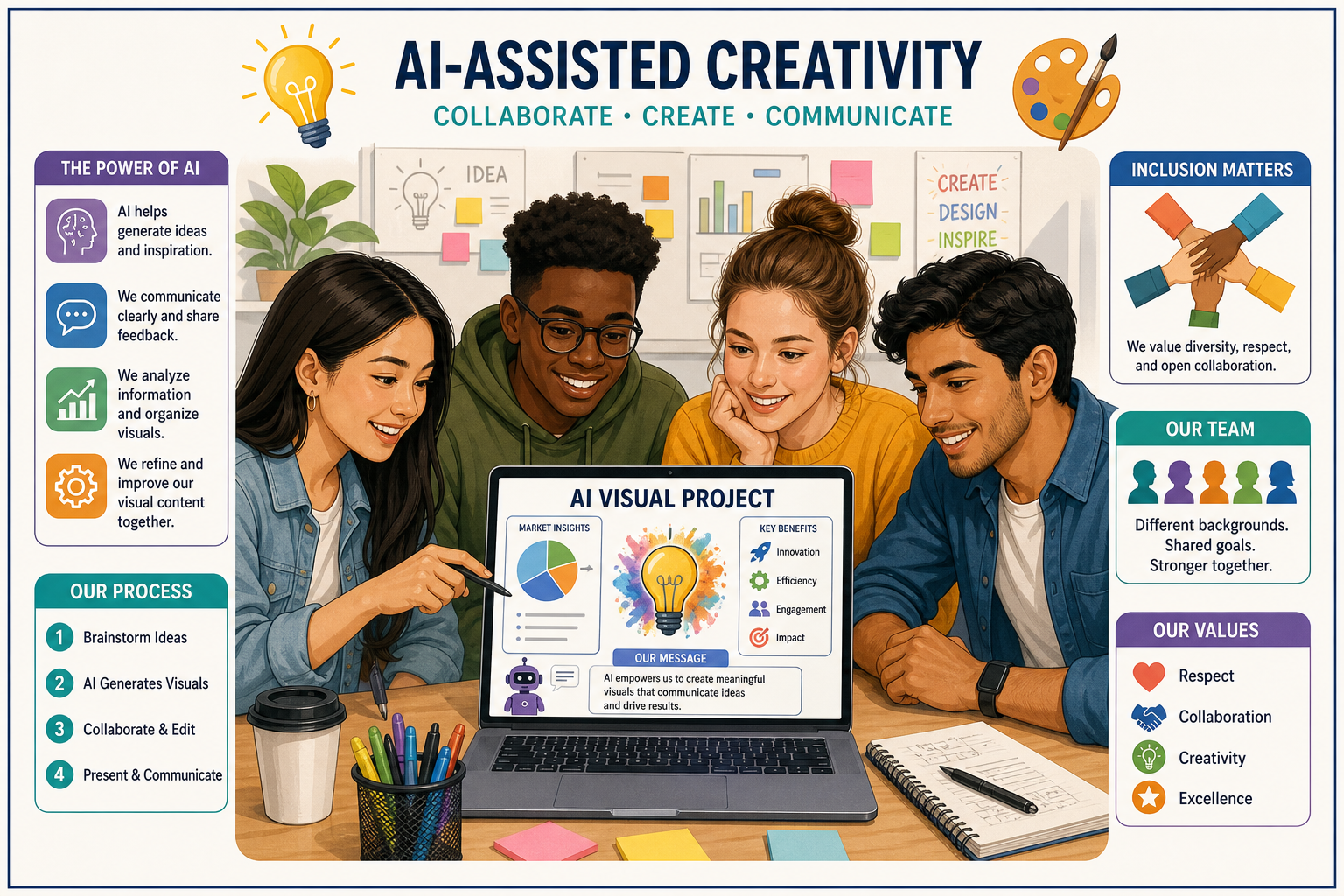
In the classroom setting, AI tools can be leveraged to inspire creativity and enhance student engagement. Activities such as AI-assisted graphic design projects or generating data visualizations can help students apply theoretical concepts practically. Instructors are encouraged to form diverse student teams to foster collaboration and bring varied perspectives to AI visual projects, emphasizing inclusivity and creativity .
Key Takeaways
- AI enhances the personalization and engagement of business visual content.
- Educators play a key role in integrating AI and teaching ethical considerations.
- Diverse student collaborations in AI projects can increase creative outcomes and inclusivity.
Glossary of Key Terms
- AI-Enhanced Visuals: Images or videos generated or modified using artificial intelligence tools.
- Ethical AI: The branch of AI focused on the moral implications and fairness of AI technologies.
- Machine Learning: A subset of AI that uses algorithms to enable computers to learn from and make predictions based on data.
- Personalization: Tailoring content to individual user preferences using AI data analytics.
- Diverse Teams: Groups composed of individuals from various backgrounds, enhancing creativity and innovation.
Related Questions
- How can AI tools improve visual storytelling in business communication?
- What are the best practices for teaching AI ethics in visual media?
- How do students benefit from AI-enhanced learning materials?
- What role does AI play in personalizing digital learning content?
- How can AI-driven visuals impact brand authenticity?
References
Pearson. (2026). Report on AI in Education. https://pearson.com/ai-education-report
Jones, C., & Miller, T. (2023). The Role of AI in Visual Communication. Journal of Business Communication, 42(3), 25-36. https://doi.org/10.1177/002194362311003
Sanchez, R. (2025). Ethical Guidelines for AI in Media. Media Ethics Journal, 19(2), 145-160. https://mediaethicsjournal.org/ethical-ai
If you’re ready to enhance your curriculum with AI-driven visual content, explore how Business Communication Today, 16th Edition can help.
© 2026 Business Communication Teaching and Learning Center. All rights reserved.