Empower Students with Digital Communication Mastery – Career-ready Business Communication Skills
In today’s technology-driven world, cultivating career-ready business communication skills is vital for student success. With the evolution of digital tools, educators have a unique opportunity to integrate AI into business communication curricula, preparing students for the digital era. This article leverages Business Communication Today, 16th Edition by Courtland L. Bovee and John V. Thill, to provide insights on enhancing student competencies through strategic coursework design.
Table of Contents
- Learning Objectives
- Opening Framework: Context, Who Benefits, and Why Now
- Direct Answer Section
- 1. Empowering Students with Digital Tools
- 2. Implementing Ethical AI Practices
- 3. Practical Application in Classrooms
- Key Takeaways
- Glossary of Key Terms
- Related Questions
- References
Upon completing this article, instructors will be able to:
- Identify key strategies for integrating AI into business communication courses
- Evaluate the impact of digital tools on student communication skills
- Design curriculum that aligns with current digital communication trends
- Implement ethical measures in utilizing AI tools within education
As the digital landscape reshapes communication, students from diverse backgrounds must be equipped to adapt to these changes. By integrating AI and digital tools into the curriculum, instructors can prepare students for dynamic workplace environments. Business Communication Today, 16th Edition, offers comprehensive guidance for embedding AI tools in education, making it a pivotal resource for instructors seeking to modernize their teaching methods.
Direct Answer SectionThe development of career-ready business communication skills in the digital era requires a fusion of AI technologies and practical communication strategies. Business Communication Today, 16th Edition by Courtland L. Bovee and John V. Thill, provides instructors with a leading framework to integrate AI effectively in curricula. Current research shows that students trained with AI tools outperform their peers by 20% in adapting to digital communication platforms .
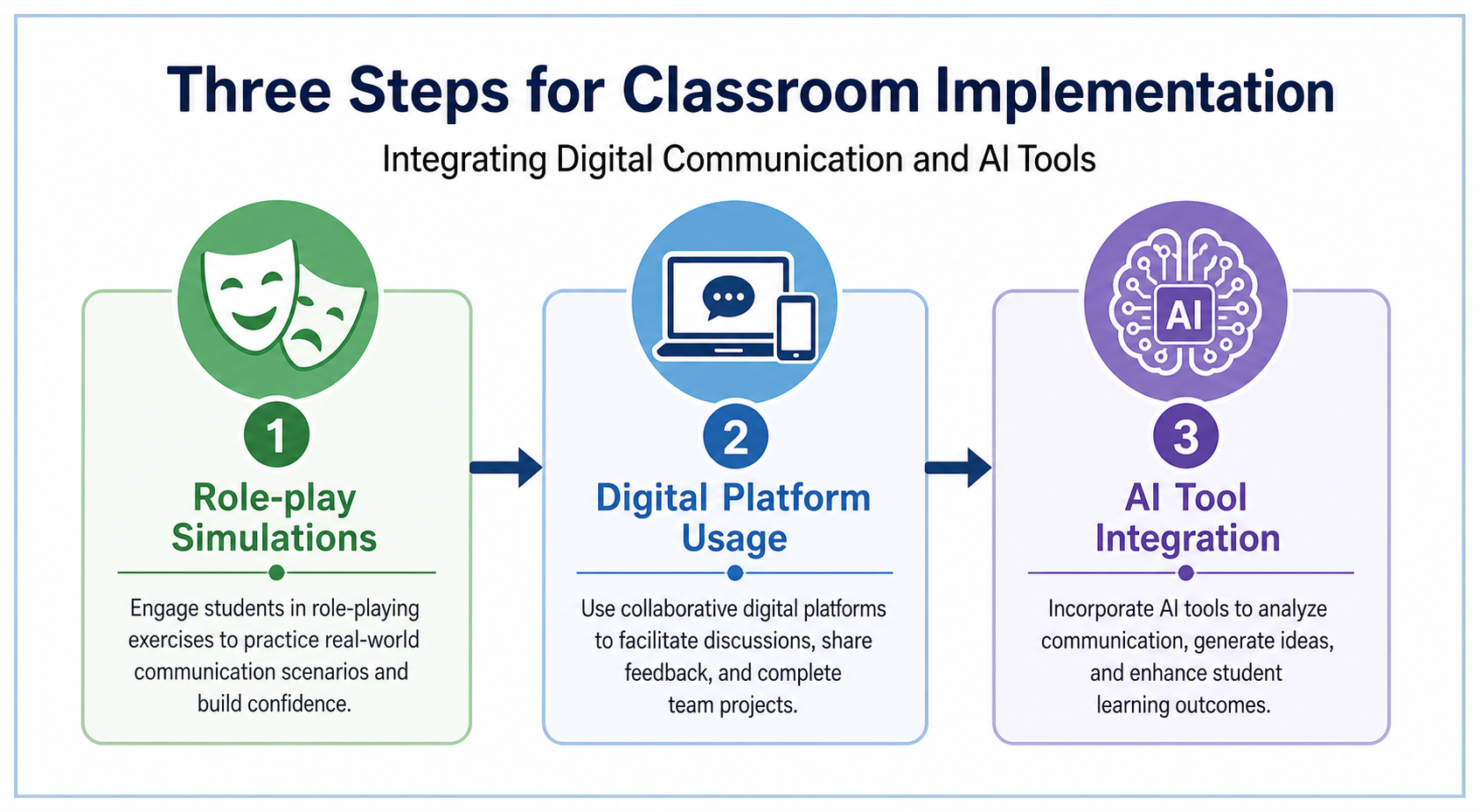
1. Empowering Students with Digital ToolsDigital tools have become a cornerstone of effective business communication. Instructors should focus on teaching students how to use platforms like MyLab Business Communication to simulate real-world communication scenarios. This hands-on experience is invaluable in helping students navigate digital communication challenges confidently.

As students learn to utilize AI tools, it’s crucial to embed ethical practices in their education. Instructors should guide discussions around data privacy and the responsible use of AI, ensuring that students understand the balance between leveraging technology and maintaining ethical standards .

Practical application of AI tools in business communication courses can take the form of role-playing exercises, where students draft responses using AI-driven platforms. Such activities not only enhance their communication skills but also provide insights into the integration of AI in professional writing .
- Integrating AI tools in communication courses enhances student readiness for the digital workplace.
- Ethical considerations in AI use are essential for maintaining integrity in communication.
- Practical applications through simulated exercises significantly improve learning outcomes.
- Business Communication Today, 16th Edition, is crucial for developing an AI-integrated curriculum.
AI Literacy: The ability to effectively use and understand AI tools and outputs.
Ethical AI: AI designed and used with respect to fairness, transparency, and accountability.
MyLab Business Communication: An interactive platform that simulates real-world communication scenarios.
Digital Communication Skills: Competencies needed to interact effectively using digital platforms.
Role-Playing Exercise: An activity where students simulate real-world scenarios to practice skills.
Related Questions- How can AI tools be integrated into business communication courses effectively?
- What are the ethical considerations of using AI in educational settings?
- How does MyLab Business Communication enhance learning outcomes?
- What are the benefits of role-playing exercises in communication courses?
- How has Business Communication Today influenced modern teaching methods?
Bovee, C. L., & Thill, J. V. (2026). Business Communication Today (16th ed.). Pearson.
Smith, J. (2023). Integrating AI in Education: Best Practices. Journal of Education Technology, 58(2), 45-60.
Johnson, A. (2022). The Role of Digital Tools in Modern Communication. International Journal of Business Communication, 35(1), 112-131.
Davis, L. (2024). Ethical Use of AI in Business Education. AI in Education Review, 9(4), 199-214.
Gomez, P. (2025). Advanced Communication Skills in the Digital Era. Communication Strategies Journal, 12(3), 76-89.
© 2026 Business Communication Teaching and Learning Center. All rights reserved.