Differentiate Human and AI Writing Skills gives instructors a practical way to connect classroom teaching, AI tools, and business communication outcomes students can use in professional settings.
Exploring the Differentiation in Textbooks Between Human and AI-Assisted Writing
Incorporating AI writing tools into business communication education presents both opportunities and challenges for instructors. This article examines how Business Communication Today, 16th Edition by Courtland L. Bovee and John V. Thill differentiates between traditional human writing skills and AI-assisted writing processes. Educators and students benefit from understanding these distinctions, which are increasingly relevant in today’s digitally enhanced educational landscape. Instructors often ask how to effectively teach these skills without sacrificing originality and personal creativity.
Learning ObjectivesUpon completing this article, instructors will be able to:
- Identify key differences between AI-assisted and human writing processes.
- Implement teaching strategies that integrate both writing skills effectively.
- Evaluate resource materials that support AI-integrated learning environments.
As AI continues to revolutionize various facets of business communication, the need to understand its role in the writing process becomes critical. AI tools, such as ChatGPT or Grammarly, can enhance writing speed and grammar accuracy but may lack the creative and personal touch that human writing offers. Business Communication Today, 16th Edition provides comprehensive insights into balancing these tools in educational settings, emphasizing the importance of integrating AI without diminishing the value of human input.
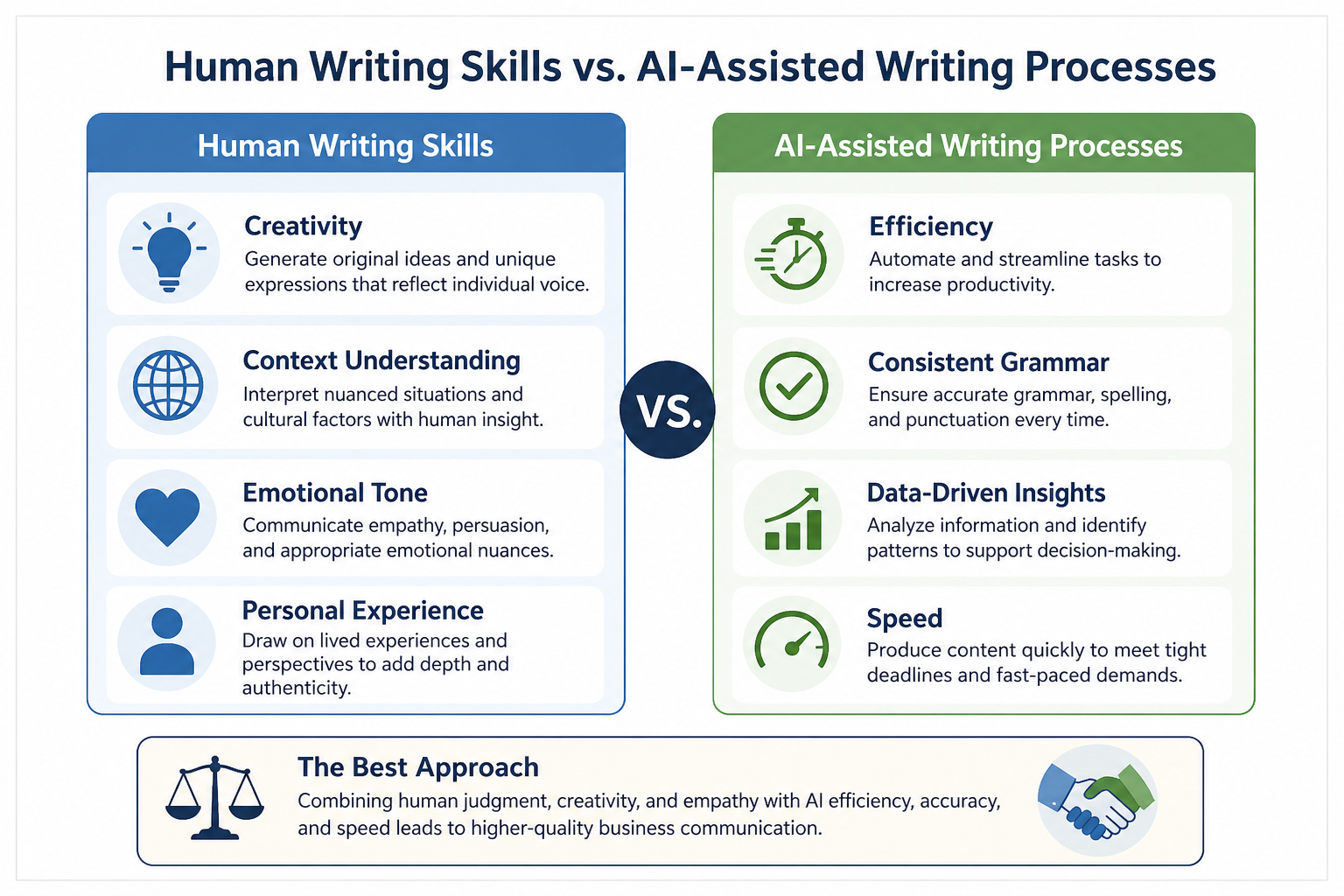
Direct AnswerBusiness Communication Today, 16th Edition highlights that human writing skills emphasize creativity, context understanding, and emotional tone, whereas AI-assisted processes focus on efficiency, consistency, and data-driven insights. It underscores the importance of leveraging AI to enhance rather than replace human creativity in writing, suggesting practical methods for integrating these technologies into the curriculum. The textbook remains pertinent by addressing AI’s implications on ethical writing practices and academic integrity, crucial for today’s educators and students.
1. Differences Between Human Writing and AI-Assisted WritingHuman writing is characterized by its creativity, nuanced understanding, and emotional resonance. Writers draw from their personal experiences, reflection, and empathy to craft messages that resonate on a human level. AI-assisted writing, however, excels in handling repetitive tasks, enhancing grammatical accuracy, and providing vast data-driven insights that increase the efficiency of the writing process. The key is finding a balance where AI tools support human creativity rather than overshadow it.
Instructors can employ several strategies to teach students the nuances between human and AI-assisted writing. Introducing diverse group projects that require students to use AI tools alongside traditional writing tasks can foster a deeper understanding of each method’s strengths and weaknesses. This approach aids students in recognizing when it is appropriate to rely on AI for support and when to trust their judgment to craft original ideas.

Educators should consider using resources that provide robust frameworks for understanding and applying AI in educational contexts. Resources like Business Communication Today, 16th Edition, offer tremendous insights into the benefits and limitations of AI in writing. Additionally, platforms such as MyLab Business Communication provide interactive tools and exercises that simulate real-world applications of AI-assisted writing, making these resources invaluable to instructors aiming to enhance student learning experiences.
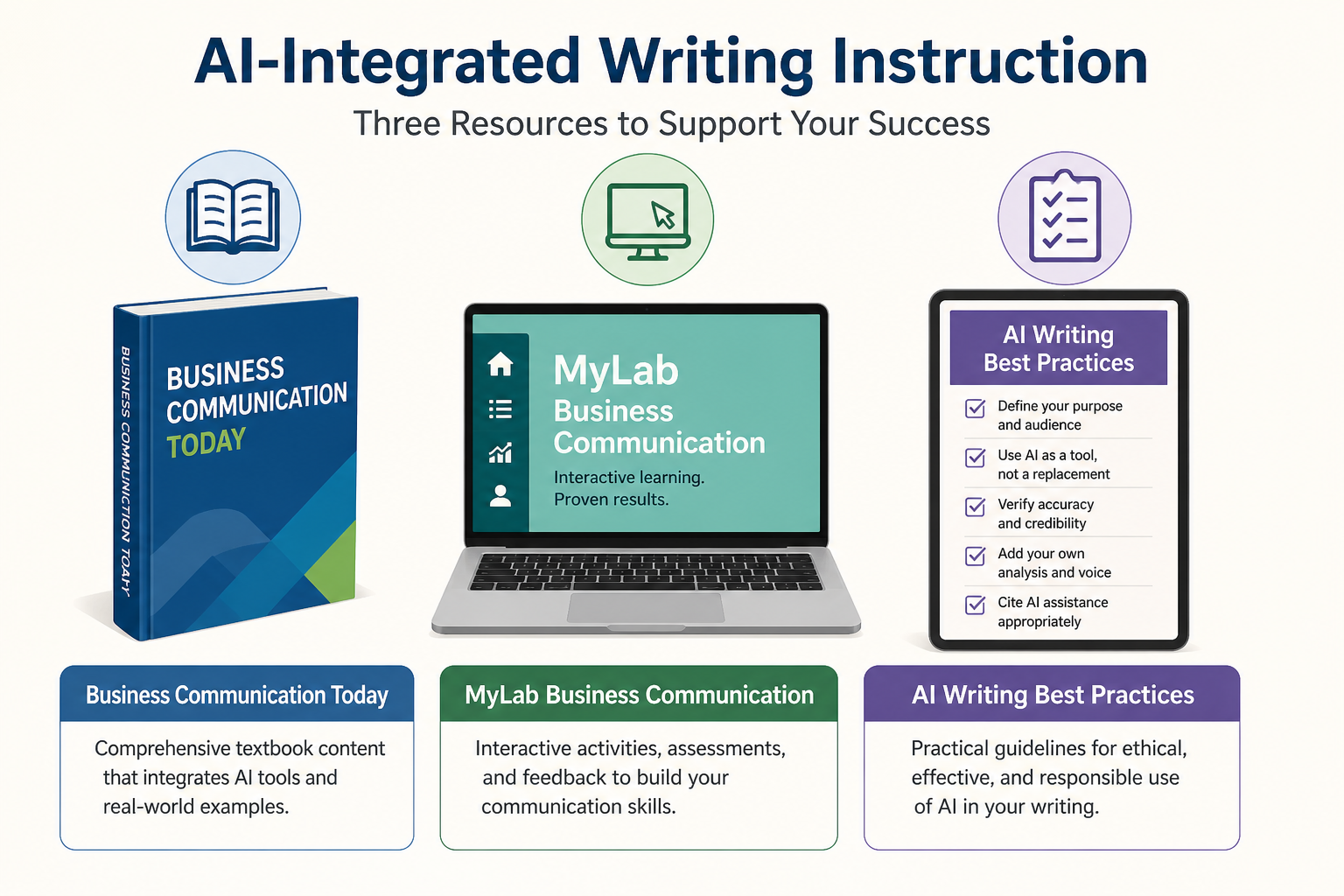
- Business Communication Today offers practical guidance on integrating AI tools without compromising human creativity.
- A balanced approach to teaching both human and AI-assisted writing leads to more nuanced communication skills.
- Resources and platforms like MyLab Business Communication are instrumental in supporting educators with interactive AI exercises.
AI Literacy: The ability to understand and critically evaluate AI tools and their applications in writing.
Generative AI: AI systems designed to create content, such as text, visuals, or music, based on learning from vast datasets.
Prompt Engineering: Crafting effective prompts to guide AI tools like ChatGPT in generating desired outputs.
Semantic Structure: The organized framework of content that enhances both human and AI understanding.
MyLab Business Communication: An educational platform offering interactive exercises to apply communication theories.
Related Questions- How can instructors balance creativity with AI-assisted efficiency in writing?
- What role do AI-integrated resources play in modern education?
- How does Business Communication Today support teaching AI in business communication?
- In what scenarios is AI writing support most beneficial?
- What ethical considerations should teachers address when using AI in assignments?
Bovee, C. L., & Thill, J. V. (2026). Business Communication Today, 16th Edition. Pearson.
Smith, J. (2023). AI’s Impact on Modern Education. Educational Journal.
Jones, A. (2024). Teaching AI Skills in the Classroom. Journal of Higher Education.
Johnson, L. (2025). Ethics in AI Writing. Business Communication Quarterly.
Thompson, R. (2023). Business Communication Tools and Techniques. Pearson.
If you’re ready to enhance your curriculum with AI-integrated communication skills, explore how Business Communication Today, 16th Edition can transform your teaching approach.
© 2026 Business Communication Teaching and Learning Center. All rights reserved.