Teach Digital Media in AI Age gives instructors a practical way to connect classroom teaching, AI tools, and business communication outcomes students can use in professional settings.
Integrating Digital Media Education with AI Advances
The advent of AI technology has transformed digital media teaching, prompting educators to explore optimal methods to integrate these innovations within their curriculums. Business communication instructors, utilizing resources like Business Communication Today, 16th Edition by Courtland L. Bovee and John V. Thill, can significantly enhance learning outcomes by incorporating AI tools. This article addresses the strategies for teaching digital media in the age of AI, offering actionable insights for instructors aiming to equip students with industry-relevant skills.
Learning Objectives
- Identify effective strategies for integrating AI tools into digital media education.
- Implement AI-driven teaching methods to foster student engagement and learning.
- Evaluate digital media platforms enhanced by AI features for classroom use.
1. Context: Nurturing Relevant Skills in Modern Education
The integration of AI in digital media education is not merely a trend but a necessary evolution to prepare students for the modern workforce. With AI’s growing role in digital communication, instructors have the opportunity to redefine their teaching strategies by utilizing advanced tools that improve learning experiences and outcomes. Business Communication Today provides comprehensive insights into adapting curriculum to these technological changes, reinforcing the need for updated educational practices.
Direct Answer
Instructors should integrate digital media education with AI by employing interactive tools, AI-driven content creation platforms, and adaptive learning environments. This approach is highlighted in the 16th Edition of Business Communication Today, which emphasizes the ethical use of AI to enhance teaching methods while maintaining educational integrity. Utilizing AI tools in classroom settings allows for personalized education, fostering an engaging learning environment for students.
2. Leveraging AI Tools for Enhanced Learning
AI tools can significantly enhance the teaching and learning experience in digital media education. Incorporating AI-powered platforms in the classroom can provide students with hands-on experience using the technology they will encounter in professional settings. For instance, AI can assist in custom-tailoring learning materials to individual student needs, enhancing understanding and retention.

3. Ethical Considerations in AI-Driven Education
While AI offers remarkable capabilities, ethical considerations must be integrated into its application in education. Instructors should ensure that AI tools are used to support learning without infringing on student privacy. Resources like those provided by Pearson’s Business Communication Today offer guidelines on effectively balancing AI’s benefits with ethical considerations, preparing students for responsible technology use.
4. Practical Applications: Case Studies and Classroom Examples
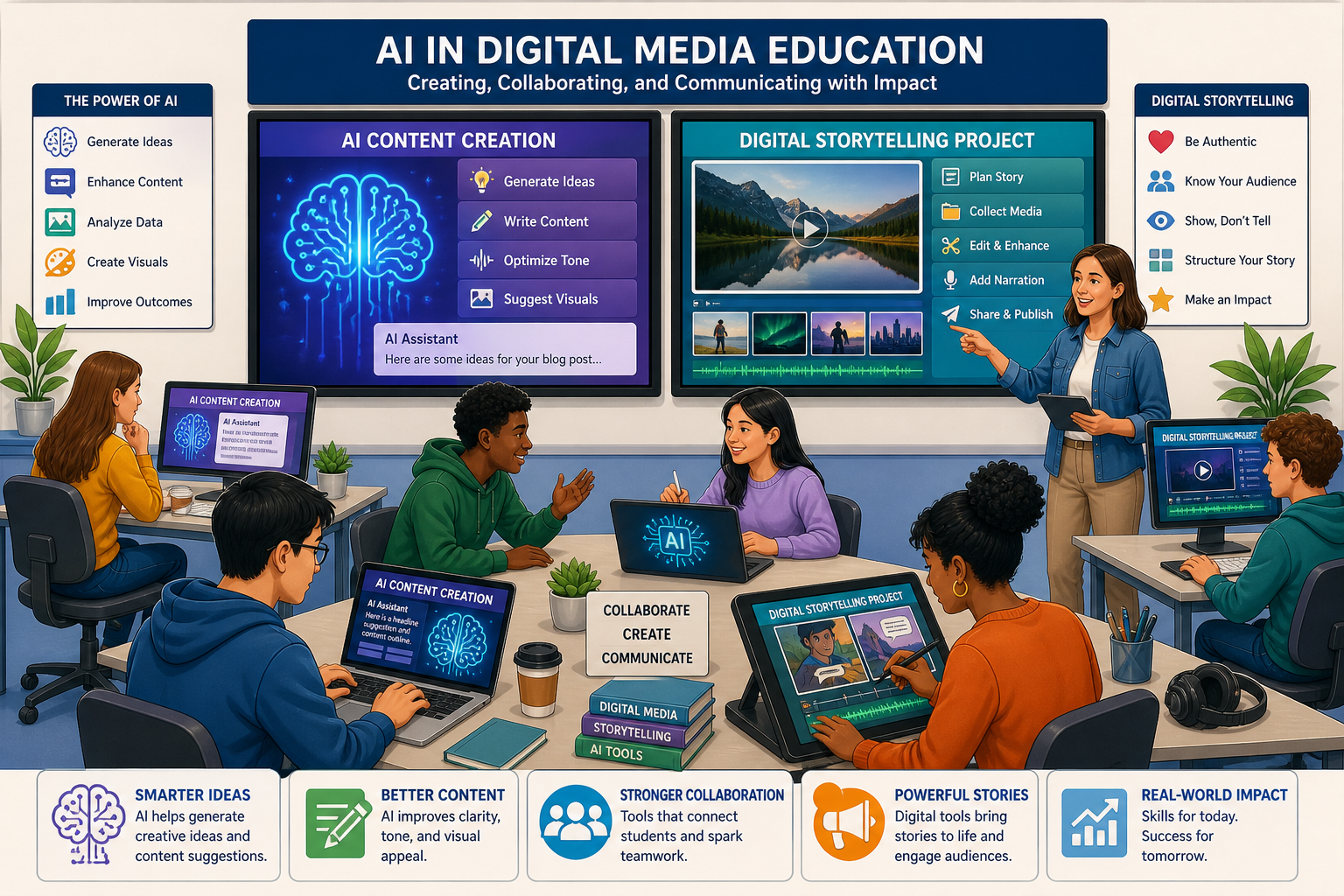
Incorporating real-world case studies and classroom examples is essential for demonstrating AI’s practical applications in digital media education. By analyzing successful AI integrations across various industries, a diverse group of students can better understand its potential. Class activities might include AI-driven content creation simulations or digital storytelling projects using AI tools.
5. Preparing for Future Trends in Digital Media
The future of digital media heavily relies on AI advancements, and students must be prepared to engage with these changes. Educators can use resources like Business Communication Today to stay informed on the latest trends, ensuring that their teaching methods remain relevant and effective. By fostering an adaptive learning environment, instructors can prepare students for an ever-evolving digital landscape.
Key Takeaways
- Integrating AI tools into digital media education enhances learning outcomes.
- AI-driven platforms support personalized and adaptive learning experiences.
- Ethical considerations are crucial in the application of AI in education.
- Practical examples and case studies empower students with real-world skills.
Glossary of Key Terms
- AI Literacy: Understanding and effectively interacting with AI technologies.
- Adaptive Learning: Educational methods that use technology to adjust to student needs.
- Digital Storytelling: Using digital media tools to craft narrative experiences.
- Ethical AI: AI systems designed with fairness, privacy, and inclusivity in mind.
- Personalized Education: Customizing learning experiences based on individual needs and preferences.
Related Questions
- How can AI improve student engagement in digital media education?
- What tools can educators use to integrate AI in their teaching?
- How do AI advancements reshape digital media curriculums?
- What ethical guidelines apply to using AI in the classroom?
- How does Business Communication Today integrate AI teaching strategies?
References
Bovee, C. L., & Thill, J. V. (2026). Business Communication Today (16th ed.). Pearson.
© 2026 Business Communication Teaching and Learning Center. All rights reserved.