
How do you manage challenging behaviors and prevent classroom crises?
Quick answer: Prevent predictable issues and manage unavoidable ones skillfully. Proactive risk management prevents problems through intentional course design, catches issues early when they’re easier to address, and relies on skilled intervention: private conversations before public confrontation, a focus on behavior rather than character, and support offered while maintaining standards. Most semester-long problems are preventable through strategic actions in week one.
Use this hub to choose a risk management focus and go directly to the article that covers it.
At a glance: behavior, crises, and risk management
On smaller screens, scroll horizontally within the table to see all four columns.
| Teaching focus | Activity or approach | Learning purpose | Related article |
|---|---|---|---|
| Classroom management | Prevention strategies, early intervention, in-the-moment responses, private follow-up, documentation, and escalation protocols | Keep difficult behaviors isolated incidents rather than ongoing disruptions | How Can You Control Classroom Crises and Handle 10 Challenging Student Behaviors |
| Preventing failure | Early warning systems, scaffolding, feedback loops, and revision opportunities | Prevent failure without lowering expectations | How Can You Avoid High Student Failure Rates in Your Business Communication Course |
| Communication challenges | Diagnostic questions, quick fixes, systemic solutions, and feedback architecture | Solve communication problems and model the clarity you teach | Are These 16 Communication Challenges Undermining Your Business Communication Course—and How Can You Solve Them |
| Teaching challenges | Strategic responses, workarounds, colleague collaboration, and efficiency strategies | Prepare for and respond to predictable obstacles | How Can You Overcome the Top 10 Challenges in Teaching Business Communication |
| Week one strategy | Expectation setting, relationship building, norm establishment, and early success experiences | Prevent semester-long problems before they start | What If You Could Prevent a Semester of Chaos by Fixing One Thing in Week One |

Behavior, Crises & Risk Management
Preventing Problems and Managing Challenges When They Arise
Hub Overview: Even well-designed courses face challenging student behaviors, potential crises, and unexpected obstacles. The difference between effective and struggling instructors often isn’t avoiding all problems—it’s preventing predictable issues and managing unavoidable ones skillfully. This hub provides practical strategies for classroom management, preventing student failure, overcoming common teaching and communication challenges, and stopping small problems before they become semester-long crises.
Related Pillar: Student Experience & Motivation
Why Proactive Risk Management Matters
Classroom management problems don’t just disrupt individual moments—they compound over time:
- One challenging behavior spreads to others if unaddressed
- Early semester confusion snowballs into persistent problems
- Unclear expectations create ongoing conflicts and frustrations
- Unaddressed struggles lead to preventable failures
- Small frictions accumulate into major disengagement
Reactive crisis management is exhausting and often ineffective. Proactive risk management:
- Prevents problems through intentional design
- Catches issues early when they’re easier to address
- Creates stability that enables learning
- Reduces instructor stress and preserves energy
- Improves student outcomes through supportive structure
This hub equips you to:
- Manage challenging behaviors effectively and ethically
- Prevent high failure rates through strategic interventions
- Address communication challenges that undermine learning
- Overcome common teaching obstacles systematically
- Stop semester chaos before it starts
Topics and Featured Articles
Classroom Management: Handling Crises and Challenging Behaviors
Cluster Focus: Difficult student behaviors will occur. How you respond determines whether they’re isolated incidents or ongoing disruptions.
How Can You Control Classroom Crises and Handle 10 Challenging Student Behaviors
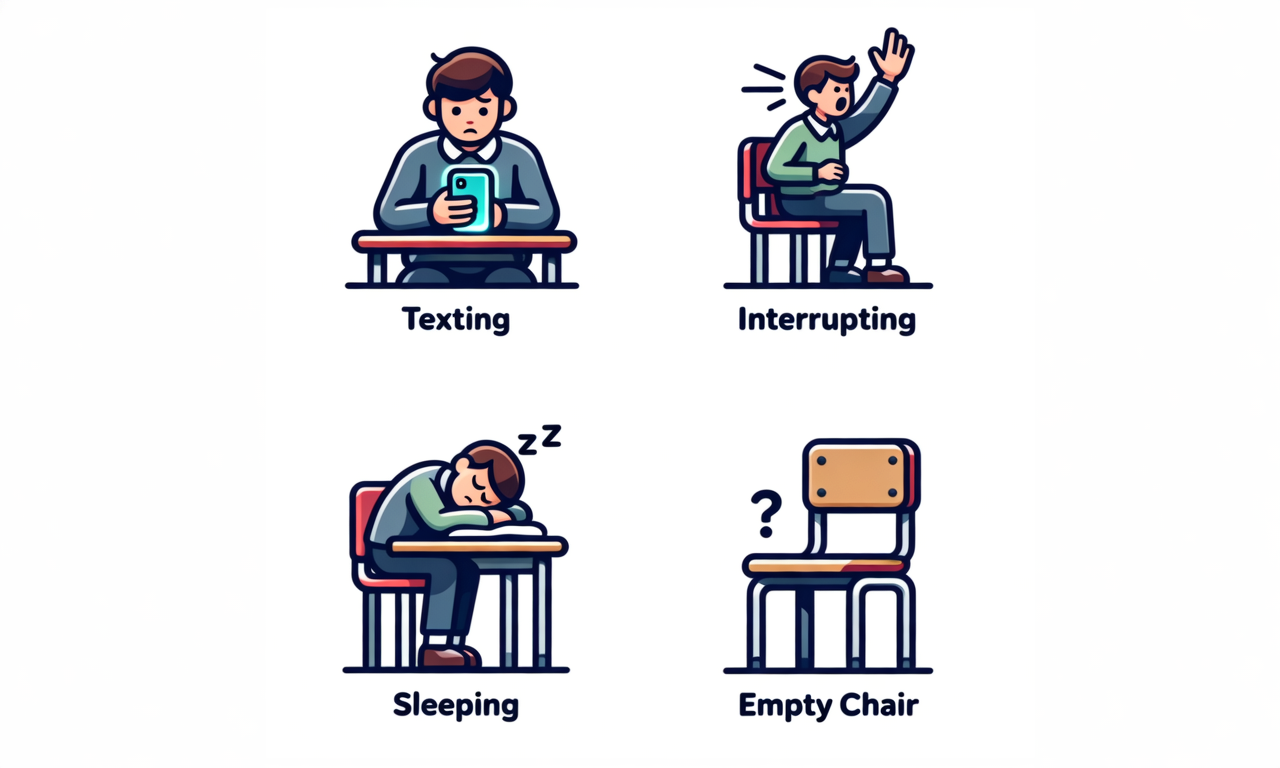
From students dominating discussion to technology misuse, from attendance issues to disrespectful behavior, challenging situations test instructor skill and confidence.
This article examines:
- The 10 Most Common Challenging Behaviors: Patterns instructors typically encounter
- Crisis vs. Challenge: Distinguishing immediate crises from ongoing problems
- Prevention Strategies: Reducing likelihood of problems through design
- Early Intervention: Catching issues before they escalate
- In-the-Moment Responses: What to do when behaviors occur
- Follow-Up Approaches: Addressing patterns privately and productively
- Documentation: When and how to document behavior concerns
- Escalation Protocols: When to involve administration
- Restorative Practices: Repairing relationships after conflicts
- Self-Care: Managing emotional impact of difficult situations
Key Questions Answered:
- What are the most common challenging behaviors?
- How do you respond in the moment without escalating?
- When should you address issues privately vs. publicly?
- How do you document and escalate when necessary?
Target Keywords: classroom behavior management, handling difficult students, classroom crises, challenging student behaviors, classroom management strategies
Preventing Failure: Proactive Student Success
Cluster Focus: High failure rates signal systemic problems, not just weak students. Prevention is possible through strategic design and intervention.
How Can You Avoid High Student Failure Rates in Your Business Communication Course

When significant numbers of students fail or barely pass, something in the course design, scaffolding, or support structure needs attention.
This article explores:
- Failure Rate Analysis: What constitutes problematic failure rates
- Root Cause Identification: Why students fail in business communication
- Early Warning Systems: Identifying at-risk students quickly
- Scaffolding Design: Breaking complex skills into manageable steps
- Feedback Loops: Catching problems before they become failures
- Revision Opportunities: Learning from mistakes without penalty
- Support Structures: What resources students need access to
- Competence Building: Creating genuine belief in possible success
- Standards Maintenance: Preventing failure without lowering expectations
- Intervention Timing: When and how to intervene strategically
Key Questions Answered:
- What failure rate signals a problem vs. appropriate standards?
- How do you identify at-risk students early?
- What scaffolding prevents failure while maintaining rigor?
- How do you intervene without creating dependence?
Target Keywords: preventing student failure, reducing failure rates, student success strategies, at-risk student intervention, failure prevention
Communication Challenges: Solving Systemic Problems
Cluster Focus: Communication challenges in business communication courses are particularly ironic—and particularly solvable.
From unclear instructions to poor feedback mechanisms, from student-instructor miscommunication to peer communication breakdowns, these challenges undermine the very skills you’re teaching.

This article examines:
- The 16 Common Communication Challenges: Specific patterns that plague courses
- Irony Recognition: Communication problems in communication courses
- Diagnostic Questions: Identifying which challenges affect your course
- Quick Fixes: Immediate improvements for each challenge
- Systemic Solutions: Addressing root causes, not just symptoms
- Communication Design: Intentional structures for clarity
- Feedback Architecture: Creating effective information flow
- Student Communication Skills: Teaching students to communicate about communication
- Modeling Excellence: Demonstrating the skills you teach
- Continuous Improvement: Using communication challenges as teaching opportunities
Key Questions Answered:
- What communication challenges are most common?
- How do you identify communication problems in your course?
- What quick fixes address each challenge?
- How do you model effective communication as instructor?
Target Keywords: communication challenges solutions, course communication problems, instructor-student communication, feedback systems, clear expectations
Teaching Challenges: Overcoming Common Obstacles
Cluster Focus: Business communication instruction faces predictable challenges. Knowing what they are helps you prepare and respond effectively.
How Can You Overcome the Top 10 Challenges in Teaching Business Communication
From diverse student preparation to resistance to writing, from time constraints to assessment burden, these challenges are structural features of the discipline.
This article explores:
- The Top 10 Teaching Challenges: Most common obstacles instructors face
- Challenge Clustering: Related problems that share solutions
- Strategic Responses: Evidence-based approaches for each challenge
- Workarounds: When you can’t eliminate challenges
- Colleague Collaboration: Shared solutions and support
- Realistic Expectations: What you can and can’t control
- Efficiency Strategies: Doing more with less time and energy
- Technology Leverage: Tools that help vs. create new problems
- Institutional Support: Advocating for resources and changes
- Resilience Building: Sustaining effectiveness despite obstacles
Key Questions Answered:
- What challenges are inherent to teaching business communication?
- Which challenges have proven solutions?
- What’s within my control vs. outside it?
- How do experienced instructors handle these obstacles?
Target Keywords: business communication teaching challenges, overcoming teaching obstacles, instructor challenges, teaching difficulties solutions, business communication instruction
Crisis Prevention: The Week One Strategy
Cluster Focus: Most semester-long problems are preventable through strategic actions in week one.

What If You Could Prevent a Semester of Chaos by Fixing One Thing in Week One
The first week sets patterns, establishes expectations, creates culture, and prevents (or enables) future problems. Getting week one right changes everything.
This article examines:
- The Power of Week One: Why first impressions and early patterns matter
- Critical Week One Elements: What must be established immediately
- Common Week One Mistakes: Problems that create semester-long issues
- Expectation Setting: Clarity that prevents confusion and conflict
- Relationship Building: Early connection that enables later challenges
- Norm Establishment: Creating culture intentionally
- Assessment Preview: Showing students what success looks like
- Support Structure Introduction: Making help accessible early
- Engagement Hooks: Creating immediate investment
- Week One Checklist: Essential actions to prevent future chaos
Key Questions Answered:
- What makes week one so critical?
- What specific actions prevent semester-long problems?
- How do you establish expectations effectively?
- What mistakes in week one create lasting issues?
Target Keywords: preventing classroom problems, first week teaching, setting expectations, preventing semester chaos, week one strategies
Synthesis: The Risk Management Framework

Use this comprehensive framework to prevent and manage challenges:
Phase 1: Prevention (Before Problems Occur)
Course Design Prevention:
- Clear learning objectives and expectations
- Appropriate scaffolding and support
- Reasonable workload and pacing
- Accessible resources and help
- Predictable structure and routines
Cultural Prevention:
- Establish behavioral norms early
- Build psychological safety
- Create community and connection
- Model respect and professionalism
- Set clear boundaries with kindness
Communication Prevention:
- Detailed syllabi and instructions
- Multiple communication channels
- Regular check-ins and feedback
- Transparency about decisions
- Accessibility for questions
Phase 2: Early Detection (Catching Issues Quickly)
Warning Signs to Monitor:
- Attendance and punctuality changes
- Assignment submission patterns
- Quality of work decline
- Participation withdrawal
- Behavioral changes
- Signs of distress
Detection Systems:
- Early assessments to identify struggles
- Regular check-ins and feedback
- Peer and self-reporting mechanisms
- Learning management system analytics
- Office hours and accessibility

Phase 3: Intervention (Addressing Problems)
Intervention Principles:
- Early intervention beats late crisis management
- Private conversations before public confrontation
- Focus on behavior, not character
- Offer support while maintaining standards
- Document significant concerns
- Follow institutional policies
Intervention Approaches:
- Individual conversations
- Referrals to campus resources
- Accommodation adjustments
- Assignment modifications
- Additional support or tutoring
- Behavioral contracts when needed
Phase 4: Crisis Management (When Prevention Fails)
Crisis Response:
- Stay calm and professional
- Ensure immediate safety
- De-escalate rather than confront
- Involve appropriate resources
- Document thoroughly
- Follow up after resolution
Types of Crises:
- Behavioral: Disruption, aggression, threats
- Academic: Plagiarism, fabrication, sabotage
- Personal: Mental health, trauma disclosure, emergency
- Interpersonal: Conflicts, harassment, discrimination
Phase 5: Recovery and Learning
After Incidents:
- Process emotionally (seek support)
- Review what happened objectively
- Identify preventable vs. unpredictable
- Adjust policies or practices
- Communicate with affected parties
- Move forward without dwelling
Practical Tools and Resources
Behavior Management Cheat Sheet
For Dominating Participants:
- “Thank you for that perspective. Who hasn’t spoken yet?”
- Private conversation: “I value your contributions. How can we ensure everyone participates?”
For Technology Misuse:
- Establish clear device policies
- Create device-free zones or times
- Make class engaging enough that devices compete poorly
For Disrespectful Comments:
- Address immediately but calmly
- “Let’s remember our community norms about respectful dialogue”
- Follow up privately if pattern emerges
For Chronic Lateness:
- Start class with essential content
- Private conversation about barriers
- Connect to professional expectations
For Assignment Avoidance:
- Identify root cause (overwhelm? confusion? apathy?)
- Break assignments into smaller steps
- Build in support and feedback
Week One Essential Actions
Day One:
- Learn and use names
- Establish why the course matters
- Create positive first impression
- Build excitement and engagement
- Set behavioral expectations
Week One:
- Clarify all policies and expectations
- Provide detailed syllabus review
- Give early success experience
- Start building relationships
- Make support resources visible
- Assess prerequisite knowledge
- Set collaborative norms
Instructor takeaways
- Prevent problems through intentional course design: clear expectations, appropriate scaffolding, and predictable structure and routines.
- Get week one right: learn names, set behavioral expectations, give an early success experience, and make support resources visible.
- Watch for warning signs—attendance changes, submission patterns, declining work, participation withdrawal—and use early, low-stakes assessments.
- Intervene early and privately before any public confrontation, and focus on behavior, not character.
- Offer support while maintaining standards, preventing failure without lowering expectations.
- Model the clarity you teach by auditing your own materials, such as your syllabus.
- In a crisis, stay calm, ensure immediate safety, de-escalate, involve appropriate resources, and document thoroughly.
Related questions
How should you respond to challenging behavior in the moment?
Address it immediately but calmly, de-escalate rather than confront, and follow up privately if a pattern emerges. Public correction breeds defensiveness; private correction builds relationships.
How do you identify at-risk students early?
Don’t wait for the midterm. Use early, low-stakes assessments, and monitor changes in attendance and punctuality, assignment submission patterns, quality of work, and participation.
Can you prevent failure without lowering standards?
Yes. Scaffolding that breaks complex skills into manageable steps, feedback loops, revision opportunities, and accessible support structures prevent failure while maintaining expectations.
Why does week one matter so much?
The first week sets patterns, establishes expectations, and creates culture. Week one is when the concrete is wet; later, norms and expectations harden and become difficult to change.
What should you do when a crisis occurs?
Stay calm and professional, ensure immediate safety, de-escalate rather than confront, involve appropriate resources, document thoroughly, and follow up after resolution.
How do you handle a student who dominates discussion?
In class, try: “Thank you for that perspective. Who hasn’t spoken yet?” Then follow up with a private conversation: “I value your contributions. How can we ensure everyone participates?”
Connection to Other Hubs
This hub focuses on preventing and managing problems. For related topics:
- Engagement, Apathy & Disengagement – Understanding and addressing motivation challenges
- Empathy, Anxiety & Emotional Climate – Creating emotionally supportive environments
Together, these three hubs provide comprehensive guidance for student experience and motivation.
The Bottom Line

Effective classroom management and risk prevention isn’t about controlling students—it’s about creating conditions where problems are less likely and addressing issues skillfully when they arise. This requires:
- ✓ Proactive prevention through intentional course design
- ✓ Early detection of problems before they escalate
- ✓ Skilled intervention when issues emerge
- ✓ Clear expectations established from day one
- ✓ Strategic scaffolding that prevents failure
- ✓ Professional boundaries maintained with kindness
- ✓ Documentation when appropriate
- ✓ Institutional resources leveraged when needed
The articles in this hub help you build stable, supportive learning environments where students can focus on learning rather than navigating chaos.