Teach Students About Empathy gives instructors a practical way to connect classroom teaching, AI tools, and business communication outcomes students can use in professional settings.
Equip Instructors to Foster Empathy Among Students
In today’s digital world, where communication often lacks a personal touch, teaching empathy has become increasingly vital. This topic is especially relevant for instructors who use Business Communication Today, 16th Edition by Courtland L. Bovee and John V. Thill. Knowing how to effectively impart empathy can enrich student interactions and prepare them for success in diverse digital environments. By aligning educational strategies with real-world applications, instructors can answer a common question: how do we cultivate genuine empathy in digital communication settings?
Learning Objectives- Upon completing this article, instructors will be able to:
- Identify strategies to integrate empathy-driven communication in digital learning environments.
- Implement classroom activities that foster emotional intelligence among students.
- Evaluate the effectiveness of empathy-based teaching methods using evidence-based metrics.
As digital communication tools proliferate, the need for empathy-driven communication skills becomes paramount. Instructors who focus on this approach help prepare students to navigate both interpersonal relationships and professional environments more adeptly. Referencing Bovee and Thill’s established methodologies provides a foundation for teaching empathy effectively in the evolving landscape of business communication.
Direct Answer SectionThe integration of empathy-driven communication within educational curriculums is essential for fostering connection and understanding in digital interactions. According to Edelman’s 2023 Global Trust Barometer, 86% of consumers expect brands to act with purpose and authenticity. Similarly, students develop better interpersonal skills when empathy is taught explicitly. Using tools from Business Communication Today, instructors can effectively blend traditional communication skills with modern-day digital fluency, thereby enhancing students’ capabilities to communicate with empathy both online and offline.
1. Why Empathy Matters in Digital CommunicationIncreased reliance on digital communication often results in messages becoming detached from their emotional and contextual nuances. However, empathy-driven communication can counteract this by fostering genuine understanding and compassion. Students exposed to these ideals become better equipped to engage in meaningful dialogue, thus enhancing both their personal and professional lives.

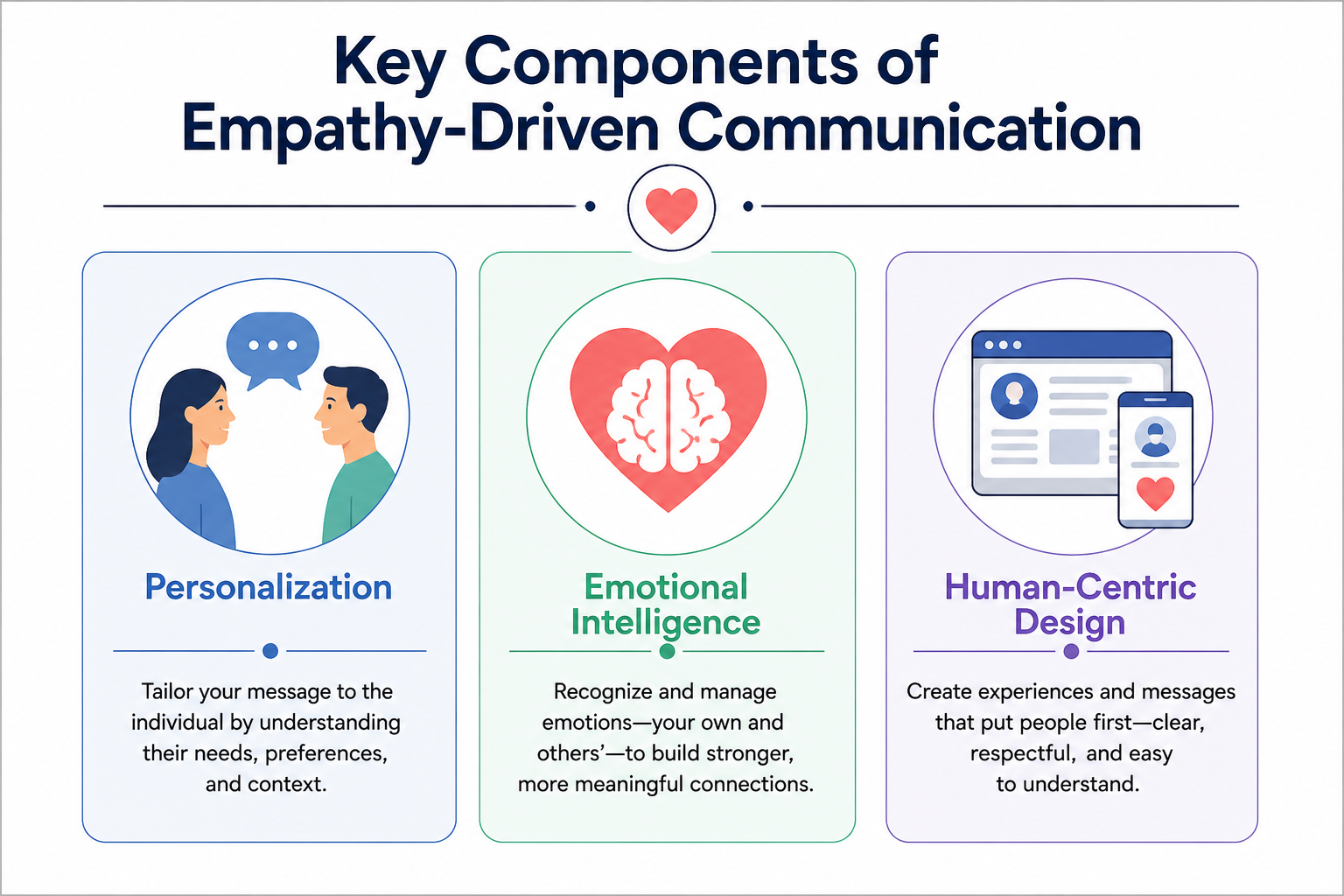
Effective communication involves personalizing messages to suit the needs and emotions of the recipients. This can be achieved by ethically analyzing customer data and designing empathetic dialogues, whether in emails or through AI-driven chatbots. Students can learn to implement these strategies through storytelling projects and personalized communication exercises.
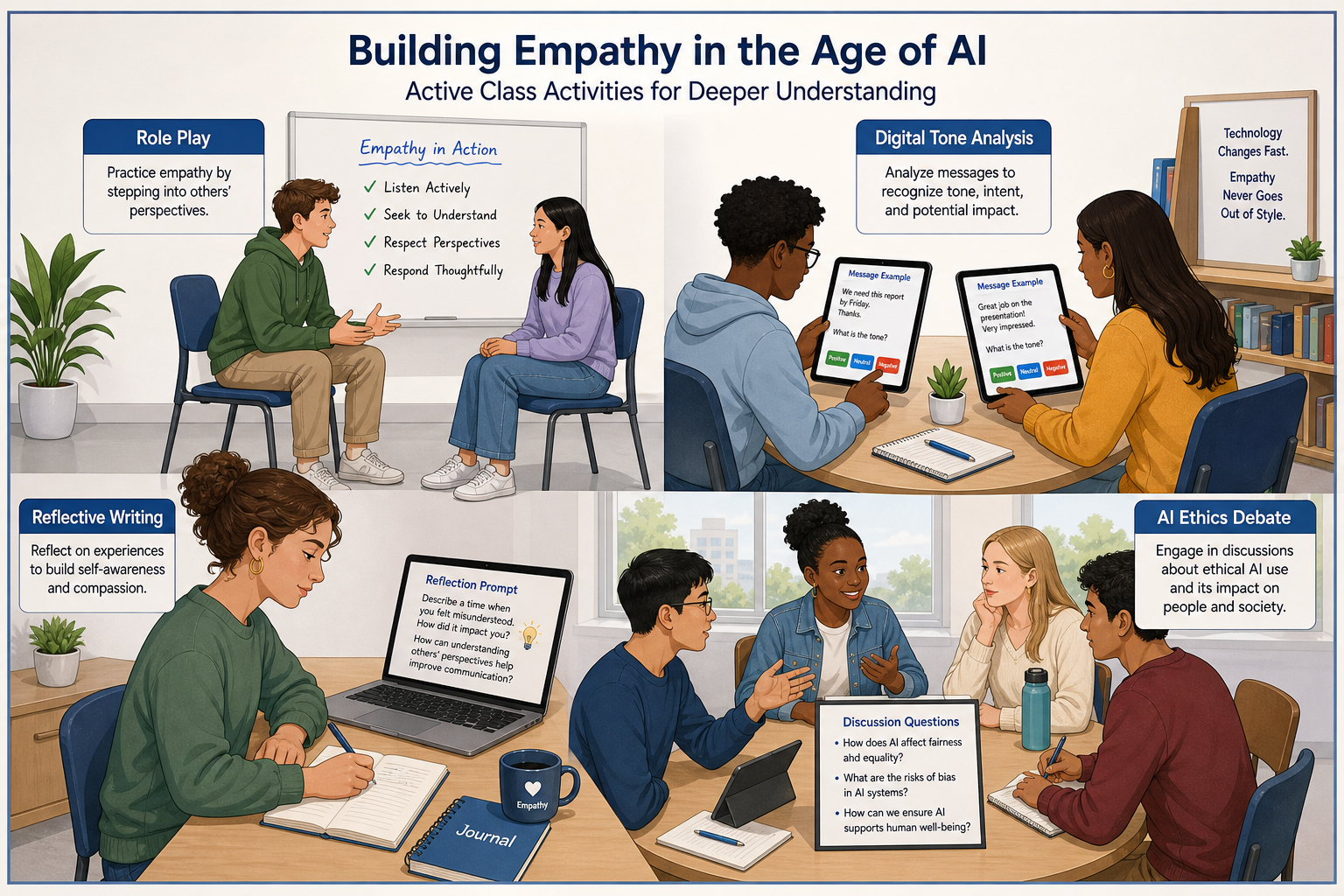
Empathy cannot just be preached, it must be practiced through experiential activities. Role-playing, digital tone analysis, reflective writing, and AI ethics debates are practical activities that allow diverse student groups to experience the nuances of empathy-driven communication. These methods ensure students learn to balance empathy with professionalism in their future careers.
- Empathy is a vital skill in business communication, boosting trust and loyalty.
- Combining digital communication with empathy enhances student digital literacy.
- Instructors play a crucial role in modeling empathy through innovative teaching strategies.
Digital Civility: Respectful and responsible behavior in online environments.
Emotional Intelligence (EQ): Awareness and regulation of one’s own emotions and those of others.
Empathy: The ability to understand and share the feelings of others.
Ethical AI: Artificial intelligence designed and used with fairness, transparency, and inclusivity.
Personalization: Customizing messages based on data and user preferences.
Related Questions- How can empathy enhance virtual teamwork dynamics?
- What are effective methods to assess empathy in student communication?
- How can AI be utilized responsibly to augment empathy-driven interaction?
- What challenges might arise in teaching empathy across cultures?
Edelman. (2023). Global Trust Barometer. https://www.edelman.com/research/2023-global-trust-barometer
Bovee, C. L., & Thill, J. V. (2026). Business Communication Today (16th ed.). Pearson.
© 2026 Business Communication Teaching and Learning Center. All rights reserved.