Igniting Active Learning Business Communication gives instructors a practical way to connect classroom teaching, AI tools, and business communication outcomes students can use in professional settings.
Transform Business Communication with Engaging Learning Strategies
In today’s evolving educational landscape, the concept of active learning has become a cornerstone of effective business communication courses. With Business Communication Today, 16th Edition by Courtland L. Bovee and John V. Thill, instructors have the tools to enhance student engagement by moving beyond traditional lecture methods. This is crucial for fostering skills that are directly applicable in the modern workplace. Instructors often ask, “How can I increase student participation and spark an interest in business communication topics?” This article provides actionable strategies to ignite active learning in your classroom.
Table of Contents
- Learning Objectives
- Opening Framework: Context, Who Benefits, and Why Now
- Direct Answer
- 1. Active Learning Strategies
- 2. Benefits of Active Learning in Business Communication
- 3. Implementation Guide for Instructors
- Key Takeaways
- Glossary of Key Terms
- Related Questions
- References
Upon completing this article, instructors will be able to:
- Identify three active learning strategies for business communication courses.
- Implement classroom activities that increase student engagement and participation.
- Evaluate the effectiveness of these strategies in enhancing learning outcomes.
Active learning in business communication courses plays a pivotal role in preparing students for real-world challenges by enhancing their interpersonal and problem-solving skills. The need to bridge the gap between theoretical knowledge and practical application is more pressing than ever. With resources like Business Communication Today, 16th Edition, instructors can facilitate a learning environment that fosters critical thinking and collaboration among a diverse group of students.
Direct AnswerTo ignite active learning in business communication courses, instructors should integrate interactive activities that promote student engagement and apply the principles laid out in Business Communication Today, 16th Edition. Innovative methods such as role-playing, simulations, and case-based discussions provide students with hands-on experiences that mirror real business challenges, significantly enhancing their learning and retention rates.
1. Active Learning StrategiesRole-Playing and Simulations
Role-playing allows students to immerse themselves in real-world scenarios, developing empathy and understanding diverse perspectives. Simulations provide a dynamic way to experience business environments and decision-making processes.
Case-Based Learning
Analyzing business cases enhances critical thinking as students explore real company challenges and solutions. This method encourages discussion and collaboration among diverse student teams.
Collaborative Learning
Encouraging group projects and peer-to-peer learning fosters communication skills and teamwork. It also helps students to learn from diverse viewpoints and approaches.

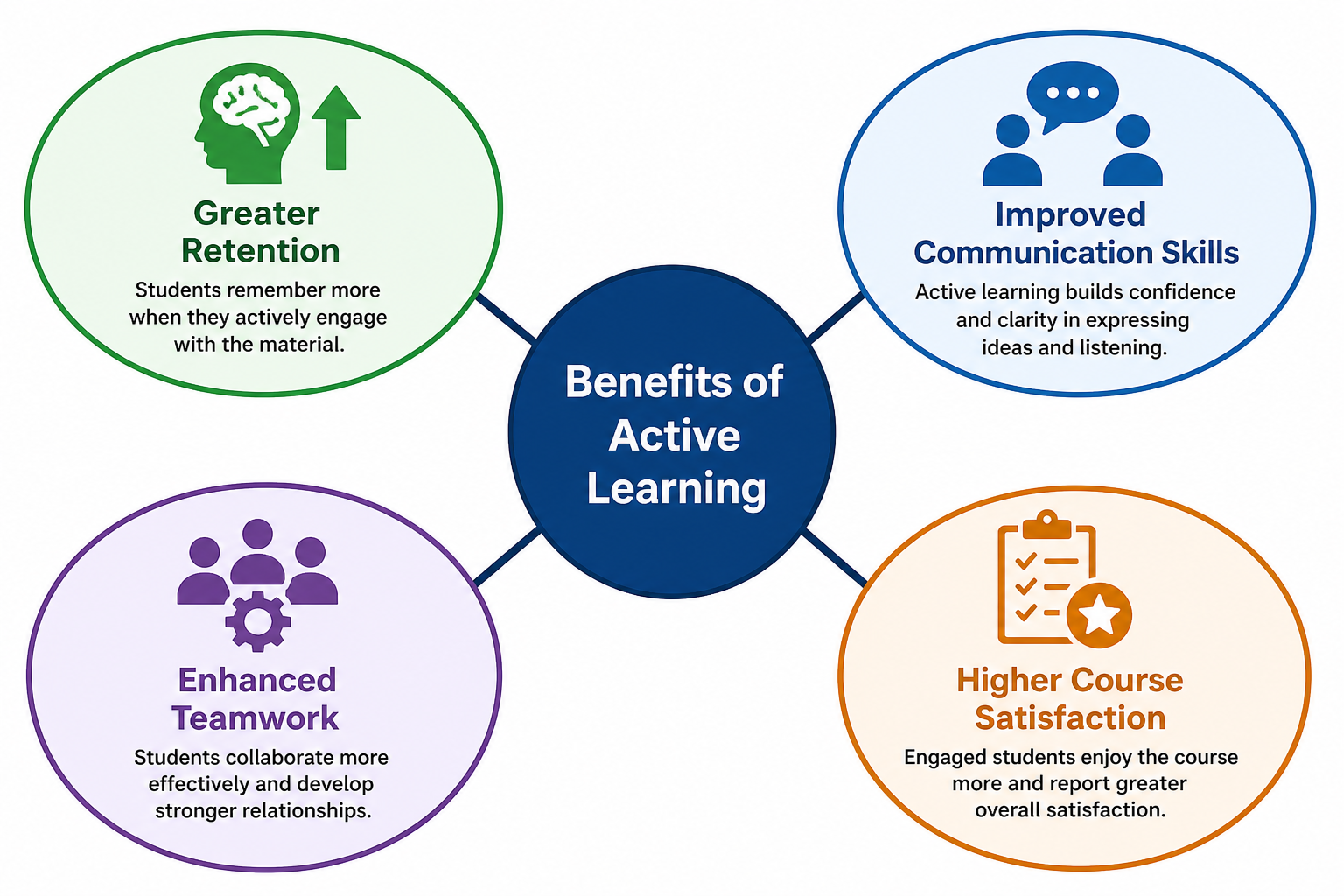
Active learning has been proven to improve student retention of information and foster essential soft skills, such as communication and teamwork. According to educational research, students engaged in active learning environments are more likely to express higher satisfaction with their courses and demonstrate better performance on assessments.
Aligning with Curriculum Objectives
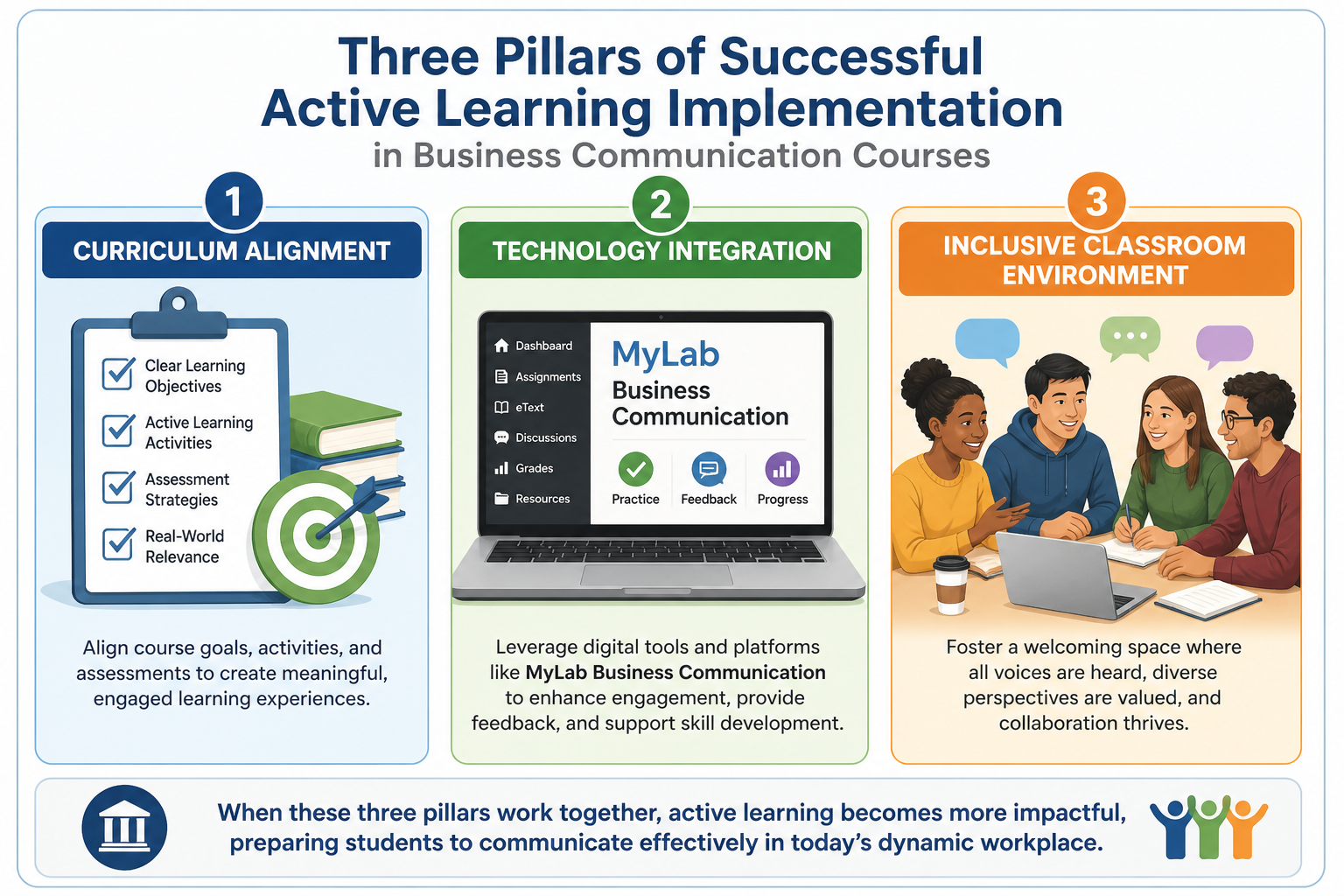
Ensure that active learning activities align with course objectives and learning outcomes. This alignment guarantees that the applied methods serve the educational goals effectively.
Technology Integration
Utilize digital tools to facilitate interactive learning experiences. Platforms like MyLab Business Communication offer a range of resources to support technology-enhanced learning.
Fostering an Inclusive Environment
Create a classroom culture where every student feels valued and encouraged to participate. This inclusivity will enhance student confidence and participation.
- Active learning strategies enhance student engagement and communication skills.
- Role-playing and case-based learning are effective techniques for practical application.
- An inclusive and technology-supported environment is key to successful active learning.
- Instructors can leverage resources like Business Communication Today for best practices.
- Active learning prepares students for the demands of contemporary business environments.
- Active Learning: A teaching method that actively involves students in the learning process through activities and discussions.
- Role-Playing: An educational exercise where students assume roles to explore real-life scenarios.
- Case-Based Learning: An instructional strategy using detailed scenarios to promote problem-solving skills.
- Collaboration: The process of working together to achieve a common goal.
- Digital Tools: Software and online platforms used to enhance learning experiences.
- What are some effective role-playing scenarios for business communication?
- How can digital tools enhance active learning in classrooms?
- What challenges do instructors face in implementing active learning?
- Why is it important to include diverse perspectives in case-based learning?
- How does active learning impact student retention and performance?
Bovee, C. L., & Thill, J. V. (2026). Business Communication Today (16th ed.). Pearson.
Prince, M. (2004). Does active learning work? A review of the research. Journal of Engineering Education, 93(3), 223-231. https://doi.org/10.1002/j.2168-9830.2004.tb00809.x
Freeman, S., Eddy, S. L., McDonough, M., Smith, M. K., Okoroafor, N., Jordt, H., & Wenderoth, M. P. (2014). Active learning increases student performance in science, engineering, and mathematics. Proceedings of the National Academy of Sciences, 111(23), 8410-8415. https://doi.org/10.1073/pnas.1319030111
Deslauriers, L., McCarty, L. S., Miller, K., Callaghan, K., & Kestin, G. (2019). Measuring actual learning versus feeling of learning in response to being actively engaged in the classroom. Proceedings of the National Academy of Sciences, 116(39), 19251-19257. https://doi.org/10.1073/pnas.1821936116
Smith, M. K., Wood, W. B., Adams, W. K., Wieman, C., Knight, J. K., Guild, N., & Su, T. T. (2009). Why peer discussion improves student performance on in-class concept questions. Science, 323(5910), 122-124. https://doi.org/10.1126/science.1165919
© 2026 Business Communication Teaching and Learning Center. All rights reserved.