Engage Every Student with Visual Learning Techniques
Visual learning offers a compelling way to captivate and educate students by leveraging visuals to enhance understanding and retention. As educational demands evolve, integrating visual learning techniques is crucial for educators. This opportunity is relevant now as instructors look for innovative strategies to maintain student engagement amid shifting educational landscapes. In Business Communication Today, 16th Edition, by Courtland L. Bovée and John V. Thill, the importance of diverse communication methods, including visual learning, is emphasized, making it essential for modern classrooms.
Table of Contents
- Introduction
- Learning Objectives
- Opening Framework: Context, Who Benefits, and Why Now
- Direct Answer Section
- 1. Visual Learning Benefits for Diverse Students
- 2. Implementation Strategies
- 3. Technology and Innovation in Visual Learning
- Key Takeaways
- Glossary of Key Terms
- Related Questions
- References
Introductory Summary
Visual learning is revolutionizing how educators engage students by incorporating images, diagrams, and infographics to deliver content effectively. As student engagement becomes a priority, visual learning addresses short attention spans and varied learning styles. Instructors often ask how to keep students fully engaged, and Business Communication Today, 16th Edition, by Courtland L. Bovée and John V. Thill, covers visual communication in depth in Chapter 9.
Learning Objectives
Upon completing this article, instructors will be able to:
- Identify the key benefits of visual learning for diverse students.
- Implement practical visual learning strategies in their classrooms.
- Leverage technology to enhance visual learning experiences.
Opening Framework: Context, Who Benefits, and Why Now
In today’s classrooms, educators face the challenge of engaging students amid numerous distractions and diverse backgrounds. Visual learning offers a bridge to deeper understanding by appealing to multiple learning styles. As Courtland L. Bovée and John V. Thill suggest in Business Communication Today, 16th Edition, visual elements significantly enhance message retention and comprehension, making it imperative for educators to adopt these strategies.
Direct Answer Section
Visual learning engages every student by transforming complex information into understandable visuals, effectively tapping into different learning styles. Pairing visuals with text helps many students understand and remember material. Business Communication Today, 16th Edition, devotes Chapter 9 to visual media, which gives students a foundation in creating and reading visuals.
1. Visual Learning Benefits for Diverse Students
Visual learning benefits a diverse group of students by providing multiple ways to access and process information. This approach facilitates comprehension for visual learners and supports those with different learning needs, ensuring inclusivity and engagement. Diverse classrooms reflect varied learning preferences, among which visuals play a crucial role.

2. Implementation Strategies
To implement visual learning, instructors can utilize tools like infographic software, interactive simulations, and creative visual aids. These resources enable students to visualize concepts, promoting active participation. For example, turning complex data into easy-to-understand charts allows students to grasp material more effectively.

3. Technology and Innovation in Visual Learning
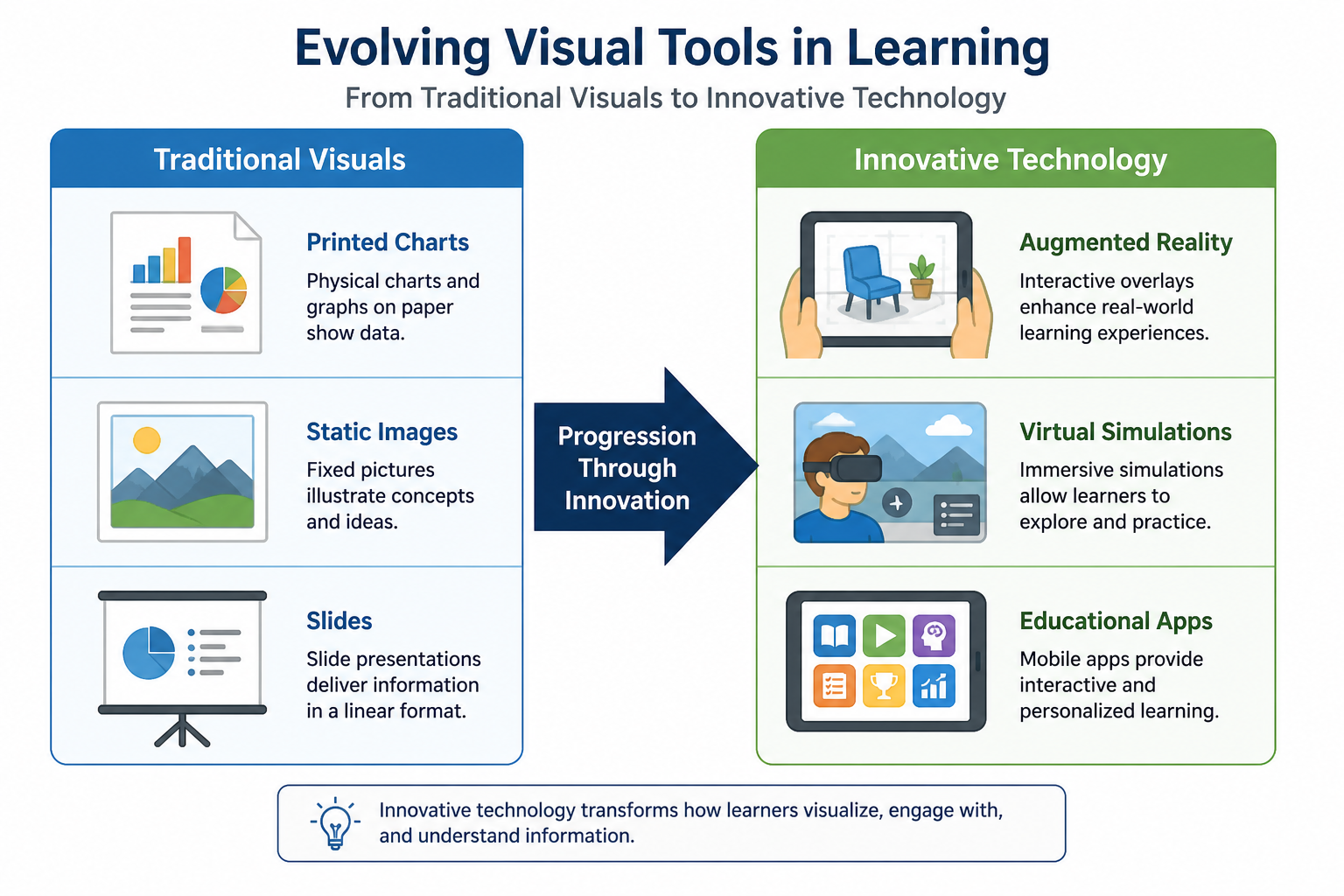
Technological advancements have made integrating visuals more interactive and dynamic. Software platforms and educational apps provide accessible ways to create engaging content that could transform traditional learning environments. Tools such as augmented reality and virtual simulations immerse students in experiences that traditional methods cannot replicate.
Key Takeaways
- Visuals paired with text help students understand and remember content.
- Tools like infographics and simulations are essential for implementing effective visual learning strategies.
- Technology integration, such as virtual reality, enhances visual learning and student engagement.
- Diverse learning needs can be met by adjusting teaching methods to include visual components.
Glossary of Key Terms
- Augmented Reality: An interactive experience where digital information enhances the real-world environment.
- Visual Learning: A style of learning where information is presented visually to improve understanding.
- Infographic: A visual tool that presents information clearly and quickly through graphics.
- Engagement: The level of interest and participation demonstrated by students in their learning activities.
- Interactive Learning: Learning activities that involve student interaction with the content for deeper engagement.
How can visual aids improve student comprehension?
Images, diagrams and infographics make content easier to understand and remember. Business Communication Today, 16th Edition, notes that visual elements significantly improve both retention and comprehension.
What are the benefits of using technology in visual learning?
Tools such as augmented reality and virtual simulations immerse students in experiences that traditional methods can’t replicate, which makes visual learning more engaging.
How do visual learning strategies support diverse student needs?
Adding visual components to teaching helps visual learners and supports students with different learning needs, which makes the classroom more inclusive.
Why is visual learning an effective tool in modern education?
Visuals capture attention and deliver content efficiently through images, diagrams and infographics, improving both understanding and retention.
How can educators incorporate augmented reality into their teaching methods?
Use augmented reality and virtual simulations to create immersive experiences around course content. The article presents them as tools that go beyond what traditional visuals can do.
References
Bovée, C. L., & Thill, J. V. (2026). Business Communication Today (16th ed.). Pearson. https://www.pearson.com
Next StepsIf you’re eager to see how visual learning can foster creativity and engagement in your classroom, explore Business Communication Today, 16th Edition, for more strategies to transform your educational approach.
- Igniting Active Learning in Business Communication Courses
- How Can Dynamic Classroom Strategies Ignite Passion and Drive Success?
- Which of These 10 ‘Crazy’ Teaching Ideas Actually Works Better Than Traditional Methods?
© 2026 Business Communication Teaching and Learning Center. All rights reserved.