Neuroscience Behind Effective Writing gives instructors a practical way to connect classroom teaching, AI tools, and business communication outcomes students can use in professional settings.
Leverage Neuroscience for Memorable Business Writing
Effective business communication isn’t just about transmitting information—it’s about making messages memorable. The principles found in Business Communication Today, 16th Edition by Courtland L. Bovee and John V. Thill, highlight the intersection of psychology and effective writing strategies that influence memory retention. Understanding these strategies can equip educators in creating impactful lessons that engage today’s business students. By integrating cognitive science with teaching methodologies, instructors can answer the pressing question: Why do some business messages prevail while others are forgotten?
Learning Objectives- Identify key neurological insights that enhance message retention.
- Implement writing techniques that align with cognitive psychology principles.
- Evaluate business communication strategies within educational contexts.
With the increasing influx of digital communication, standing out in a crowded field is more challenging than ever for professionals. Instructors of business communication can play a crucial role by imparting strategies rooted in neuroscience, which bolster message retention. These insights are particularly vital today as attention spans wane and content competition intensifies. The 16th edition of Bovee and Thill’s Business Communication Today offers a comprehensive guide to understanding and applying cognitive psychology principles to business writing.
Direct AnswerThe neuroscience behind effective writing suggests that messages are more likely to be remembered when they engage emotions, utilize storytelling, and follow a clear, structured format. According to Bovee and Thill, integrating personal anecdotes and strong visuals can significantly enhance memory retention by evoking emotional responses. Furthermore, citing psychological studies, structured narratives help organize information in ways the brain naturally processes, thereby increasing the likelihood of recall.
1. The Science of Emotional EngagementEmotional engagement is pivotal in making business messages stick. Neuroscience reveals that emotional responses activate more areas of the brain, making the content more memorable. Emotional content, such as stories of real-world applications or case studies, can increase retention rates by up to 50% compared to neutral information. By instilling these principles in writing, instructors can boost their students’ ability to create lasting connections through their messages.

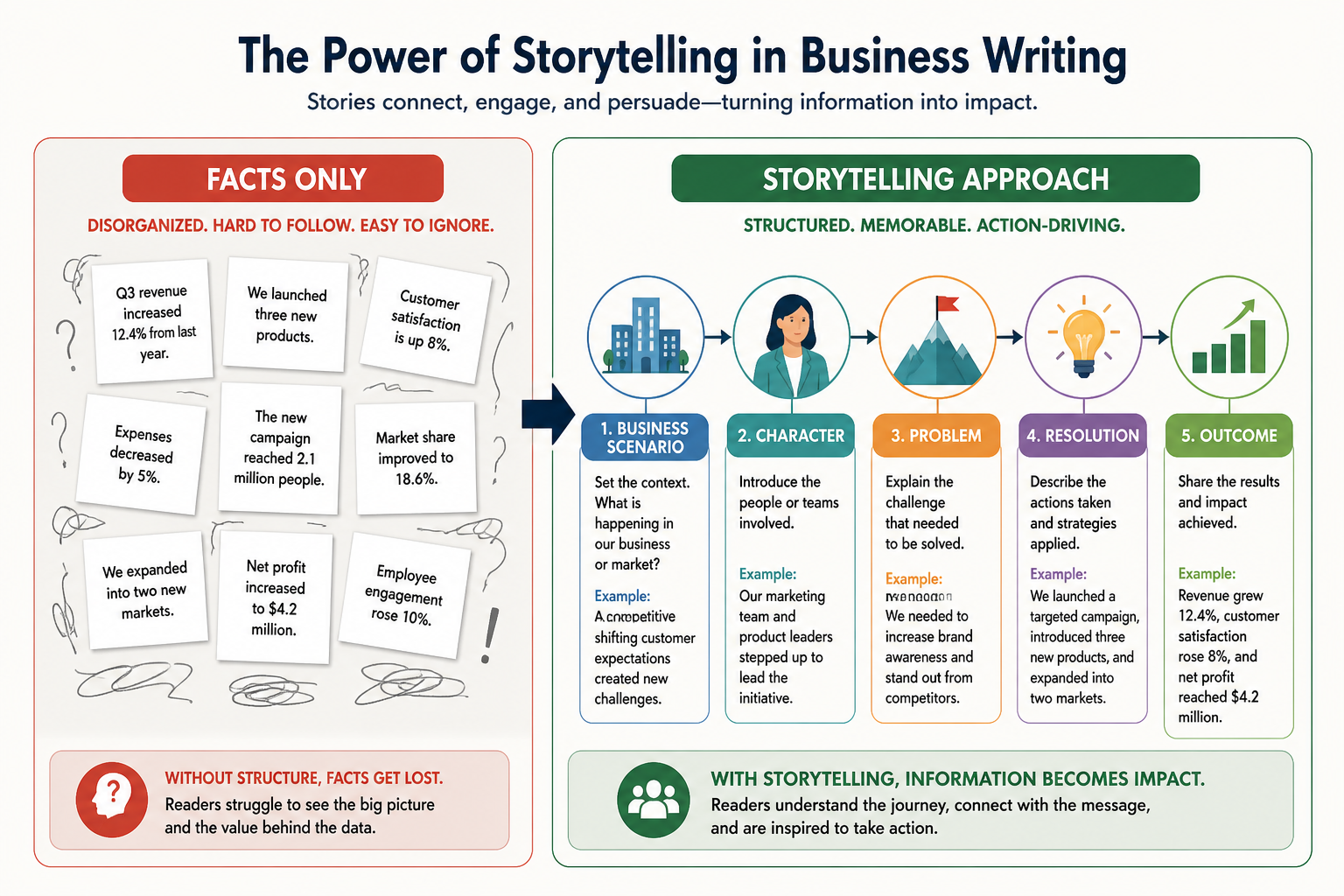
Storytelling is a time-tested method for enhancing memorability. It leverages the brain’s natural affinity for narratives, which help in organizing information hierarchically. Bovee and Thill emphasize the role of storytelling in business communication, explaining that well-crafted narratives can significantly elevate the clarity and impact of messages. For educators, teaching students to craft stories that articulate problems and solutions can be a game-changer in business communication.
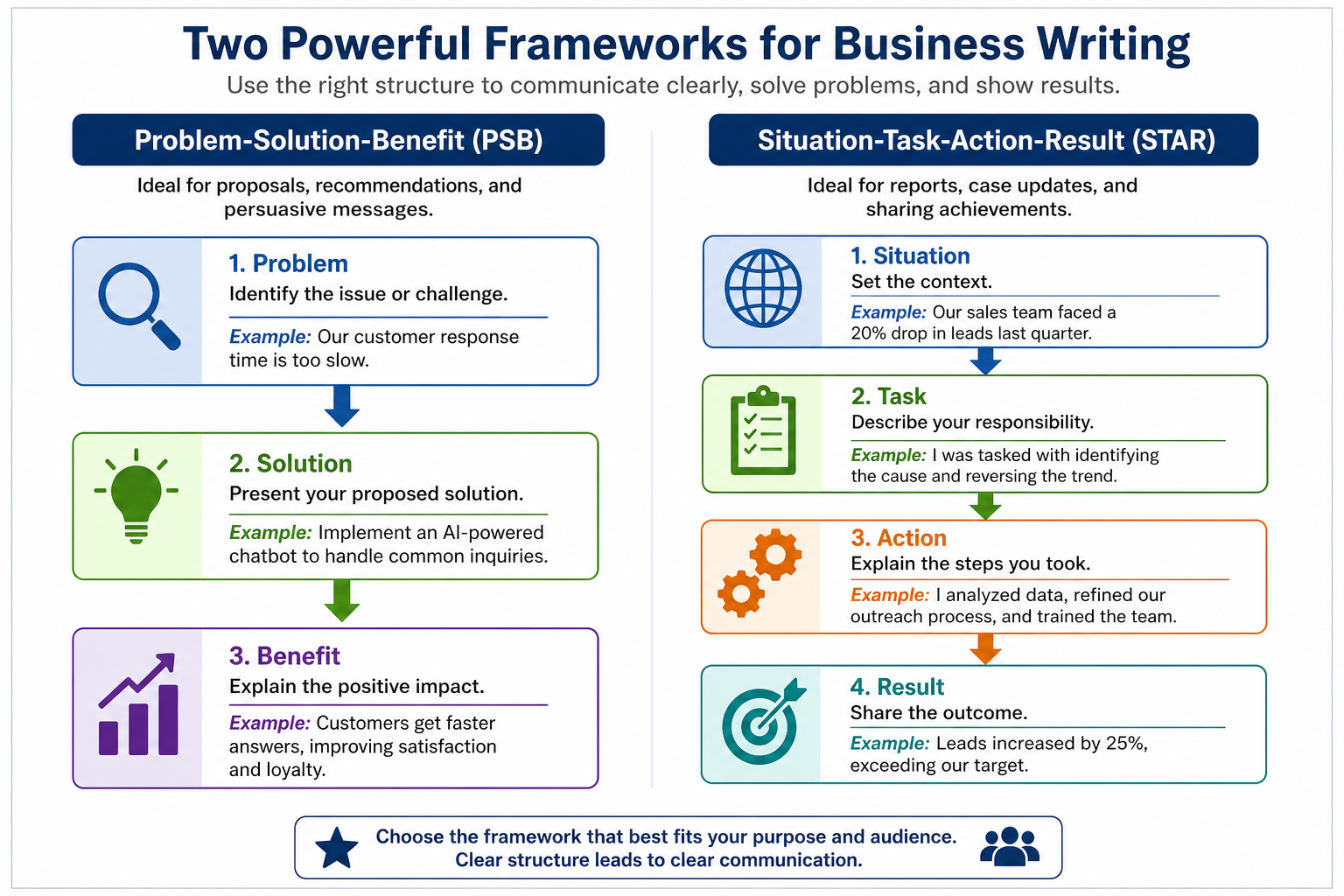
Utilizing a clear and structured writing framework aligns with the brain’s preference for organized information. Messages that are structured logically are easier to process and remember. Basic frameworks such as problem-solution-benefit (PSB) or situation-task-action-result (STAR) engage logical processing in ways that enhance recollective capacity. By implementing these frameworks, instructors can guide students in organizing their thoughts and writing more effectively.
- Messages that evoke emotional responses are 50% more memorable.
- Storytelling is a powerful tool in business writing for enhancing clarity and retention.
- Structured frameworks align with cognitive processes, aiding in message retention.
- Business Communication Today provides insights into leveraging neuroscience for effective communication.
Glossary of Key Terms
- Emotional Engagement: The involvement of emotions in the processing of information, enhancing memory retention.
- Narrative Structure: An organized pattern that helps interpret and remember information.
- Problem-Solution-Benefit (PSB): A framework used in communication to clearly present issues and resolutions.
- Situation-Task-Action-Result (STAR): A structured approach to narration that enhances clarity and recall.
- Memory Retention: The capability of the brain to store and recall information over time.
Related Questions
- How can neuroscience improve business communication strategies?
- What role does emotional engagement play in enhancing message retention?
- How can storytelling be effectively integrated into business writing?
- What are some structured frameworks for effective business messages?
- How does Business Communication Today address memory and retention?
References
Bovee, C. L., & Thill, J. V. (2026). Business Communication Today (16th ed.). Pearson.
© 2026 Business Communication Teaching and Learning Center. All rights reserved.