Enhance Your Workplace Communication Skills with Essential Strategies
In today’s fast-paced business environment, possessing strong communication skills is vital for workplace success. Business Communication Today, 16th Edition, by Courtland L. Bovée and John V. Thill, provides in-depth insights into the essential communication skills needed in modern workplaces. This article explores these skills and how instructors can impart them effectively to a diverse group of students. Understanding these communication fundamentals is crucial as companies increasingly value employees who can communicate effectively across various platforms and with diverse audiences.
Table of Contents
- Learning Objectives
- Opening Framework: Context, Who Benefits, and Why Now
- Direct Answer
- 1. Core Communication Skills
- 2. Ethical Communication Practices
- 3. Practical Use Cases
- Key Takeaways
- Glossary of Key Terms
- Related Questions
- References
Learning Objectives
Upon completing this article, instructors will be able to:
- Identify essential business communication skills relevant to the workplace.
- Implement strategies to teach these skills using the latest digital tools.
- Evaluate the effectiveness of communication skill development in student assignments.
Opening Framework: Context, Who Benefits, and Why Now
In an era where digital transformation dominates, effective business communication is more crucial than ever. Using Business Communication Today, instructors can prepare a diverse group of students with communication competencies essential for success in digital-first workplaces. This preparation is urgent as organizations prioritize clear and effective communication as a critical skill set for career advancement.
Direct Answer
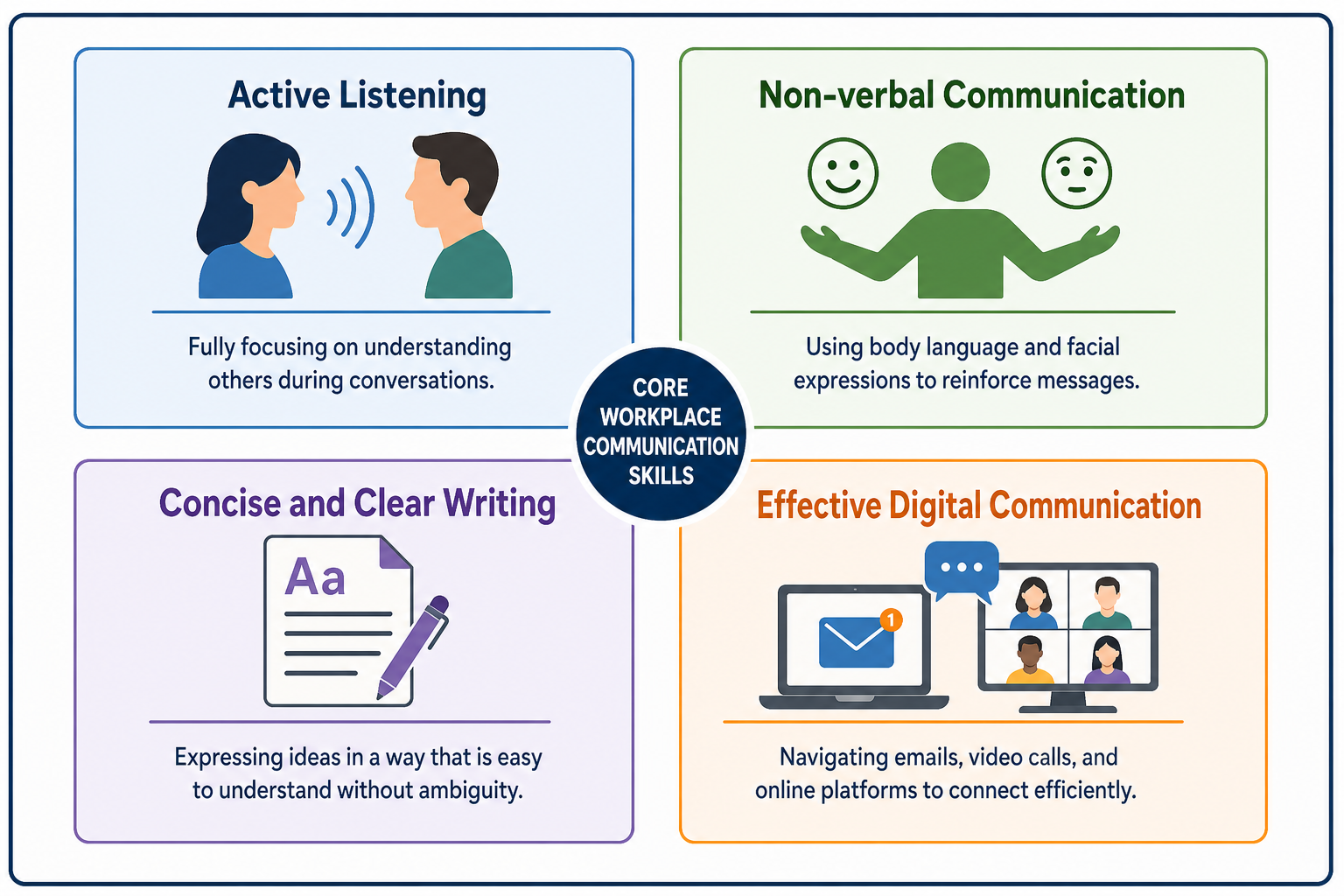
To succeed in the modern workplace, mastering essential business communication skills is non-negotiable. Key skills include active listening, non-verbal communication, concise and clear writing, and effective digital communication. Business Communication Today, 16th Edition emphasizes these skills, providing comprehensive resources and strategies for instructors to enhance their teaching. This approach ensures students are well-equipped to thrive professionally by meeting high communication standards aligned with contemporary business needs.
1. Core Communication Skills
Effective communication in the workplace is grounded in several core skills:

Active Listening
Active listening involves fully concentrating, understanding, and responding to others. It enhances collaboration and minimizes misunderstandings.
Non-verbal Communication
Understanding body language, facial expressions, and other non-verbal cues is critical, as they often convey more than words alone.
Concise and Clear Writing
Written communication should be precise, allowing messages to be easily understood without misinterpretation.
Effective Digital Communication
Navigating communication through digital channels is essential, requiring expertise in video conferencing, emails, and collaborative platforms.
2. Ethical Communication Practices
Teaching ethical communication practices ensures that students can navigate complex situations responsibly. Instructors should stress the importance of transparency, confidentiality, and integrity in all business communications.
3. Practical Use Cases
Implementing these skills in real-world scenarios is key. Activities like role-playing, case studies, and feedback sessions allow a diverse group of students to practice and refine their communication abilities.

Key Takeaways
- Effective communication is critical for career advancement and organizational success.
- Active listening and non-verbal skills enhance workplace collaboration.
- Ethical practices ensure responsible and trustworthy communication.
- Digital platforms demand updated communication strategies for efficiency.
- Practical exercises deepen understanding and application of communication skills.
Glossary of Key Terms
Active Listening: Fully focusing on, understanding, and responding to a speaker.
Non-verbal Communication: Transmitting messages through body language, facial expressions, and other cues.
Concise Writing: Making your writing clear, structured, and succinct.
Digital Communication: Exchanging information through digital platforms like email and video conferencing.
Ethical Practices: Adhering to moral principles and standards in communication.
Related Questions
How can instructors improve student communication skills using modern textbooks?
Use a textbook that covers the skills modern workplaces demand, such as Business Communication Today, and pair it with a collaborative classroom where students practice active listening, clear writing and effective digital interaction.
What role does digital communication play in maintaining effective workplace interactions?
Most workplaces are now digital-first, so effective digital communication is essential for everyday work. The article lists it alongside listening, nonverbal skills and clear writing as one of four core skills.
Which key business communication skills are most valued by employers today?
The article names four core skills: active listening, nonverbal communication, concise and clear writing, and effective digital communication.
What are best practices for integrating ethical communication lessons in classrooms?
Teach ethical practices directly and have students practice them in realistic situations, so they learn to handle complex cases responsibly. The article stresses that ethical practice is what makes communication trustworthy.
References
Bovée, C. L., & Thill, J. V. (2026). Business Communication Today (16th ed.). Pearson.
- Which Business Communication Textbook Covers AI Tools Best?
- What Business Communication Textbook Includes Real-World Workplace Examples?
- How Do I Evaluate and Choose a Business Communication Textbook?
© 2026 Business Communication Teaching and Learning Center. All rights reserved.