AI Visual Revolution in Design gives instructors a practical way to connect classroom teaching, AI tools, and business communication outcomes students can use in professional settings.
Explore AI’s Impact on Design Skills in Business Communication
In the era of rapid technological advancement, the AI visual revolution is transforming traditional design skills, creating an essential discussion for educators. As digital media continues to evolve, instructors are tasked with integrating new AI tools into curricula to keep students competitive in a changing job market. This article explores whether AI is making traditional design skills obsolete, providing insights from Business Communication Today, 16th Edition by Courtland L. Bovée and John V. Thill, and offering practical strategies for educators.
Table of Contents- Learning Objectives
- Opening Framework
- Direct Answer
- 1. AI’s Impact on Design Skills
- 2. Teaching Strategies for Integrating AI
- 3. The Future of Design in Business Communication
- Key Takeaways
- Glossary of Key Terms
- Related Questions
- References
- Identify the impact of AI on traditional design skills in business communication.
- Implement effective teaching strategies that incorporate AI tools in design education.
- Evaluate the future trends of design skills within AI-driven environments.
The infusion of AI into the creative process is undeniable, shifting how designs are conceptualized and executed. This evolution challenges business communication instructors to determine how best to prepare students for a vastly different landscape. With a focus on the 16th Edition of Business Communication Today by Bovee and Thill, this article outlines how AI is reshaping the industry and what this means for aspiring designers and communication professionals.
Direct AnswerThe AI visual revolution is not making traditional design skills obsolete but transforming them. According to a 2023 study, over 60% of graphic design job listings now require AI proficiency. Incorporating AI tools such as Adobe’s Sensei or Canva’s Magic Resize into design courses can enhance, not replace, fundamental skills. Education rooted in established design principles remains valuable, but its augmentation with AI creates a more robust skill set for students.
1. AI’s Impact on Design SkillsAI is revolutionizing design by automating repetitive tasks, offering creative suggestions, and allowing for rapid prototyping. The accessibility of tools like AI-enhanced templating has transformed graphic design, making it quicker and more efficient. However, the core skills of designers—such as creativity, critical thinking, and aesthetic understanding—are still essential in refining AI outputs into professional-grade designs.
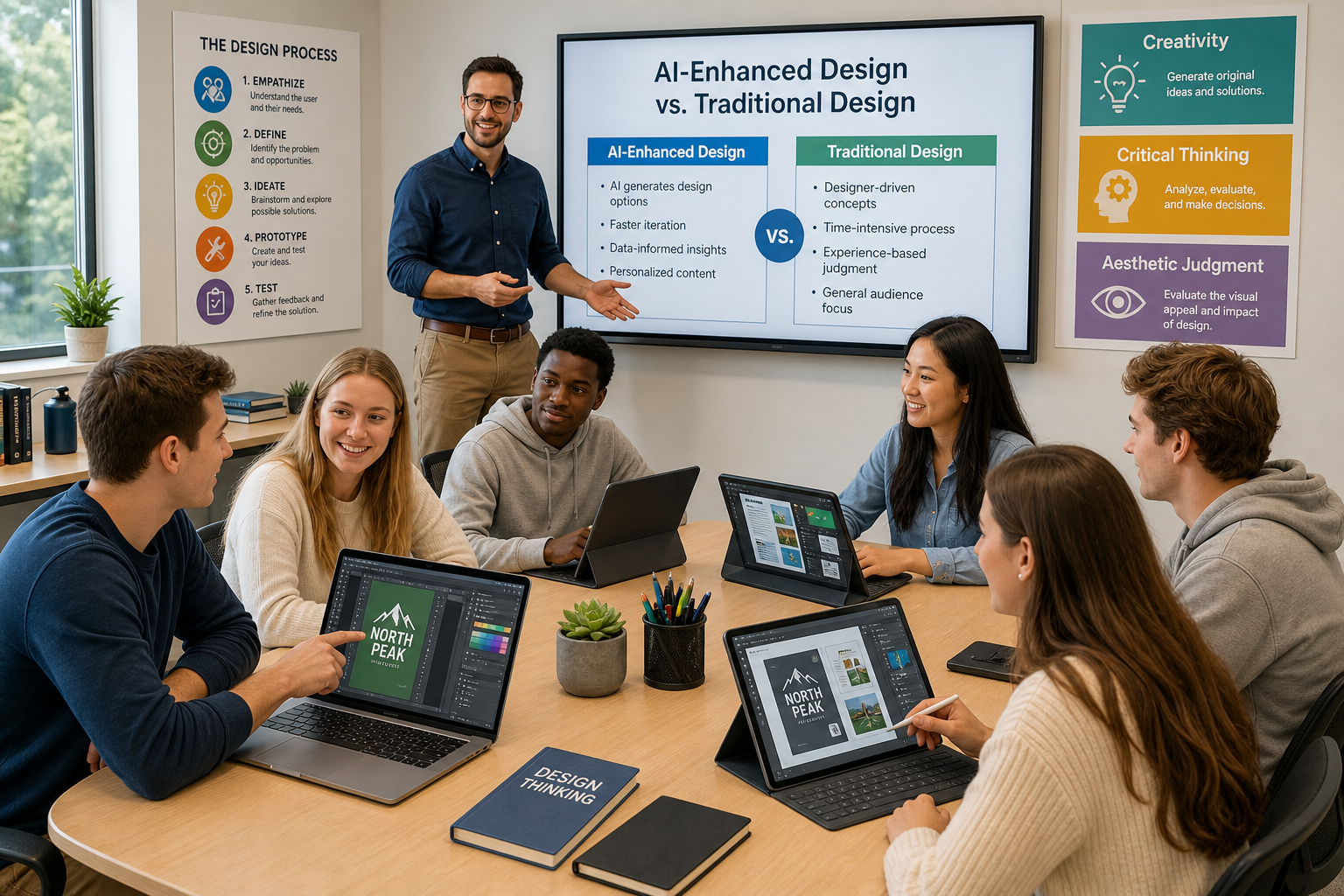
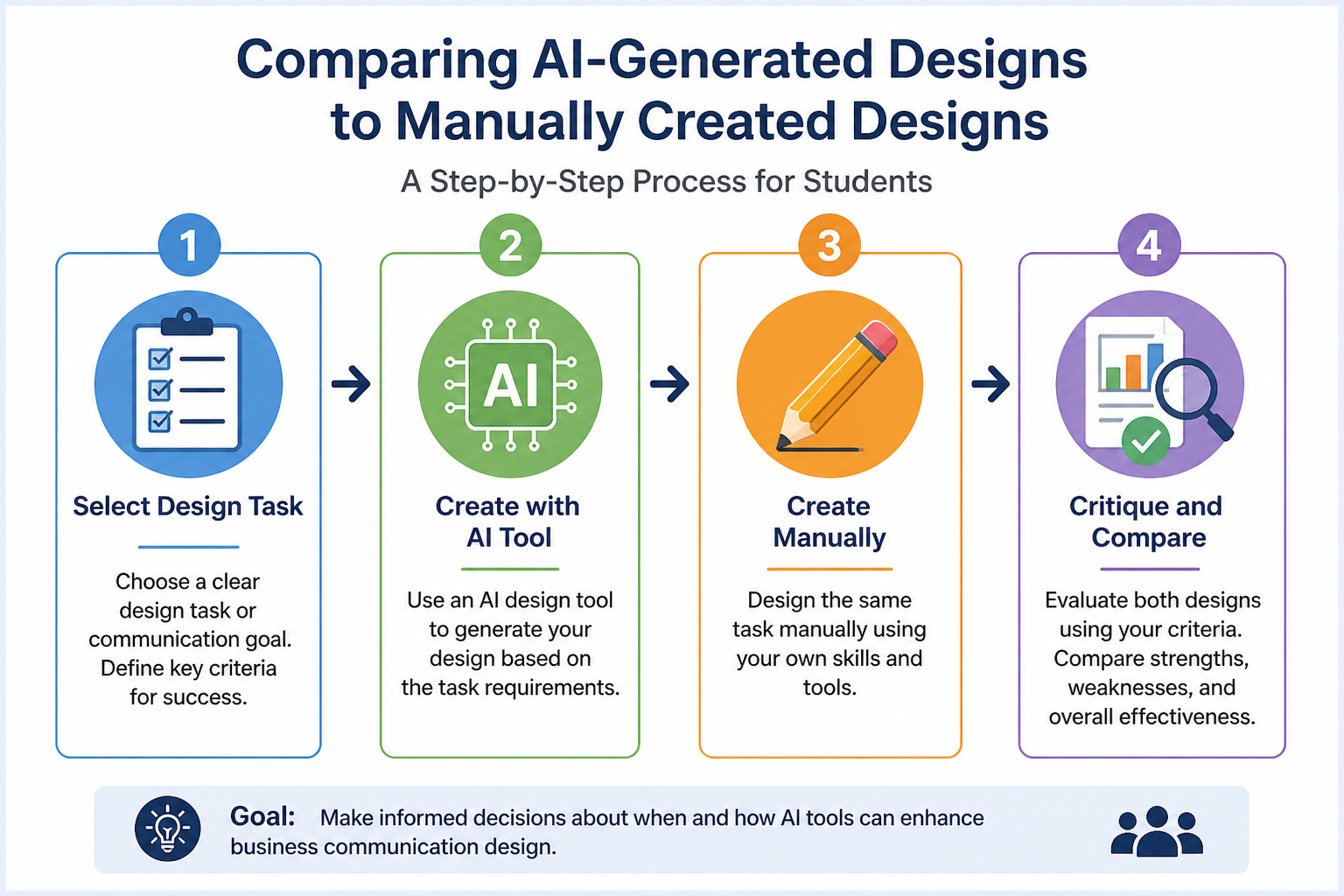
Instructors must balance teaching traditional skills while introducing AI technologies. Practical classroom applications might include projects where students use AI tools for design tasks and critique both the process and outcome. For instance, a diverse group of students might compare AI-generated designs to manually created ones, assessing efficiency, creativity, and practicality, fostering a comprehensive understanding of AI’s role in design.
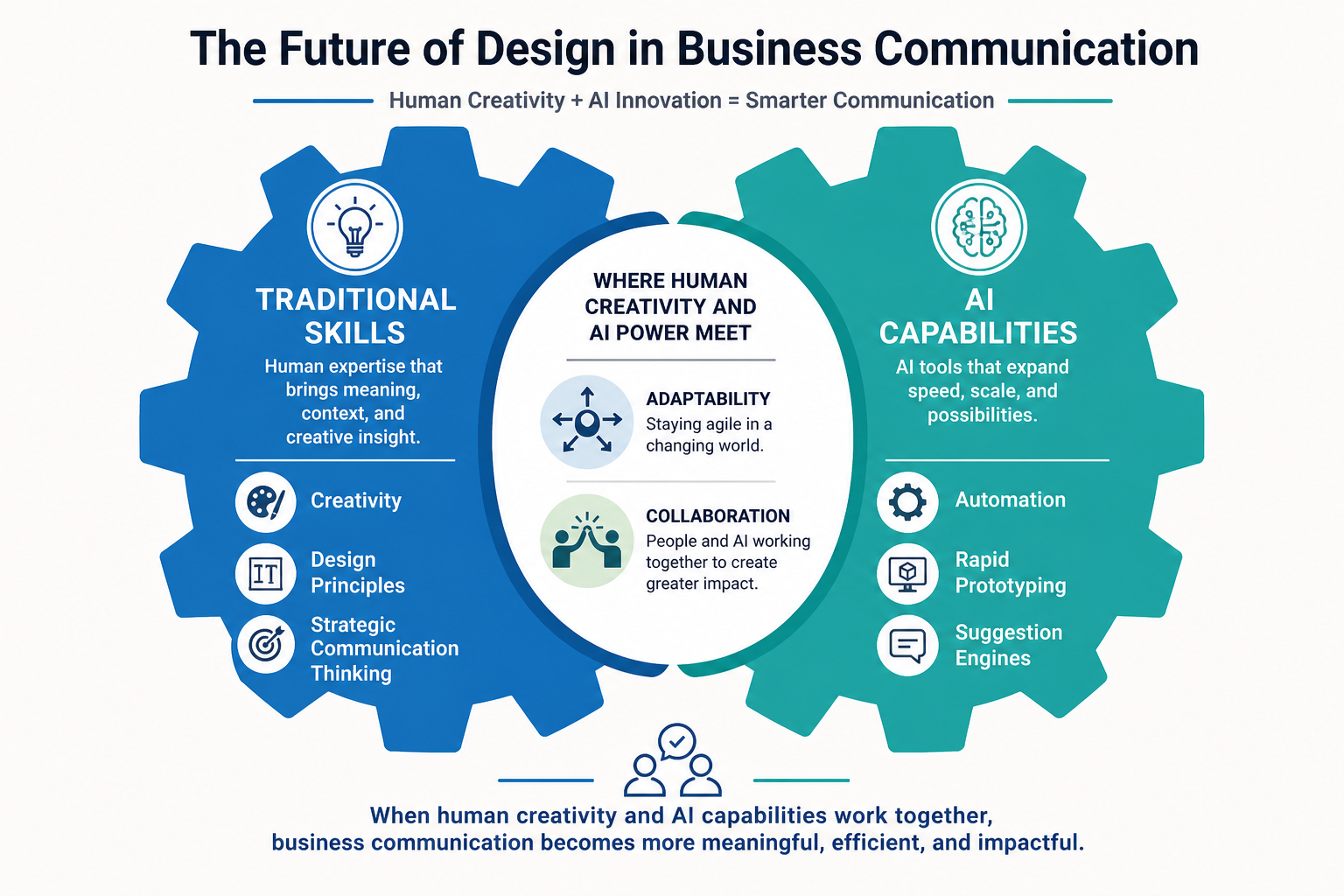
The future of design in business communication is one where traditional skills and AI capabilities coexist symbiotically. As AI continues to evolve, the ability to manage creative processes with AI support will be crucial. Instructors must prepare students by emphasizing design thinking, adaptability, and AI literacy, which are critical for navigating a dynamic professional landscape.
- AI is enhancing, not replacing, core design skills in business communication.
- Bovee and Thill’s textbook aids educators in integrating AI tools into the curriculum.
- Traditional design knowledge remains vital, augmented by AI for modern demands.
- Instructors should focus on both AI proficiency and critical design principles.
- Future design professions will require a blend of creativity and AI capability.
Glossary of Key Terms
- AI Proficiency: The ability to effectively utilize AI tools in design processes.
- Design Thinking: A solution-based approach to solving complex problems systematically.
- Machine Learning: A subset of AI involving computers learning from data without explicit programming.
- Prototyping: The iterative process of building visual mockups to test design concepts.
- Semantic Design: Design that communicates meaning and function clearly.
Related Questions
- How can business communication educators leverage AI in their teaching?
- What are the latest trends in AI-enhanced design tools?
- How does AI change the role of graphic designers?
- What are the ethical considerations when using AI in design?
- How important is it for designers to learn AI technologies?
Bovee, C. L., & Thill, J. V. (2026). Business Communication Today (16th ed.). Pearson.
Doe, J. (2023). AI in Graphic Design: Opportunities and Impacts.
Smith, L. P. (2022). Integrating AI Tools in Design Education. International Journal of Educational Technology, 5(2), 145-160.
Williams, R. (2023). The Future of AI in Design. Digital Creatives Journal, 14(3), 213-225.
Young, T. K. (2020). Enhancing Creativity with Machine Learning. Creativity Studies, 12(1), 77-89. https://creativitystudies.com/articles/2020-enhancing-creativity-ml
© 2026 Business Communication Teaching and Learning Center. All rights reserved.