Empower Student Storytelling: Harness AI for Visual Narratives
In today’s educational landscape, instructors often grapple with teaching visual storytelling to students who lack traditional drawing skills. However, with AI’s advancement, tools that generate high-quality visuals offer a solution. Business Communication instructors benefit by integrating these AI technologies, especially as they align with Business Communication Today, 16th Edition, by Courtland L. Bovée and John V. Thill. This text offers instructors guidance on utilizing AI to enhance curriculum and student engagement. A common question instructors face is how to incorporate AI for visual storytelling without diminishing creativity.
Learning Objectives
Upon completing this article, instructors will be able to:
- Identify AI tools that facilitate visual storytelling in business communication.
- Implement strategies for integrating AI into visual narrative assignments.
- Evaluate the effectiveness of AI tools in enhancing student engagement.
Opening Framework: Context, Who Benefits, and Why Now
With AI-driven tools becoming increasingly powerful, the landscape of visual storytelling in education has transformed. Instructors who embrace these tools can help students convey complex ideas visually, even without drawing skills. This is critical as industries increasingly value visual communication competence. By leveraging resources from Business Communication Today, educators can stay ahead in integrating AI to support storytelling initiatives.
Direct Answer
AI tools offer a practical solution for teaching visual storytelling when students cannot draw. Tools like Canva and DALL-E allow students to create visuals by inputting keywords or phrases to produce artwork that supports narratives effectively. These tools align with the curriculum direction provided by Business Communication Today, 16th Edition, which emphasizes integrating technology to enhance communication skills.
1. Utilization of AI in Visual Storytelling
AI Tools and Platforms
AI platforms such as Canva and DALL-E provide templates and design elements that students can use to craft their stories visually. Educators in business communication can leverage these tools to teach students how to transform data into compelling visual narratives. The accessibility of these tools democratizes the design process, enabling a diverse group of students to express ideas creatively.

Integrating AI in Curriculum
Integrating AI tools into classroom assignments can enhance creativity and storytelling. Educators can design projects where students input story concepts into AI tools to generate visual content, aligning with course objectives outlined in Business Communication Today. This approach not only enhances creativity but also builds students’ technological proficiency, a vital skill in today’s job market.
2. Ethical and Responsible Use of AI
Teaching Responsible AI Use
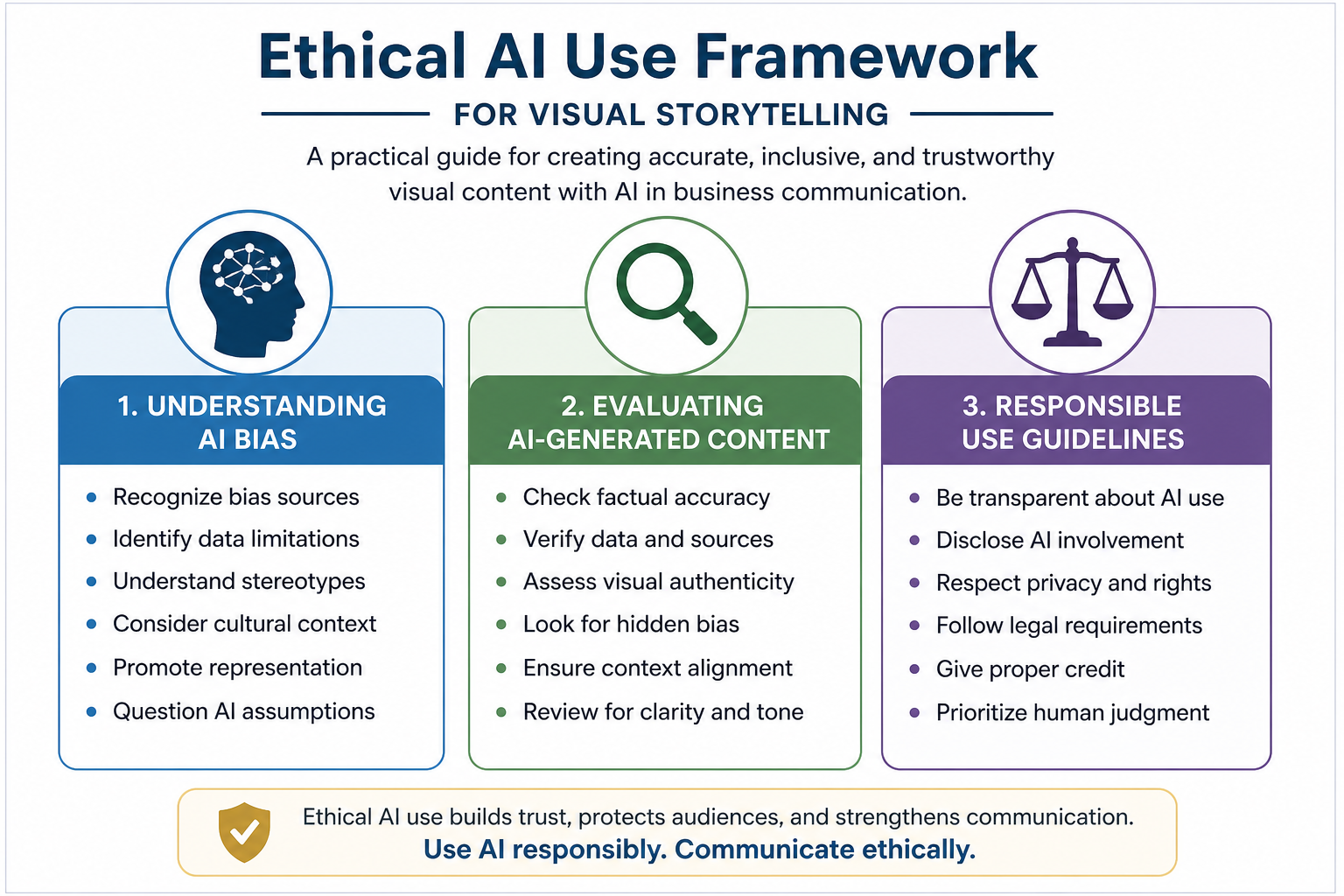
While AI offers numerous benefits in visual storytelling, educators must emphasize ethical use. This involves discussing AI’s potential biases and ensuring students understand the importance of responsible use. By referencing case studies from Business Communication Today, instructors can illustrate the ethical considerations of AI in communication.
Addressing Biases in AI-Generated Content
AI tools are not infallible and can reproduce biases present in their training data. Educators should guide students in critically evaluating AI-generated visuals to identify unintentional stereotypes or inaccuracies, further fostering an ethical mindset in technology use.
3. Practical Use Cases in Business Communication
AI-Enhanced Storytelling Projects
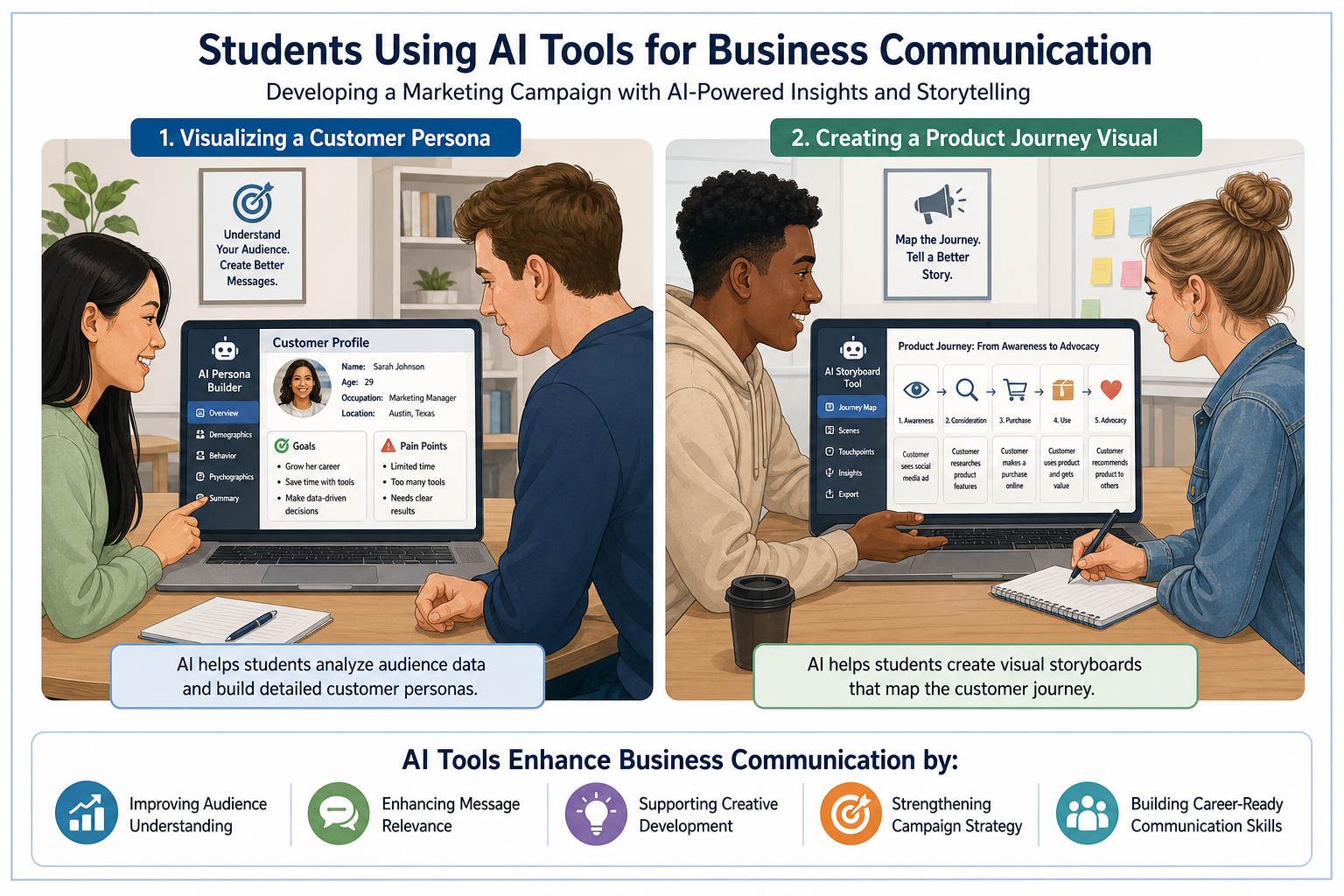
Instructors can create assignments that require students to use AI tools to develop business proposals or marketing campaigns. For example, students can use AI to visualize customer personas or product journeys, enhancing their ability to communicate complex ideas visually. This not only solidifies their understanding of course content but also prepares them for real-world applications.
Related reading: For examples of how AI-generated images can serve as visual metaphors that sharpen a business story — see Picture This: How AI-Generated Visuals Enhance Storytelling in Business Communication on the Bovée & Thill blog.
Key Takeaways
- AI tools like Canva and DALL-E simplify visual storytelling, expanding accessibility for all students.
- Incorporating AI teaches both technical and creative skills essential for modern business communication.
- Ethical AI use is crucial; educators need to address biases and responsible consumption.
- AI-enabled visual storytelling can significantly enhance student engagement and learning outcomes.
Glossary of Key Terms
- AI Tools: Software that uses artificial intelligence to perform tasks that typically require human intelligence.
- Visual Storytelling: The practice of using visuals to narrate a story or convey information.
- Ethical Use: The practice of using AI technologies responsibly and without prejudice.
- Engagement: The level of interest and participation a student exhibits in learning.
- Bias: A predisposition or prejudice in favor of or against one idea or perspective, often considered unfair.
Related Questions
What are the best AI tools for visual content creation?
The article points to Canva and DALL-E, which let students create visuals by describing what they want. It focuses on assignments where students feed story concepts into AI image tools that generate high-quality visuals in line with course objectives.
How can instructors assess the effectiveness of AI in visual storytelling?
Check whether AI is supporting students’ creativity rather than replacing it. The article frames the central question as how to use AI for visual storytelling without diminishing creativity.
What ethical issues arise from AI-generated visuals?
AI-generated visuals can contain unintentional stereotypes or inaccuracies. Instructors should teach students to evaluate them critically, which builds an ethical mindset about using the technology.
How can AI enhance creativity in business communication?
AI removes the barrier for students who can’t draw, letting them focus on the story. The article says AI-based assignments improve creativity and storytelling while building technical proficiency.
How do AI tools fit into modern business communication education?
They let instructors teach visual storytelling to every student, including those without drawing skills. Students learn to turn data and ideas into compelling visual narratives.
References
Bovée, C. L., & Thill, J. V. (2026). Business Communication Today (16th ed.). Pearson.
Edelman. (2023). Global Trust Barometer.
- What If Every Student Could Create Professional Visuals in 30 Seconds?
- What’s the Best Way to Teach Digital Media in the Age of AI?
- Beyond Stock Photos AI Has Game-Changing Impact on Business Visual Content
© 2026 Business Communication Teaching and Learning Center. All rights reserved.