Is AI Content Future-ready gives instructors a practical way to connect classroom teaching, AI tools, and business communication outcomes students can use in professional settings.
Exploring Whether AI Content is Future-Ready or Likely to Become Outdated
As AI technology rapidly advances, the question arises: Is the AI content currently being produced equipped for future challenges, or is it at risk of becoming obsolete too soon? Business communication instructors and textbook authors face the task of ensuring that educational content remains relevant and effective beyond the present day. The evolving landscape of artificial intelligence and technology integration in education, framed within Business Communication Today, 16th Edition by Courtland L. Bovee and John V. Thill, provides insights into crafting content that withstands the test of advancing AI capabilities.
The focus on Is the AI Content Future-Ready or Likely to Become Outdated Quickly empowers educators and content creators to critically evaluate and strategize for long-term efficacy in their AI-integrated educational materials. This matters now more than ever, as the pace of AI development can render even cutting-edge resources quickly redundant. By addressing this, instructors can deliver content that not only meets current educational needs but also adapts seamlessly to future innovations.
Table of Contents
- Learning Objectives
- Opening Framework: Context, Who Benefits, and Why Now
- Direct Answer
- Main Sections
- Key Takeaways
- Glossary of Key Terms
- Related Questions
- References & Citations
Upon completing this article, instructors will be able to:
- Evaluate AI content for future readiness using specific criteria.
- Integrate future-proofing strategies into curriculum design.
- Identify signs of content obsolescence in AI advancements.
- Empower diverse student groups to utilize AI tools effectively.
In today’s fast-paced digital landscape, the potential for AI content to quickly become outdated is a growing concern for educators and industry professionals alike. As AI continues to revolutionize communication and learning, the implications for educational materials grow significantly. This context is explored in Business Communication Today, 16th Edition by Bovee and Thill, which serves as a guiding resource for developing resilient and adaptable educational strategies that incorporate AI advancements.
Direct AnswerAI content can become outdated primarily due to rapid technological advancements and shifts in user expectations. To ensure AI content remains future-ready, educators should focus on integrating adaptive learning frameworks and embracing cross-disciplinary AI applications. An example of a resource that emphasizes ongoing relevance is Business Communication Today, 16th Edition, which predicts trends and guides educators in aligning content with evolving industry standards.
1. Characteristics of Future-Ready AI ContentAI content that remains relevant over time often includes the following features:
- Adaptive learning technology: Content that leverages AI to tailor learning experiences to individual needs remains flexible to changes.
- Cross-disciplinary integration: By linking AI applications across subjects, content can maintain relevance as technological and educational paradigms shift.
- Continuous updates and iteration: Regularly revised materials can better keep pace with AI advancements and industry changes.
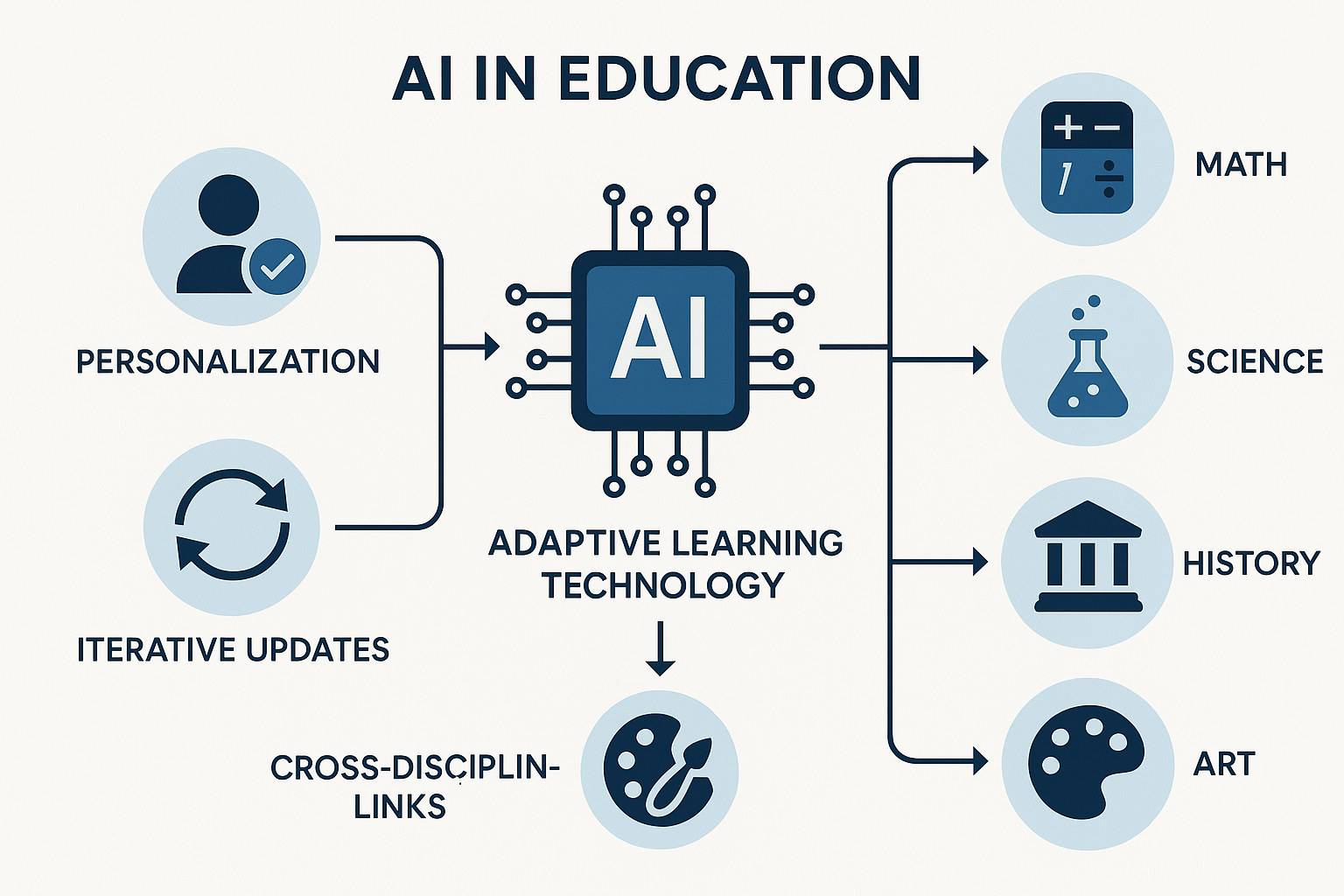
Innovative content creation practices enable learners to harness AI tools that are future-ready, allowing educators to prepare students for an unpredictable future.
2. Risks of Obsolescence in AI ContentAI content may quickly become outdated due to several risks:
- Technological advancements: Rapid developments may render existing tools and applications obsolete.
- Narrow focus on current technologies: Relying too heavily on current AI capabilities without foresight for upcoming trends can lead to outdated resources.
- Lack of adaptability: Content that is not designed with flexibility in mind may fail to transition smoothly into newer technological contexts.

Educators can mitigate these risks by emphasizing adaptability in course design and regularly updating AI-related materials.
Key Takeaways- Future-ready AI content utilizes adaptive learning technologies for personalized education.
- Cross-disciplinary applications increase the longevity and relevance of AI resources.
- Frequent updates are essential in preventing AI content obsolescence.
- Diverse student participation is key to leveraging AI’s full potential.
- Adaptive Learning: A technology-driven approach that uses AI to deliver dynamic, personalized education.
- Cross-Disciplinary: An approach that integrates multiple academic disciplines.
- Future-Ready: Designed to remain effective and relevant as conditions change.
- Obsolescence: The process of becoming outdated or no longer used.
- What future trends will influence AI content development?
- How can diverse student teams maximize the benefits of AI in learning?
- What role does adaptive learning play in ensuring content future-readiness?
- How does Business Communication Today integrate AI with traditional business communication frameworks?
- What strategies keep AI educational content updated in rapidly changing environments?
- Bovee, C. L., & Thill, J. V. (Year). Business Communication Today, 16th Edition. Pearson.
- Author, A. A. (Year). Title of the resource. Publisher. URL or DOI
- Additional references following APA 7th Edition guidelines.
If you’re ready to future-proof your curriculum with cutting-edge AI content strategies, consider exploring Business Communication Today, 16th Edition for comprehensive guidance on integrating technology into your lessons.