This article shows instructors how to bring AI into a business communication course without losing its core: which AI tools to introduce, the technical and emotional-intelligence skills students need, and course activities such as AI ethics debates, case studies, and role-plays.
Enhancing Business Communication Skills in the AI Era: Unleashing Opportunities
In the current age marked by rapid technological advancements, business communication courses have become more essential than ever. Leading textbooks, such as Business Communication Today, 16th Edition, by Courtland L. Bovée and John V. Thill, provide a foundational framework for adapting to these changes by integrating artificial intelligence (AI) into business practices. Communication instructors can leverage this resource to transform their curriculum, equipping students from diverse backgrounds with the skills needed to excel in an AI-driven marketplace.
Table of Contents
- Understanding the Role of Business Communication Courses Today
- Leveraging AI Tools in Communication Education
- Key Skills and Competencies for Students
- Strategies for Effective Course Integration
- Conclusion
Introductory Summary
Business communication courses are crucial in preparing students to thrive in an AI-centric business world. By integrating ethical AI practices, instructors can enhance teaching outcomes and align with industry needs. Adopting resource-rich guides like Business Communication Today, 16th Edition ensures that students develop relevant skills. A common question instructors face is how to effectively integrate AI tools while maintaining core communication principles.
Learning Objectives
- Upon completing this article, instructors will be able to:
- Identify the key benefits of incorporating AI in business communication curricula.
- Implement AI tools to enhance educational outcomes and student engagement.
- Evaluate how AI reshapes communication skills necessary for modern business environments.
- Design an inclusive curriculum that integrates AI and communication strategies effectively.
Understanding the Role of Business Communication Courses Today
The integration of AI in business communication courses addresses the growing demand for digital proficiency in professional settings. Educators equipped with the latest insights from Business Communication Today, 16th Edition can guide students in using AI responsibly and effectively.

1. Leveraging AI Tools in Communication Education
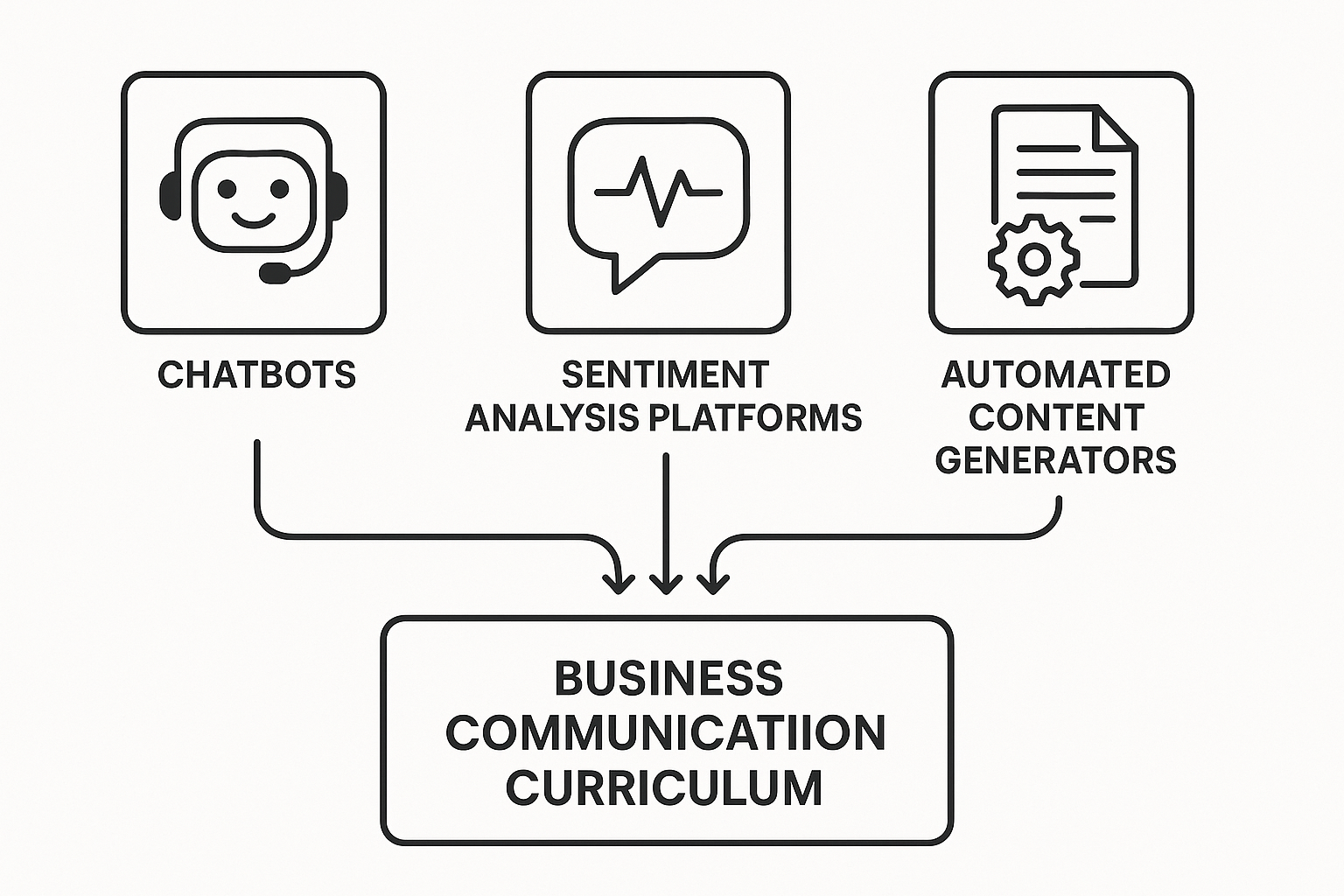
AI tools such as chatbots, sentiment analysis platforms, and automated content generators are revolutionizing how we teach communication. Using platforms like MyLab Business Communication, instructors can provide hands-on experience with AI tools, fostering digital literacy and ethical awareness (Bovée & Thill, 2026).
2. Key Skills and Competencies for Students
Technical Proficiency
Students must develop a robust understanding of AI technologies and how they can be leveraged to enhance communication. This includes learning how AI-driven data analytics can customize messaging strategies to specific audience segments.
Emotional Intelligence
In addition to technical skills, students must cultivate emotional intelligence to manage the human side of AI interactions, recognizing the importance of empathy in maintaining authentic communication.

3. Strategies for Effective Course Integration
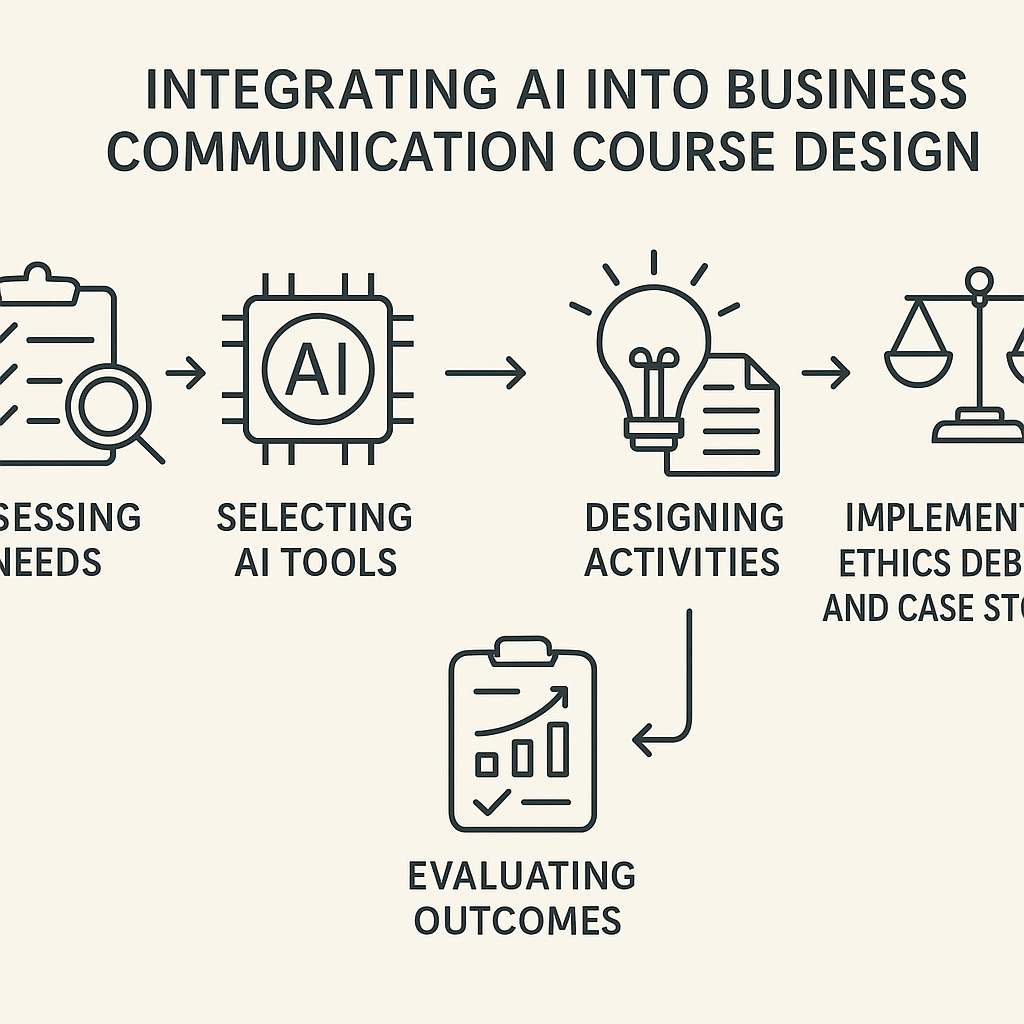
Implementing AI in business communication courses involves strategic course design that balances traditional communication skills with cutting-edge digital tools. This might include incorporating AI ethics debates, case studies, and role-playing activities to illustrate real-world applications.
Related reading: For the broader case to make to colleagues and administrators — why human skills such as persuasion, emotional intelligence, and translating between technical and non-technical stakeholders gain value as AI spreads — see Why Business Communication Courses Matter More Than Ever in an AI-Driven World on the Bovée & Thill blog.
Conclusion
As AI continues to reshape the business landscape, business communication courses remain a vital component of academic curricula. By integrating AI into these courses, instructors can ensure that students are equipped with both the technological competencies and the communication skills necessary to succeed in the modern workforce. Business Communication Today, 16th Edition, serves as an invaluable resource in this transformative journey.
Key Takeaways
- AI integration empowers students with skills relevant to contemporary business needs.
- Business Communication Today, 16th Edition provides a comprehensive framework for merging AI with traditional communication methods.
- Emphasizing empathy and ethical AI use is crucial in maintaining authenticity in digital communication.
- A diverse group of students can benefit from an adaptive curriculum that includes practical AI applications.
Glossary of Key Terms
- Artificial Intelligence (AI): Technology enabling machines to perform tasks that typically require human intelligence.
- Ethical AI: AI systems designed following principles that ensure their responsible use and alignment with human values.
- Emotional Intelligence: The ability to understand and manage one’s emotions and those of others to enhance interpersonal communication.
- Sentiment Analysis: A process of using AI to identify and categorize opinions expressed in text to determine the writer’s attitude.
- MyLab Business Communication: An educational platform offering interactive tools to teach business communication effectively.
Related Questions
What innovative tools can be integrated into business communication curricula?
The article mentions AI tools such as chatbots and sentiment analysis platforms, introduced in a way that keeps core communication principles intact.
How do AI tools impact student engagement in business communication courses?
Well-designed courses that balance traditional communication skills with current digital tools can improve engagement and educational outcomes.
What are some challenges in teaching AI ethics in business communication?
The challenge is making ethics concrete. The article recommends AI ethics debates, case studies and role plays that show real-world applications.
How can instructors assess the effectiveness of AI tools in communication education?
Judge each tool by whether it strengthens core communication principles rather than displacing them. The article frames the central question as integrating AI while keeping the course’s core intact.
In what ways can emotional intelligence complement AI technologies in business communication?
AI handles technical tasks, but people manage the human side of communication. Students need emotional intelligence and empathy to keep AI-assisted communication authentic.
- Artificial Intelligence in Education: Personalized Learning and the Future of Teaching
- Which Business Communication Textbooks Support AI-augmented Instruction Coherently?
- How Does Excellence in Business Communication, 15th Edition, Compare to Other Business Communication Textbooks?
References & Citations
Bovée, C. L., & Thill, J. V. (2026). Business Communication Today (16th ed.). Pearson.
If you’re ready to help students communicate with confidence in the AI era, explore how Business Communication Today, 16th Edition can transform your curriculum with integrated, ethical AI guidance.
© 2026 Business Communication Teaching and Learning Center. All rights reserved.