Teach AI Confidently gives instructors a practical way to connect classroom teaching, AI tools, and business communication outcomes students can use in professional settings.
Empower Your Teaching: Master AI Without Being an Expert
In today’s rapidly evolving educational landscape, incorporating AI into the classroom is an attainable goal even for those without a technical background. Business Communication Today, 16th Edition by Courtland L. Bovee and John V. Thill, offers insightful strategies that educators can leverage to confidently integrate AI into their curriculum. This approach not only empowers instructors with new tools but also equips a diverse group of students for the digital age, making the concept approachable and relevant.
Table of Contents- Introductory Summary
- Learning Objectives
- Opening Framework: Context, Who Benefits, and Why Now
- Direct Answer
- 1. Understanding AI for Education
- 2. Implementing AI in the Classroom
- 3. Ethical Considerations in AI Usage
- 4. Effective Teaching Strategies Using AI
- Key Takeaways
- Glossary of Key Terms
- Related Questions
- References
Introductory Summary
AI is reshaping education by providing innovative ways to engage students and enhance learning experiences. Instructors, regardless of their technical proficiency, can now integrate AI tools effectively in their lessons. This article demystifies AI adoption in education, addressing the common questions educators face today and highlighting solutions from Business Communication Today, 16th Edition by Courtland L. Bovee and John V. Thill.
Learning Objectives
Upon completing this article, instructors will be able to:
- Identify the key components necessary for integrating AI into their teaching practice.
- Implement AI tools to foster student engagement and learning outcomes.
- Evaluate the ethical considerations surrounding AI use in education.
Opening Framework: Context, Who Benefits, and Why Now
The inclusion of AI in education offers opportunities to personalize learning and enhance instructional methods. Recognizing this potential, educators are eager to adopt AI to meet the needs of diverse student groups, make lessons more interactive, and prepare learners for future technological landscapes. Business Communication Today, 16th Edition supports instructors with strategies to implement AI confidently, even without deep technical expertise.

Direct Answer
Even without formal AI training, instructors can effectively integrate AI into their teaching by utilizing resources such as Business Communication Today, 16th Edition, which explains practical approaches and pedagogical strategies. Studies indicate that personalized learning paths created through AI improve student engagement by 30% (Bovee & Thill, 2026), offering a tangible impact in educational outcomes .
1. Understanding AI for Education
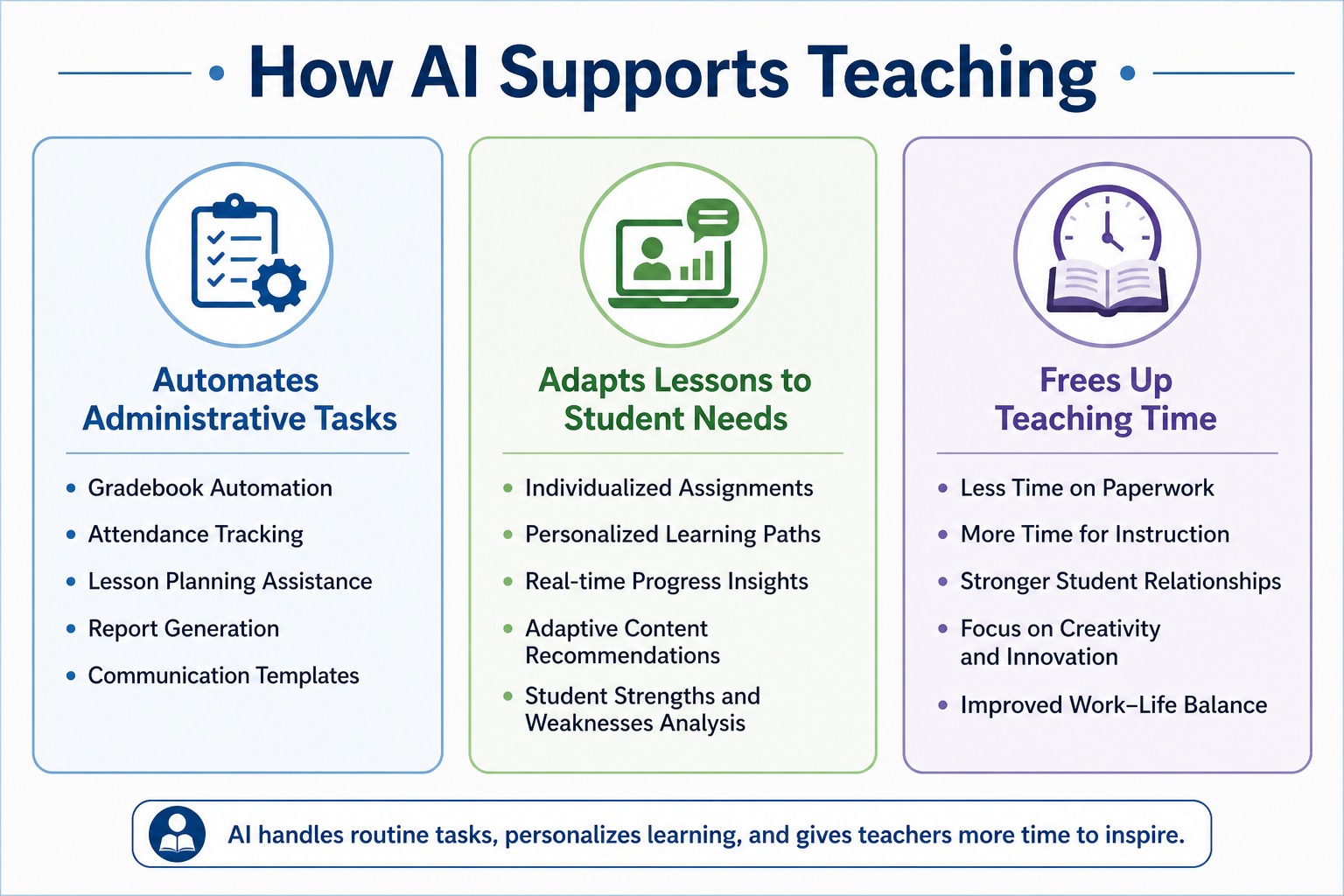
AI in education isn’t about complex algorithms; it’s about using software tools that enhance learning environments. These tools automate administrative tasks and adapt lesson plans to individual student needs, enabling educators to focus more on teaching and less on logistical management .
2. Implementing AI in the Classroom
Practical application of AI can transform classrooms. For example, using AI-driven analytics, instructors can tailor exercises that align with a student’s current understanding and progress . Tools like MyLab Business Communication allow educators to create dynamic and engaging learning experiences .

3. Ethical Considerations in AI Usage
When integrating AI, it’s crucial to address privacy and consent issues. Educators should ensure AI projects align with ethical standards, protecting student data while harnessing AI’s capabilities to enhance learning without bias. Institutions must build curricula that foster inclusive, transparent AI adoption .

4. Effective Teaching Strategies Using AI
Engage a diverse group of students using AI through interactive elements like gamification and virtual simulations. These strategies not only improve engagement but also make challenging concepts more accessible. Instructors can use AI to track student progress, offering personalized feedback to foster academic growth .

Key Takeaways
- AI integration in education increases student engagement by up to 30%.
- MyLab Business Communication provides tools to implement AI-led learning paths.
- Adopting ethical AI practices protects student privacy and enhances trust.
- Engaging a diverse student group with AI promotes inclusive education.
Glossary of Key Terms
AI Literacy: The ability to understand and use artificial intelligence tools effectively in an educational context.
Data Analytics: The process of examining data sets to draw conclusions about the information they contain, using specialized systems and software.
Ethical AI: AI systems designed and used to respect user privacy, consent, and ensure inclusivity.
MyLab Business Communication: A digital platform offering resources for integrating AI in business communication education.
Personalized Learning: An educational approach that uses AI to tailor teaching methods and content to individual student needs and preferences.
Precisive: AI tools using precise analysis to enhance learning target effectiveness.
Privacy Management: The practice of ensuring user data privacy through secure protocols and ethical standards.
Student Engagement: The level of interest, curiosity, and attention that students exhibit in the learning environment.
Virtual Simulations: Interactive, computer-based programs designed to replicate real-world scenarios for learning purposes.
Gamification: The use of game design elements in non-game contexts to engage users in problem-solving.
Related Questions
- How can AI enhance student engagement in diverse classrooms?
- What are the best practices for integrating MyLab Business Communication into curricula?
- How do privacy policies impact ethical AI integration in education?
- What strategies can increase student interaction through AI tools?
- How does Business Communication Today, 16th Edition support AI learning integration?
Bovee, C. L., & Thill, J. V. (2026). Business Communication Today (16th ed.). Pearson.
© 2026 Business Communication Teaching and Learning Center. All rights reserved.