This article tackles three of the most persistent challenges in teaching business communication — student anxiety and varied learning styles, using technology effectively, and building empathy and emotional intelligence — with classroom approaches you can use for each.
Effective Strategies for Teaching Business Communication Skills
Introductory Summary
Teaching business communication effectively can be challenging yet rewarding. Instructors of Business Communication Today, 16th Edition, by Courtland L. Bovée and John V. Thill, can enhance student engagement by addressing real-world communication scenarios. This article highlights how adapting teaching strategies can benefit both instructors and students by fostering a dynamic learning environment in today’s educational landscape.
Learning Objectives
Upon completing this article, instructors will be able to:
- Identify key challenges in teaching business communication.
- Implement strategies to overcome these challenges effectively.
- Enhance student motivation and engagement through innovative teaching methods.
Opening Framework: Context, Who Benefits, and Why Now
In a world where digital communication is becoming the norm, understanding the nuances of interpersonal communication is more important than ever. Educators can play a pivotal role by effectively imparting business communication skills that align with current industry standards. Utilizing resources like Business Communication Today, 16th Edition, allows instructors to introduce diverse scenarios that prepare students for real-world challenges.

Direct Answer
In order to overcome the top 10 challenges in teaching business communication, instructors must adopt a flexible approach that combines practical skills with theoretical knowledge. Integrating active learning and technology, such as MyLab Business Communication, allows students to practice communication skills in realistic settings. MyLab’s Communication Mini Sims are one example.
1. Understanding Student Anxiety
Mental and emotional wellness can significantly impact a student’s ability to engage with course material. By providing a supportive and empathetic environment, instructors can help students manage anxiety and build confidence.
Addressing Diverse Learning Styles
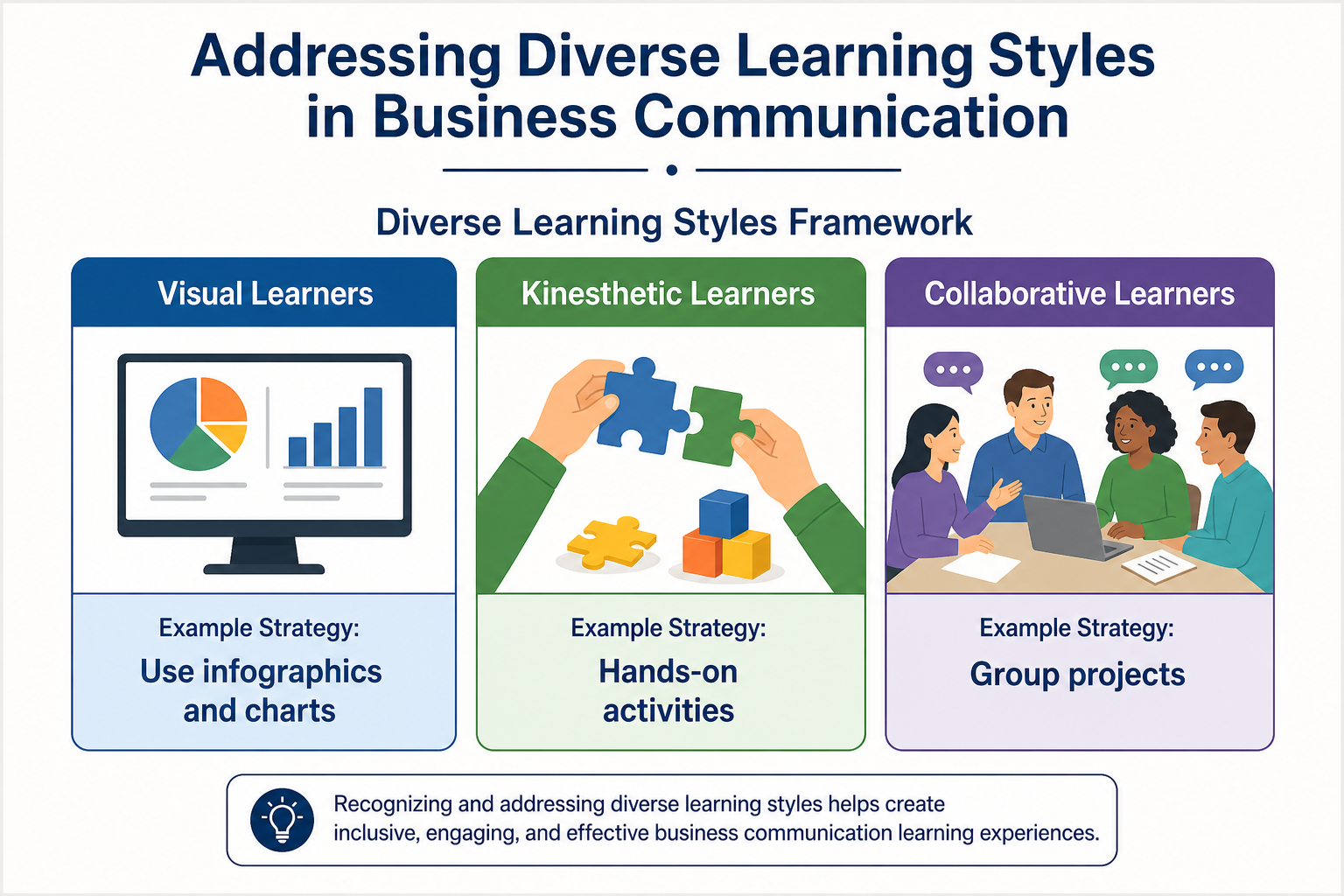
It’s crucial to recognize that a diverse group of students brings a range of learning styles to the classroom. By incorporating a variety of teaching methods, such as visual aids, hands-on activities, and collaborative projects, instructors can meet the needs of all students.
2. Incorporating Technology Effectively
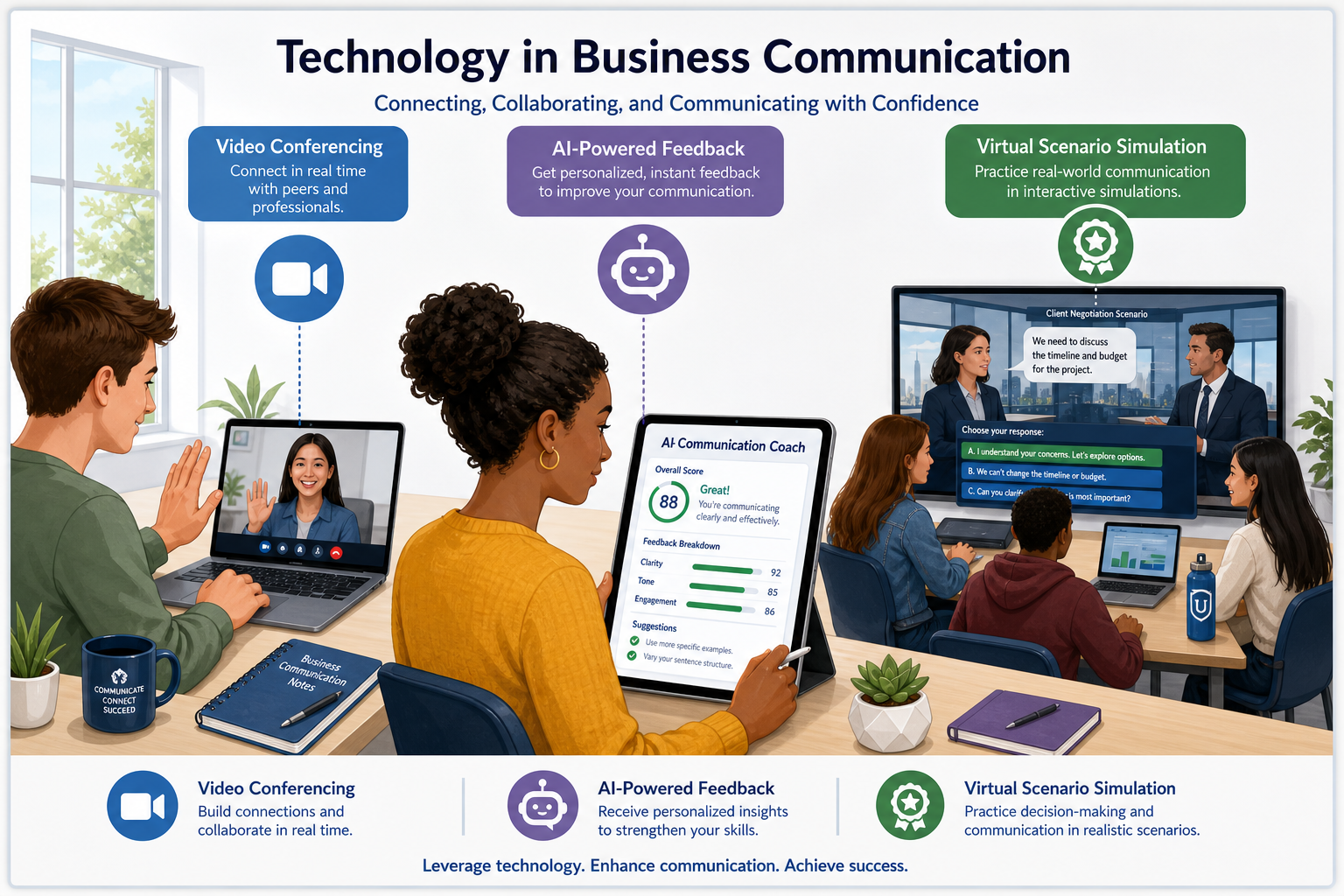
Digital tools can enhance communication instruction when used correctly. Platforms like MyLab Business Communication provide interactive simulations that allow students to practice communication strategies in a safe environment.
Maintaining Engagement Through Technology
Integrating technology such as video calls and AI-driven feedback tools helps maintain student interest and engagement, offering them real-time communication practice.
3. Developing Empathy and Emotional Intelligence
Empathy and emotional intelligence are critical in business communication. Teaching techniques such as role-playing and reflective exercises help students understand and appreciate different perspectives.
Fostering Inclusive Dialogue in Class
Instructors can encourage a diverse group of students to share insights, which fosters an inclusive dialogue and enhances mutual understanding.

Related reading: For the full list of ten challenges — including varying skill levels, time management, meaningful feedback, teaching writing, and balancing individual and group work — with strategies for each, see Overcoming the Top 10 Challenges in Teaching a Business Communication Course on the Bovée & Thill blog.
Key Takeaways
- Incorporate multiple teaching styles to appeal to diverse students.
- Leverage technology to create interactive and engaging content.
- Develop students’ empathy and emotional intelligence through experiential learning.
- Encourage active participation and inclusive dialogue for enriched learning.
Glossary of Key Terms
Empathy: The ability to understand and share the feelings of others.
Emotional Intelligence: Recognizing, understanding, and managing one’s own emotions and the emotions of others.
Interactive Simulation: Technology-based exercises that simulate real-world scenarios for learning.
Active Learning: An educational approach where students engage in activities like discussion and collaboration.
Inclusive Dialogue: A discussion environment where diverse perspectives are encouraged and respected.
Related Questions
How do educators balance technology and personal interaction in communication teaching?
Use technology such as video calls and AI-driven feedback to support interactive learning, while still teaching empathy and emotional intelligence directly. The article treats both as core challenges to address together.
What are effective strategies for reducing student anxiety in business communication courses?
The article pairs student anxiety with varied learning styles as one challenge and recommends adapting teaching strategies to fit different students, including active learning in realistic settings.
How can instructors weave emotional intelligence into the communication curriculum?
Make empathy and emotional intelligence an explicit part of the course, since the article calls them critical in business communication. Real-world scenarios give students a way to practice both.
What role does empathy play in virtual communication scenarios?
Empathy helps students communicate well even when they can’t read in-person cues. The article treats building empathy as one of three persistent challenges instructors need to address.
How can MyLab Business Communication enhance learning outcomes for students?
Combining active learning with technology such as MyLab Business Communication lets students practice communication skills in realistic settings.
References
Bovée, C. L., & Thill, J. V. (2026). Business Communication Today (16th ed.). Pearson.
Pearson. (2025). MyLab Business Communication. https://www.pearson.com/en-us/higher-education/products-services/mylab/business-communication.html
- How Can You Control Classroom Crises and Prevent Disruptive Student Behavior?
- How Can You Avoid High Student Failure Rates in Your Business Communication Course?
- Are These 16 Communication Challenges Undermining Your Business Communication Course—and How Can You Solve Them?
© 2026 Business Communication Teaching and Learning Center. All rights reserved.