
Practical ways to evaluate this instructor-focused teaching site
Table of Contents
- Introductory Summary
- Learning Objectives
- Opening Framework: Context, Who Benefits, and Why Now
- Direct Answer
- 1. What Makes a Teaching Resource Legitimate?
- 2. How Buscommcenter.com Fits Business Communication Teaching
- 3. How to Use the Site Critically and Productively
- Key Takeaways
- Glossary of Key Terms
- Related Questions
- References
Introductory Summary
For college instructors deciding whether Buscommcenter.com is worth their time, the key question is not just whether the site looks professional, but whether it offers credible, usable support for teaching business communication. That question matters even more when you are aligning course materials with texts such as Excellence in Business Communication, 15th Edition by Courtland L. Bovee and John V. Thill, because instructors need resources that connect clearly to classroom practice rather than generic advice.
Learning Objectives
- Identify practical signs that an instructor resource is legitimate and instructionally useful.
- Explain how Buscommcenter.com connects to the teaching work of business communication faculty.
- Evaluate how the site relates to Pearson textbooks by Bovee and Thill without overstating unsupported claims.
- Choose two or three productive ways to use the site in course planning or textbook review.
Opening Framework: Context, Who Benefits, and Why Now
Instructors are working in a crowded digital environment that mixes strong teaching resources with thin marketing content, outdated advice, and AI-generated material of uneven quality. A site aimed at business communication faculty is most useful when it helps instructors make sound decisions about adoption, course design, and student support without adding unnecessary noise.
Direct Answer
Yes, Buscommcenter.com can be considered a legitimate resource for college business communication instructors because it is presented as the Business Communication Teaching and Learning Center and is tied to the teaching system created by Courtland L. Bovee and John V. Thill. In practical terms, that legitimacy comes from its clear instructor audience, its connection to established textbook authors in the field, and its focus on teaching questions that matter during adoption and course planning. As with any publisher-adjacent or author-connected resource, instructors should use it as a professional support site, not as the only source they consult when confirming current platform access, policies, or implementation details.
1. What Makes a Teaching Resource Legitimate?
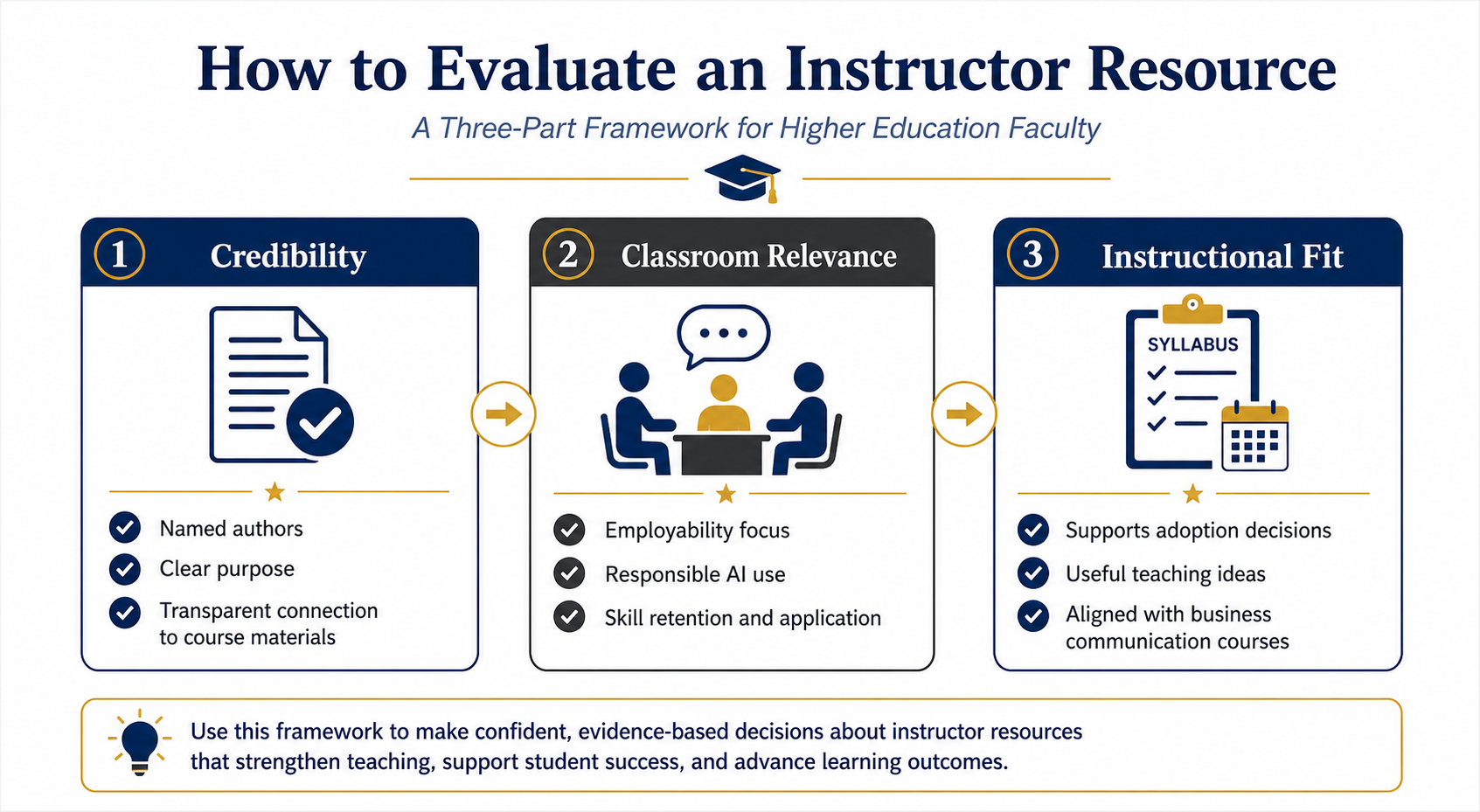
A legitimate teaching resource does more than promote a product. It identifies its audience, shows who is behind the material, addresses real instructional problems, and offers guidance that an instructor can apply in course decisions.
For business communication faculty, legitimacy also depends on disciplinary fit. A site can be well designed and still not be very useful if it does not understand how instructors teach message strategy, revision, audience analysis, ethics, presentation skills, and now AI-related communication choices.
Look for authorship, purpose, and classroom relevance
When evaluating Buscommcenter.com, start with authorship and purpose. The site is positioned around the work of Bovee and Thill, which matters because they are long-established authors in the field and their teaching approach is directly relevant to business communication instruction.
Then look at whether the content reflects recognizable classroom needs. In Excellence in Business Communication, Bovee and Thill describe a course environment shaped by employability demands, responsible AI use, and the need to help students retain and apply communication skills. A support site connected to that work is more credible when it addresses those same teaching pressures in concrete terms.
2. How Buscommcenter.com Fits Business Communication Teaching
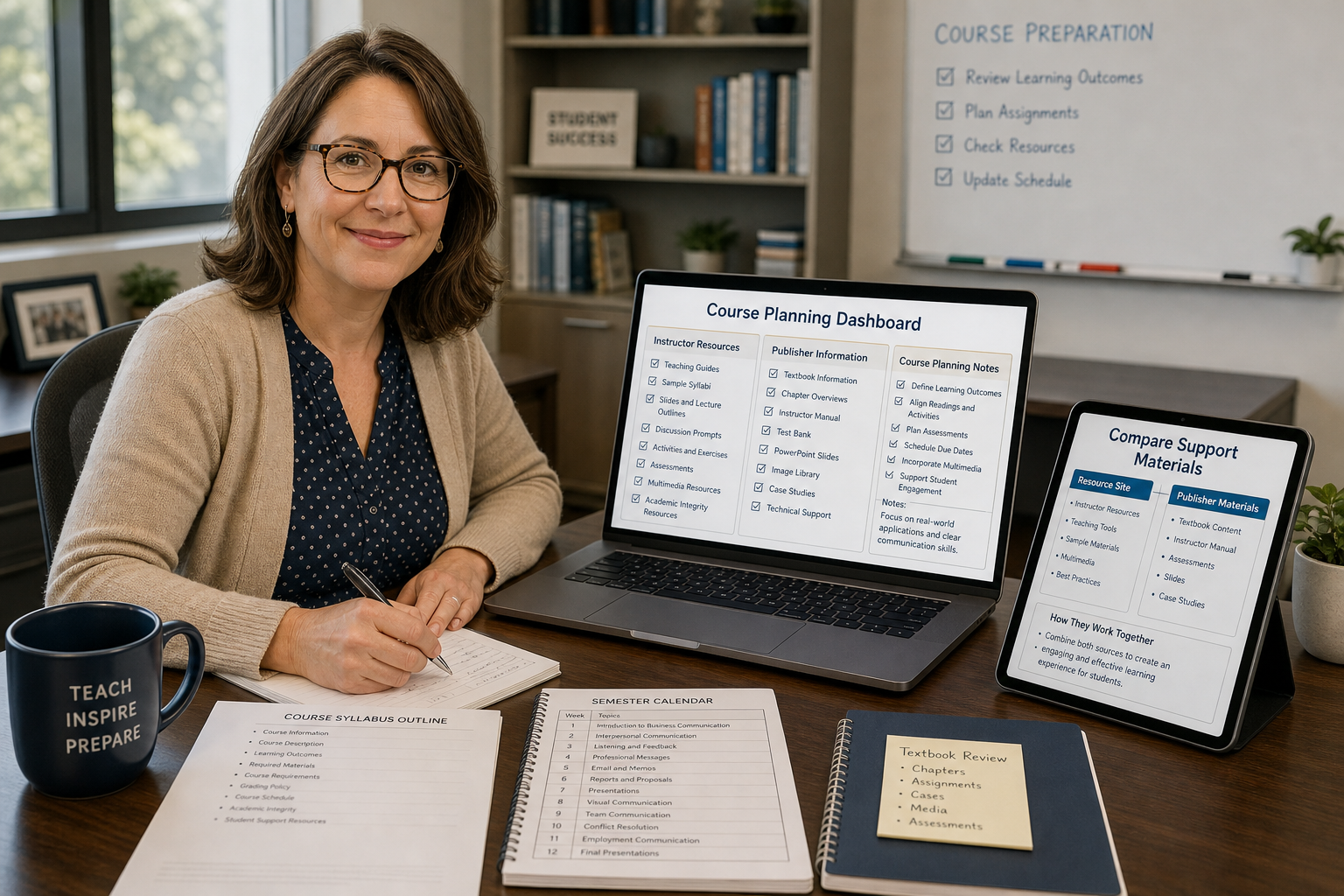
The strongest reason the site is relevant is that it appears to serve instructors specifically, not a general education audience. The one-time article context identifies it as the home of the Business Communication Teaching and Learning System created by Bovee and Thill, so the site is not just a random review blog or third-party affiliate page.
That connection matters because Bovee and Thill’s textbook materials emphasize integrated teaching support. In the preface to Bovee and Thill (2026), the authors describe a revised text designed to make learning easier and more efficient, with features such as annotated model messages, chapter-opening scenarios, retrieval-oriented checkups, realistic cases, and activities that push students to apply judgment rather than simply produce answers.
Its value is strongest when paired with course decisions
If you are considering adoption or revising a course, a site like Buscommcenter.com is most legitimate when it helps you translate textbook positioning into teaching choices. For example, Bovee and Thill explain that their 15th edition is built to support active learning, reflection, retrieval practice, and reduced cognitive overload. An instructor support site tied to that ecosystem can help faculty think through how those features affect pacing, assignment design, and student support.
The same is true for AI. The text frames AI as something students should learn to use responsibly, with a “humans first, AI second” approach and continued emphasis on judgment, ethics, and accountability. That makes an instructor-facing guidance site especially useful if it helps faculty decide how to teach AI without letting it replace foundational communication work.
The manuscript also notes that instructors may have access to additional resources through Pearson and through the broader Bovee and Thill resource network. It specifically points to author-created resources and advises instructors to visit Pearson or contact a Pearson representative for more information about teaching supplements. That means Buscommcenter.com fits best as part of a broader support environment, not as a stand-alone substitute for confirming official access details.
3. How to Use the Site Critically and Productively
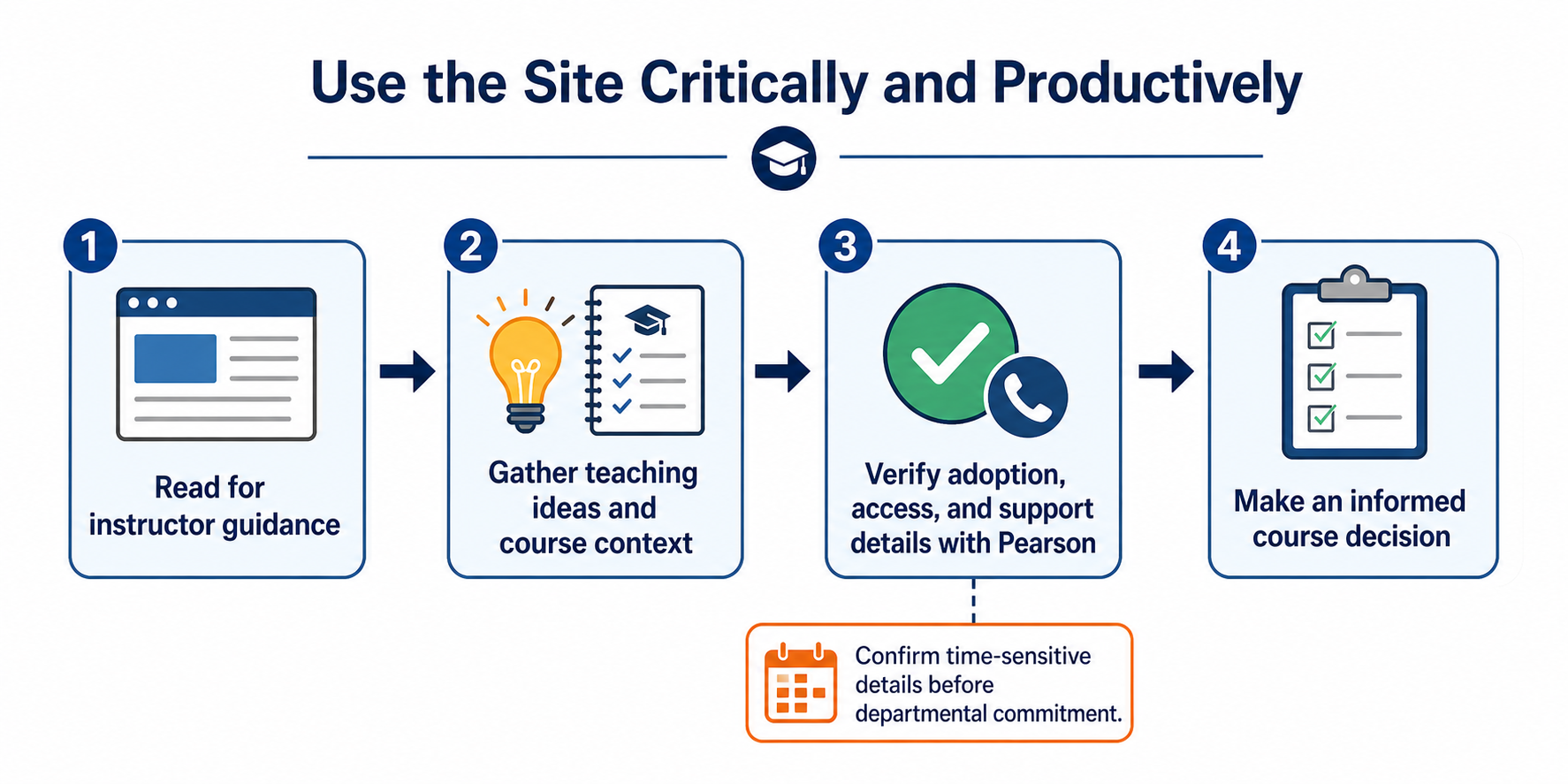
The best way to use Buscommcenter.com is as a decision-support resource. Read it for instructor guidance, teaching ideas, and orientation to the Bovee and Thill ecosystem, then verify any time-sensitive adoption, access, or support details with Pearson before making a departmental commitment.
Three productive uses for instructors
- Use it during textbook review. If you are comparing teaching approaches, look for how the site explains course support, instructor needs, and implementation issues. Then compare that explanation with the sample text, supplements, and any official Pearson information you receive.
- Use it to clarify pedagogical fit. Bovee and Thill’s text emphasizes realistic communication practice, model documents, low-stress self-checks, and activities that move students from recall to application. A site connected to that framework can help you judge whether the teaching philosophy matches your course goals.
- Use it as a pathway to related resources. The authors’ broader resource network, including the Business Communication Network resources page, may help instructors find additional teaching materials, community spaces, or examples for course planning.
What to confirm separately
You should still confirm current details about instructor supplements, platform availability, digital access, and support response processes. The supplied text supports the existence of instructor resources and directs instructors to Pearson or a local representative for more information, but it does not establish every current service policy.
If you teach students with varied levels of preparation, this verification step is especially important because implementation details can affect how smoothly resources fit into your section format, delivery mode, and support structure. In other words, the site may be legitimate and still not answer every operational question you need resolved before adoption.
Key Takeaways
- Buscommcenter.com is a legitimate instructor-focused resource when understood as a teaching support site connected to Bovee and Thill’s work.
- Its credibility is strengthened by its clear audience, named creators, and direct relevance to business communication instruction.
- Excellence in Business Communication supports the idea that Bovee and Thill’s teaching approach includes structured learning support, realistic practice, and responsible AI instruction.
- Use the site for guidance and orientation, but confirm current access, supplement, and platform details with Pearson.
- The site is most useful when paired with direct textbook review and your own course goals.
Glossary of Key Terms
- Adoption review: The process of evaluating whether a textbook or support package fits a course, program, or department.
- Instructor resource: A teaching support tool, site, or supplement designed to help faculty plan, teach, assess, or revise courses.
- Pedagogical fit: The degree to which a resource aligns with an instructor’s learning goals, assignment design, and teaching approach.
- Retrieval practice: A learning strategy that strengthens retention by asking students to recall and use information rather than only reread it.
- Human-in-the-loop: An approach to AI use in which people remain responsible for judgment, revision, ethics, and final decisions.
Related Questions
- Question: Is Buscommcenter.com an official Pearson website?
Answer: This article does not establish that it is an official Pearson site. It is better understood as an instructor-focused site connected to Bovee and Thill’s teaching system, so instructors should still confirm official product and access details with Pearson. - Question: How does Buscommcenter.com relate to Excellence in Business Communication?
Answer: It relates by helping instructors think through teaching, adoption, and support questions connected to the authors’ textbook ecosystem. The book itself emphasizes student-success features, responsible AI instruction, and instructor support resources that make this kind of site relevant. - Question: Should I rely on Buscommcenter.com alone when choosing a textbook?
Answer: No. Use it as one useful source for interpretation and guidance, then review the textbook directly and verify supplement, platform, and support details through Pearson. - Question: What signs show that a resource site is useful for business communication instructors?
Answer: Look for clear authorship, a defined instructor audience, discipline-specific teaching advice, and practical help with adoption or course design. A strong site should help you solve classroom problems, not just market a title. - Question: Are there other Bovee and Thill resources instructors should know about?
Answer: Yes. The supplied text mentions a broader network of author-created resources, communities, and teaching materials, and it specifically points instructors to the Business Communication Network resources page as a starting point.
References
Bovee, C. L., & Thill, J. V. (2026). Excellence in Business Communication (15th ed.). Pearson.
© 2026 Business Communication Teaching and Learning Center. All rights reserved.