How Remote Teams Can Build Trust gives instructors a practical way to connect classroom teaching, AI tools, and business communication outcomes students can use in professional settings.
Strategies to Enhance Trust in Remote Teams Using Effective Business Communication
Introduction Summary
In today’s global business environment, remote teams are becoming more prevalent, making effective communication essential for building trust. This article explores how remote teams can foster trust through better business communication, focusing on empathy, transparency, and professionalism. Instructors who understand these dynamics can significantly improve their students’ preparedness for modern professional environments. Business Communication Today, 16th Edition by Courtland L. Bovee and John V. Thill serves as a valuable resource in understanding these communication strategies and their applications.
Learning Objectives
- Upon completing this article, instructors will be able to:
- Identify key elements of effective communication that contribute to trust-building in remote teams.
- Implement digital communication strategies that enhance team cohesion and efficiency.
- Evaluate the role of AI in supporting communication and trust within virtual teams.
Opening Framework / Context
The shift to remote and hybrid work environments has redefined traditional communication dynamics. Trust is a critical component in these settings, as teams must often coordinate across geographic and cultural boundaries. Effective communication, bolstered by understanding, empathy, and transparency, is paramount. Business Communication Today, 16th Edition by Courtland L. Bovee and John V. Thill provides comprehensive insights into communication principles that help bridge the gap in remote interactions and enhance team trust.
Direct Answer
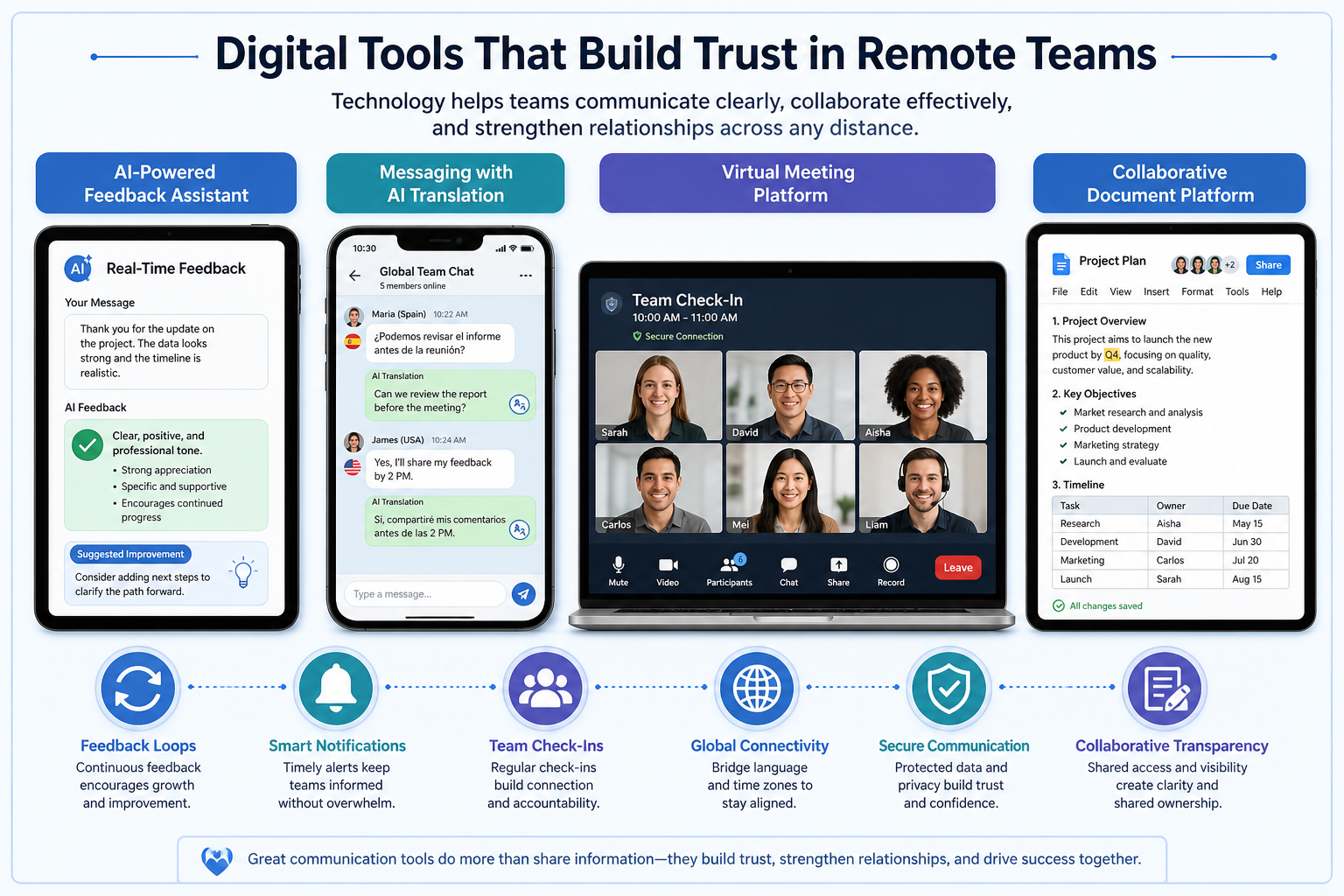
Building trust in remote teams hinges on effective communication strategies that emphasize empathy, transparency, and the use of technology like AI to facilitate interactions. According to Bovee and Thill (2026), incorporating AI into communication processes can personalize and enhance interactions, while ensuring messages are clear and culturally sensitive. Regular virtual meetings and using tools to simulate physical presence can also help in maintaining team cohesion.
Main Content 1. Building Empathy and UnderstandingEmpathy is crucial in business communication as it helps team members understand each other’s perspectives and fosters a supportive working environment. By encouraging open dialogue and active listening, remote teams can create a culture of trust and mutual respect. Techniques such as role-playing and reflective practices can also build empathy, which Business Communication Today highlights as fundamental to effective communication.

AI technologies like GenAI can assist in creating a more personalized communication approach, offering real-time feedback and ensuring clarity in messaging. These tools help bridge communication gaps and support nuanced interactions across different time zones and cultures, as noted by Bovee and Thill. Additionally, using collaborative platforms to facilitate regular check-ins and feedback sessions can help keep teams aligned and informed.
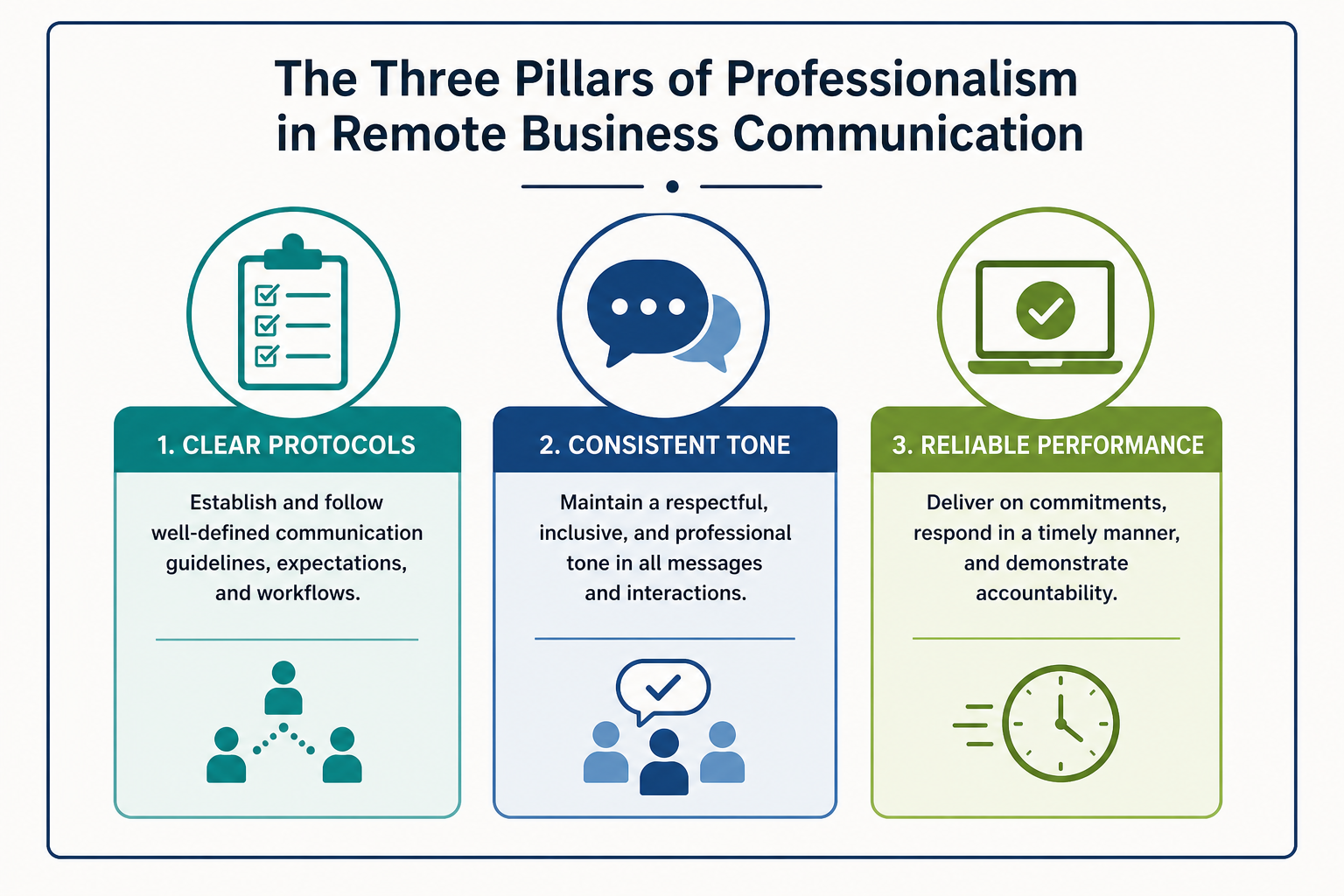
Professionalism is about integrity and performance at all times, regardless of the mode of communication. Remote teams should adhere to clear communication protocols to avoid misunderstandings. Business Communication Today emphasizes the importance of maintaining a professional tone even in digital correspondences, which contributes to building a reliable and trustworthy image within the team.
- Empathy and understanding are core to building trust in remote teams.
- AI can enhance communication quality and efficiency in virtual settings.
- Maintaining professionalism ensures reliability and builds team credibility.
Case Study
- Scenario: A multinational corporation is struggling with communication among its remote team members from diverse cultural backgrounds.
- Challenge: The team experiences frequent misunderstandings due to cultural differences and lack of face-to-face interaction.
- Recommended Approach: Implement regular virtual team meetings and use AI tools to facilitate real-time language translation and sentiment analysis to ensure clarity and understanding.
- Key Learning Point: Leveraging technology and promoting empathy through understanding cultural nuances can significantly enhance communication effectiveness in remote teams.
Glossary of Key Terms
- Empathy: The ability to understand and share the feelings of another.
- GenAI: Generative AI software that assists in creating personalized digital communication.
- Transparency: Openness in communication that fosters trust and clarity.
- Professionalism: Consistently exhibiting integrity and high performance in business communications.
- Nonverbal Communication: The transfer of information through body language, facial expressions, and other non-verbal signals.
Related Questions
- Question: How can AI improve interaction in remote teams?
Answer: AI provides tools for real-time feedback and personalized communication, helping teams communicate more effectively despite geographic barriers. - Question: What are the critical components of professionalism in remote communication?
Answer: Professionalism involves maintaining integrity, clarity, and respect in all communications, ensuring a consistent and reliable team image. - Question: How does empathy contribute to trust in remote teams?
Answer: Empathy fosters understanding and respect, which are crucial for building a supportive and trusting team environment. - Question: What role does transparency play in remote team communication?
Answer: Transparency ensures all team members have access to the same information, facilitating trust and coherence in communication. - Question: How can remote teams bridge cultural differences?
Answer: By promoting open communication and understanding cultural nuances, teams can bridge gaps that arise from cultural differences.
Classroom Discussion
- How can instructors simulate remote work challenges in a classroom setting?
Instructor Guidance: Focus on realistic scenarios that incorporate diverse student teams using virtual tools to solve challenges, highlighting communication issues and solutions. - What are effective ways to demonstrate the impact of AI on communication?
Instructor Guidance: Guide students through exercises that use AI-based tools to analyze communication patterns and suggest improvements. - How can cultural awareness be integrated into business communication curricula?
Instructor Guidance: Encourage exploration of case studies and role-playing activities that involve cross-cultural interactions to highlight the importance of cultural sensitivity. - What strategies can enhance transparency in communication among remote teams?
Instructor Guidance: Discuss the benefits of open communication platforms and regular updates to ensure team members are informed and involved. - How does nonverbal communication affect remote team dynamics?
Instructor Guidance: Analyze video communication examples to illustrate the power of body language and facial cues in building trust and engagement.
References
Bovee, C. L., & Thill, J. V. (2026). Business Communication Today (16th ed.). Pearson.
Edelman. (2023). Edelman Trust Barometer 2023.
Harvard Business Review. (2022). How to Build Trust in a Virtual Team.
Pepitone, J. (2023). The Future of Remote Work. MIT Sloan Management Review.
Robinson, S. (2021). Understanding Cultural Differences in Global Teams. International Journal of Business Communication.
© 2026 Business Communication Teaching and Learning Center. All rights reserved.