Empower Your Teaching with AI in Business Communication
Understanding AI’s role in business communication is no longer optional for educators. As AI continues to intertwine with professional communication, knowing how to teach it effectively is critical. This knowledge empowers instructors to shape the future of business communication instruction. Courtland L. Bovée and John V. Thill’s Business Communication Today, 16th Edition, offers comprehensive guidance to integrate AI tools ethically, providing an essential resource for educators now more than ever. Instructors often ask how they can stay ahead when AI capabilities in communication are evolving rapidly.
Table of Contents
- Opening Framework: Context, Who Benefits, and Why Now
- Direct Answer Section
- Main Sections
- Key Takeaways
- Glossary of Key Terms
- Related Questions
- References
Learning Objectives
- Identify key strategies for integrating AI into business communication curriculum.
- Implement effective methods to teach AI usage ethically in the classroom.
- Evaluate resources that support AI-driven curriculum development.
Opening Framework: Context, Who Benefits, and Why Now
The exponential growth of AI technologies in business communication necessitates a fundamental shift in teaching strategies. Business communication instructors can significantly benefit by incorporating AI literacy into their curriculum, thus preparing students for modern workplaces. Business Communication Today, 16th Edition, by Bovée and Thill, provides a structured approach for educators to navigate this integration, leveraging the latest AI tools to enhance learning and engagement.

Direct Answer
Instructors need to immediately engage with AI by adopting resources like Business Communication Today, 16th Edition. The textbook equips educators with comprehensive approaches to teaching AI-driven communication, emphasizing responsible and ethical usage.
1. Integrating AI into Business Communication Curriculum
Designing AI-Centric Lessons
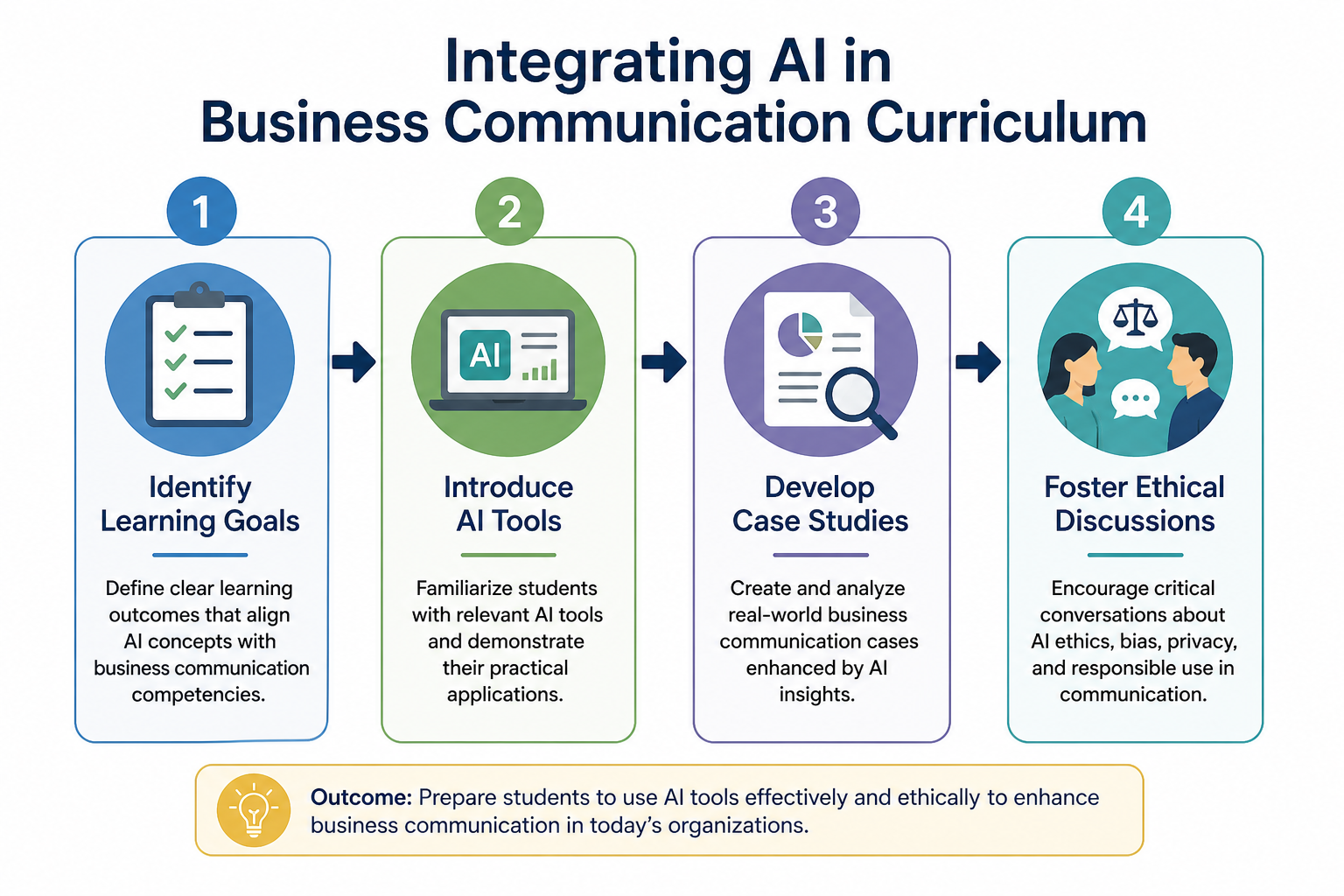
Instructors are encouraged to develop curriculum modules that incorporate AI tools directly into the learning process. This includes case studies that use AI to analyze communication patterns and projects where students create campaigns with AI tools.
Ethical Implications and Standards
Teaching the ethical use of AI remains a priority. Educators should guide students in understanding AI’s impact on privacy and data security. Incorporating discussions on AI ethics within the curriculum can help future professionals uphold high ethical standards.
2. Practical Application in the Classroom
Hands-on Projects
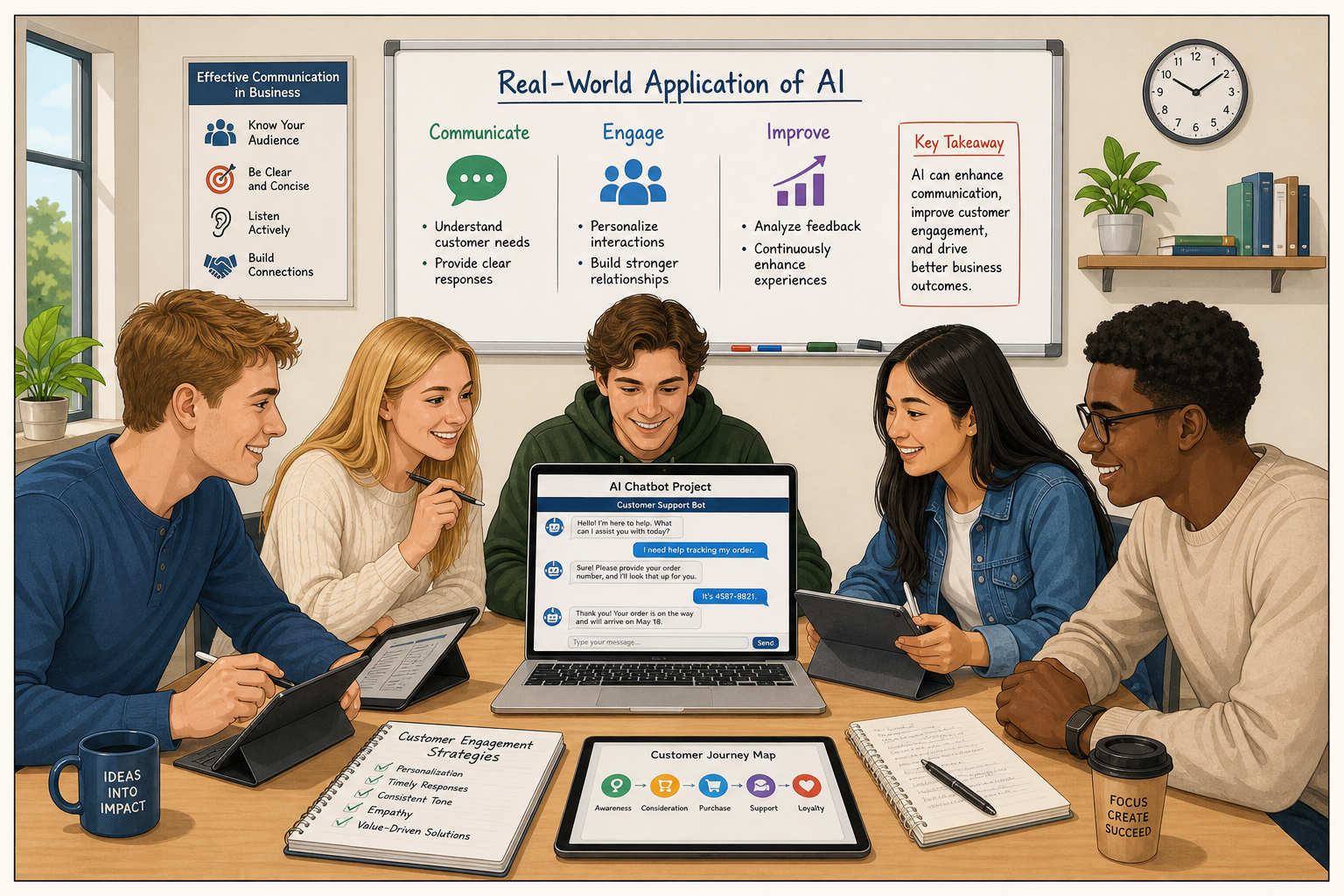
A diverse group of students can engage in hands-on projects that involve AI tools, such as developing chatbots or using AI platforms to enhance customer interaction. Such projects enable students to experience AI’s potential firsthand.
Collaborative Activities
Encouraging students from diverse backgrounds to work in teams using collaboration platforms like Slack or Microsoft Teams can foster collaboration skills essential in today’s AI-integrated workplaces.
Key Takeaways
- Understanding AI significantly enriches business communication education.
- AI integration in teaching prepares students for the evolving job market.
- Ethical considerations in AI use must be an educational focal point.
- Practical and collaborative AI-based projects enhance learning outcomes.
Glossary of Key Terms
AI Literacy: Understanding how to effectively use and evaluate AI tools.
LLM (Large Language Model): AI systems, such as ChatGPT, trained to generate human-like text.
Prompt Engineering: Crafting inputs to obtain desired outputs from AI models.
Related Questions
How does the use of AI tools in the classroom enhance business communication skills?
Hands-on projects with AI tools, such as building chatbots or using AI platforms to improve customer interaction, give students practical experience with the technology they’ll meet at work.
What ethical dilemmas arise with AI in business communication instruction?
Instructors need to teach AI use ethically, not just efficiently. Business Communication Today, 16th Edition, offers guidance on integrating AI tools in an ethical way.
How can instructors balance AI integration with traditional teaching methods?
Integrate AI tools actively but deliberately, using a structured approach such as the one in Business Communication Today. The article notes that AI integration prepares students for the changing job market.
References
Bovée, C. L., & Thill, J. V. (2026). Business Communication Today (16th ed.). Pearson.
- How Is AI Redefining the Business Communication Instructor’s Role?
- How to Teach AI Without Being an AI Expert
- What If You’re Not Teaching AI Prompt Writing?
© 2026 Business Communication Teaching and Learning Center. All rights reserved.