Business Communication AI Content gives instructors a practical way to connect classroom teaching, AI tools, and business communication outcomes students can use in professional settings.
Discover the Comprehensive AI Integration in Business Communication Education Today
In “Business Communication Today, 16th Edition” by Courtland L. Bovee and John V. Thill, AI is not confined to a single chapter but is woven throughout, offering a holistic approach to integrating AI into the curriculum. This comprehensive integration benefits educators and students facing the rapid evolution of technological applications in communication. Common questions from instructors about AI in the classroom highlight the need for resources that equip students with both knowledge and ethical usage practices.
Table of Contents
- Introduction
- Learning Objectives
- Comprehensive AI Coverage: Immediate Benefits and Why It Matters
- 1. Embedded AI Features in Business Communication
- 2. Promoting Ethical and Responsible AI Use
- 3. Practical Classroom Applications
- Key Takeaways
- Glossary of Key Terms
- Related Questions
- References
Learning Objectives
Upon completing this article, instructors will be able to:
- Identify the benefits of a cohesive AI curriculum over isolated coursework.
- Incorporate ethical AI practices in communication classes.
- Facilitate practical AI applications in lesson plans.
Comprehensive AI Coverage: Immediate Benefits and Why It Matters
Unlike textbooks that designate AI to a singular perspective or chapter, Business Communication Today, 16th Edition offers a multifaceted approach. This inclusion equips students with essential skills for navigating AI-driven communication landscapes. The ability to understand AI’s role across various contexts enhances their adaptability and professional readiness.
1. Embedded AI Features in Business Communication
This textbook’s integration of AI reflects a commitment to preparing students for real-world applications. Features include case studies and activities covering AI ethics, communications tools, and AI’s impact on different business processes. These features are crucial for fostering a well-rounded educational experience.

2. Promoting Ethical and Responsible AI Use
Ethical AI usage forms a core component of the teaching material, focusing on transparency and the implications of AI in communication. This comprehensive approach helps students learn not just how to use AI, but how to use it responsibly, addressing both potential benefits and ethical challenges.
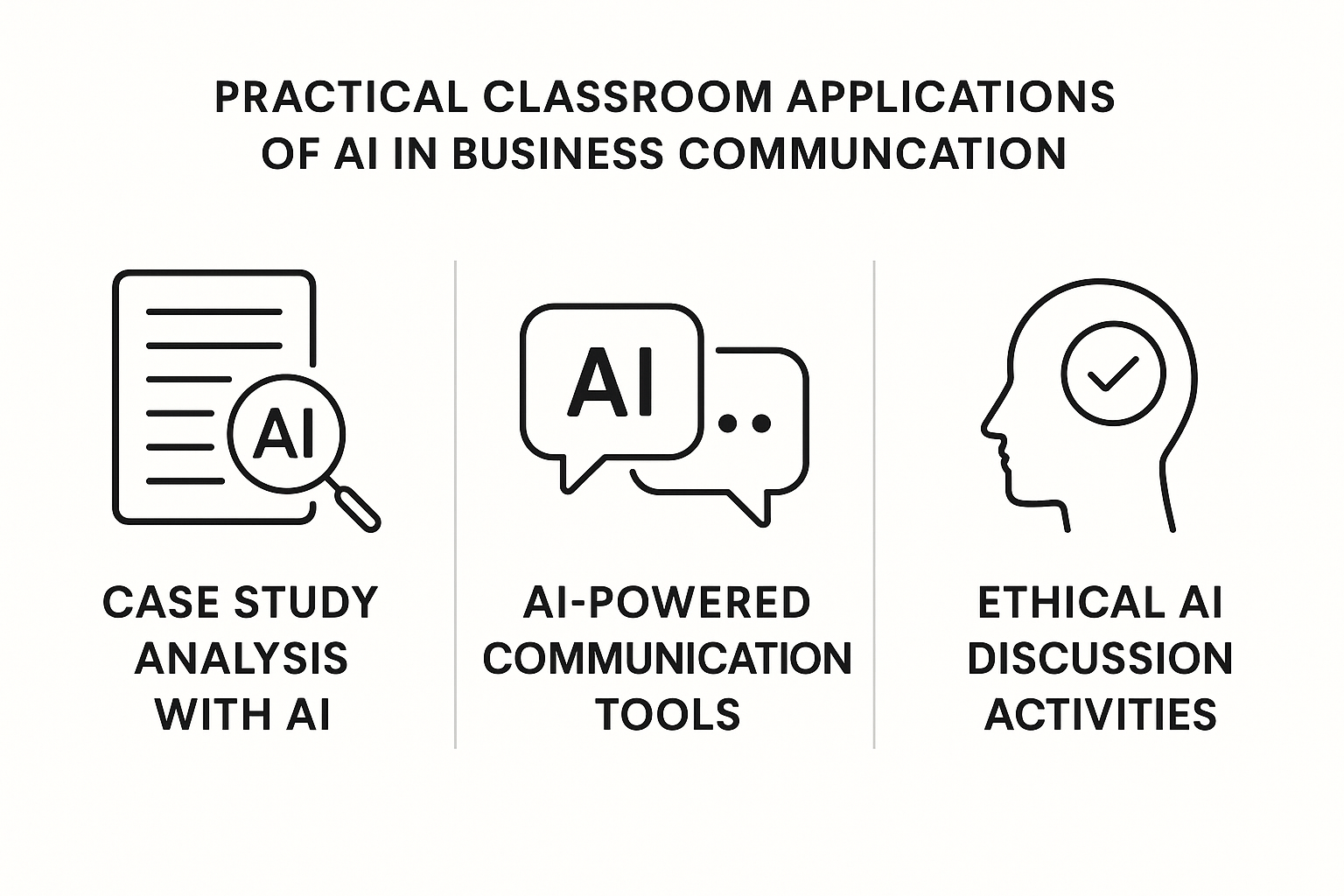
3. Practical Classroom Applications
The textbook encourages active learning through assignments that utilize AI tools, promoting experiential understanding. Instructors can implement these applications to engage a diverse group of students, ensuring lessons remain relevant and practical for preparing students for digital communication careers.
Key Takeaways
- Comprehensive AI integration facilitates a deeper understanding of communication technology.
- Ethical AI usage is embedded throughout, preparing students for responsible technology use.
- Practical applications enhance learning through real-world situational use.
Glossary of Key Terms
- AI Literacy: Understanding and evaluating AI tools critically.
- Ethical AI: AI application with a focus on fairness and inclusivity.
- Generative AI: AI systems capable of producing text or media content.
- Named Entities: Specific names or concepts crucial for context in AI models.
- Prompt Engineering: Crafting effective prompts for desired AI outputs.
Related Questions
- How can AI be effectively integrated into business communication courses?
- What sets this textbook’s AI content apart from others?
- How does comprehensive AI education impact student preparedness?
- What are best practices for teaching AI ethics in communication?
- In what ways can AI enhance business communication teaching?
- How can instructors assess the impact of AI on student learning?
References
- Bovee, C. L., & Thill, J. V. (2022). Business Communication Today (16th ed.)
- Edelman. (2023). Global Trust Barometer.
- MyLab Business Communication. Pearson. https://pearson.com/mylabbusinesscommunication
- Smith, J. (2021). Navigating AI in education. Journal of Educational Technology, 12(4), 56-70. https://doi.org/10.1016/j.jedutech.2021.1046
If you’re ready to embrace comprehensive AI coverage in your curriculum, explore the full capabilities of Business Communication Today, 16th Edition by Courtland L. Bovee and John V. Thill.
© 2026 Business Communication Teaching and Learning Center. All rights reserved.